
… and the day came, when risk to remain tight in a bud was more painful than the risk it took to blossom
Anais Nin

… and the day came, when risk to remain tight in a bud was more painful than the risk it took to blossom
Anais Nin
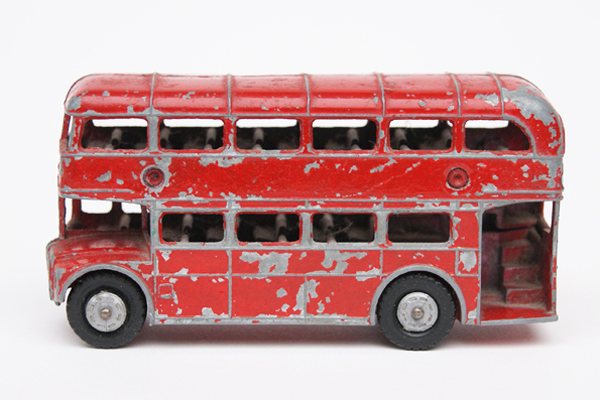
Earlier this week I hopped on a bus in London.
As I found my seat, the bus pulled away and I noticed a taxi slowing next to the bus, as the gap ahead was too narrow. He slotted in behind, but merely for a few moments, before accelerating alongside the bus.
There was an exchange of views through open windows. Thankfully mostly inaudible, but clearly both had a perspective on what had just occurred. They drove together sharing their perspectives for a few moments before the taxi veered off.
The bus driver audibly muttered ‘stupid’, thumped his wheel twice and clearly, as he repeated the word at least five times over the next three or four minutes, his attention was directed inwardly to whatever emotions he was feeling after the exchange. Certainly some anger, maybe some frustration, possibly some hurt? Who knows? Maybe not even the driver.
I reflected for a moment on the safety of his passengers, as evidently his mind was not fully on the busy London traffic.
There is a drought of compassion in our world, and a deluge of blame.
I wished for my bus driver to be able to step outside his emotion and notice what was happening for him.
His emotions and doubtless those of his fellow combatant, the taxi driver, trapped them in their blaming world.
Stepping into what he was feeling, and why, might allow him space to contemplate what the taxi driver might also be feeling; from that awareness comes the capacity for compassion, for self and for others.
Sometimes we are merely toys, played with by our own humanity.
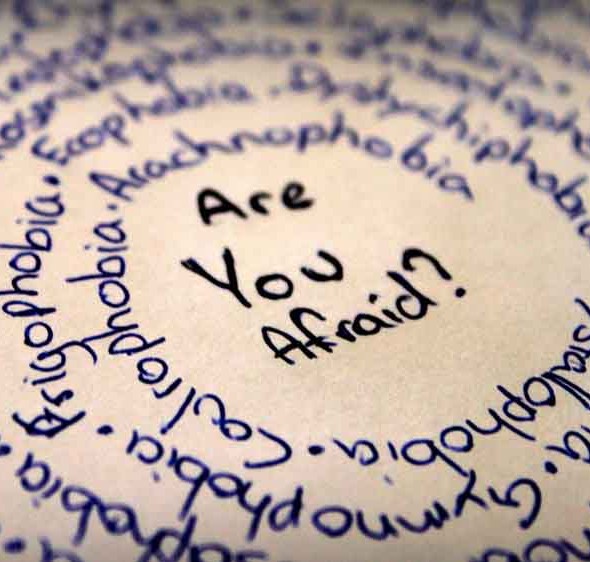
We have many words to describe fears. In fact there may well be a word for every fear or phobia. Why is that?
True, many of the names fears and phobias are a little more esoteric. Not in most people’s vocabulary. For example…
Athazagoraphobia – fear of being forgotton or ignored
Chionophobia – fear of snow
Alektorophobia – fear of chickens
Geniophobia – fear of chins
Sesquipedalophobia – fear of long words (ironically)
However there are common examples we are all familiar with; such things as…
Agoraphobia – fear of open spaces
Xenophobia – fear of foreigners
Technophobia – fear of technology
Claustrophobia – fear of confined spaces
Arachnophobia – fear of spiders
Technically we could replace phobia with philia (Greek origin) and turn these into loves or addictions, but we don’t have these in our daily lexicon. How many -philias do you know or use?
Why such rich language for negatives when we don’t have the same plethora of words to describe the love of something?
What does this say about our societal focus on the bad or negative, and how does this impact our human psyche?
That worries me.

In the right light, at the right time, everything is extraordinary.

For all we know about the world, its solar systems, its solids and gases and liquids, its states and orbits and atmospheres, its stars and planets and moons. For all we know about the Earth, its rivers and mountains and continents, its seas and oceans and lakes, its cities and people and landscapes, its cultures and societies and languages… we know nothing.
Everyone has their own world, their own reality, their own truth. Created from their own experience. Made up of patterns and meaning and connections. Motivated by values, purpose and beliefs. Driven by feelings, emotions and thoughts. Held in pictures and sounds and senses. Motivated by ego, desire and love.
Every world unique.
We struggle to understand our own personal world, let alone that of our neighbour, our colleague, our friend, our human cousin.
We know nothing.
I read recently about an ‘origami robot’ that unfolds itself to perform remote controlled surgery in the stomach. It has just undergone laboratory tests.
The small rectangular robot is ingested in a dissolving capsule and then steered, using magnetic fields, to patch a stomach wall wound or to collect a foreign body, such as a swallowed button battery. Using magnets rather than a tether to direct it, provides greater flexibility and control.
Wow. Science is amazing.
But, how come we can do this, yet…
we can’t cure loneliness?
we can’t stop people worrying?
we can’t stop human beings commiting self abusive behaviour?
we can’t give people their self esteem back?
How many more people worry, or are lonely, or have low self esteem in comparison to those with stomach wall tears or those who swallow batteries?
Come on science, let’s pay attention to the emotional and psychological too. We need you to do great things for us.

A tiny bird, taking its first steps away from the nest, stands in my garden. A sparrow.
It runs after its mother following the only rule it knows. Stay close. It stands, beak gaping, pleading for food. The mother provides. Insect after insect. The fledgling bird incessant, demanding, noisy. The mother industrious, giving, caring.
So helpless, so dependent, so vulnerable.
We are vulnerable too. We should embrace that. It’s beautiful.

I need to cut the grass. It’s a routine during three seasons. Mostly a chore. Weekend job.
We cut a lot of things that grow.
Outside we not only cut grass, we prune roses, clip shrubs, pull up weeds, lop branches.
On our own bodies we clip nails, cut hair, exfoliate skin, pluck eyebrows, shave underarm hair, trim beards or shave them off all together; each day, often at prescribed times.
Most of this cutting seems to serve a tidiness purpose.
But our children grow their knowledge and we cut that too. Don’t do this, don’t say that, run away and play, not now, because I say so… Not tidy. Just timely. For us.
Our own knowledge grows wild, unkempt, organically. We prune that too. Discarding things which might be useful because they’re someone else’s opinion, experience, idea, viewpoint. Tossing our own experiences aside because we cannot find meaning or make sense of it. Often because we don’t have time to. Not tidy. Just timely.
Meanwhile, out of control, inexorably, experience washes over us. And we randomly accept knowledge and learning every day, through every interaction, every experience. Our brains filing it away with dutiful order and precision. Some to be recalled, some to be lost forever in the grey matter. There is no real plan, no real order, no tidy symmetry. Structured randomness.
Unkempt sense making, messy knowing, time restricted learning, disorderly growth.
Neat gardens, neat hair, neat nails, neat lawns, neat children.
Neat lives?

Sitting in Vera’s Kitchen for a cuppa. A fine cafe in Letchworth.
The menu begins with ‘detoxing soup’.
Is that possible? Can soup have a detox effect? What toxin exactly is being removed from your body by consumption of said broth?
Detox, detoxifying, detoxing are ‘a la mode’ at the moment it seems.
But when do we detox our humanity? Remove the toxic parts of our being; the flotsam picked up along our life journey?
The unwanted thoughts. The unhelpful behaviours. The disabling feelings. When do we recover from the self toxifying life journey that has left us with redundant beliefs, self doubt, insecurity, poor self image, vulnerability, limiting thoughts, low self esteem?
That’s the soup we really need.

Free from passion and desire, you have stripped the thorns from the stem.
Buddha
What is it that you hunger to do?
 illuminated dandelion