our very public privacy

image

I invite you to imagine yourself in a large theatre, standing on a stage in front of an audience of 200 strangers. You are about to speak out, frankly, about your most private moments.

Ready to go? Happy? Begin…

No?

Oddly, public transport seems to provide a safe environment for us to do this. To share our most private moments. A train carriage, packed with 200 strangers for example.

In only the last week I have witnessed three examples whilst travelling on a train.

Maybe it’s the imagined intimacy of the one to one telephone conversation, the background hum of the train on the tracks? Maybe it’s the intensity and the emotion of the content of the exchange, taking us into ourselves?  I don’t know, but somehow these people become so absorbed by their conversation that their awareness of their audience is seemingly totally lost. They find a freedom and a frankness in front of strangers; all sense of potentially prying eyes and ears, any sense of vulnerability, of exposure, of visibility seems to desert them.

Whether it be a lady initially informing her husband she will be late and is having to stand, descending into a row about him never listening to her and a very honest view of his sister’s shortcomings; or a young woman, speaking to a (presumed) friend, recounting her night out, which culminated in her boyfriend hitting her; or a conversation face to face between two standing passengers, conducted at unnecessary volume, one initially exploring a ‘client’ emotionally falling for her (I’m sure there are ethical limits here) and culminating in a sharing of bluntly truthful views on their respective partners and their children…

Maybe we should be more cognisant of our surroundings and the words, thoughts and feelings tumbling out?

Or maybe we could benefit from such honesty, such openness, such trust in our everyday lives?

clap……..clap….clap

image

We love a ritual, don’t we?

The Icelandic football celebration, arms aloft, slow clapping in unison with ever increasing speed, seems to be being adopted globally and I’m sure as the new football season approaches we will see it on many league terraces.

Rituals are important because they provide a sense of identity and a sense of belonging. They signify our tribe, and by taking part we signal our membership of the tribe.

We have rituals in our families. When I was a child we always had Saturday tea watching early evening television. Tea was always bread rolls, often with beef burgers or sausages in. Dripping with ketchup. Christmas and birthdays often offer up family rituals. Mince pie and a carrot for Santa’s reindeer. Christmas breakfast. Birthday meals. We pass these rituals down too. Sometimes the things we did as children we carry forward into our own families. Some pass down from granny or great granny.

There are rituals at work too. We see them as the culture. In my organisation we ‘go for tea’. Rather than grabbing something you drink at your desk, there is a ritual of going for tea or coffee with someone. Taking time away from our desks.

Towns and counties have rituals too. Like cheese rolling, or fell running, or the whole town engaging in a tomato fight.

Countries, culture and societies have rituals too. Like hunting a lion to prove your coming of age, or baby throwing, or tooth filing.

I’m not Icelandic, but I may well clap, if the opportunity arises. I sense this may become a football ritual, and I am, after all, a football supporter.

Clap ………. clap ….. clap .. clap


are they? really?

I received an email yesterday.

Not in itself newsworthy I grant you.  I had a few.  Too many in fact.

This one though stood out.

After the brief message it ended…
KR
Name

I had to read it several times. The KR puzzled me. Was it a mistake? An inadvertent lean on the keyboard? Some coded message perhaps? Or maybe the first two initials of the writer, with an unplanned carriage return before the rest of the name?

Then it dawned on me… kind regards.

But are they?

If I cannot be bothered to type the words, are they really kind regards? I certainly didn’t receive it that way. In fact I felt this person showed little regard for me at all with this shorthand, can’t be bothered, nod to politeness.

Even when technology is used, we surely need to pay attention to the relationship, the messages we unconsciously send, the rapport we create or don’t. Text based exchanges already lose out on conveying tone of voice, facial expression, mood, a smile. If we resort to abbreviated proxies for any attempted human connection, all is lost.


trapped in my own mental construction

lifts

Yesterday I was at a conference. A hotel in central London.

Part way through the day I headed for the ‘facilities’ (strange how we invent words to hide our embarrassment of a normal human function – I needed a pee), only to discover that it was being cleaned. I wandered around the ground floor looking for alternatives. A man dressed in a ‘hotel concierge’ style approached and I sought his guidance.  He directed me to the reception area and the bank of lifts, suggesting I travelled to the first floor, where I could exit, turn left, left again and find the required room.

I headed off, conscious that I would soon be missing the start of the next break out session.  Finding the lifts, I pressed the button and the lift on the right of four opened its door. I entered and pressed the button marked 1. The lift door closed and it surged into life; well, actually it dribbled into life, but I could sense movement. I stood reflecting on the conference so far.

The lift juddered to a halt.

The door didn’t open.

Panic flashed into my body. Surely the lift hadn’t broken down? I glanced at the panel seeking the alarm button. I’d seen them before, but never had cause to use one. Into my mind came the conversation I would need to have, ‘yes lift on the right’, ‘yes, between ground and first floor’…

Thoughts swam in an ever quickening whirlpool in my mind… ‘how long might I be here?’ ‘what would I miss?’, ‘did I have water in my bag?’…

Then I turned around.

Behind me was an open door and an expansive empty corridor.

The lift had doors on both sides.

I tutted to myself, gently chastising my stupidity, glancing around to ensure nobody had noticed my tardy lift exit, or worse still witnessed my elementary mistake. I felt so silly.

Of course I have been in a lift before with doors that open both ends. Tube stations, hospitals. Usually large lifts, never a small 6 person lift in a hotel though. Lift doors normally ‘ping’ or are noisy enough for your attention to be drawn.

I noticed how my thought stream had moved from the panic of entrapment, to masking my embarrassment, to rationalising and justifying my inability to spot an open side in a four foot by five foot space.

For a moment, only a moment,  I had been trapped in my own mental construction – the lift and where its door should open.

Now I was trapped in a different mental construction – the need to hide and the need to make sense and justify.


an actor in our own story

image

In a fractured age, when cynicism is God, here is a possible heresy: we live by stories, we also live in them.

One way or another we are living the stories planted in us early or along the way, we are also living the stories we planted – knowingly or unknowingly – in ourselves. We live the stories that either give our lives meaning, or negate it with meaninglessness. If we change the stories we live by, quite possibly we change our lives.

Ben Okri

how do you do becoming?

image

I love the phraseology that juxtaposes ‘human being’ with ‘human doing’ and also with ‘human becoming’. I don’t know who first coined it?

The ‘becoming’ piece intrigues me most.

It suggests evolving, learning, growing. It infers movement, change, desire. It implies a different state.

We say we’re becoming better, or we’re becoming a teacher (substitute any other skill/profession of your choosing). We say we’re becoming clearer, or becoming irritated. We’re becoming addicted or becoming curious. I’m becoming numb to it, or I’m becoming a recluse. And so on…

But how does one do ‘becoming’? What’s going on? What makes ‘becoming’ possible? What’s the process?

More significantly perhaps what’s my process? And what’s your process?

How do you do becoming? Is there a pattern? A recipe? A methodology? Do you have a style, a flavour, a posture for becoming?

How do you know? Know you’re becoming? Where’s the evidence? Is it tangible or is it a sense of becoming? Are there feelings, thoughts, behaviours with becoming? And when do we stop becoming and just be? When do we reach the destination?

Then does ‘being ‘ inspire us to strive, to grow, to move forward into another spate of becoming? Does ‘being’ bore us, frustrate us, drive us to more ‘becoming’?

What triggers becoming? What fuels the becoming?

Becoming curious?

why so hard to fathom?

hope

Hope.

What is it?

Like so many of life’s most important treasures, it seems almost intangible, hard to put your finger on, illusively difficult to describe. floating in the ether. Yet of immeasuable significance to us.

For when it is absent, all seems lost. Its magnitude then, monumental. Its impact, seismic.

An important element seems to be a goal. An intent. An objective. And then there needs to be choice. A sense that we can see alternatives. Pathways. When there are none, hope is lost. A will to get there seems to be the final ingredient. A desire to make the choice and a drive to work towards the aim, however difficult. We all lose sight of one of these from time to time – goal, alternatives, will. Perhaps hope is lost when they all leave us?

Why are the most important things in our human lives so hard to quantify, to describe, to grasp? Hope, belonging, love, freedom, will, happiness…

seen and unseen, illusion and reality

image

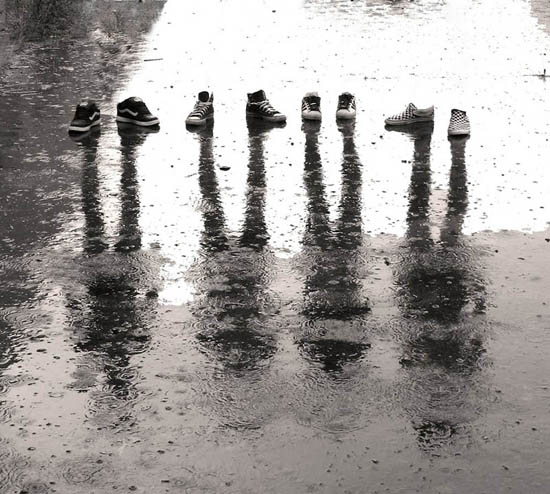
Our shadow is always with us. Always connected.

Often we cannot see it. Occasionally so faded, so feint, it cannot be detected by our human eye. Sometimes fragmented, in parts; distorted by multiple light sources.

In the right light though our shadow is clearly us. It responds to our movement, to our very being. It is an extension of us. A monochrome, two dimensional form, that adopts the contours of our surroundings.

A shadow part of our complex humanity perhaps? Intrinsically us; yet sometimes hidden, sometimes not. Impacted by our environment. By conditions. Sometimes we can see this part of ourselves, sometimes others see it when we do not, sometimes it is invisible to all. Our shadow responds to our other parts, our thoughts, actions, behaviours. Our movements and motion. Always responding.

Light and shade.  Effect and cause. Seen and unseen. Illusion and reality.