without sense, no sense

image

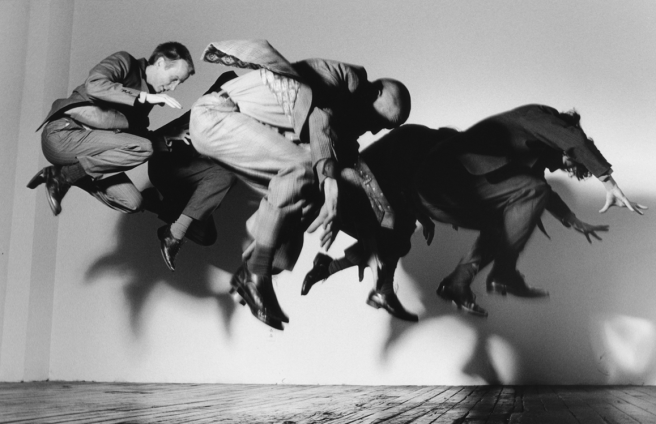
and those who were seen dancing were thought to be insane by those who could not hear the music.

Friedrich Nietzsche

We make sense of our world. With our senses. Same word.

When we remove a sense, the sense we make is different. Developing our ability to use them all in harmony is useful. Don’t just listen, when you can feel what is being said. Don’t just see, when you can hear with your heart.

Make all the sense you can.

here’s the scenario…

image

Top deck of a London bus.

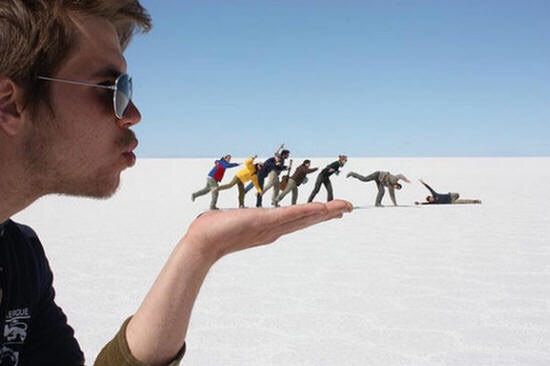
Man comes upstairs and moves to sit next to another man in front seat. Seated man looks up at new passenger who is requesting he move his bag. Seated man looks over shoulder. Behind him there are only six other passengers on the top deck. Seated man looks incredulously at new passenger. “Really?” can be heard.  New passenger, now sitting, asks already seated man, if he wants him to sit at the back?  Already seated man mutters inaudible. Newly seated man shuffles closer, settles down and opens his newspaper. Already seated man stares at cheek of newly seated man like he’s trying to burn through his face with just the power of his stare.

We’re funny sometimes aren’t we? People.

is there a hole in my bucket list?

The bucket list idea has been around for a few years now, popularised by the film of that name from 2007.

Essentially the notion of a list of the life experiences to have, or life achievements to attain, before you die. Before you ‘kick the bucket’.  For example, ‘making this trip ticks one thing off my bucket list’.

You can even download suggested bucket lists – with places you should visit and experiences you should have whilst you still can.  Someone else’s idea of what you should do, to live a rich and fulfilled life.  Interesting concept.

Often these lists contain far flung places to visit or high octane adrenaline fueled experiences. Many cost a lot of money or take a lot of time. Visit Machu Pichu. Skydive. Swim with dolphins. Run a marathon.

What if we lived for the moment instead?  What if we identified the day to day things that bring pleasure, happiness, joy to our lives and just do more of them?

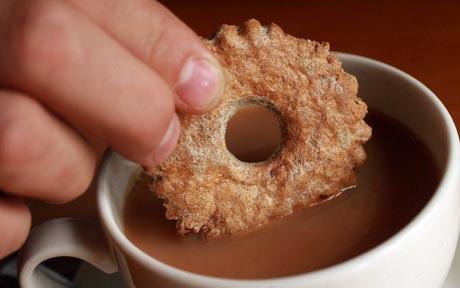
Drink tea with a biscuit to dunk. Sit in the garden. Have a bath. Walk in the woods. Bake brownies. Buy those orange shoes we covet. Listen to a thunderstorm. Hold hands. Laugh.

Too few people notice the little things they enjoy and then set out to do more of them.

It strikes me the bucket list idea has a hole in it.  If we’re focused on our death and on large scale, time costly, expensive big events, then life is leaking out of the hole every day.


cultural intelligence trumps empathy

inuit child

We all like to think we can show empathy.

We like to think we can hear someone’s narrative and ‘stand in their shoes’.

For many of us this might be true. We may have honed our awareness skills, fine tuned our listening skills, twizzled our emotional connection antennae. We are empathetic.

But are we?  Really? To what extent is our ability to show empathy merely a product of our ability to find meaning and sense from our lives and relate it to another’s experience? Another person brought up in the same language, the same country or world area, the same belief system, the same society? Meaning and sense making may be intrinsically linked to our own life experience. So maybe empathy has geographic and cultural boundaries?

If you sat down with a Australian aboriginal, or with a Chinese gentleman aged 80, or a native Inuit child from the snowy north, would you be able to truly connect with the meaning in their lives? Could you read the signs in their faces? Connect with the significance in their tale? Understand their underlying value and belief systems?

Over recent years we have added emotional intelligence (EQ) to cognitive intelligence in the form of IQ. Terms we are all familiar with.

Now, cultural intelligence (CQ) is emerging as a third intelligence.  Can we really be open to learning and meaning making when we meet another culture, another society, another upbringing? Or do we have to learn to do this? And without it, is empathy merely a hollow aspiration, or a distorted falsehood?


that other ‘to do’ list

emotions to do

Many of us write lists. The ‘to do’ list is a favourite.

Jobs for the weekend, reminders of tasks for the day job, lists of objectives for the project, even a list of things to buy for a birthday…

These lists tend to be full of tasks.  Doing things.  Activities to complete, assignments to progress, promises to keep.

How often do we create an emotional ‘to do’ list?

Today, I need to feel joyous, curious, excited and relieved.  Tomorrow I plan some happy, a bit of stressed (because I will need that adrenaline) and a ton of relief, because I can foresee a few minutes of sad.

I recently attended an event where the group was encouraged to reflect on sources of happiness in their lives. We then shared and told stories of how and why that happiness had arrived for us. We pledged to each other to do more of that in our lives going forward (whatever it was for each of us).  Having people bear witness seemed to help.

So, what’s on your long term emotional ‘to do’ list, and how do you plan to get more or less of the emotions you want or don’t?

articulated mind traps

Observing a driver reversing an articulated lorry always gives me a sense of admiration. I notice a desire to be able to do that. It looks satisfying. I feel compelled to stand and watch.

But my brain says it’s hard.

‘I would probably struggle,’ it says. ‘It’s not as easy as it looks,’ it says. ‘Look on and marvel in the ability of these wondrous people, but it’s not for you, is it?’ it says.

Maybe it is hard, maybe it isn’t?
The point is that what my brain says, makes a big difference.

More importantly, what else does my brain say is hard?  What else do I avoid or just never get around to experiencing because my brain says it’s hard?

And … why does it do that?

What is my brain’s purpose in telling me it’s hard?  How is my own brain serving me, by telling me I will struggle to master that? By putting me off? By putting me down? By creating a limiting frame of reference?

But still I listen. Still I stand and marvel. Still I imagine.

a hanging emotion?

image

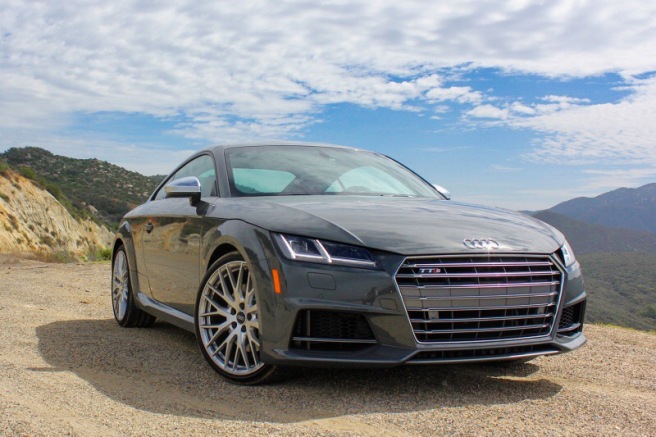
I’ve just been overtaken.

Overtaken on a blind bend.

The car in question then overtook the car in front, also with insufficient visibility for the manoeuvre.

The area and time of day tell me that half a mile ahead there will be a substantial queue at a roundabout. I know this because I am familiar with the area.

The driver in question had earlier been waiting in a side turning and they had slotted in behind me as I had passed them. The side turning I also know would suggest they live or work in the area, so would be familiar too with the upcoming queue.

What motivates us to get ahead? To take risks to get in front?

Is it time? Lateness or a need to get somewhere quickly?

Competitiveness? A desire to win?

Peacock syndrome? A need to show personal power; to showcase capability or self? Look at me, look at my car, look at our potential?

Or maybe it’s a hanging emotion? Maybe work or life had recently delivered an emotional experience leaving the driver with frustration or anger or some other feeling? Maybe the thrill of speed, the rush of risk is a venting of a hanging emotion?

Whatever the reason, I hope they live long enough to enjoy what was a nice car.


I own what I have lost

Listening to a conversation the other day I heard someone use the phrase “my ex”. They were referring of course to someone they were once married to.

The concept of applying a possessive label, a word used to describe belonging alongside something you describe as being previous, being lost, being ‘ex’, struck me as odd.

I no longer have this, it is ‘ex’, but it belongs to me, it is mine.

I no longer have a spouse and so the replacement label for that loss is what I will own instead. It’s as if we wear the label of having lost it with pride.

Yoonjin “Zoonzin” Lee, who took the photo on this post, gives a voice to small found objects with his blog – What small objects think when you forget them on the street. What a fab idea.