are they? really?

I received an email yesterday.

Not in itself newsworthy I grant you.  I had a few.  Too many in fact.

This one though stood out.

After the brief message it ended…
KR
Name

I had to read it several times. The KR puzzled me. Was it a mistake? An inadvertent lean on the keyboard? Some coded message perhaps? Or maybe the first two initials of the writer, with an unplanned carriage return before the rest of the name?

Then it dawned on me… kind regards.

But are they?

If I cannot be bothered to type the words, are they really kind regards? I certainly didn’t receive it that way. In fact I felt this person showed little regard for me at all with this shorthand, can’t be bothered, nod to politeness.

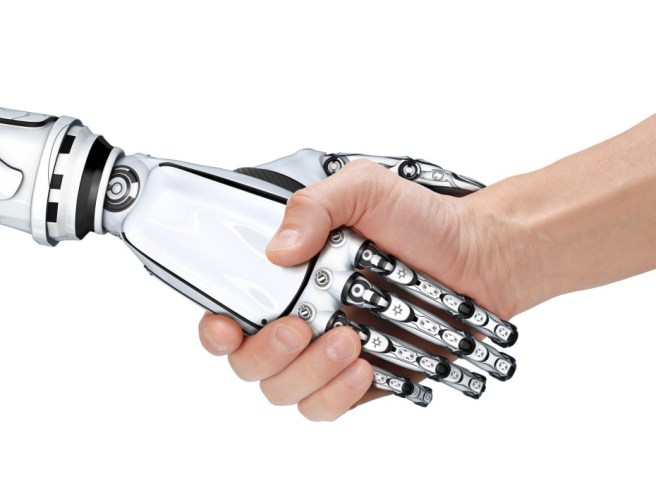
Even when technology is used, we surely need to pay attention to the relationship, the messages we unconsciously send, the rapport we create or don’t. Text based exchanges already lose out on conveying tone of voice, facial expression, mood, a smile. If we resort to abbreviated proxies for any attempted human connection, all is lost.


trapped in my own mental construction

lifts

Yesterday I was at a conference. A hotel in central London.

Part way through the day I headed for the ‘facilities’ (strange how we invent words to hide our embarrassment of a normal human function – I needed a pee), only to discover that it was being cleaned. I wandered around the ground floor looking for alternatives. A man dressed in a ‘hotel concierge’ style approached and I sought his guidance.  He directed me to the reception area and the bank of lifts, suggesting I travelled to the first floor, where I could exit, turn left, left again and find the required room.

I headed off, conscious that I would soon be missing the start of the next break out session.  Finding the lifts, I pressed the button and the lift on the right of four opened its door. I entered and pressed the button marked 1. The lift door closed and it surged into life; well, actually it dribbled into life, but I could sense movement. I stood reflecting on the conference so far.

The lift juddered to a halt.

The door didn’t open.

Panic flashed into my body. Surely the lift hadn’t broken down? I glanced at the panel seeking the alarm button. I’d seen them before, but never had cause to use one. Into my mind came the conversation I would need to have, ‘yes lift on the right’, ‘yes, between ground and first floor’…

Thoughts swam in an ever quickening whirlpool in my mind… ‘how long might I be here?’ ‘what would I miss?’, ‘did I have water in my bag?’…

Then I turned around.

Behind me was an open door and an expansive empty corridor.

The lift had doors on both sides.

I tutted to myself, gently chastising my stupidity, glancing around to ensure nobody had noticed my tardy lift exit, or worse still witnessed my elementary mistake. I felt so silly.

Of course I have been in a lift before with doors that open both ends. Tube stations, hospitals. Usually large lifts, never a small 6 person lift in a hotel though. Lift doors normally ‘ping’ or are noisy enough for your attention to be drawn.

I noticed how my thought stream had moved from the panic of entrapment, to masking my embarrassment, to rationalising and justifying my inability to spot an open side in a four foot by five foot space.

For a moment, only a moment,  I had been trapped in my own mental construction – the lift and where its door should open.

Now I was trapped in a different mental construction – the need to hide and the need to make sense and justify.

 

an actor in our own story

image

In a fractured age, when cynicism is God, here is a possible heresy: we live by stories, we also live in them.

One way or another we are living the stories planted in us early or along the way, we are also living the stories we planted – knowingly or unknowingly – in ourselves. We live the stories that either give our lives meaning, or negate it with meaninglessness. If we change the stories we live by, quite possibly we change our lives.

Ben Okri

how do you do becoming?

image

I love the phraseology that juxtaposes ‘human being’ with ‘human doing’ and also with ‘human becoming’. I don’t know who first coined it?

The ‘becoming’ piece intrigues me most.

It suggests evolving, learning, growing. It infers movement, change, desire. It implies a different state.

We say we’re becoming better, or we’re becoming a teacher (substitute any other skill/profession of your choosing). We say we’re becoming clearer, or becoming irritated. We’re becoming addicted or becoming curious. I’m becoming numb to it, or I’m becoming a recluse. And so on…

But how does one do ‘becoming’? What’s going on? What makes ‘becoming’ possible? What’s the process?

More significantly perhaps what’s my process? And what’s your process?

How do you do becoming? Is there a pattern? A recipe? A methodology? Do you have a style, a flavour, a posture for becoming?

How do you know? Know you’re becoming? Where’s the evidence? Is it tangible or is it a sense of becoming? Are there feelings, thoughts, behaviours with becoming? And when do we stop becoming and just be? When do we reach the destination?

Then does ‘being ‘ inspire us to strive, to grow, to move forward into another spate of becoming? Does ‘being’ bore us, frustrate us, drive us to more ‘becoming’?

What triggers becoming? What fuels the becoming?

Becoming curious?

why so hard to fathom?

hope

Hope.

What is it?

Like so many of life’s most important treasures, it seems almost intangible, hard to put your finger on, illusively difficult to describe. floating in the ether. Yet of immeasuable significance to us.

For when it is absent, all seems lost. Its magnitude then, monumental. Its impact, seismic.

An important element seems to be a goal. An intent. An objective. And then there needs to be choice. A sense that we can see alternatives. Pathways. When there are none, hope is lost. A will to get there seems to be the final ingredient. A desire to make the choice and a drive to work towards the aim, however difficult. We all lose sight of one of these from time to time – goal, alternatives, will. Perhaps hope is lost when they all leave us?

Why are the most important things in our human lives so hard to quantify, to describe, to grasp? Hope, belonging, love, freedom, will, happiness…

seen and unseen, illusion and reality

image

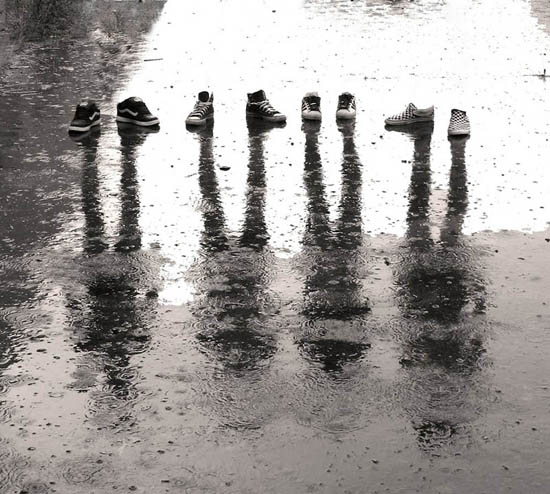
Our shadow is always with us. Always connected.

Often we cannot see it. Occasionally so faded, so feint, it cannot be detected by our human eye. Sometimes fragmented, in parts; distorted by multiple light sources.

In the right light though our shadow is clearly us. It responds to our movement, to our very being. It is an extension of us. A monochrome, two dimensional form, that adopts the contours of our surroundings.

A shadow part of our complex humanity perhaps? Intrinsically us; yet sometimes hidden, sometimes not. Impacted by our environment. By conditions. Sometimes we can see this part of ourselves, sometimes others see it when we do not, sometimes it is invisible to all. Our shadow responds to our other parts, our thoughts, actions, behaviours. Our movements and motion. Always responding.

Light and shade.  Effect and cause. Seen and unseen. Illusion and reality.


you’re not…

image

You’re not the mistake you made.
You’re not the failure of your most recent project.
You’re not the loss of your job.
You’re not that indulgence you should have resisted.
You’re not the disappointment at not having come first.
You’re not that missed deadline or average result.

You’re not your success, your fame, your glowing reputation, either.

You’re not the letters after your name, your job title, your exam results, your qualifications, your place in the organisational hierarchy.

You’re not your bank balance, your debt, your smart suit, that designer frock, your car, your house.

You’re not your ability, or your disability.
You’re not your weight, your muscles, your illness, that blemish.
You’re not your happiness, your sadness, your rage, your shame, your dream.

How could you be any of these, given that any of them are liable to change at any time?

Any of them.

These things are all a blink in the timeline of your life.

It’s a huge misunderstanding of what humans being are, and one that your inner critic can go wild upon. That voice can be demanding that you fix, or change, or hide, or be ashamed of these things.  Or that you hold on ever so tight to what you’ve got, for fear of losing it, and what it represents.

You are not your circumstance.

Perhaps there is a new kind of freedom you can find from knowing this? A new kind of acceptance of the transience of the world, and a new recognition of your own strength and constancy, a new discovery of your essence, your soul… a new kind of hope.

image by: GranitKrasniqi – deviantart.com

it’s intentional

image

Have you ever been driving somewhere and needed to get there on time, or you’re simply in a hurry, keen to arrive?

Ahead of you on the motorway, vehicles slow. Hazard lights are pulsed to warn you of rapid deceleration. Stretching into the distance is a long line of red dots; blinking illuminations signalling stationary or slowing modes of supposed transport. A queue.

How do you respond? Maybe your mind turns to being late? Maybe to the impact of that? Maybe you feel frustrated? Maybe annoyed? Maybe you sense a loss of control, your destiny in the hands of circumstance? Maybe that creates anger? Maybe your thoughts turn to those you are driving to? Maybe you worry? Maybe you begin switching lanes in an attempt to get some advantage over your fellow car crawlers, telling yourself you are winning and outsmarting those around you? Thereby generating a somewhat false sense of progress and movement. Maybe that makes you feel good?

Once your thoughts lead to a state change. Once the thoughts and feelings are connected in dubious harmony, you have set your intent. You will be anxious. You will be frustrated. You will be angry. Whether you want to or not, it will happen. It won’t get you what you want of course. It won’t move you forward. And not just literally.

If instead you were able to think about enjoying the scenery, or listening to some stirring music, or calling a friend to catch up. If you were able to set a positive, productive, happy intent. Leading to a positive, productive, enjoyable state. How would that queue be different?

Our thinking creates our state.  Our state determines our thinking.

Setting your intent, for how you want it to be, can make it so. On the motorway and elsewhere.

Today I co-facilitated a learning session with 50 people. As facilitators, we both set our intent to learn everyone’s name … and we did.

The act of setting intent, directs our attention to where we want it. We have choice, rather than simply being at the beck and call of our thoughts and feelings. We are driving ourselves, rather than being driven. Intentionally.