is the SatNav of life working?

image
Driving a car is purposeful. It would seem strange not to have a destination.

Maybe it is home, work, friends, relatives or a visit to somewhere new? Wherever we are going, we normally know the end point before we set out. Indeed we may plan a route. Maps, Sat Nav or simply a route in our heads, recalled from previous journeys perhaps? Or maybe we simply know the key roads and towns and follow the strategically positioned, helpful road signs?

Along the journey, we speed up, slow down, to match the traffic and conditions around us. We indicate turns so that others on different and similar journeys know our intention. We illuminate the way ahead at dusk when we need to see the road to our destination. We may pause en route to resource and replenish ourselves before setting out again to our destination.

Life isn’t like this.

In one, somewhat morbid, sense we know our destination. But in another we don’t. At birth we don’t know our purpose. We don’t know where we’re going. We have no idea of the route our life will take, or of the turns or stops along the way. We can even be half way, or three quarters of the way through our life journey and still not know where we are headed. Sadly some complete the trip and still never knew.

The drive of our lives doesn’t come with maps in the glove box or a Sat Nav on the dashboard. Sometimes we will swerve without indicating, avoiding collisions or steering away from, or towards something. Sometimes we will slow down, or stop, without brake lights for those around us. Life temporarily on hold, or simply crawling in traffic. Sometimes we will make up the route along the way. Sometimes we will turn back. Sometimes we will find a detour. And what if we pause, but don’t like the place we have stopped? What if our way becomes dimly lit, how will we shine a light on the way ahead? What if our vehicle breaks down and we cannot travel to where we wish to be, in the manner or time frame we would want? What if we don’t have the resources, the capabilities, the fuel to reach our destination? Fill up?

We take journeys and driving for granted. Route, provisions, stopovers, movement, fellow travellers, destination.

We have one life journey, yet many of us meander through it.

No aim. No plan. No route. Accepting places we don’t like. Being and doing something, because we don’t know any different, other than to accept it’s just where we are at the moment, on this somewhat aimless journey. Reacting. Swerving. Braking. Turning. Accelerating.

You wouldn’t drive aimlessly. Don’t drive your life that way.

Pay attention to who you are, where you are going, why you are going there and why that matters. Be authentically you. Be purposeful. Be sure when you get to the end, you haven’t gone the wrong way. Relish the journey. Appreciate the views. Value the experience. Enjoy those you meet along the way.

Time to program your SatNav?
 

the glow of humanity

the light of humanity
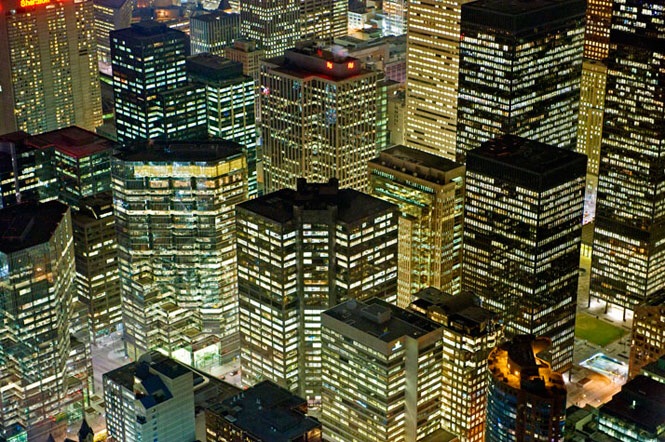
Travelling through any urban area at this time of year and you will see light leakage. The glow of illumination. Street lights, office lights, car headlights, security lights, early evening lounge lights, Christmas lights…

Humanity’s presence reflected in the surrounding environs.

Unintentionally. Light just creates a halo. It spreads like a smokey haze. Leeching into the space around the light source. Unselfishly sharing its light.

We do that with our own light too. Our personal light of presence, of compassion, of capability, of friendship, of appreciation, of recognition, of love.

If we light it up in ourselves, the effect is seen in those around us.

Give it a go. Shine on someone and watch them glow.


map your meaning

the-map-of-meaning
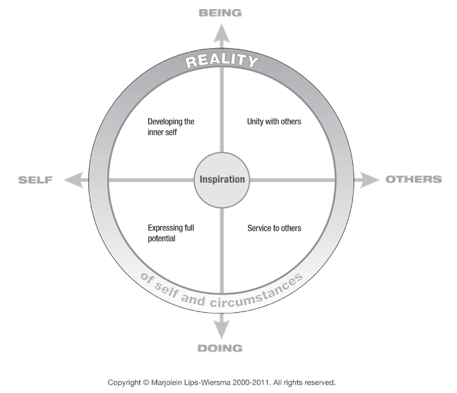
When did you last experience working well with others, maybe with a sense of unity, even if you were quite different? Think of a time.

In that moment, what did you do that helped others? How were you of service to them?

What did you do that uniquely served you? That allowed you to do your best and express your potential?

How was your balance of doing for self and for others?  In balance? Or skewed, maybe as you would want it skewed, or maybe not?

And in that moment, at that time during that experience, what did you realise about yourself that felt important? What part of that experience developed your inner self, such that you might be more you?

How was your balance here between developing and being more you, with that sense of connection and unity from being with others? In other words, how was your balance of being? Were you being more in service of them or of yourself?

Your orientation to being or to doing, balanced with your orientation towards self or to others is interesting.

Does meaning come in one of those quadrants more easily – being (developing inner) self, being (unity) with others, doing (service) to others and doing for self (expressing your potential)?

If so, are there other quadrants which feel less developed? What would you like to pay more attention to?

Mapping where we find meaning can be illuminating.

http://www.holisticdevelopment.org.nz/

the present lie about absenteeism

daydreaming
Most of us work through the day.  We sit in our office or car. We stand on the production line. We pore over our computer. We meet others and decide important things. To do this, we are expected to be present. To be wherever our work requires us to be.

But physical presence is a lie, a misnomer, if we think it signifies presence in our work. Occupation, activity, productivity, output, quality.

I can sit and stare at words on my screen and yet be somewhere completely different, in my head. I can be in a meeting and look to be taking active part, whilst emotionally being totally disconnected. I can even be driving my car and be on auto-pilot, because my attention is on some unrelated, yet important, mental distraction.

This is largely invisible to those around us. A secret we keep.

We all do it. We do it all the time.

Physically present. Mentally and emotionally elsewhere.

Why is it that the ponderings, thoughts, feelings, of another place, another time, another scenario, with other people, are more important to our bodies, than where our bodies are?

Wherever you are now.  Where are you?


now is the only everlasting memory

image

Many years ago, the photograph was a physical thing.

Nowadays we live in a digital age. The image has become a series of ones and zeros, which can be shared instantly across the globe. It can be enlarged, edited, colours saturated, edges blurred. It can be enhanced with special effects, have its background changed, detail enhanced. All of this can be achieved in seconds. Methods and means for sharing are many, and once a photograph is out in the social network we lose track of its global journey; who might see it, where, how and when.

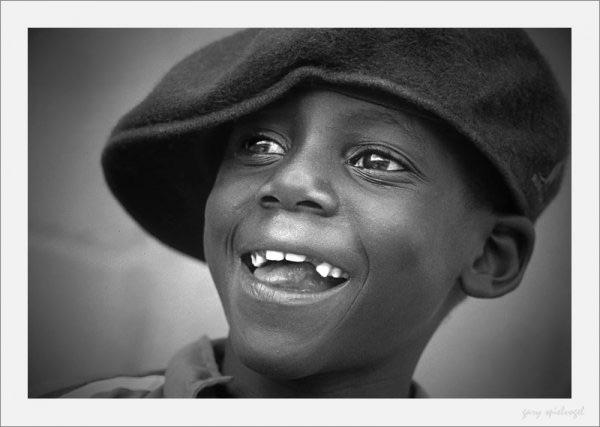
When we capture a smile in a photograph, it has an eternal quality. A moment in time is captured in digital form to be shared and enjoyed for ever. It becomes an everlasting smile. Or does it?

The photograph cannot replicate the human experience. The feeling that went with the smile. The sensation of the facial muscles drawing the lips back. The image or experience behind the camera that generated the smile. The joy of the moment. The supporting emotions of fun, love, togetherness, excitement, happiness. It cannot hold within it the sharing. The memories.

Today we have become obsessed by taking the picture. We snap them constantly. Delete the duplicates. Discard the imperfect. Edit them to impress.

Maybe we have forgotten to enjoy the moment? To take in the experience? To absorb the emotion and allow the feeling to wash over us like a wave of liquid happiness? To live the experience and therefore to enrich the memory? Maybe the smile in the moment is the only truly everlasting smile? The one in the now?

Let’s focus on the moment, not on the creation of the ones and zeros.


share this, it needs to be heard…

whats your story
I posted on here a while back that we all want to be seen and heard.

Truly seen and heard.

So, if someone was there for you, what would you say?
If you could be heard, what would you say?

What is your truth?
What is your story?
What hasn’t been said?
What needs to be heard?
How did your story come to be?
Where does your story begin?
Where are you now in your story?
How does your story end?
What does your story say about you?

People are listening, you just need to speak your story.

what would your big toe say?

image
A friend of mine once declared that to be a favourite coaching question of theirs. “What would your big toe say?”

I can’t vouch for its effectiveness as a question. Or its appropriateness.

I do like it though.

The notion of paying attention to a physical part of you fascinates me.

On occasion, when I have found it difficult to get to sleep, I focus my attention on my foot. It works. Maybe it is the sheer mundaneness of directing all my conscious attention to my foot that helps me nod off? Boring the conscious mind into submission perhaps? I pay total attention to my foot’s position. The toes, ankle, sole. To its boundaries; where it begins and ends. To any sensations I have in it, such as a slight tickle, or the feel of the sheet.

I guess my ear would do just as well, but I haven’t learned to build such a close relationship with my ear yet. Or my nose, which I suspect has its attention focused on breathing; and I am very grateful to it for that. Whereas my foot and I are on good terms. We have an understanding.

I think this is why I like the question “What would your big toe say?”

Not, you understand, because it’s a part of the foot. Rather, because it’s a part of you. A part of me. A body part playing an unfamiliar role.

Sometimes we over value the brain. We consult it constantly. We pay it too much respect arguably. Sure, it has its uses. A bit like my nose and breathing, I wouldn’t want to be without my brain. But sometimes I wonder what the rest of me thinks? What do other parts of me feel about this?

Sometimes I listen to my gut or to my heart, why not my big toe?

Try it. Next time you want another perspective,  or you’re stuck, or you just want a less busy response from yourself, ask…

“What would my big toe say about this?”

And if that doesn’t work… start a conversation with your elbow.