are you scared?

scared change
Are you scared?

Sometimes I am.

The world is changing at an unbelievable pace.

Did you know that there are now more people in the world with access to a mobile phone than access to a toilet?

That would have been inconceivable only a decade ago. If change happens that fast, what will be true in ten years time?

And will you cope?

The world is changing. Business is changing. Communication is changing. Your job is changing. Are you changing?

The irony is that at this time of unprecedented change, what we most need … is an ability to change.

To change ourselves.

Not to become someone else, but to adapt, to be more agile, to learn quickly and change our approach, change our behaviour, change our thinking, change our response, change our direction.

Put simply we have two choices. We can shoot the change. Complain. Try and stop it. Avoid or hide from it. Run away. Deny it.

Or … we can stop looking outside and look inside. At ourselves.

It starts with giving ourselves attention, building our capability to understand ourselves; this enables choice, agility, resilience, freedom, learning, growth, happiness.

Maybe in ten years time, more human beings will have full access to themselves than currently have access to a parking space?

How cool would that be?

how much is a hug worth?

hug
I read this morning about a Chinese mother selling hugs in an attempt to raise money and awareness to save her four year old daughter, who has leukaemia.

She is selling them for around £1.  It made me wonder what a hug is worth?

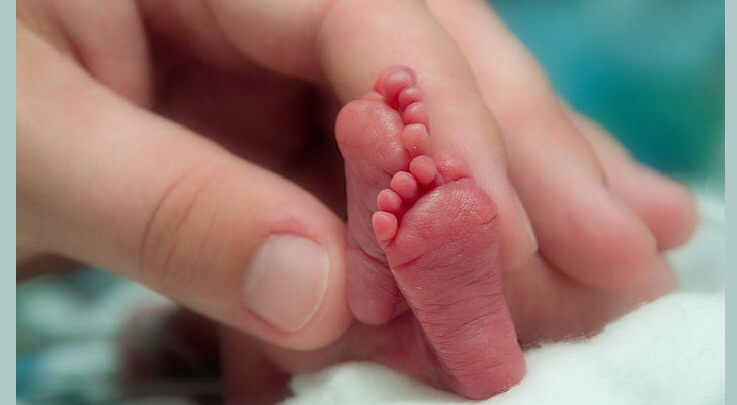
A hug at certain times in our lives can mean much. It says hello, it says I’m pleased to see you. It is an expression of intimacy. It says I love you. It also says I’m there for you. It says I acknowledge your existence, I see you and you’re ok. It transmits understanding and empathy. It says don’t worry. It says you’re safe. It says I understand. And much much more. Physical connection, touch, makes us feel good, emotionally, physiologically and psychologically.

Research has shown hugging has an impact on our health, reducing levels of stress and anxiety, reducing heart rates, cortisol levels, blood pressure. It has also been shown to increase levels of Oxytocin, referred to in some circles as the bonding hormone, raising levels of trust and feelings of security.

Of course, reassurance and affection of this kind, through touch, can also come through holding hands, fingers gently entwining. It can come through a stroke of the arm or face. Even meeting eyes, or exchanging a smile can have similar impact. The hug though, seems to be the ultimate. Its level of connection more total, more of us physically in contact with more of someone else, our bodily cores aligned, as one. It pulls our hearts closer together, so that each feels the other beat. It holds our very being, in that moment. It contains our energy, our life source, which, in that moment before, seems in danger of leaking away.

Maybe you can think of a time when you gave someone that gift?

Maybe you can think of a time when that was what you needed. All you needed.

At that moment, what was that hug worth?

I would suggest, priceless.


boxes, cupboards and life

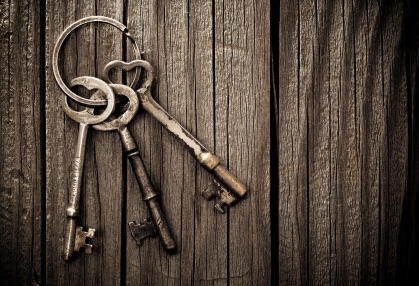
box cupboard key
In relationships there are often routine niggles. I’m sure you have them. A different perspective between you and your partner that crops up from time to time. Never something to truly fall out over, but ever present nonetheless.

At home one of ours is cupboards. I see a cupboard as a filing system. I want to go to it to find something easily. To know where things are and to be able to access them without searching, without moving anything to get to them. My wife sees cupboards as storage depots. For her, it’s somewhere to hide stuff away. The more you can squeeze in the better – because if you can’t see it, it’s tidy. Neither right, neither wrong, just different.

As you might imagine this difference can lead to the occasional fractious ‘conversation’, or pile of stuff on the floor. This happened the other day.

It served to remind me that the motivation or trigger for our behaviour as human beings is often hidden, whilst the storm of the action is all too visible.

It also served to remind me of cupboards, boxes, walls and other ways of hiding things.

In my coaching work I often work with people who use a phrase such as ‘I’ve boxed that away’ or ‘I’ve put that back in the box’. Sometimes there is a whole wall, behind which much can be hidden.

An interesting metaphor – and like our cupboards at home,  is it there so the contents can be found quickly, or there because you want to hide them away? Generally of course it’s the latter. The box often contains hurt or pain. We don’t want to feel it again, so we keep the lid closed.

Often when asked, or sometimes unconsciously volunteered, my client will indicate where the box is. On their left, just behind them, or down to the right at their feet for example. Generally we know where the box is in relationship to our physicality.

A bit like me interacting with our cupboards at home though, something comes along occasionally to unexpectedly open the cupboard and the contents fall out. In an uncontrolled mess.

Cupboards and boxes can be useful. Not when we keep a part of ourselves shut away in them.

If you have a personal box or cupboard, find a way to reorganise it. Very carefully, maybe with someone’s support, open the box or cupboard and sort it out. Throw away some things you no longer need in your life, polish and cherish some parts you do and put them proudly on display, reorganise some other contents and index them differently. Embrace who you are. Your story is just your story. Care for yourself.

Boxes and cupboards can be useful, when used appropriately.


dance like it’s your birthday

Why born
We celebrated a birthday in our family the other week. Some cake, some cards, a few presents. Nothing grand. I’m sure you do the same. Children’s birthdays are often more lavish affairs, as are so called important or landmark birthdays. These were decided by someone, once. 18, 21, 30, 40, 50 etc… I’m sure any of you celebrating some of these would like to have words with that person.

Our date of birth seems to be important. Yet it has a large element of chance. I wasn’t, but I’m sure if you were, born at one minute to, or one minute past midnight, you might wonder at the possible alternative? We are seldom born on the day we were ‘due’.

Yet our somewhat chance date of birth seems to be important. We are often asked for it as a kind of identifier or label as to who we are.

A relative of mine celebrated the wrong birthday for many years, until they were required to extract their birth certificate and realised they were born on a different day. It hadn’t changed who they were.

Many organisations such as banks, insurers, our employers even, use our date of birth as a key identifier of who we are. At my doctor’s surgery you can sign in on arrival using a terminal. The first question is ‘what is your date of birth?’  The system then presents a list of letters – the initials of surnames – presumably those people of that birth date, registered at the surgery or with an appointment that day?

At school we are batch educated, based on our date of birth. If you happen to be born late in August, you will be in one year group. Born a few days later, you will be in another. We even classify people by decade or period – child of the 60’s, generation z…

Yet our date of birth really says very little about who we are. It says no more than our job title does, or our place of residency, or the university we went to, even the name we were given.

Yet ask someone who they are, and this is often where they start.  “I’m Graham, I’m forty three, I’m a taxidermist, I live in Cippenham with my wife and three children. We have two dogs.” Labels, just like a date of birth, we use to describe who we are.

Try this.  Ask ‘Graham’ again. “Yes and who are you Graham?”  This time you might get something like ‘I’m a family man and I love nature and the beauty of the natural world around us’.

Repeat again. It takes time, but gradually you may find out about ‘Graham’. What matters to him, what he values, what he believes in, his motivations, his dreams and much much more. You might find out who he is.

One of my favourite quotes is by Mark Twain

The two most important days in your life are the day you are born and the day you find out why

What if we celebrated that second day, not the first? Cake and party poppers for something more significant, more real, more impactful on our lives?

It seems to me that requires more celebration. Finding your reason for being, finding out who you are, is to be rejoiced over. Far more than the incidental day you began to breathe.


all the same, uniquely different

Uniquely different
I have recently been meeting someone with dyslexia.

At the time of our first meeting, they had only told a handful of people in the world. We have now spoken four or five times and I have noticed some things on the journey.

There is a strong desire not to be treated differently, not to be marked out in some way as needing help. With that comes a fear of judgement. As if by being seen, belonging will be denied – a kind of ostracism from normality, from humanity.

We have researched the number of people in society with dyslexia. I have spoken to them about the idea of neurodiversity. Still belonging … to the rich soup of humanity. After all, who is to say what is ‘right’, just the majority?

Recently they confided to me of a plan to tell some colleagues at their place of work. A huge step. Taking the number of people who would know, almost to double figures. Afterwards, we met and I asked how it went.

In the conversation they had given examples to their team of how to get the best out of them and some things not to do – for example, don’t give me a fifteen page document to read in the next hour.

I was struck again by their world view that this was just them, needing a special way of interacting. Almost apologetic.

I pointed out we all have preferences for working, for relationships. How another person’s words, actions, behaviours can either encourage us, inspire us, make us feel comfortable or enable us to be at our best. Equally words, actions behaviours can have an opposite effect.

I, for example, struggle when I’m not given, or allowed to find, a reason for something – a purpose, a bigger connection. Also, if someone asks me to do something and then tells me how to do it – I get frustrated, angry even, which them obstructs me from being at my best.

My dyslexic friend seemed surprised, but somehow relieved.

It’s a strange phenomena to me that we still find it hard to just say – this is me, this is how I work, this is what I need. Instead we follow a path of assumption, of judgement, of misinterpretation, of struggle.

We’re all the same, just uniquely different.

Digital art by BuestRose

we like to be seen, but from a distance

see me
How many people do you know?

How many of those do you see, really see?
How many do you allow to really see you?

I’m not talking about visiting, or noticing your new top or knowing how you take your coffee, I’m referring to a deep empathy, a real connection, a knowing so profound it is almost as if they are you, or you are them.

I use the term ‘see’ as a collective here. For some, the term ‘see’ will work. Experiment with alternatives for yourself. How many people really hear you? How many utterly feel you? How many truly get you? How many wholly understand you? How many do all of those things?

It seems we have a deep desire to be seen, to be understood, to be heard. We need to be acknowledged in a human way. Yet to be acknowledged in that total way, can be so desperately intimate.

Intimacy of that sort scares us.

Sometimes the person who gets that close sees more of us than we can see for ourselves.

So we employ tactics to keep ourselves safe, sometimes conscious tactics, but much more often, we employ tactics out of our conscious awareness. Games if you like. Games with ourselves and with those around us. We tease. Here’s a little bit of me, come closer if you dare, come closer if you care. If they do, we often push them away again. That way, we can tell ourselves they don’t really care, or we can shield our vulnerability. If we are the one being being invited in, sometimes that intimacy is too scary too, so we deflect, we joke, we talk about us, we change the subject.

When the invitation is extended, often subtly, often in a fleeting moment, often out of conscious choice … all it takes is to be present. To stand in the moment. If they attempt a game-play or to move away, gently and respectfully, hold them in that moment. Witness their truth. Rather than turn away in a kind of counter game-play, say “I see you (and you’re OK)”, not aloud, but through your presence, your very being. Hold them, carefully, whilst they witness their own truth.

That’s acknowledgement.
That’s seeing them.
That’s deeply human.

to run or not to run…?

tube run steve
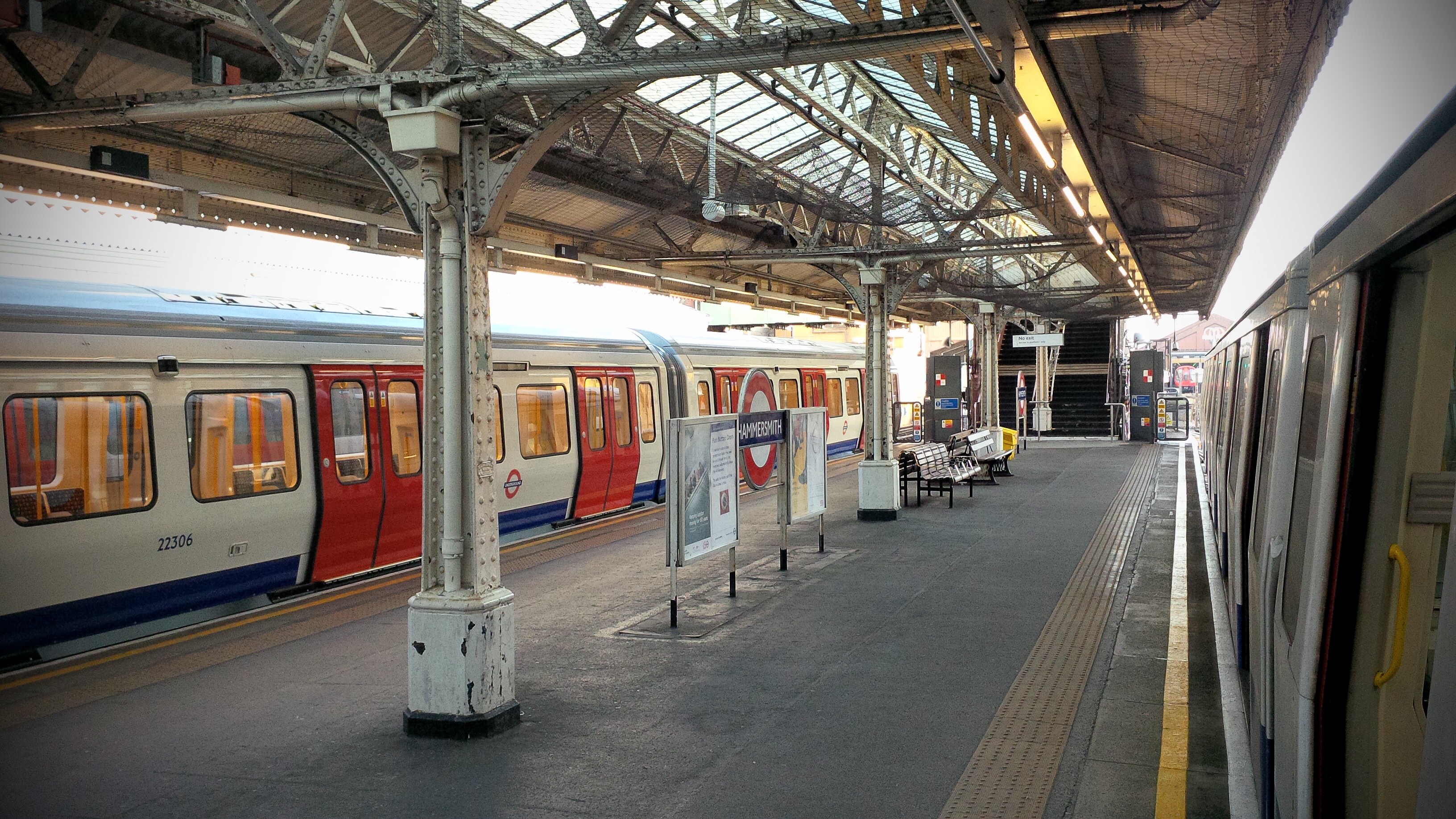
The other week I posted something about my NLP training in Hammersmith and the coffee experience. I attended the training with a friend, and at the end of each day we would go to the tube station – the Hammersmith and City line rather than the Piccadilly. It’s a terminus, so trains are usually ready in the station, waiting patiently at a platform for their fresh cargo.

Each and every day we would stroll up to the ticket barrier, move through and see the display board signalling which platform the next train departed from. Most days there would be a train at that platform.

Then something strange would happen.

My friend would quicken his pace and often break into a run. Sometimes a sprint. I would be left to saunter down the platform and find him in his chosen carriage.

After a few experiences of this we began to ‘unpack’ these two contrasting behaviours. Initially I mocked him, because I had never missed the train, but we were curious about what lay deeper in this behaviour.

There was superficial evidence that might support certain theories. My friend was a runner. He ran for pleasure regularly. I did not. He was, and probably still is, much fitter than me – so he had more capability to behave that way and running was a familiar activity. Typically I don’t run for anything.

At a deeper level though, time isn’t important to me. So the possibility of missing a train wasn’t a significant issue, but more than that, it presented an opportunity. I would have time to watch the world and the people in it. I would have time to sit quietly and ‘be’. My friend’s map of the world was different – he had many things to do, things to get done, so missing a train would deny him possibilities.

We still see this pattern today, not with trains, but elsewhere. He tries to fit a lot into his life. I’m more content to see what life offers in this moment.

There will of course be more depth, more detail in explaining our run/saunter behaviour at Hammersmith, but the joy is discovering that.

So be curious about what you do … every little thing, from choosing what to eat for lunch, to buying new shoes, to how you plan your weekend or even how you live your life.

It’s not about running or not running. It’s about knowing or not knowing.

If you don’t take time to know yourself, who else is going to?

how do you know your truth?

feeling, body
I’ve recently been noticing how hard we find it to stay with a feeling.

It seems we are conditioned to move away from the somatic expression of our truth, to rationalise and explain it away, or to deflect it for fear of it consuming us.

I was in a meeting recently. The conversation bounced around, at times becoming heated, at times lost, at times held too tightly. I noticed an energy change several times. So I called it out.

“What are you feeling now here in this moment?” I asked.

The desire to go cognitive was overwhelming. People used a word, such as anxious, but then lost themselves in an explanation of why, what they were going to do; masks and deflections from staying with the feeling.

There is a deep knowing that comes from the way your body expresses itself and yet we find that hard to be with sometimes.

I am reminded of a quote from somewhere…

Your body is the only part of you that is ever truly present

Trust what your body is saying. Give it time and the same space as your head. It has just as much to say.


is it vital to be alive?

alive vitality

Take a moment to reflect on your year so far.

On what occasion, in what scenario, did you feel most alive?

I mean truly alive. Alive in a whole body way. Physically and emotionally buzzing, an energy coursing through you like you were plugged in.

Maybe you achieved a work goal, maybe you experienced an adrenalin rush on your first parachute jump, maybe you were walking alone in the forest at dawn, maybe you had a deep realisation about yourself, maybe you completed your first ever triathlon and felt on top of the world, maybe you presented to a group something important to you and won them over, maybe you had a tender moment of love with someone close to you…

Vitality.

If you can’t find something. Go further back. Look for it like it’s a pot of gold at the end of the rainbow. Seek it tirelessly. If you can’t find a single experience, look to understand components, smaller parts that provide clues to where your vitality rests, then build, add, try, experiment.

Maybe you find it easier to locate the opposite? A sense of fatigue, of being drained, of a kind of deadness? Somehow we have become conditioned to notice this more. The drudge of the commute, the dull but necessary task, the unfulfilled aspiration, the tiresome social gathering…

It’s a useful exercise to list down how you spend your time and then reflect on what nourishes you and what depletes you. Simply getting better balance in your life will improve your state of mind, your sense of happiness or fulfilment, your well-being – swap some draining activities for ones that inspire you, lift you, nourish you.

But more than that, be curious about the nature of that nourishment. Score them. Look at ones that deliver most. Why is that? What properties do they have that align with who you are, what matters to you, what gives you pleasure, what gives you meaning and purpose?

Here lie clues to that vital experience, that vitality, that sense of aliveness experienced in a whole body way – psychologically, emotionally, physically

Never stop looking. It’s vital.

You think you are alive because you breathe air?  Shame on you, that you are alive in such a limited way

Rumi

what does the map say?

constellation map
If you have a family, you may have heard yourself say something like this…?

“My brother looks to his eldest sister…”
or
“Our daughter is closer to her mum…”
or
“There’s always been distance between me and my brother…”
or
“There was a time when we were close…”

This language seems to suggest that we have an unconscious map inside, not only of the relative proximity of ourselves to other family members, but also their distances and orientations to each other; almost a sense of who is looking which way, where their attention is drawn, where they ‘stand’.

These maps would appear to be deep in our subconscious and in some way describe ‘what is’. They represent a form of truth.

The maps exist in our organisational worlds too. Individuals, teams, departments, functions, divisions can all have hidden relationship maps. Connections that can also exist through time – loyalties and ‘closeness’ to predecessors, founders, old colleagues lost through the last ‘organisational transformation’.

As with families, these maps inform behaviours, present and absent, they provide clues to broken connections, hidden loyalties, deep stuckness.

If you’re feeling stuck and have tried to logically find a way forward, try a different approach to finding a way out.

Build a map.

Decide the context and use a space on your desk to represent it – maybe it’s team dynamics, or the relationship with a colleague, or why the project doesn’t move forward?

Now find something to represent the most important parts. Any object will do, you just need to be able to indicate orientation (where attention is drawn). I sometimes use those little UHT milk jiggers. Place the most significant representative piece. Often this might represent you.

Where are you in this system, and where are you ‘looking’? Take some time to notice this – what does it feel like, what’s true, what’s new to you?

Now place the next most important piece of the map. Trust your instinct, don’t over think. Again take time to notice this piece’s relationship to you, where its attention is drawn. What does this feel like? What’s true? What do you notice?

Build the map slowly. Take time to acknowledge what is, don’t rush to make changes.

This approach is a method related to systemic constellations – a technique for exploring the truth of relationship systems. It was developed from family therapy and is now used in coaching and organisational development.

I recommend some research and a great book by John Whittington, who you can find here
http://www.coachingconstellations.com

Meanwhile, stay curious about your relationship maps and this hidden truth in your subconscious.