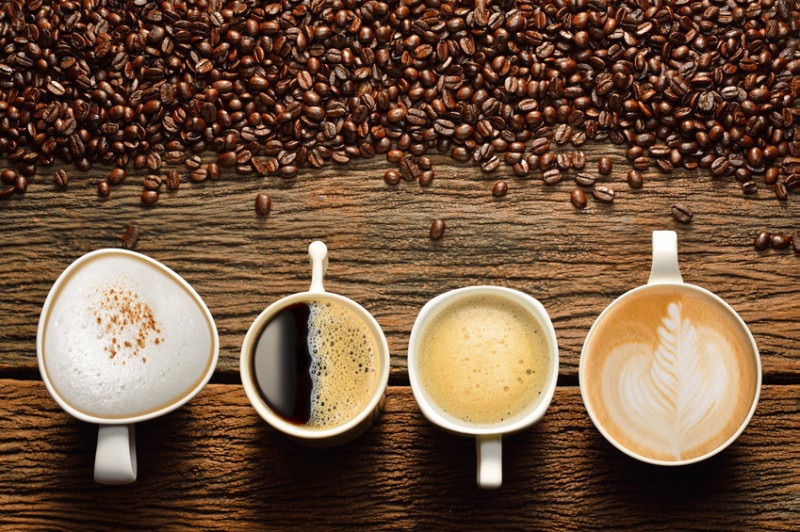
the true meaning of coffee …

beliefs change
Many years ago I trained as a master practitioner in Neuro Linguistic Programming. I trained with a friend.

The training was near Hammersmith in London and at the beginning of each day we would go for a cappuccino and a bacon sandwich at a little Turkish coffee shop nearby. Although the training modules were several months apart, on seeing us enter at the beginning of a new module the owner would always recall our order – one sandwich on white, one brown, one without butter etc.

That coffee shop has sadly gone now, but that experience still anchors me to that time of learning, and I doubt the owner and his cheery waitress have any knowledge of how much that stays in my memory.

It serves to remind me that interactions between human beings can sometimes have more importance than their seemingly ‘low level’ content might suggest; they can carry more meaning than those involved at the time might ever realise; the spoken word or behaviour may have a completely different result or impact to that intended at the time – indeed one NLP presupposition is that the meaning of the communication is the result it elicits, not necessarily the one the giver intended.

Every day, all day, we give out communication, consciously and unconsciously. Everyone we meet takes their own meaning from that, even if several people experience the same ‘message’, each will create their own meaning.

In our early years, much of this gives rise to our beliefs about the world. Some of that serves us well in later life. Some does not.

The parent with the adolescent child, studying for their exams, will doubtless have the best intention to support them. Comments such as ‘never mind, you did your best’ or ‘all you can do is try’, have positive intentions. Yet I have seen such people in the middle of their lives, still running a belief that ‘I’m not good enough’ or ‘I have to work hard’ or even a more complex belief such as ‘If I don’t succeed nobody will love me’.

Spoiler alert: you probably believed in Father Christmas when you were small. Your parents span the yarn. It served you to believe – you got toys, chocolate, the excitement of presents to unwrap, and as a child that’s desirable. My guess is most of you no longer believe in Father Christmas.

The meaning we take at one point in our lives doesn’t have to be the meaning we live with. Trying hard when you’re 15 might be useful – please a parent, pass an exam. Trying hard later in life, when your work life balance is out of kilter, or when you’re in a job you loathe, or when you’re burning out through effort, or when you just want your boss to notice you, isn’t necessarily so helpful.

The barista can make many coffees.

You have a choice whether yours will always be the same.

if you think you think, think again…

Chocolate behaviour

We are at the top of the food chain. Our ability to think, to cognitively assess, decide and act is unparalleled.

Or is it?

Yesterday afternoon I ate a large chocolate bar.
I wasn’t hungry. I know it’s not good for my waistline. Only the other day I was reading about the hidden threat of too much sugar in our diet. I had a banana on my desk, which, despite its curvaceous yellow appeal, remained ignored.

Human behavior is complex and rarely, if ever, purely rational. In fact our rational internal dialogue almost always loses out to a deeper, hidden, irrational, impulsive, unconscious drive to act.

But, behavior doesn’t happen by chance or out of the blue. It has a structure – trigger, behaviour, reward. In one real sense we are machines: input, action, output. Mechanistic rather than thinking.

Behaviour can be conscious or subconscious, mental or physical, learned or inherited, voluntary or involuntary… some behaviour is genetically and biologically underpinned – we all withdraw our hand from the hot saucepan handle, from pain, without thinking. Some behaviour is influenced by social and cultural norms. Some by persuasion or even coercion.

That doesn’t however explain my chocolate addiction.
Nor does it explain much of our behaviour day to day.

I’m not genetically coded, socially expected or forced to curse that driver sat in the middle lane of the motorway. Nor to stop working on what I should be doing to do something more interesting. Nor to be late for that meeting. Nor to run for the bus. Nor to buy those trousers I don’t need.

No, these behaviours are motivated internally, by our beliefs, values and biases. By hidden patterns developed and evolved by our life story.

I regularly curse middle lane drivers. I’ve examined this behaviour closely. It’s not that I’m a stickler for the Highway Code – I confess I don’t always follow it. It’s not that I’m in the habit of moaning at people. It’s not that I’m often late and they’re simply in my way. For me, it’s because they aren’t honouring, recognising, making space for a fellow human being. They’re self absorbed. That value drives other behaviours in me; some I’m not proud of and that just happen before I can rationally think. So the unfortunate motorist is merely the trigger. My reward is I can honour a personal value – yet the irony of my own behaviour contradicting that very value is not lost on me and therein lies another behaviour puzzle. What remains true is that in that moment, the behaviour is unthinking, subconscious, mechanistic, programmed … out of my control.

Or is it?

You see, consciously understanding my internal motivation, beliefs, values and world map gives me choice. Noticing the triggers and the rewards of my behaviour gives me choice. So be curious about you.

If you think you think, think again…


have you noticed who has control?

eye_earth


I am me.

In all the world, there is no one else exactly like me.
Everything that comes out of me is authentically mine, because I alone chose it – I own everything about me: my body, my feelings, my mouth, my voice, all my actions, whether they be to others or to myself. I own my fantasies, my dreams, my hopes, my fears. I own my triumphs and successes, all my failures and mistakes.

Because I own all of me, I can become intimately acquainted with me. By so doing, I can love me and be friendly with all my parts. I know there are aspects about myself that puzzle me, and other aspects that I do not know – but as long as I am friendly and loving to myself, I can courageously and hopefully look for solutions to the puzzles and ways to find out more about me.

However I look and sound, whatever I say and do, and whatever I think and feel at a given moment in time is authentically me. If later some parts of how I looked, sounded, thought, and felt turn out to be unfitting, I can discard that which is unfitting, keep the rest, and invent something new for that which I discarded.

I can see, hear, feel, think, say, and do.
I have the tools to survive, to be close to others, to be productive, and to make sense and order out of the world of people and things outside of me.
I own me, and therefore, I can engineer me.
I am me, and I am Okay.

A declaration of self esteem
Virginia Satir

is train travel a metaphor for life?

train signal
My train was delayed the other morning because of signalling problems. If you travel by train they are an ever present fact of life.

The delays gave me time to ponder. Even if you don’t commute by train, signalling problems will be ever present in your life too.  Human signalling problems.

That look …
That sigh …
She hasn’t answered my email …
He’s late again …
Those tattoos …
That outfit …
She smiled …
He’s quiet …
My stomach is churning …

If only life’s signals were as simple as red, amber, green. Stop and go. But in life we interpret the signal. Often incorrectly. Very often.

And the misreading of them, accounts for many of our train crashes, in relationships … with others and with ourselves.

That look means I got it wrong, again
That sigh just proves to me that I’m a boring person
She hasn’t answered my email so she doesn’t care
He’s late again so I don’t matter
Those tattoos mean he’s a thug
That outfit says everything about her
She smiled so she likes me
He’s quiet because he doesn’t agree
My stomach is churning because, again, I’m not good enough

Signals on the train network are there to keep us safe and ironically so are life’s signals.

Our interpretation of the signals allow our beliefs about ourselves and our beliefs about the world around us to remain true. In doing so they keep us safe. They also permit judgement of others and in this way we can attribute our pain and discomfort to them and know we are OK.

Sometimes train signals might serve us better in life. Clear and incontrovertible. No interpretation needed. But then we wouldn’t be human.

So how to avoid the train crash?

What if we just noticed?
What if we communicated?
What if we asked what that signal meant and listened to the reply?
What if we explained how we felt at that moment?
What if we were just curious and had the humanity to have an honest conversation instead of judging and interpreting?

I suspect our relationships would be better – mostly our relationship with ourselves.

Travel well on life’s train journey.

the search for connection and the fear of rejection

connection
A core human need is for connection. Connection to others.  We seek it in many ways.  Soul mates, lovers, friends, family, community …

Another dimension to connection is belonging. We seek to belong, to groups of ‘like-minded’ people, to social groups, ethnic and religious groups, groups of nationality, to teams at work, family and friend groups, communities based around our hobbies and pastimes as well as those where we live. I’m seeking connection in writing this.

Sometimes connection and belonging needs can be met by something as simple as acknowledgement by another. Acknowledgement that we exist. A look, a smile. This affirms our connection to the human race. To be acknowledged by another human being is very precious.

Yet there is a dark side to this search for connection and belonging.  Fear.

Psychologists tell us that fear is adaptive. That it helps us survive. I’ve heard it said we are born with only two fears – the fear of falling and the fear of loud startling sounds – both in service of our survival. I don’t know if that is true.

I have seen fear though.  I have felt it myself.

The fear I see often in my work as a coach and working with the organisational system is the fear of NOT belonging. The dark side of the need for connection and belonging.

This fear stops us speaking up in that meeting for fear of being judged, for fear of being wrong. It stops us talking about our confidence dip or the worries on our mind, for fear of being judged by our boss or our peers. It stops us being who we are, because we’re a little different, unique, special; but that very uniqueness, that ‘not like others’, means we might be rejected. Rejected from the community. So we seek to conform. Because we believe conformity brings connection.

Yet.  Here’s the thing …

When someone you know, tells you their deepest concern, shows their true vulnerability, turns up as their authentic self, how often do you see pure courage?  How often do you reach out and offer support?

Show yourself some compassion and tell your story.  Share your fear. Be who you are. You might find it liberating. You might find it brings you real connection and a stronger sense of belonging than you’ve ever felt.

what if people could hear your thoughts?

Inside me
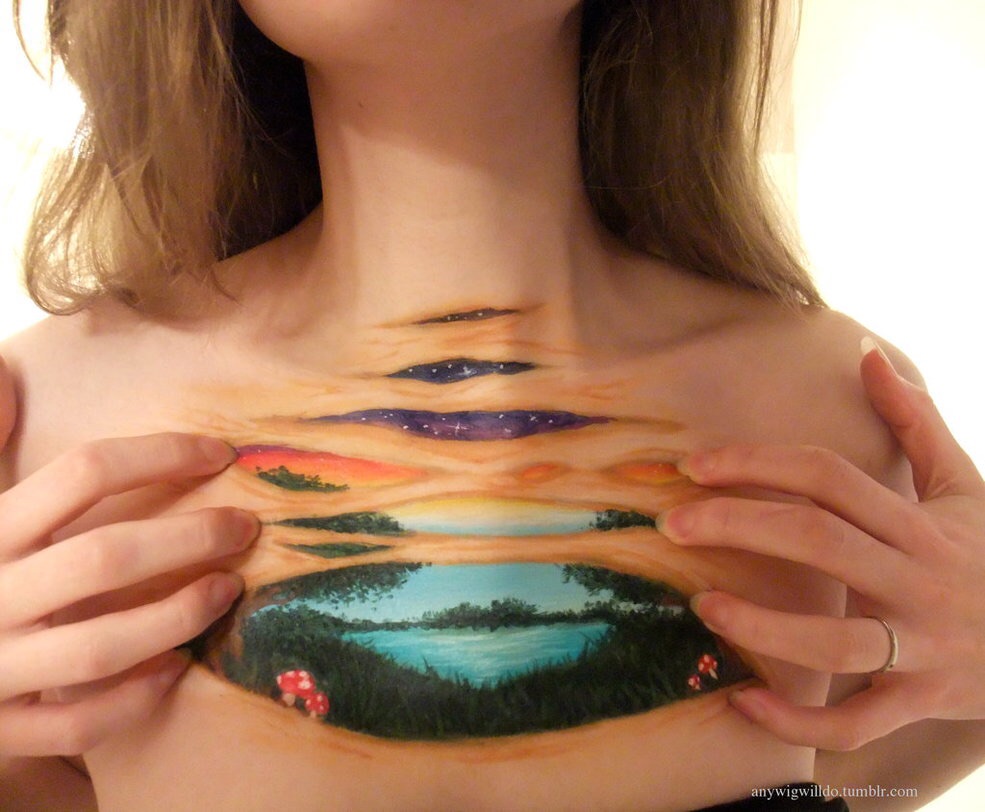
What if the world was inside out?

Mostly our world is three dimensional.
An outside. A visible shape. An unseen interior.

I watched a young tree the other day blowing in the wind. I could see the sinewy branches dancing to the wind’s tune, waving in a frenetic chorus of communication. I could hear the wind rustling its leaves in an excited chatter. I could observe the trunk bending; flexing to ensure its very survival.

Yet I can’t see inside the tree. The stresses at a cellular level. Damage that might emerge later in life, with a fallen branch or twisted growth. I can’t see the break and heal process as leaves are stolen away by the wind.

Human beings are like this too.

What if the world were inside out?

What if I didn’t see the face you presented; the smile that cloaked the pain? Didn’t hear the words you spoke; the “I’m fine” you mask yourself with? Didn’t notice your visible actions, gestures and behaviours that consciously communicate a message, to unconsciously hide what you really need to say?

If the world were inside out, I might hear your thoughts rather than the words you say, feel your emotions rather than hear your label for them, experience your doubt, marvel in your strength, be transfixed by your beauty, know your vulnerability?

What if I could hear, see and feel your inner truth?

How would it be different?
How would I be different?
How would you be different?

Coming to the world as yourself, as an authentic version of you, requires huge courage and vulnerability. It demands you show a little more of your inside on the outside.

Image of body art by: Pastel-AI

what does the dust jacket of your life say?

Life in your hands
When we buy a book something draws us in. Maybe the author, maybe the characters, maybe the plot, maybe the picture or strap line on the front, maybe the synopsis on the back of the dust jacket?

If your life was a book, what would the dust jacket say?

Our life story is in every sense just that … a story. With a beginning, middle and end. Complex relationships between the characters, plots that twist and turn, some with jaw dropping surprise, some with addictive page turning attention. Sub plots that weave a tangled web of every emotion.

Yet we are the author, not just the actor.

We have choice. We can guide the story to fit the character and evolve the character through the experience of the story.

As authors, we can paint the picture of our lead character. Their background, context, journey. We can afford them the interactions, relationships, challenges and successes we choose. These build depth and richness and create a bond with the reader.

As authors we can also create the plot. Like any well crafted novel, we can know where the story takes us. How each part builds to the whole. We can decide the ending. We can give the story a purpose. We can draw the reader in, engage them, delight them, surprise them.

Life is like this.

Purpose and meaning provide a context for who we are – the reason for our story, the reason we are here. Our sense of self, our origins, our futures, what we value, how we behave, how we come to the world and our map of that world – these things shape us as a human being in this narrative of humanity.

So what does it say on your dust jacket?

Is the story the life you want?
Are you even in your own story, or are you simply playing a bit part?
Have you got a sense of where the plot is going?

If not, there are still chapters to be written.

Change it.

when did you last see someone, really see them?

“Some people put walls up, not to keep people out, but to see who cares enough to knock them down”

Socrates

So, care.
Reach out.
Be curious.
Notice someone today. Really notice.
See them. Really see them.
You might be surprised.
They might see you too.
We all want to connect.
To be seen, for who we really are.

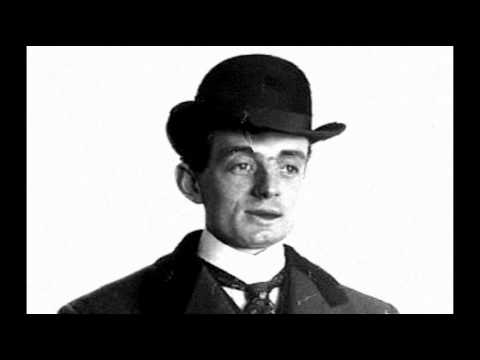
do you know the man in the bowler hat?

maninbowlerhat

I am the unnoticed, the unnoticeable man;
The man who sat on your right in the morning train
The man who looked through like a windowpane
The man who was the colour of the carriage, the colour of the mounting
morning pipe smoke.

I am the man too busy with a living to live
Too hurried and worried to see and smell and touch
The man who is patient too long and obeys too much
And wishes too softly and seldom.
I am the man they call the nation’s backbone,
Who am boneless – playable catgut, pliable clay
The Man they label Little, lest one day
I dare to grow.

I am the rails on which the moment passes,
The megaphone for many words and voices
I am the graph diagram,
Composite face.

I am the led, the easily-fed,
The tool, the not-quite-fool,
The would-be-safe-and-sound,
The uncomplaining, bound,
The dust fine-ground,
Stone-for-a-statue, wave worn pebble-round

A.S.J. Tessimond

how are you spending your life … literally

spending time
If you were given £750,000 the day you were born, and knew that was all you would ever get, how would your choices be different?

At home the other week, we were discussing changing our carpets upstairs. I’m sure you have such conversations in your lives too … can we afford to replace the car, should we re-do the bathrooms, where shall we go on holiday this year, can I afford that training course I’d love to do?

Often a factor in such conversations is money and a choice about what we can afford. We play one thing off against another. Money is a currency we understand.  It gives us choices, informs our priorities.  We strive to acquire more, so that we can have more choice.  But what if there was a finite sum?

Time is a currency too.

The offer of £750,000 reflected the fact that most of us, living a full life into our mid 80s, will have around 750,000 hours on this planet. You can’t buy or earn any more.

Yet time, we fritter away with less conscious attention than a handful of small change.

We allow others to spend it for us.  Especially in work.  I’m required to be in that meeting. I need to travel to Glasgow. I have to finish that report this week-end. I must spend a few hours this evening getting on top of my email…

Even worse, we do this with our energy.

Our lives become dominated by things that not only eat into our time on this earth, but also which drain us of our energy.

That dull meeting you wish you weren’t in. The hours commuting. The dinner party with the couple you don’t really like. The hours in the gym you hate, but tell yourself you ought to do. The tedious job you wish was different.

Meanwhile, the simple things in life that energise us, we find less time for. Reading a book. Playing with the children. Enjoying an amazing view. That hour of yoga. Baking some bread.

You have around 750,000 hours in your life. It’s your choice how you spend it. Spend more of it on the things that inspire you and less on the things that are other people’s choices or that allow your energy, your very life essence, to leak away.

photo credit: BramstonePhotography via photopin cc