stuck in the tunnel of life

stuck tunnel life
My tube train stopped today at Edgware Road. The driver informed us that we would be held there for a while. There was a problem with the train in front.

It got me thinking. If a train becomes completely immovable, what happens then? The tunnel, the only route forward, is blocked. I guess we would all decamp and be forced to exit the platform, leave the station and find another way to our destination. Or I guess we could wait. Wait for life, for someone else to remove the blockage so that we can continue on our chosen path.

It struck me that in the event that this happened, we would just cope. Sure we might moan that we’ll be late, gripe about the cost of tickets and the poor service, worry that we don’t know how to get to our destination, but we would find a way. We would move on. Yet in life we often get stuck and stay stuck. Unable to see another path, we become disabled.

Of course London Underground would probably have staff available. Advice would be on hand. Guidance about how to get to our destination. Failing that, we would simply surface and surf. The Internet would tell us what to do.

Life isn’t like that. Even if people are around to listen or to give advice, our life situation is more complex, more individual, more unique, than the tube journey. The Internet doesn’t offer solutions to complicated life problems, riddled with feelings, entwined with complexities of relationship, weighed down with challenges of expectation, paralysed with the fear of coming up short in some way.

As fellow human beings, we seem hopelessly ill equipped to support each other, even if we were minded to.

Maybe this is the Internet we really need?

making meaning from now

making meaning from now
The concept of ‘now’ intrigues me.

I have always considered myself someone who is very present, in the moment, in the ‘now’. But reading something in a book by Steve Chapman the other day, gave me a different language to describe it. This is what I took from what I read…

Time as we know it, is a social construction, a human invention, something that over many centuries we have honed and agreed universally as a good way of orienting ourselves to movements of the solar system, and to getting to our next meeting on time!

The most obvious ever-present reminders of the concept of time, are the clock and the calendar.  These have developed over centuries from lunar calendars to solar calendars, sundials etc… to, I guess, the i-watch.

This clock time, or chronos time – the on going perpetual march of seconds, minutes, hours – ticks away on our watches, clocks and electronic systems all over the world.

Daniel Stern argues that if chronos time were real, then the moment of ‘now’ would be so fleeting that we would never be able to dwell on it long enough to make meaning of the experience.  We would in effect be goldfish, with each ‘now’ moment lasting +/- one second; the unit of chronos.

The Greek concept of kairos offers an alternative perspective. Kairos is a moment of indeterminate time in which everything happens. While chronos is quantitative, kairos has a qualitative, permanent nature. In kairos there are no seconds, minutes, hours, just the idea that kairos time is a passing moment of consciousness, in which something happens that offers us new meaning in our experience.

The author of my book summarises the two like this…

chronos time is a concept informed by clocks
kairos time is a concept informed by meaning

What would happen in organisations if we abandoned chronos time and just interacted, communicating, learning, until a new collective meaning emerged?

Meetings wouldn’t have agenda items with start and end points, but each item would be explored until collective new meaning emerged. Some agenda items might take five minutes, some items ten times as long.

Of course for this to work, people need to be open to learning, open to having generative conversations, open to enquiry with others as to where collective meaning existed, or was lacking.  People would need to be very present in this ‘moment of meaning making’. No longer slaves to chronos time, people would interact throughout the day until sufficient meaning had emerged for individuals to move forward, for the business to move forward.

In such a kairos informed culture I wonder if this would make us more curious, more exploratory, more accepting of alternative viewpoints and enable us to both seek meaning in our work and in our lives? It might also free us to play with our creative spirit.

What would happen if we lived our lives to kairos time? Not just at work, but all our experiences?

Even as you read this, you may be seeking to find new meaning for you?

Welcome to kairos 🙂

needs and wants, wants and needs

want need
Waiting in for a plumber. I’m not good at waiting for someone. Deliveries, tradesmen etc. My choice is removed. I’m in their control.

I want to get out.

I need to wait though. We may have a leak. A telltale little brown patch has appeared on a ceiling.

I should wait. The leak could get worse. Despite this more sensible course of action, I’m still drawn to go out. Nowhere special, just to have the freedom to decide. It’s the freedom I want. The expert opinion I probably need.

The tension between what we want and what we need is intriguing. Are needs more powerful than wants? Are needs more fundamental to our sense of self and our wellbeing? Certainly needing shelter, water, food would seem to be basic needs. Yet wanting something can be a pretty strong draw too. Wanting to move, wanting freedom, growth, learning, progression, choice. These too are powerful motivators.

Refugees and economic migrants pouring into Europe seem to demonstrate the power of wanting a better life for your family. Wanting opportunity. Wanting freedom. Or is the migration need driven? The need for safety, for security?

I wonder if our modern world has confused the two? Do I need a new phone, or do I simply want one? Do I want a hug, or are there times I absolutely need one?

Do we know the difference any more? The difference between a need and a want? How the difference motivates our thinking? Which has more feeling? Which trumps the other? Which do we value more? The things we want and have, or the things we need and have?

Are the words interchangeable, or is it some other orientation in our lives that motivates us to prefer one word over the other? Do independent people have a penchant for wanting things? Is wanting essentially selfish? Wanting something certainly implies choice, preference. Needing something suggests less choice. It suggests necessity.

But is it the same for us all? Is there a common thread to our humanity? Or is this a more personal matter?

Maybe you want to know? Or need to? Maybe you don’t? Understanding that which motivates us would seem to be useful though? How your choice of language impacts your thinking, your emotions, your behaviours?

the need for consonants

consonants fully present
In the sunshine at Leyton Orient today.

Half time and my team are 1-0 up.

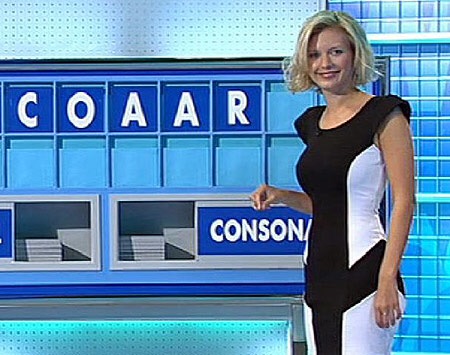
We have been singing ‘Barmy Army’. All except one. His contribution seems to be ar-eee ar-eee. For ‘Blue Army’, it’s ooo-ar-eee.

It works though. Lost in the crowd. It adds to the noise and would seem to be quite economical. No need to waste consonants. No need to use facial muscle to form lips, mouth and jowel to enunciate all the suggested letters and sounds.

Where else can we be economical and still fit in? Save energy and still be part of the team? Go through the motions but still add something?

At work, at home, with friends, with colleagues, in relationships…?

Maybe at times we all do that?

Maybe we signal agreement, dissent, act as if we are together, pulling as one, but our commitment is only partial. Without consonants perhaps? Partially present, noisy, but somehow incomplete?

hello, hello, can you hear me?

now communication
“Hello, hello. Can you hear me?” the man says.

He removes the mobile telephone from his ear and looks wistfully at its display. Shrugs, and places it alongside the other phone and his tablet, laid expectantly on the train table in front of him.

Three communication devices and ironically he can’t.

Of course when that happens to us, we play that guessing game. Should I call them back, or wait a few moments in case they’re already dialling?

The desire to connect immediately is new to humanity.

I’ve never had a postal service representative knock on my door and say, ‘sorry, a colleague just tried to deliver your letter to Grace in Hull and she’s out.’ Nor do I feel the need to follow up my letter to Grace with another, sent next post, saying, ‘did you get my previous letter?’

We never needed phrases such as ‘offline’ or ‘out of office’ when communication simply involved speaking, reading or writing. People were either there in front of you, or they were left to choose when to digest your message. Without pressure. In their own time. No expectation.

A book doesn’t have sentences at the foot of the page such as ‘any questions so far?’ or ‘don’t turn the page if you haven’t followed the plot to date.’ Nor does it urge us to read the entire novel in one go.

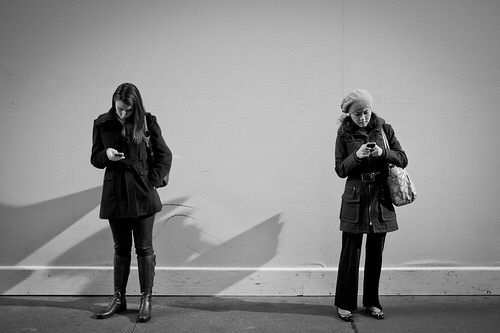
Yet I’ve heard people say they struggle with Twitter because they don’t have enough time to read everything. Hours are spent thumbing the Facebook feed on our touch screen ever upwards, pausing briefly to look at Erin’s new pony, or read Graham’s latest holiday itinerary, or watch the video clip that one second earlier you didn’t even know existed, let alone that you needed to watch it, now.

Hello, I’m here now, tell me everything now. Don’t let me miss out on anything now.

The man opposite waits. Surely someone wants him?

where are the confused people?

confused angry emotion
You know that exercise we do after conferences or meetings, where before we check out the facilitator says, “Let’s do a temperature check”. “Let’s go around the room. Everyone sum up how they are feeling in one word”.

They’re asking because we’ve just been told something and we might be having an emotional reaction to it.

How many synonyms are there for thoughtful?
Reflective, pensive, contemplative, pondering …

How many synonyms are there for open minded?
Curious, wondering, intrigued, anticipating …

These are neutral. We can’t be challenged on them. They’re to be expected almost. We’ve just been told some new information, something is changing, why wouldn’t we be thinking about this new information and why wouldn’t we be open to what we’re being told is to be the new reality anyway?

I wonder though…

Where are the confused people?
Where are the angry people?
Where are the scared people?
Where are the resentful people?
Where are the lost people?

Our language for emotions in organisations is woefully lacking and our ability to connect with and honour our personal truth, in such a public forum, is so hard to reach.

problem or opportunity?

towards away from
Interesting that some of us are stuck unless we can ask and answer the question “What’s the problem we need to fix?”

For others, the question is “What’s possible?”

It seems some of us need to know what we need to resolve, to put right. The weakness or failing of what exists now. This motivates us to move to change. To move away from the problems and challenges of now. To fix things.

Others are motivated by possibility. By opportunity. What could we achieve? What dream, goal, target, objective can we move towards? The possibility motivates us to change. Sometimes we have no sight of the actual goal, it’s the possibility there might be possibilities that motivates and excites us.

What’s your pattern? How open are you to another perspective? How disabled are you if those around you have a different perspective?

how does your inner self see you?

self image
I’ve just followed a chap wearing a trilby and a waistcoat.

In my head, that would be me.

I’m not a sweater man.

I would have a funky moustache with those little waxed twirled ends. A cool haircut, as befits the younger me (I’m not sure I know what a cool haircut is, but I’d have one). Maybe some sunglasses, but only in the summer.

My clothes would be strong colours. No patterns. Just blocks of orange, yellow, green, cyan etc. No red, it’s not me.

Stylish shoes. Expensive. Well made.

I’m an individual.

I have a few of these things in my current ‘me’, but I wonder why not more? Why is my inner sense of me and my image different from that I show outwardly? I suspect it’s about judgement. Judgement of myself.

I wonder what it would be like to lose that judgement and to let the real me out?

What does your inner sense of you look like?

What would it be like to let it free?

important safety information

safety
Monday morning and the train journey.

I find myself gazing at a notice. Important safety information.

The notice tells me ‘These instructions are provided for your safety in the event of an emergency’. It continues by reassuring me that if there is no immediate danger, I should await instructions from onboard staff.

Where are my safety instructions for life? For living?

When I feel unsafe, there is no handy information guide. When I feel uncertain, no useful diagrams and pictures. No advice on what to do. No step by step instruction. When I feel threatened, no arrows to show me escape routes. When I need help, no emergency equipment provided and no colour coded symbols to help me decide.

And at times of emergency, my onboard staff tend to have done a runner. I’m not thinking clearly. Not resourced to help myself.

Often in life there is more risk, more fear, more danger from our way of being, our patterns of thought, our interactions with self, than from the trains we travel on. Maybe we need to pay as much attention to the important safety information for our humanity?

the move for movement

movement change reflection now
Water seldom stands still.

Part of the endless water cycle. Rain, snow, hail and other precipitation falls. It runs from mountain to valley, it seeps into the ground, it pours into rivers. Driven by gravity, it is drawn down towards the earth. Providing a life source for plants, humans and other species. Then, from the land, the oceans and seas, evaporation and condensation draw the water up again, high into the atmosphere where the cycle begins again.

Water in many forms, with many uses. Always moving, always transforming, always serving.

As human beings we too seem drawn to movement. To move away from a past or present truth or to move towards a future one. Drawn too to transformation. Drawn to experiment. To change our state. To experience change. To work towards something. To grow our usefulness. To breathe life into something, someone. To find a new place. To simply find a place.

The inevitability of movement.

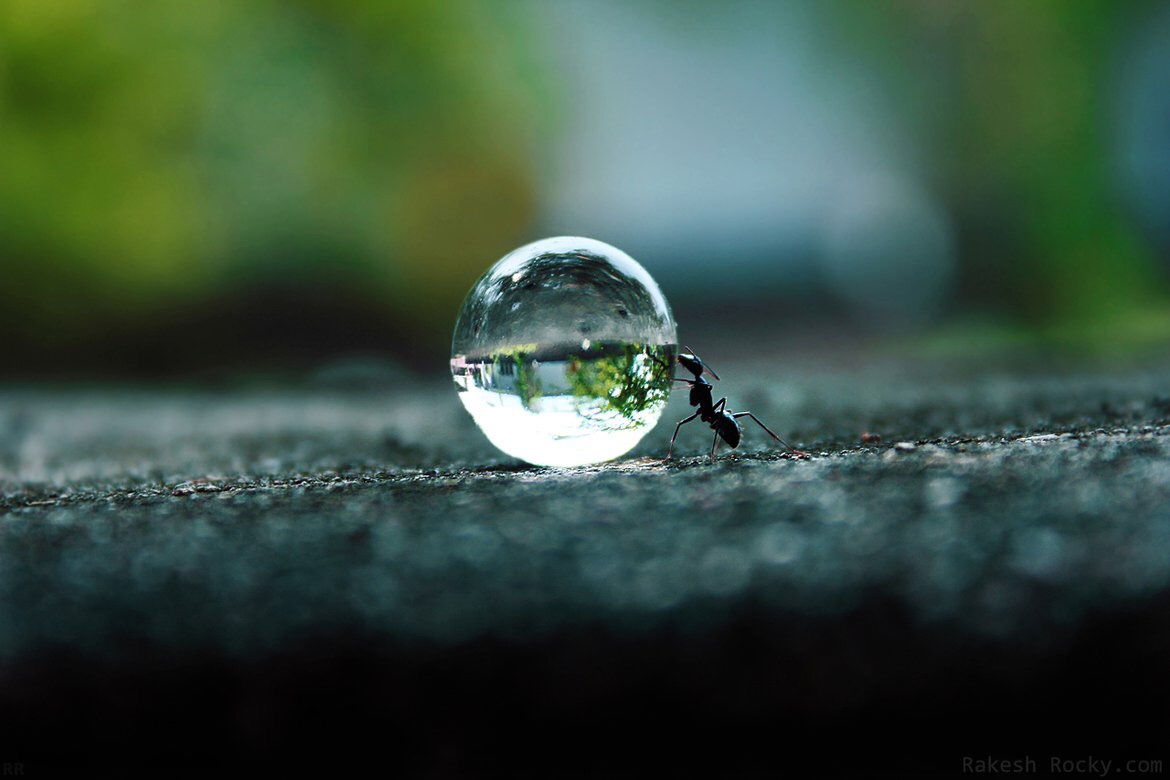
Yet water pauses too. Beads of water hesitate in the arms of the leaf, pause as a dew droplet on a blade of grass, hang in the air in a foggy breath, rest for a moment in the rock pool. Socialise with friends in the puddle, the lake.

Water reflects the beauty of now. The glassy eye of the water bead displaying its surroundings in a full panorama. The puddle reflecting passers by, life in action.

As human beings we would do well to mimic this behaviour too. To pause in the moment of now. Life comes in these moments of rest, these moments of reflection, these moments of connection with each other and the world we live in. For in one sense this is our purpose.

The cycle of movement will continue, relentlessly. It will happen whether we seek it or not. Just like the water cycle, it will complete. But like the water droplet, we would do well to pause, to reflect the light around us. Ours and that of others.