dance like it’s your birthday

Why born
We celebrated a birthday in our family the other week. Some cake, some cards, a few presents. Nothing grand. I’m sure you do the same. Children’s birthdays are often more lavish affairs, as are so called important or landmark birthdays. These were decided by someone, once. 18, 21, 30, 40, 50 etc… I’m sure any of you celebrating some of these would like to have words with that person.

Our date of birth seems to be important. Yet it has a large element of chance. I wasn’t, but I’m sure if you were, born at one minute to, or one minute past midnight, you might wonder at the possible alternative? We are seldom born on the day we were ‘due’.

Yet our somewhat chance date of birth seems to be important. We are often asked for it as a kind of identifier or label as to who we are.

A relative of mine celebrated the wrong birthday for many years, until they were required to extract their birth certificate and realised they were born on a different day. It hadn’t changed who they were.

Many organisations such as banks, insurers, our employers even, use our date of birth as a key identifier of who we are. At my doctor’s surgery you can sign in on arrival using a terminal. The first question is ‘what is your date of birth?’  The system then presents a list of letters – the initials of surnames – presumably those people of that birth date, registered at the surgery or with an appointment that day?

At school we are batch educated, based on our date of birth. If you happen to be born late in August, you will be in one year group. Born a few days later, you will be in another. We even classify people by decade or period – child of the 60’s, generation z…

Yet our date of birth really says very little about who we are. It says no more than our job title does, or our place of residency, or the university we went to, even the name we were given.

Yet ask someone who they are, and this is often where they start.  “I’m Graham, I’m forty three, I’m a taxidermist, I live in Cippenham with my wife and three children. We have two dogs.” Labels, just like a date of birth, we use to describe who we are.

Try this.  Ask ‘Graham’ again. “Yes and who are you Graham?”  This time you might get something like ‘I’m a family man and I love nature and the beauty of the natural world around us’.

Repeat again. It takes time, but gradually you may find out about ‘Graham’. What matters to him, what he values, what he believes in, his motivations, his dreams and much much more. You might find out who he is.

One of my favourite quotes is by Mark Twain

The two most important days in your life are the day you are born and the day you find out why

What if we celebrated that second day, not the first? Cake and party poppers for something more significant, more real, more impactful on our lives?

It seems to me that requires more celebration. Finding your reason for being, finding out who you are, is to be rejoiced over. Far more than the incidental day you began to breathe.


all the same, uniquely different

Uniquely different
I have recently been meeting someone with dyslexia.

At the time of our first meeting, they had only told a handful of people in the world. We have now spoken four or five times and I have noticed some things on the journey.

There is a strong desire not to be treated differently, not to be marked out in some way as needing help. With that comes a fear of judgement. As if by being seen, belonging will be denied – a kind of ostracism from normality, from humanity.

We have researched the number of people in society with dyslexia. I have spoken to them about the idea of neurodiversity. Still belonging … to the rich soup of humanity. After all, who is to say what is ‘right’, just the majority?

Recently they confided to me of a plan to tell some colleagues at their place of work. A huge step. Taking the number of people who would know, almost to double figures. Afterwards, we met and I asked how it went.

In the conversation they had given examples to their team of how to get the best out of them and some things not to do – for example, don’t give me a fifteen page document to read in the next hour.

I was struck again by their world view that this was just them, needing a special way of interacting. Almost apologetic.

I pointed out we all have preferences for working, for relationships. How another person’s words, actions, behaviours can either encourage us, inspire us, make us feel comfortable or enable us to be at our best. Equally words, actions behaviours can have an opposite effect.

I, for example, struggle when I’m not given, or allowed to find, a reason for something – a purpose, a bigger connection. Also, if someone asks me to do something and then tells me how to do it – I get frustrated, angry even, which them obstructs me from being at my best.

My dyslexic friend seemed surprised, but somehow relieved.

It’s a strange phenomena to me that we still find it hard to just say – this is me, this is how I work, this is what I need. Instead we follow a path of assumption, of judgement, of misinterpretation, of struggle.

We’re all the same, just uniquely different.

Digital art by BuestRose

we like to be seen, but from a distance

see me
How many people do you know?

How many of those do you see, really see?
How many do you allow to really see you?

I’m not talking about visiting, or noticing your new top or knowing how you take your coffee, I’m referring to a deep empathy, a real connection, a knowing so profound it is almost as if they are you, or you are them.

I use the term ‘see’ as a collective here. For some, the term ‘see’ will work. Experiment with alternatives for yourself. How many people really hear you? How many utterly feel you? How many truly get you? How many wholly understand you? How many do all of those things?

It seems we have a deep desire to be seen, to be understood, to be heard. We need to be acknowledged in a human way. Yet to be acknowledged in that total way, can be so desperately intimate.

Intimacy of that sort scares us.

Sometimes the person who gets that close sees more of us than we can see for ourselves.

So we employ tactics to keep ourselves safe, sometimes conscious tactics, but much more often, we employ tactics out of our conscious awareness. Games if you like. Games with ourselves and with those around us. We tease. Here’s a little bit of me, come closer if you dare, come closer if you care. If they do, we often push them away again. That way, we can tell ourselves they don’t really care, or we can shield our vulnerability. If we are the one being being invited in, sometimes that intimacy is too scary too, so we deflect, we joke, we talk about us, we change the subject.

When the invitation is extended, often subtly, often in a fleeting moment, often out of conscious choice … all it takes is to be present. To stand in the moment. If they attempt a game-play or to move away, gently and respectfully, hold them in that moment. Witness their truth. Rather than turn away in a kind of counter game-play, say “I see you (and you’re OK)”, not aloud, but through your presence, your very being. Hold them, carefully, whilst they witness their own truth.

That’s acknowledgement.
That’s seeing them.
That’s deeply human.

is it vital to be alive?

alive vitality

Take a moment to reflect on your year so far.

On what occasion, in what scenario, did you feel most alive?

I mean truly alive. Alive in a whole body way. Physically and emotionally buzzing, an energy coursing through you like you were plugged in.

Maybe you achieved a work goal, maybe you experienced an adrenalin rush on your first parachute jump, maybe you were walking alone in the forest at dawn, maybe you had a deep realisation about yourself, maybe you completed your first ever triathlon and felt on top of the world, maybe you presented to a group something important to you and won them over, maybe you had a tender moment of love with someone close to you…

Vitality.

If you can’t find something. Go further back. Look for it like it’s a pot of gold at the end of the rainbow. Seek it tirelessly. If you can’t find a single experience, look to understand components, smaller parts that provide clues to where your vitality rests, then build, add, try, experiment.

Maybe you find it easier to locate the opposite? A sense of fatigue, of being drained, of a kind of deadness? Somehow we have become conditioned to notice this more. The drudge of the commute, the dull but necessary task, the unfulfilled aspiration, the tiresome social gathering…

It’s a useful exercise to list down how you spend your time and then reflect on what nourishes you and what depletes you. Simply getting better balance in your life will improve your state of mind, your sense of happiness or fulfilment, your well-being – swap some draining activities for ones that inspire you, lift you, nourish you.

But more than that, be curious about the nature of that nourishment. Score them. Look at ones that deliver most. Why is that? What properties do they have that align with who you are, what matters to you, what gives you pleasure, what gives you meaning and purpose?

Here lie clues to that vital experience, that vitality, that sense of aliveness experienced in a whole body way – psychologically, emotionally, physically

Never stop looking. It’s vital.

You think you are alive because you breathe air?  Shame on you, that you are alive in such a limited way

Rumi

the true meaning of coffee …

beliefs change
Many years ago I trained as a master practitioner in Neuro Linguistic Programming. I trained with a friend.

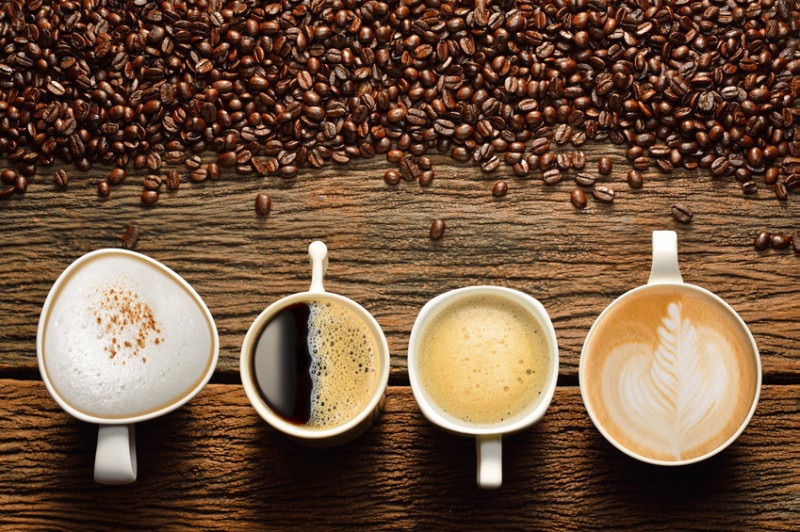
The training was near Hammersmith in London and at the beginning of each day we would go for a cappuccino and a bacon sandwich at a little Turkish coffee shop nearby. Although the training modules were several months apart, on seeing us enter at the beginning of a new module the owner would always recall our order – one sandwich on white, one brown, one without butter etc.

That coffee shop has sadly gone now, but that experience still anchors me to that time of learning, and I doubt the owner and his cheery waitress have any knowledge of how much that stays in my memory.

It serves to remind me that interactions between human beings can sometimes have more importance than their seemingly ‘low level’ content might suggest; they can carry more meaning than those involved at the time might ever realise; the spoken word or behaviour may have a completely different result or impact to that intended at the time – indeed one NLP presupposition is that the meaning of the communication is the result it elicits, not necessarily the one the giver intended.

Every day, all day, we give out communication, consciously and unconsciously. Everyone we meet takes their own meaning from that, even if several people experience the same ‘message’, each will create their own meaning.

In our early years, much of this gives rise to our beliefs about the world. Some of that serves us well in later life. Some does not.

The parent with the adolescent child, studying for their exams, will doubtless have the best intention to support them. Comments such as ‘never mind, you did your best’ or ‘all you can do is try’, have positive intentions. Yet I have seen such people in the middle of their lives, still running a belief that ‘I’m not good enough’ or ‘I have to work hard’ or even a more complex belief such as ‘If I don’t succeed nobody will love me’.

Spoiler alert: you probably believed in Father Christmas when you were small. Your parents span the yarn. It served you to believe – you got toys, chocolate, the excitement of presents to unwrap, and as a child that’s desirable. My guess is most of you no longer believe in Father Christmas.

The meaning we take at one point in our lives doesn’t have to be the meaning we live with. Trying hard when you’re 15 might be useful – please a parent, pass an exam. Trying hard later in life, when your work life balance is out of kilter, or when you’re in a job you loathe, or when you’re burning out through effort, or when you just want your boss to notice you, isn’t necessarily so helpful.

The barista can make many coffees.

You have a choice whether yours will always be the same.

have you noticed who has control?

eye_earth


I am me.

In all the world, there is no one else exactly like me.
Everything that comes out of me is authentically mine, because I alone chose it – I own everything about me: my body, my feelings, my mouth, my voice, all my actions, whether they be to others or to myself. I own my fantasies, my dreams, my hopes, my fears. I own my triumphs and successes, all my failures and mistakes.

Because I own all of me, I can become intimately acquainted with me. By so doing, I can love me and be friendly with all my parts. I know there are aspects about myself that puzzle me, and other aspects that I do not know – but as long as I am friendly and loving to myself, I can courageously and hopefully look for solutions to the puzzles and ways to find out more about me.

However I look and sound, whatever I say and do, and whatever I think and feel at a given moment in time is authentically me. If later some parts of how I looked, sounded, thought, and felt turn out to be unfitting, I can discard that which is unfitting, keep the rest, and invent something new for that which I discarded.

I can see, hear, feel, think, say, and do.
I have the tools to survive, to be close to others, to be productive, and to make sense and order out of the world of people and things outside of me.
I own me, and therefore, I can engineer me.
I am me, and I am Okay.

A declaration of self esteem
Virginia Satir

the search for connection and the fear of rejection

connection
A core human need is for connection. Connection to others.  We seek it in many ways.  Soul mates, lovers, friends, family, community …

Another dimension to connection is belonging. We seek to belong, to groups of ‘like-minded’ people, to social groups, ethnic and religious groups, groups of nationality, to teams at work, family and friend groups, communities based around our hobbies and pastimes as well as those where we live. I’m seeking connection in writing this.

Sometimes connection and belonging needs can be met by something as simple as acknowledgement by another. Acknowledgement that we exist. A look, a smile. This affirms our connection to the human race. To be acknowledged by another human being is very precious.

Yet there is a dark side to this search for connection and belonging.  Fear.

Psychologists tell us that fear is adaptive. That it helps us survive. I’ve heard it said we are born with only two fears – the fear of falling and the fear of loud startling sounds – both in service of our survival. I don’t know if that is true.

I have seen fear though.  I have felt it myself.

The fear I see often in my work as a coach and working with the organisational system is the fear of NOT belonging. The dark side of the need for connection and belonging.

This fear stops us speaking up in that meeting for fear of being judged, for fear of being wrong. It stops us talking about our confidence dip or the worries on our mind, for fear of being judged by our boss or our peers. It stops us being who we are, because we’re a little different, unique, special; but that very uniqueness, that ‘not like others’, means we might be rejected. Rejected from the community. So we seek to conform. Because we believe conformity brings connection.

Yet.  Here’s the thing …

When someone you know, tells you their deepest concern, shows their true vulnerability, turns up as their authentic self, how often do you see pure courage?  How often do you reach out and offer support?

Show yourself some compassion and tell your story.  Share your fear. Be who you are. You might find it liberating. You might find it brings you real connection and a stronger sense of belonging than you’ve ever felt.