how do you introduce yourself?

i-am

If you’re asked to introduce yourself, how do you begin?

Maybe with your name?  “Hello I’m Steve.”

Our name is the most natural representation of our identity. Since our earliest years it has defined us. Differentiated us from siblings, classmates, friends.

But how do you proceed then? After your name?

Maybe with your job role, or where you come from, or some details about your partner or family? What follows your name is probably context sensitive, but in many situations, when encouraged to say a little more, we might provide all of these details.

But does this describe who you are?

We seem more comfortable to offer up what we do, our employment, career, profession, job title, hobbies. We offer up where we come from, who else is in our lives, maybe our age… in other words our context.

Why do we find it more difficult to describe who we are as a human being?

I wonder if it is in part because that is more personal, more exposing, riskier? Maybe we are embarrassed to reveal our innermost selves? Possibly. But I wonder if it is more because many of us have been given little opportunity to explore and understand who we are?

What drives and motivates you? What do you value highly? What words, actions, behaviours give you a good feeling, and which have the opposite effect? What gifts do you possess? What do you believe to be true about the world, about your place in it – those unwritten rules that determine how you are judged, valued, belong? What excites you in life? What will your legacy to the world be?

Maybe it’s time to start understanding yourself?
Then you can introduce yourself.
Then people can truly meet you.
And you them.
are you collecting?

image

You probably have a loyalty card, or six. Maybe you collect points from buying petrol, from visiting your supermarket, from buying coffee, from a number of high street stores? These days we aren’t loyal to one retailer, but the retailers still strive to buy our loyalty. Actually they are spending to protect themselves from our disloyalty. It’s a game. They offer points for us to save for gifts or for money off future purchases, and we dutifully collect the points. Theirs, and often their competitors too.

It seems we like to think we are getting something for nothing. It seems we like to save and to reward our saving endeavours.

So… what if you were rewarded for being loyal to who you are?

What if you had your own loyalty points system? Gaining rewards, gifts and bonuses from living your life in a manner congruent with your sense of self?

Every time you act in a way aligned with your values and beliefs, you gain satisfaction points. Every time you behave or act in line with the things that give you meaning, your account is topped up with a sense of purpose and fulfilment. Every time you do something that makes you happy, you get a bonus injection of joy. Every moment of enhanced self awareness gets you a small gift of learning.

Be loyal to yourself.

No card required.
No account needed.
No password to remember.
Meaningful, priceless, lasting gifts.

karaoke you

image

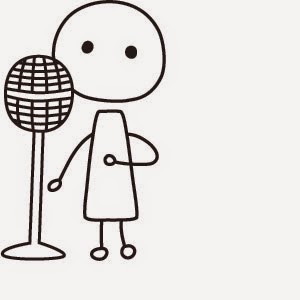
Singing someone else’s song is fun… but it’s not your song.

In life, when you stand up to the microphone…

Sing your own song.
Find your own words.
Hum your own tune.
Strum your own beat.
Make your own rhythm.
Voice your own story.
Connect with the hearts, minds and emotions of others through your own lyrics.

Don’t sing a karaoke version of someone else’s life.

Sing yours.

the space to be

fix-what-you-think-fix-what-you-do

The next time you have a thought… let it go

Ron White

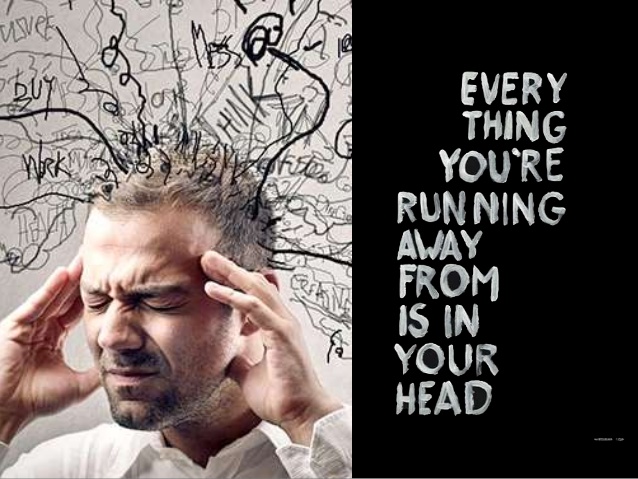
We can become slave to our heads.

We ping pong between the past and the future. What has happened and what might happen. What we need to do. What we did or didn’t do. Experiences we have had. Opportunities to come. Lists of things to do. Things we did, or should have done.

Our thoughts begin to run us.

I must do this…
If only I hadn’t…
What if…?
Don’t forget…
What did I say…?
Should I…?
Why…?
When can I…?

Find instead a place where the mind is quiet. The body is present.

The space to be.

map your meaning

the-map-of-meaning
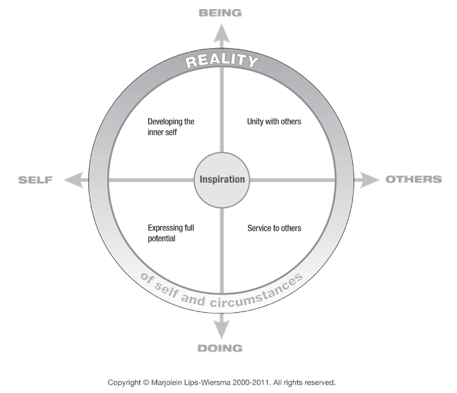
When did you last experience working well with others, maybe with a sense of unity, even if you were quite different? Think of a time.

In that moment, what did you do that helped others? How were you of service to them?

What did you do that uniquely served you? That allowed you to do your best and express your potential?

How was your balance of doing for self and for others?  In balance? Or skewed, maybe as you would want it skewed, or maybe not?

And in that moment, at that time during that experience, what did you realise about yourself that felt important? What part of that experience developed your inner self, such that you might be more you?

How was your balance here between developing and being more you, with that sense of connection and unity from being with others? In other words, how was your balance of being? Were you being more in service of them or of yourself?

Your orientation to being or to doing, balanced with your orientation towards self or to others is interesting.

Does meaning come in one of those quadrants more easily – being (developing inner) self, being (unity) with others, doing (service) to others and doing for self (expressing your potential)?

If so, are there other quadrants which feel less developed? What would you like to pay more attention to?

Mapping where we find meaning can be illuminating.

http://www.holisticdevelopment.org.nz/

the present lie about absenteeism

daydreaming
Most of us work through the day.  We sit in our office or car. We stand on the production line. We pore over our computer. We meet others and decide important things. To do this, we are expected to be present. To be wherever our work requires us to be.

But physical presence is a lie, a misnomer, if we think it signifies presence in our work. Occupation, activity, productivity, output, quality.

I can sit and stare at words on my screen and yet be somewhere completely different, in my head. I can be in a meeting and look to be taking active part, whilst emotionally being totally disconnected. I can even be driving my car and be on auto-pilot, because my attention is on some unrelated, yet important, mental distraction.

This is largely invisible to those around us. A secret we keep.

We all do it. We do it all the time.

Physically present. Mentally and emotionally elsewhere.

Why is it that the ponderings, thoughts, feelings, of another place, another time, another scenario, with other people, are more important to our bodies, than where our bodies are?

Wherever you are now.  Where are you?


now is the only everlasting memory

image

Many years ago, the photograph was a physical thing.

Nowadays we live in a digital age. The image has become a series of ones and zeros, which can be shared instantly across the globe. It can be enlarged, edited, colours saturated, edges blurred. It can be enhanced with special effects, have its background changed, detail enhanced. All of this can be achieved in seconds. Methods and means for sharing are many, and once a photograph is out in the social network we lose track of its global journey; who might see it, where, how and when.

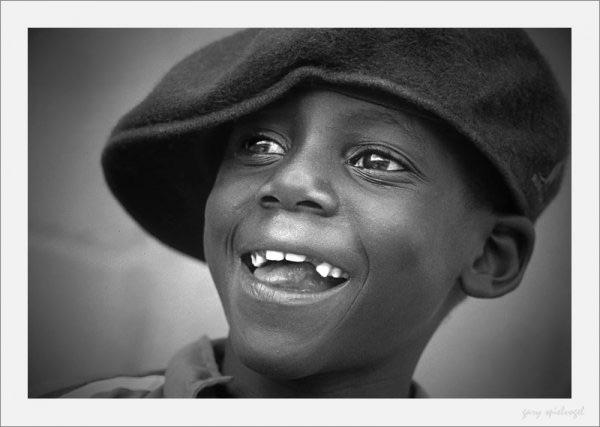
When we capture a smile in a photograph, it has an eternal quality. A moment in time is captured in digital form to be shared and enjoyed for ever. It becomes an everlasting smile. Or does it?

The photograph cannot replicate the human experience. The feeling that went with the smile. The sensation of the facial muscles drawing the lips back. The image or experience behind the camera that generated the smile. The joy of the moment. The supporting emotions of fun, love, togetherness, excitement, happiness. It cannot hold within it the sharing. The memories.

Today we have become obsessed by taking the picture. We snap them constantly. Delete the duplicates. Discard the imperfect. Edit them to impress.

Maybe we have forgotten to enjoy the moment? To take in the experience? To absorb the emotion and allow the feeling to wash over us like a wave of liquid happiness? To live the experience and therefore to enrich the memory? Maybe the smile in the moment is the only truly everlasting smile? The one in the now?

Let’s focus on the moment, not on the creation of the ones and zeros.


share this, it needs to be heard…

whats your story
I posted on here a while back that we all want to be seen and heard.

Truly seen and heard.

So, if someone was there for you, what would you say?
If you could be heard, what would you say?

What is your truth?
What is your story?
What hasn’t been said?
What needs to be heard?
How did your story come to be?
Where does your story begin?
Where are you now in your story?
How does your story end?
What does your story say about you?

People are listening, you just need to speak your story.

the hidden art of hiding

hiding dyslexia
In recent months I have spoken to a number of people with dyslexia.

One common aspect of our conversations has intrigued me. The tension that is created between a need for some support, balanced with a desire not to be marked out as different. I want some help, but I don’t want to be seen to want help.

Those I have spoken to have talked of their shame. A sense that in some way they are inadequate. Unable to do things that others find straightforward. Many hide their dyslexia for this reason. Preferring to find their own coping mechanisms. Choosing roles and work where the challenges arising from their dyslexia aren’t exposed.

Whilst my dyslexic confidants have shared their fear of judgement, their desire to hide their ‘condition’, they have also shared heart wrenching stories of the efforts required to cope. To stay afloat. Many are desperate for some simple supports.

The reality here of course is that these dyslexic individuals have other strengths, other capabilities which are more developed and stronger than their non-dyslexic colleagues. Just as with any human being, we are all different. All unique.

We all hide too.

Sometimes we hide a part of ourselves from those around us. Often we hide a part of ourselves from ourselves. Yet we think that the hiding is hidden.

Honesty and truth seldom bring blame, judgement, criticism. When they do, it is those criticising, judging, blaming who are the individuals who are really hiding. Hiding behind judgement, criticism and blame.

We need to come out of the shadows.
To learn to be, in all our unique glory.
To stop hiding.

image by: Sally Green