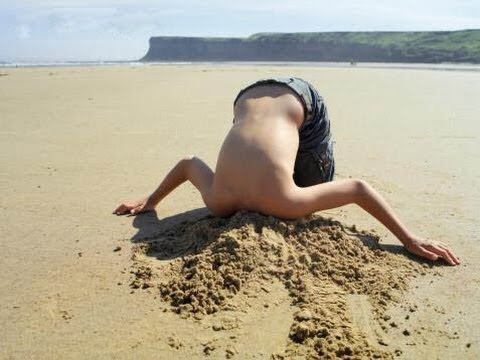
whose embarrassment?


This morning, two guys standing on the train were sniffing. Each drawing bodily fluid up into their sinuses through the medium of sucked in air. Both sniffing independently. Both once every ten seconds or so. Slightly different rates and slightly different resonance. Together almost musical.

I wanted to hand out tissues.

They were seemingly oblivious to their mildly melodic disruption of my thinking time.

The man next to me produced a silent smell.

It left me pondering what embarrasses us; the actions of others or our own? And who does the embarrassment belong to? Are we embarrassed for ourselves or for others having to judge us?

Why are some of us embarrassed by falling over, having a wardrobe malfunction, nose picking, spot squeezing, breaking wind, going red, messy hair, sneezing … and some of us not?

What is that about? Where does it come from? What purpose does it serve? And whose is it?

the five second rule

image

You know that rule.

The rule states that if you drop something on the floor, you have five seconds to pick it up. Five seconds before the bacteria infect it. Be quick, be safe.

I have a mental image of these armies of slow moving bacteria marching towards the discarded food. Bacteria armies that bizarrely aren’t on the exact spot the food fell, but are somehow always precisely five seconds away. They respond like a shark to the scent of blood. Swooping onto the food to a five second deadline, moving to the sound of ‘dum dum, dum dum’ like a menacing time countdown sounding out the impending infection.

The reality is that there are probably more bacteria on the plate the food fell off, in the air you are breathing, on your fingers picking the food up…

In essence the rule is a fabrication, albeit a useful one when you drop a piece of your best chocolate. Nom nom nom. No point wasting that!

Often our own rules are inventions too. Fabrications. Untruths.

Rules about what we can do, or can’t do. Should do, or mustn’t do. Rules about cause and effect. This means that.

Yet we live our lives by them. We behave strangely, yet to a recognisable pattern, as befits the rule and its purpose. In much the same way as the five second rule gets us reaching down quickly for the food, looking at it, like the bacteria will be waving back at us, or will have inexplicably made the food luminous green. Blowing on it, like the bacteria will fly off, descending in tiny parachutes back to the floor to await the next food spillage, thus cleansing the said food morsel.

Fantasy. Yet played out like the truth.


is it really all in the numbers?

image

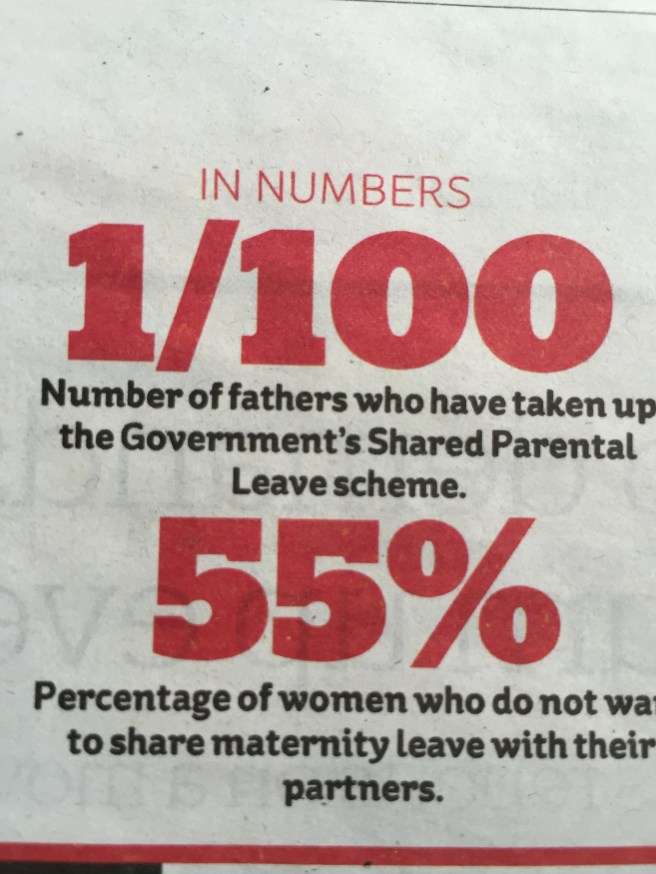
There seems a relatively new phenomena in our media to describe things through the medium of numbers. Newspaper articles are written around small colour panels, gleefully pronouncing ‘In numbers…’; these are summaries to draw in those who seemingly cannot be bothered to read and understand the depth of the article. It’s as if by providing a statistic, plucked from the vast expanse of a complicated subject, we can understand. Examples in the newspaper today include…

422 million people have diabetes;
1 in 5 people say social media makes them depressed;
124 refugees were taken to Turkey from Lesbos yesterday;

It mirrors the growth in need to know small snippets of many people’s lives in social media – glimpses on Facebook, 144 characters on Twitter. We are time poor, so we’re told, and so we need to pack a lot in. Scan rather then delve. Skim rather than comprehend.

The world seems to have developed into a place of ‘know a little, about a lot’.

This crosses over into what we know about ourselves.  Small amounts of knowledge used as labels to describe extraordinarily complex unique human beings. “I’m a completer finisher”, “my type is INTP”,  “I’m a big picture person”…

Let’s start reading the entire article.  Let’s start taking a deep dive into who we are.  Let’s be curious about other people and their glorious uniqueness…

You are not just a number.


shower or bath today?


How do we choose?

Mostly, we are one or the other. Bath or shower. At some past point we chose. Selected a preference. Now we are loyal, typically. We are in the bath camp or the shower camp. A few of us may be ambidextrous, fickle, users or abusers. Employing both for different needs. Both is itself a choice.

But why?

Is our choice down to practicalities or pampering? Speed or relaxation? Morning or evening? Felt sensations or logical economies? Time to be, or time to do? Purpose or pleasure? Logistics or preference? Conscious or unconscious? Habit or variety? Selfish or selfless?

Can we learn about our other choices from something so basic, so routine?

Maybe it’s time to clean up our choice making?


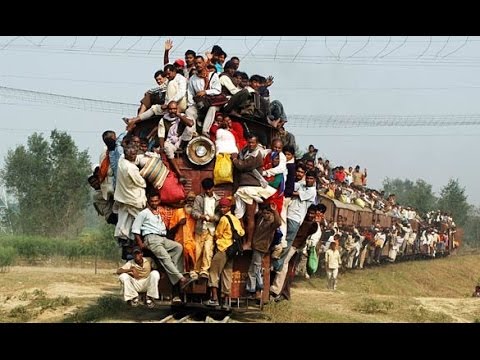
tracks of plenty

image

I travelled into London this morning by train. I arrive at Paddington, a busy station in the rush hour.

Leaving the train I noticed something I have experience before, but usually I am irritated by it, whereas this time I was curious.

As I stepped from the train, I found myself bumping into fellow travellers. Passengers who had exited the train from an adjacent door or another carriage further down the train; these people were passing along the platform ‘hugging the train’, rather than choosing to move to the centre of a wide concourse, away from disembarking passengers.

I was struck by this behaviour and the potential metaphors for human existence and interaction…

Staying close to where we’ve come from, our roots.
Not exposing ourselves in the throng of humanity and diversity.
Taking the shortest route in life.
Focusing on self and not noticing others.
Being in our own head and not present in the moment.
Staying protected and safe: using a train as a barrier.
Travelling tried and tested paths; the route the train took.
Seeking the beginning or end of our journey.

They seemed plentiful.  I may stay curious.

green man, red light

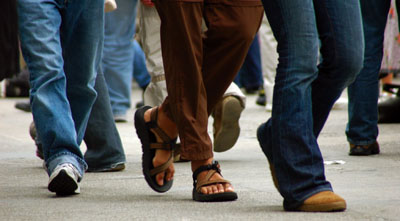
walking

I cross a busy junction in London regularly, and noticed something yesterday as I waited with maybe sixty or seventy other commuters.

It’s a pedestrian crossing, so comes complete with red and green men.  The crossing is on a bend in the road. A busy road in Central London.

The traffic lights began to change, amber to red, signalling the traffic to temporarily cease its urgent flow through the arteries of the capital.

Around me, several people urged forward as the red traffic light shone brightly.  Some cast a glance at the vehicles looming down on the crossing, presumably to check that the drivers were obeying the rules of the road. I moved forwards too, moving around someone in front of me; someone diligently waiting for the little green man to shine his instructive self.

Across the other side of the road, the other 50% of the crossing pedestrians were also dividing into two groups for a couple of seconds.  Those who acted upon the traffic signal and those awaiting the pedestrian signal.  A melee briefly ensued as human beings paused, thrust forward, side stepped and chose.

I wondered about motivations.

Rule breakers and rule followers?
Safety conscious and risk takers?
Aware of bigger picture and focused on linear instruction?
Patient and impatient?

How did we divide up and were these behaviours and motivations present in other aspects of each of our human lives?

weirdly new, weirdly human

weirdly new

I’ve just taken delivery of a new car.

It’s the same as my old one.  Same manufacturer. Same model. Same specification. Same colour.  Sure a couple of minor details have changed as they have updated the styling, but essentially it’s the same car.

I’m really excited though.  Strange how the smell of a new car is so good.  I feel like a child at Christmas.

I’ve walked around it several times and lovingly stroked it or removed an imaginary blemish or tiny sign of dirt.

I’m driving carefully too – around a car park, at least.  Strange because it’s the same shape and size, yet I’m being ultra cautious.

Given so little is different.
Given so little has changed.
Why is my behaviour so markedly altered?

How we respond to change.  How our behaviour is connected to our thoughts – real or imagined.  How our senses influence our reactions and our imagination.  Weird, but very human.

they’re your rules, believe it or not

truth

We all have beliefs.

I’m not referring here to spiritual, religious beliefs. I refer instead to the invisible beliefs we hold about the world, about who we are and about what we are capable of.

I’m referring to the truths we hold, sometimes consciously, but mostly out of consciousness, such as “I can’t sing”, or “I’m not beautiful”, or “People are amazing” or “If I set my mind to it, I can achieve anything”, or “I’m stupid”, or “Working hard brings rewards”.

Such beliefs are typically generalisations, typically unconscious patterns, meta to our experience. They can be enabling, or they can be limiting. They act as a post-hypnotic suggestion and they direct future behaviour to confirm them.  They provide context, meaning, causation, structure and as such are irrefutable.  We will deny their inaccuracy, even in the face of cognitive evidence. They are in effect our own personal rules of the world.

Take “Working hard brings rewards”. A generalisation, in that it assumes always. A generalisation in that it doesn’t define work, or how hard, or what rewards? But, someone believing this, will work hard, they will, in all likelihood, value the rewards that work brings and justify or explain those as being earned by the hard work. The ‘truth’ of the belief, or personal world rule, is both acted out now and assumed to be required in future – after all, its truth is without doubt, its cause and effect undeniable, its outcome inevitable – such is the nature of a belief.

Meanwhile, work that doesn’t bring rewards, or rewards unconnected with working hard, may be dismissed as of little note, or simply go unnoticed. The belief could be enabling, in that it provides motivation, the believer will doubtless work hard, will attain and will get rewards. It could also be limiting, in that the believer will probably give up leisure time, family time, time for self and may be pressured with a weight of reward earning responsibility, or may burn out over time.

So what do you believe?  Do you know?

How do your beliefs enable you and how do they limit you?


unconsciously patterned

image

How often do you change what you do?

I don’t mean change job or your career.  I mean change behaviour.

How much of your daily, weekly, monthly routine is just that, routine?

Do you get up at the same time? Wash, dress and eat in the same order? Do you always have a cup of tea? Eat the same things, drink the same juice? Do you go to work the same way, leave at the same time, make the same checks before leaving?  Do you have the same routines on arrival at work? Get a coffee, hang up your coat, switch on your computer, go to your locker…? Do you have lunch at the same time, eat the same choices, go with the same people? Do you leave at the same time, get the same bus or train, have the same routine when you walk through the door at home?

Do you shop the same day of the week? Wash the car or cut the grass Saturday or Sunday? Do you do the washing or ironing on a set day? Do the kids have after school club every Tuesday? Do you go skiing every year, or have a week in the sun?

How often do you deliberately change things?
Do you change more than you don’t?
Do you maintain more than you alter?
What might happen if you changed more?

It’s not that change is intrinsically good or bad, it’s simply that so much of what we do becomes an unconscious pattern, a sloppy given, an unthinking routine. It’s a missed opportunity to experiment, to learn, to improve.