the importance of wheelbarrows

wheelbarrow
In modern language we seem to have over developed the idea of the nominalisation. That is, the turning of actions into things. The nounification of verbs, if you will.

For example, we talk about ‘our relationship’, as if it is a thing. As if we can stand and look at it.  As if we can pick it up, turn it around, look at it from a different perspective. As if we can move it somewhere else. As if one of us has influence over it, owns it, can change it, or is to blame for it.

I see this all too often in organisation speak. “This person is accountable for the customer relationship.” Good luck with that.

In point of fact what we are really referring to is the verb of relating. I relate to you, you relate to me, and if that is balanced, useful and rewarding to both of us it could be said we have a relationship.  However we can only change the relating. How we behave and relate. We have no direct influence over how the other party relates, so how can we be accountable for the relationship?

This language appears everywhere now. Organisations talk about ‘engagement’. ‘Employee engagement’. We survey it, measure it, agonise about it. It isn’t a thing! It’s a nominalisation. What we should be doing is engaging. Engaging with our employees. Engaging each other. Engaging with other human beings.

We talk about ‘change’. ‘Change management’. We should be talking about changing. It’s active. Change and change management are cold terms that absolve us from acting. Corporate speak.

Someone once said to me, if you can’t put it in a wheelbarrow, it isn’t a thing. I’ve never tested the total truth here, but they are wise words, nonetheless.

Show me the wheelbarrow with a relationship in it. Show me the one with engagement in it. Wheel round the change. Pop down the garden and bring me back some competencies. Oh and get me some growth whilst you’re there.

As human beings we need to get back to doing. The good old fashioned verb.

Nominalisations give priority to the action rather than the person doing it. They prioritise products and outcomes over the actor and the process by which they are achieved.

This is unhelpful at best and dangerous in the extreme. It absolves the individual of responsibility.

I can change, provided I am motivated to. It’s my responsibility. A change management programme isn’t going to cut the mustard, it just provides smoke and mirrors to a leadership lack of engaging me, motivating me, inspiring me.

I can alter my behaviour.  Me, not some invisible behaviour management programme, enhanced benefits package or competency based review framework.

As human beings, let’s relate to each other, engage each other. Let’s focus on being responsible for personally growing, personally changing, reflecting and learning about ourselves, developing our skills.

Let’s keep the wheelbarrow. But only for the things we can put in it.

what is your psychological contract of self?

psychological_contract self
Psychological contracts are often referred to in the context of the employer and the employee – what is the expectation, commitment of both?

It sometimes explores qualities of trust, honesty, respect, fairness, compassion. It will often cover the visible expectations and agreements, such as pay, hours, work, training, but more usefully might look under the waterline, beneath the visible iceberg, so to speak. Here might be give and take, inputs and outputs, responsibilities and rewards which are less clearly in play. Concepts such as control, power, innovation, recognition, commitment, respect, loyalty, tolerance and much much more.

At a meeting the other day we were discussing psychological contracts. We were to be a team, so the question posed was, ‘How did we want to be with each other?’

We were to discuss what we were looking for from other members of the team, what we were seeking from the team leader and what we would bring to the team. What our commitments would be in terms of contribution and what we were seeking in return.

As I reflected, I wondered how I could even begin to answer this, as my thoughts and feelings were initially directed inwards, at me. I wondered what my psychological contract with myself was?

Did I respect myself? Did I have compassion for myself? Did I have faith in myself? Was I in control of myself? Did I fully trust myself? Did I appreciate my own being? Did I own my own power?

What are my perceptions of myself, what do I believe about myself?

How am I getting in my own way, either unaware of, or maybe breaking, my own psychological contract even before I entered the room. Surely this is where I should start before considering any team working agreements?

What is my psychological contract of self?

the things we provide to keep us safe…

safe vulnerable
Much in our world is provided to keep us safe.

Black and white stripes on a road just one mechanism to make crossing a road safer. “Beware of the dog”. Safety shoes to prevent damaged toes. Safety glasses to prevent damaged eyes. Policies to ensure we don’t get sued, laws to allow us to sue. Use by dates to alert us to the dangers of eating food that might harm us. Bans on games of conkers to avoid bruised hands or worse. Maximum dose eight tablets in 24 hours. Road signs warning of adverse camber, liability of freezing, low bridge or simply to ‘give way’. “Don’t run”. “Slippery when wet”. Barriers at the end of footpaths to ensure we don’t inadvertently run out into the road. Safety belts. Medical screening for illness and disease. No standing upstairs on the bus. ‘Safety’ matches. Fire extinguishers, expensive sprinkler systems and fire drills. Warnings for children on who to talk to and who not to. Fire guards, safety catches, automatic cut-offs. “Eat five a day”. Jabs for our holidays. Pinhole glasses for solar eclipses. Masks to filter our breathing. Catalytic converters to trap pollutants. Helmets for bike riders and sportsmen. “Contains 20% of daily saturated fat”. Life jackets. “Smoking kills”. The list is endless.

Yet when we engage with the world as a human being, put ourselves at emotional and psychological risk. When we show ourselves. When we face judgement. When we risk belonging. When we make mistakes. When we face fear. When we feel lonely. When we show vulnerability …

… then we are on our own.

We have to work it out for ourselves. Try things. Get hurt. Learn quickly. We have to look after our own wellbeing. We work out our own policies and rules. We build our own safety mechanisms. Tell ourselves what is acceptable and what isn’t. Build our own beliefs, values and behaviours to act as barriers to keep us safe. Talk to ourselves, reassure ourselves, beat ourselves up.

Where is the support really needed? I wonder if we have the right balance, the right focus?

facing ourselves is the hardest direction to look

not looking at ourselves
It seems like we stand in the centre of the world.  In the centre of our world.

From this place we can observe all. See sights. See situations. See people. Be drawn towards. Turn away. Fit.

From our vantage point, with our map of the world as the world should be, we can assess everything, place a value on it, judge it. We can rank things, place them in hierarchies of choice, want, need. We can compare this external vista of things, people and their actions with our perception of right and wrong, good and bad.

And we do…

We critique the behaviour, choices, necessities of others. We glance at the unsightly homeless person from the corner of our eye, thereby maintaining a dignified separation. We wince at the teenager’s language and lack of respect in the street, like we skipped that life stage. We place the drunk man in a story, a story of our own creation, so that we can explain his ‘condition’. We assess the parents and their actions towards their screaming toddler, like frustration, tiredness, learning are all experiences we have never had or at least have always handled better. We gossip about the neighbour and the affair we think they’re having, so that we can stay in the ‘moral’ club through our action of placing them in the ‘immoral’ one. We whisper with colleagues about the boss who seems oblivious to the impact of their actions, because there is safety in collusion. We mutter about the Sunday driver who meanders when we’re in a hurry to be somewhere, like they have no intent or purpose.

That person is good, this one less so. We’re OK, because they’re not. How can he do that? Why is she so…? Why don’t they…? I wouldn’t do that. Who wears that? Does she know what she looks like? Really … pink? Why doesn’t he wash his hair? Another holiday!? Why can’t she just say? He’s a waster. She doesn’t realise what she’s doing to him. Amazing, awful, not good enough, disgraceful, shameful, good heavens…

We all do it, every day.  It comes easy. Too easy.

Maybe because in our map of the world, our view of right and wrong, of good and bad, we can be exonerated? We are innocent. Never guilty. We are successful. Never a failure. We are ethically and morally just. Never wicked.

But maybe facing ourselves is merely the hardest direction to look?


needs and wants, wants and needs

want need
Waiting in for a plumber. I’m not good at waiting for someone. Deliveries, tradesmen etc. My choice is removed. I’m in their control.

I want to get out.

I need to wait though. We may have a leak. A telltale little brown patch has appeared on a ceiling.

I should wait. The leak could get worse. Despite this more sensible course of action, I’m still drawn to go out. Nowhere special, just to have the freedom to decide. It’s the freedom I want. The expert opinion I probably need.

The tension between what we want and what we need is intriguing. Are needs more powerful than wants? Are needs more fundamental to our sense of self and our wellbeing? Certainly needing shelter, water, food would seem to be basic needs. Yet wanting something can be a pretty strong draw too. Wanting to move, wanting freedom, growth, learning, progression, choice. These too are powerful motivators.

Refugees and economic migrants pouring into Europe seem to demonstrate the power of wanting a better life for your family. Wanting opportunity. Wanting freedom. Or is the migration need driven? The need for safety, for security?

I wonder if our modern world has confused the two? Do I need a new phone, or do I simply want one? Do I want a hug, or are there times I absolutely need one?

Do we know the difference any more? The difference between a need and a want? How the difference motivates our thinking? Which has more feeling? Which trumps the other? Which do we value more? The things we want and have, or the things we need and have?

Are the words interchangeable, or is it some other orientation in our lives that motivates us to prefer one word over the other? Do independent people have a penchant for wanting things? Is wanting essentially selfish? Wanting something certainly implies choice, preference. Needing something suggests less choice. It suggests necessity.

But is it the same for us all? Is there a common thread to our humanity? Or is this a more personal matter?

Maybe you want to know? Or need to? Maybe you don’t? Understanding that which motivates us would seem to be useful though? How your choice of language impacts your thinking, your emotions, your behaviours?

what’s your worst bad habit?

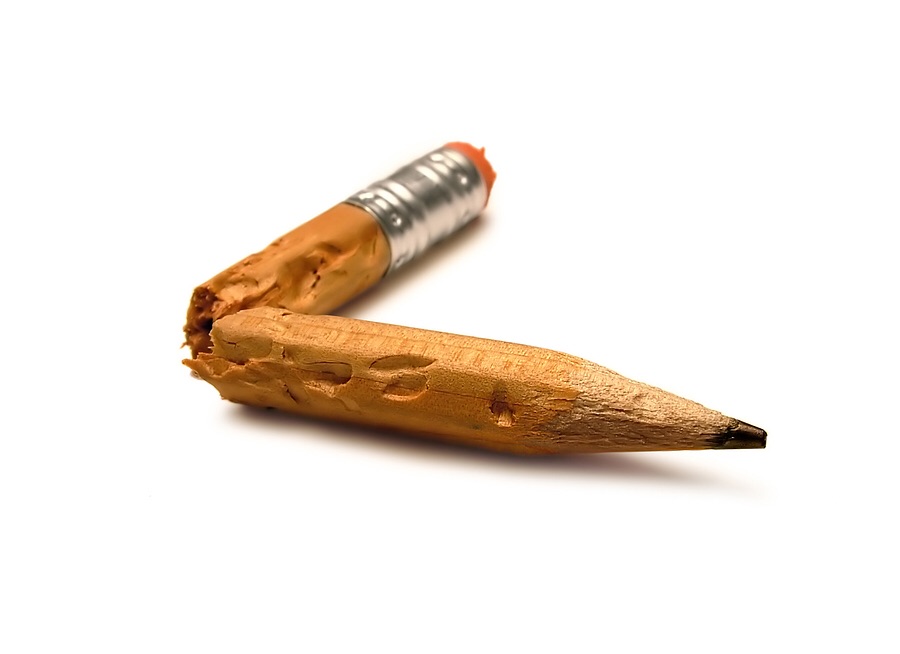
bad habit chewing pencil
From childhood we are alerted to the dark path of the bad habit.

Don’t suck your thumb
Don’t bite your nails
Don’t twirl your hair
Don’t fidget, sit still
Don’t pick your nose…

Of course in these examples it is the parent speaking, the adult. They have decided this behaviour is ‘bad’. For many, this is because they were conditioned as children to believe these habits were bad, by their own parents, by ‘society’. It is as if we have passed the judgement ‘bad’ down through the generations.

But what is a habit? Convention might say a habit is a practice, a manner, a behaviour that has become a pattern. A pattern that is hard to give up. Change requires the exercising of that thing we call ‘will power’.

I have spoken before here about behaviour being purposeful, having a structure. Trigger, behaviour, reward.

Those childhood habits I have mentioned might share similar triggers … a sense of worry, anxiety, restlessness, feeling exposed, alone, needing comfort? They might also share a reward? They all seem to have a property of physical connection to ourselves, be it thumb, hair, fidgety bottom, fingers, nose. Maybe a form of comfort from connecting to our own bodies?

So why bad?

One definition of a bad habit is one that has the potential to be detrimental to our physical or mental health.

Convention in the adult world might list such things as smoking, eating too much fast food, gambling, drinking too much, late night snacking as bad habits. Again, maybe it is society that creates this assessment, this valuation of bad? Not just invented though, not just handed down in stories and tales from elders, we have researched the medical implications of smoking, drinking, over-eating. We have hard evidence. We know.

Take a smoker. They know it is harmful, yet they persist. Why? Lack of will power? Maybe. Maybe that’s just another way of saying the reward is too important to me?

I was once in a training, where we were asked to list the benefits or rewards from smoking. Many were social – an opportunity to socialise, connect with like-minded people. Some described it as relaxing. We listed over forty benefits, from a room of sixty people, only a quarter of whom smoked. But one delegate offered a very powerful benefit. They described how it helped them remember their father – who had died of lung cancer. An odd behaviour at a logical level? But, that’s a very powerful reward. I suggest it might trump will power every time.

So paying attention to the triggers and rewards, might be useful here? It is these that drive the habit. The rewards can be well hidden, logically hard to rationalise and so hard to unearth. Seeking them out can be tricky. Be persistently curious. Keep asking ‘what do I get from behaving like this?’ Finding another way to get that reward will help you change the habit.

Maybe we need to talk not so much of ‘bad habits’, but more of ‘rewarded habits’?

So, what IS your worst bad habit?

Not because society labels it bad, but because it carries a reward you very much want or need. Your most rewarded habit? And, if you would like to change the habit or behaviour, how might you get that reward another way?

why do we question?

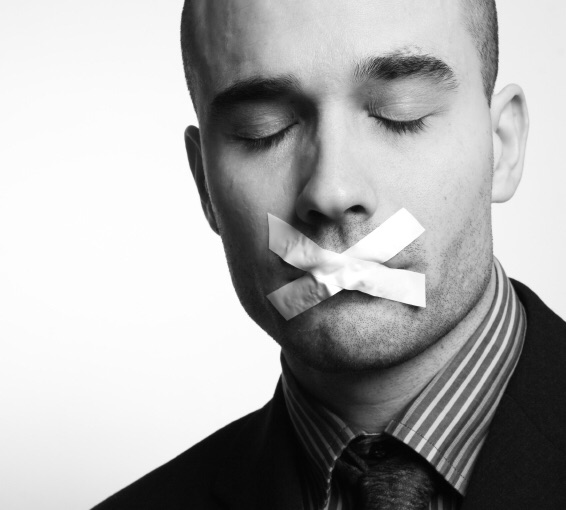
question listen silence
Some time back I facilitated a workshop during which we experimented with silence.

It’s a difficult art.

Delegates had individually completed a five minute exploration of one aspect of themselves, resulting in a few written sentences. The second part of the exercise was to pair up and share that with a colleague. The only ask I made of those listening was to say nothing. Yes, to remain fully present. Yes, to listen completely, not just for what was said, but for deeper meaning and what wasn’t being said. But to remain silent. For the full five minutes.

They were all unable to avoid asking questions. So we explored that when we came back together.

It transpired the questions were all for the benefit of the questioner. Questions to clarify the questioner’s understanding. Questions for the questioner to understand context. Questions for the questioner to compare with their own experience. Questions for the questioner to shape appropriate feedback, input, opinion. Questions for the questioner to demonstrate they were listening. Questions for the questioner to collude. Questions for the questioner to feel they were adding value, helping in some way. Questions for the questioner to demonstrate empathy.

“When does this happen?” “What have you tried?” “What happened when you…?” “Could you speak to…?” “How long has this been like this? “If you approached it this way…?” “I know what you mean, it’s hard isn’t it?” “What did they say when you did that?” “How can I help?” …

It seems we have become accustomed to ask questions for our own benefit.

Shifting focus to only ask questions for the benefit of the other person is a skill. It offers the other person a way to expand their own understanding, broaden their own awareness. It offers the other person an opportunity to explore choices, possibilities. It offers the other person the opportunity to learn, to grow.

Above and beyond this enhanced learning, to have someone be with us, solely in service of us, is rare. To have someone listen that deeply, to witness but not judge, to empathise not sympathise, can be a very connected experience. To be given space to be with our own experience is a gift, humbling and trust laden. At this level, silence becomes the deepest form of listening. The purest form of being with someone.

In many of our conversations, our human interactions, we fall into the pattern of asking questions to broaden our own understanding or to feed our own need to be useful. Questions to find solutions for the person, to be helpful and affirm our own value… to ourselves.

Seeking questions solely to broaden the speaker’s awareness offers a different way.

Be curious about the true intent behind the questions you ask.

Practice seeking questions which broaden the other person’s exploration of their own experience and to find new learning, new possibilities, new meaning for themselves. Practice too the art of silence.

the hidden value of sadness

sadness
How can sadness be useful?

When we are sad we seem to be somehow diminished. Absorbed with the source of our sadness. Distracted. Unable to function fully in that moment; emotionally and mentally disabled. Our emotions drive our behaviour and our physiology – sadness may well lead to crying, a desire to be alone and to be introspective.

I’ve just seen the film Inside Out from Pixar. What a delicious film! Pixar at their best. Go see it.

The film charts the development of Riley, a little girl from Minnesota. Her emotions, portrayed as little characters in her head, ‘operate’ Riley. Together joy, sadness, fear, anger and disgust shape new memories and apply her existing memories, including her core memories, to inform her choices. These core memories from childhood create and reinforce her ‘islands of personality’. The film beautifully shows the importance of emotions. The cognitive brain is to all intents and purposes absent, and Riley’s actions and behaviours are driven by a cocktail of her emotions and her memories.

Our emotions, the meaning associated to them and our instant responses when they are triggered are worthy of exploration and portrayal in this way. They are a fundamental part of our humanity.

There is growing psychological and neurological evidence linking emotions, especially the core emotions of fear, anger and disgust to the limbic system and particularly the Amygdala, a small almond shaped part of the brain, at the brain’s core. Here we seem to hard code situations warranting the emotion and its associated meaning. Research for example shows that damage here can impact our ability to recognise angry or fearful expressions in others, and recent studies have started to show problems with social and emotional judgement. Evolutionarily speaking, this part of our brain is old, preceded only by our ‘reptilian’ brain which controls breathing, heart rate etc. These brain systems are designed to run on auto-pilot. It’s no good having to think to breathe, or having to think whether to run away or freeze when faced with danger. There is growing evidence that the limbic system has a role to play in our other emotions too.

The way Pixar capture these complexities and portray them in a touching, yet amusing film is testimony to their art. The metaphor the film uses to suggest the make-up of our personalities as islands, shaped by our core memories from an early age, is a useful reminder of the impact early life experience has, encoding much of our world map – who we are, how the world works, how we fit in that world, what is right and wrong, what is important to us etc.

For me though I took one key insight from this wonderful piece.

The hidden value of sadness.

Sadness allows us to access deeper older memories. Without sadness we are somehow less human. Sadness provides connection and love just as much as happiness and joy do. It also tells us about loss. Sadness tells us about meaning and what matters to us. Sadness can provide real learning. It can help you be more resourceful, as well as less. The key with sadness is balance – balancing sadness with other emotions, as demonstrated in the film.

The next time you are sad, embrace that sadness and the learning it brings. Thank your body for speaking to you so clearly.

to run or not to run…?

tube run steve
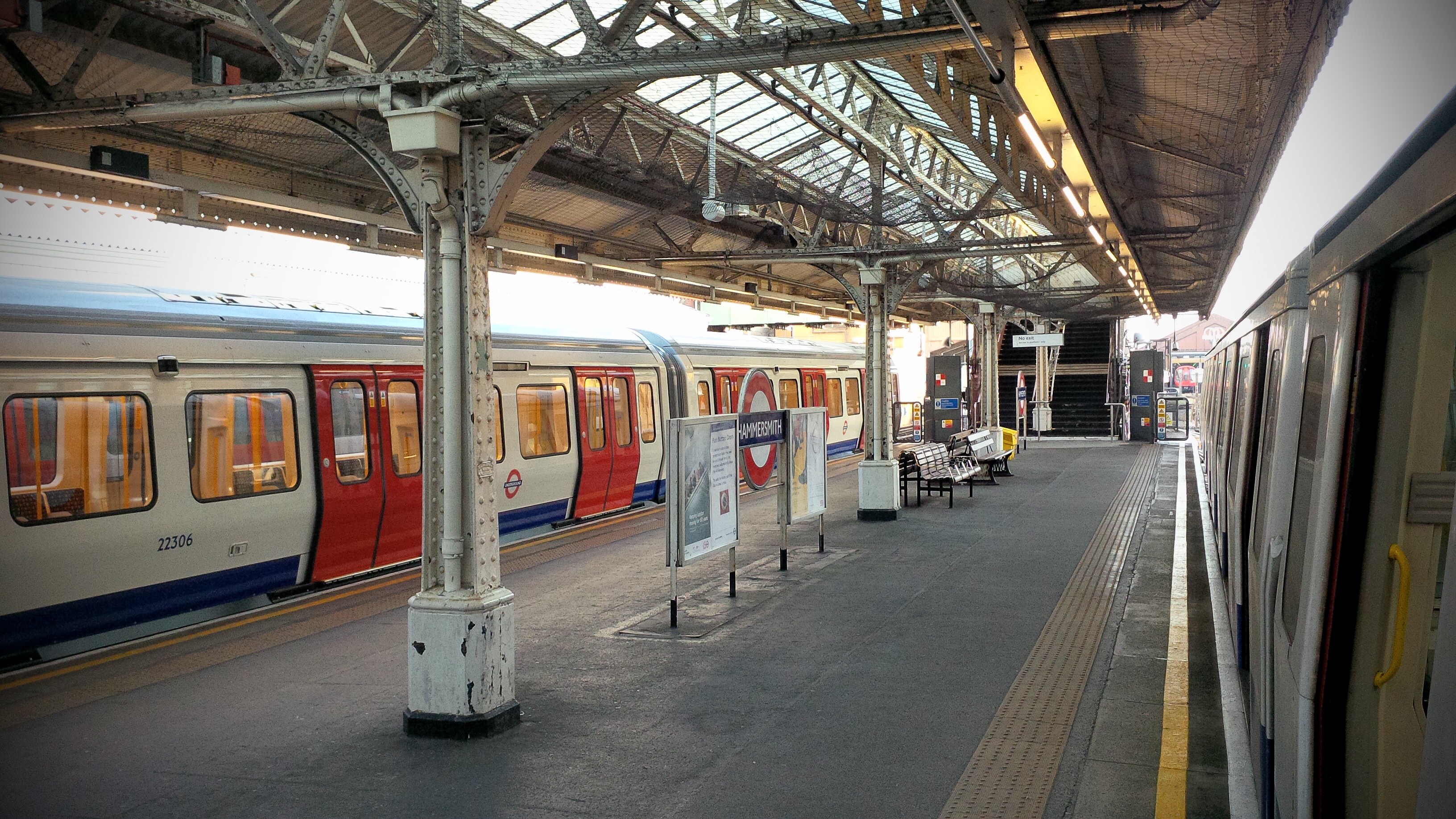
The other week I posted something about my NLP training in Hammersmith and the coffee experience. I attended the training with a friend, and at the end of each day we would go to the tube station – the Hammersmith and City line rather than the Piccadilly. It’s a terminus, so trains are usually ready in the station, waiting patiently at a platform for their fresh cargo.

Each and every day we would stroll up to the ticket barrier, move through and see the display board signalling which platform the next train departed from. Most days there would be a train at that platform.

Then something strange would happen.

My friend would quicken his pace and often break into a run. Sometimes a sprint. I would be left to saunter down the platform and find him in his chosen carriage.

After a few experiences of this we began to ‘unpack’ these two contrasting behaviours. Initially I mocked him, because I had never missed the train, but we were curious about what lay deeper in this behaviour.

There was superficial evidence that might support certain theories. My friend was a runner. He ran for pleasure regularly. I did not. He was, and probably still is, much fitter than me – so he had more capability to behave that way and running was a familiar activity. Typically I don’t run for anything.

At a deeper level though, time isn’t important to me. So the possibility of missing a train wasn’t a significant issue, but more than that, it presented an opportunity. I would have time to watch the world and the people in it. I would have time to sit quietly and ‘be’. My friend’s map of the world was different – he had many things to do, things to get done, so missing a train would deny him possibilities.

We still see this pattern today, not with trains, but elsewhere. He tries to fit a lot into his life. I’m more content to see what life offers in this moment.

There will of course be more depth, more detail in explaining our run/saunter behaviour at Hammersmith, but the joy is discovering that.

So be curious about what you do … every little thing, from choosing what to eat for lunch, to buying new shoes, to how you plan your weekend or even how you live your life.

It’s not about running or not running. It’s about knowing or not knowing.

If you don’t take time to know yourself, who else is going to?

if you think you think, think again…

Chocolate behaviour

We are at the top of the food chain. Our ability to think, to cognitively assess, decide and act is unparalleled.

Or is it?

Yesterday afternoon I ate a large chocolate bar.
I wasn’t hungry. I know it’s not good for my waistline. Only the other day I was reading about the hidden threat of too much sugar in our diet. I had a banana on my desk, which, despite its curvaceous yellow appeal, remained ignored.

Human behavior is complex and rarely, if ever, purely rational. In fact our rational internal dialogue almost always loses out to a deeper, hidden, irrational, impulsive, unconscious drive to act.

But, behavior doesn’t happen by chance or out of the blue. It has a structure – trigger, behaviour, reward. In one real sense we are machines: input, action, output. Mechanistic rather than thinking.

Behaviour can be conscious or subconscious, mental or physical, learned or inherited, voluntary or involuntary… some behaviour is genetically and biologically underpinned – we all withdraw our hand from the hot saucepan handle, from pain, without thinking. Some behaviour is influenced by social and cultural norms. Some by persuasion or even coercion.

That doesn’t however explain my chocolate addiction.
Nor does it explain much of our behaviour day to day.

I’m not genetically coded, socially expected or forced to curse that driver sat in the middle lane of the motorway. Nor to stop working on what I should be doing to do something more interesting. Nor to be late for that meeting. Nor to run for the bus. Nor to buy those trousers I don’t need.

No, these behaviours are motivated internally, by our beliefs, values and biases. By hidden patterns developed and evolved by our life story.

I regularly curse middle lane drivers. I’ve examined this behaviour closely. It’s not that I’m a stickler for the Highway Code – I confess I don’t always follow it. It’s not that I’m in the habit of moaning at people. It’s not that I’m often late and they’re simply in my way. For me, it’s because they aren’t honouring, recognising, making space for a fellow human being. They’re self absorbed. That value drives other behaviours in me; some I’m not proud of and that just happen before I can rationally think. So the unfortunate motorist is merely the trigger. My reward is I can honour a personal value – yet the irony of my own behaviour contradicting that very value is not lost on me and therein lies another behaviour puzzle. What remains true is that in that moment, the behaviour is unthinking, subconscious, mechanistic, programmed … out of my control.

Or is it?

You see, consciously understanding my internal motivation, beliefs, values and world map gives me choice. Noticing the triggers and the rewards of my behaviour gives me choice. So be curious about you.

If you think you think, think again…