to run or not to run…?

tube run steve
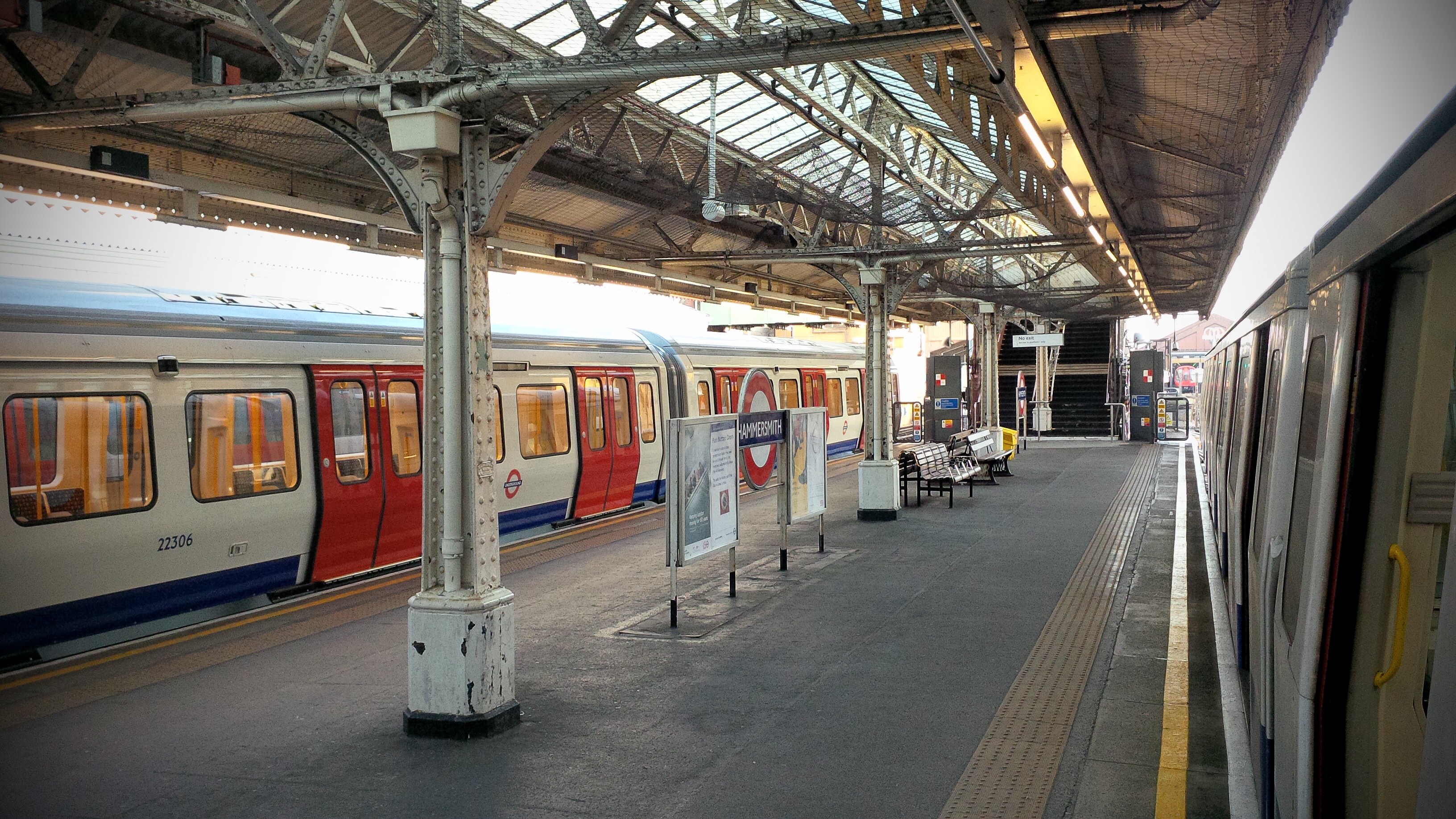
The other week I posted something about my NLP training in Hammersmith and the coffee experience. I attended the training with a friend, and at the end of each day we would go to the tube station – the Hammersmith and City line rather than the Piccadilly. It’s a terminus, so trains are usually ready in the station, waiting patiently at a platform for their fresh cargo.

Each and every day we would stroll up to the ticket barrier, move through and see the display board signalling which platform the next train departed from. Most days there would be a train at that platform.

Then something strange would happen.

My friend would quicken his pace and often break into a run. Sometimes a sprint. I would be left to saunter down the platform and find him in his chosen carriage.

After a few experiences of this we began to ‘unpack’ these two contrasting behaviours. Initially I mocked him, because I had never missed the train, but we were curious about what lay deeper in this behaviour.

There was superficial evidence that might support certain theories. My friend was a runner. He ran for pleasure regularly. I did not. He was, and probably still is, much fitter than me – so he had more capability to behave that way and running was a familiar activity. Typically I don’t run for anything.

At a deeper level though, time isn’t important to me. So the possibility of missing a train wasn’t a significant issue, but more than that, it presented an opportunity. I would have time to watch the world and the people in it. I would have time to sit quietly and ‘be’. My friend’s map of the world was different – he had many things to do, things to get done, so missing a train would deny him possibilities.

We still see this pattern today, not with trains, but elsewhere. He tries to fit a lot into his life. I’m more content to see what life offers in this moment.

There will of course be more depth, more detail in explaining our run/saunter behaviour at Hammersmith, but the joy is discovering that.

So be curious about what you do … every little thing, from choosing what to eat for lunch, to buying new shoes, to how you plan your weekend or even how you live your life.

It’s not about running or not running. It’s about knowing or not knowing.

If you don’t take time to know yourself, who else is going to?
the true meaning of coffee …

beliefs change
Many years ago I trained as a master practitioner in Neuro Linguistic Programming. I trained with a friend.

The training was near Hammersmith in London and at the beginning of each day we would go for a cappuccino and a bacon sandwich at a little Turkish coffee shop nearby. Although the training modules were several months apart, on seeing us enter at the beginning of a new module the owner would always recall our order – one sandwich on white, one brown, one without butter etc.

That coffee shop has sadly gone now, but that experience still anchors me to that time of learning, and I doubt the owner and his cheery waitress have any knowledge of how much that stays in my memory.

It serves to remind me that interactions between human beings can sometimes have more importance than their seemingly ‘low level’ content might suggest; they can carry more meaning than those involved at the time might ever realise; the spoken word or behaviour may have a completely different result or impact to that intended at the time – indeed one NLP presupposition is that the meaning of the communication is the result it elicits, not necessarily the one the giver intended.

Every day, all day, we give out communication, consciously and unconsciously. Everyone we meet takes their own meaning from that, even if several people experience the same ‘message’, each will create their own meaning.

In our early years, much of this gives rise to our beliefs about the world. Some of that serves us well in later life. Some does not.

The parent with the adolescent child, studying for their exams, will doubtless have the best intention to support them. Comments such as ‘never mind, you did your best’ or ‘all you can do is try’, have positive intentions. Yet I have seen such people in the middle of their lives, still running a belief that ‘I’m not good enough’ or ‘I have to work hard’ or even a more complex belief such as ‘If I don’t succeed nobody will love me’.

Spoiler alert: you probably believed in Father Christmas when you were small. Your parents span the yarn. It served you to believe – you got toys, chocolate, the excitement of presents to unwrap, and as a child that’s desirable. My guess is most of you no longer believe in Father Christmas.

The meaning we take at one point in our lives doesn’t have to be the meaning we live with. Trying hard when you’re 15 might be useful – please a parent, pass an exam. Trying hard later in life, when your work life balance is out of kilter, or when you’re in a job you loathe, or when you’re burning out through effort, or when you just want your boss to notice you, isn’t necessarily so helpful.

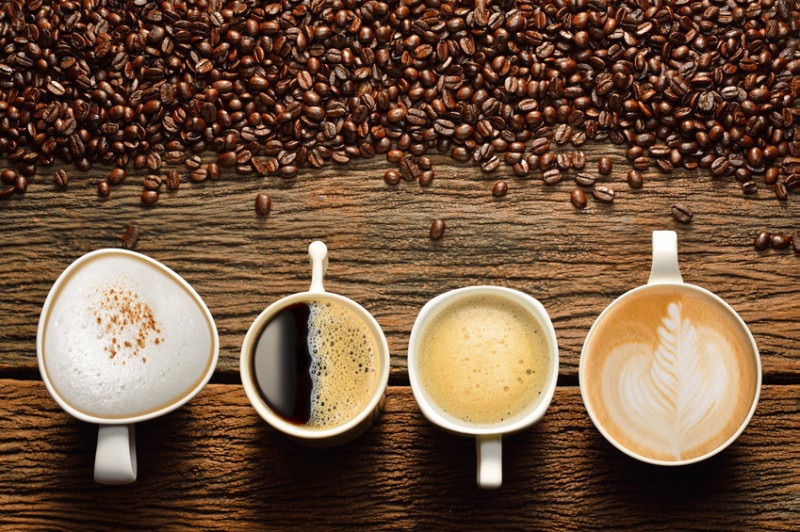
The barista can make many coffees.

You have a choice whether yours will always be the same.

if you think you think, think again…

Chocolate behaviour

We are at the top of the food chain. Our ability to think, to cognitively assess, decide and act is unparalleled.

Or is it?

Yesterday afternoon I ate a large chocolate bar.
I wasn’t hungry. I know it’s not good for my waistline. Only the other day I was reading about the hidden threat of too much sugar in our diet. I had a banana on my desk, which, despite its curvaceous yellow appeal, remained ignored.

Human behavior is complex and rarely, if ever, purely rational. In fact our rational internal dialogue almost always loses out to a deeper, hidden, irrational, impulsive, unconscious drive to act.

But, behavior doesn’t happen by chance or out of the blue. It has a structure – trigger, behaviour, reward. In one real sense we are machines: input, action, output. Mechanistic rather than thinking.

Behaviour can be conscious or subconscious, mental or physical, learned or inherited, voluntary or involuntary… some behaviour is genetically and biologically underpinned – we all withdraw our hand from the hot saucepan handle, from pain, without thinking. Some behaviour is influenced by social and cultural norms. Some by persuasion or even coercion.

That doesn’t however explain my chocolate addiction.
Nor does it explain much of our behaviour day to day.

I’m not genetically coded, socially expected or forced to curse that driver sat in the middle lane of the motorway. Nor to stop working on what I should be doing to do something more interesting. Nor to be late for that meeting. Nor to run for the bus. Nor to buy those trousers I don’t need.

No, these behaviours are motivated internally, by our beliefs, values and biases. By hidden patterns developed and evolved by our life story.

I regularly curse middle lane drivers. I’ve examined this behaviour closely. It’s not that I’m a stickler for the Highway Code – I confess I don’t always follow it. It’s not that I’m in the habit of moaning at people. It’s not that I’m often late and they’re simply in my way. For me, it’s because they aren’t honouring, recognising, making space for a fellow human being. They’re self absorbed. That value drives other behaviours in me; some I’m not proud of and that just happen before I can rationally think. So the unfortunate motorist is merely the trigger. My reward is I can honour a personal value – yet the irony of my own behaviour contradicting that very value is not lost on me and therein lies another behaviour puzzle. What remains true is that in that moment, the behaviour is unthinking, subconscious, mechanistic, programmed … out of my control.

Or is it?

You see, consciously understanding my internal motivation, beliefs, values and world map gives me choice. Noticing the triggers and the rewards of my behaviour gives me choice. So be curious about you.

If you think you think, think again…