
you are today where the thoughts of yesterday brought you, and you will be tomorrow where the thoughts of today take you
Sometimes we need to break the pattern.

you are today where the thoughts of yesterday brought you, and you will be tomorrow where the thoughts of today take you
Sometimes we need to break the pattern.
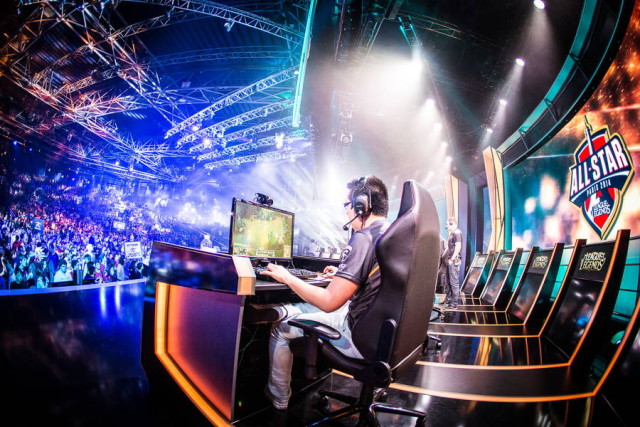
The International Olympic Committee (IOC) is considering including video gaming in the 2020 Olympics.
My first reaction was, that’s ridiculous. Almost as daft as cream cracker eating as a competitive sport. But then I reflected.
When is change about growth, modernisation and progression, recognising the demands of a changing world, and when is it a retrograde step, challenging history and values from a time gone by? Every change it could be argued comes with an upside and a downside. Every change from the invention of the wheel, through the Industrial Revolution right up to the advent of social media.
When is change almost for change’s sake? Because changing shows that we’re doing something? We’re active. Moving.
In organisations we move the deckchairs constantly. New teams, new roles, changed reporting, changed priorities, redundancies. All intended to respond to the market, to customer needs or to the call of efficiency. Yet often these changes hark back to methods or structures discarded at a previous evolution. Growth in organisations and in society it seems is more of a spiral, moving forward, yes, but circling back over old ground at the same time.
It seems change, growth, movement are a deeply intrinsic human need. We seem incapable of just standing still. But where and how we grow seems more and more to be less considered, less thoughtful, as the modern world evolves. The capacity and capability for change, seems to be driven increasingly from the need for change itself, rather than from a considered view of how and where to evolve to a markedly better place. We seem addicted to the idea that things just have to be different. It’s the movement that counts more than the destination. This in turn seems to raise the profile of temporary. Places that exist just as staging posts from one change to the next. Temporary, transitional states. Fads.
I wonder if the consideration of rows of professional e-sport players, sitting at terminals, playing each other at a computer game, watched by crowds, is more a response of this modern need to change, than a true enhancement of the sporting ideals conceived by the Olympic founders?
It seems to me that, if it gets the go ahead, it would be merely a temporary nod to a changing world, probably gone and forgotten within one or two games, replaced perhaps by insect eating or another up and coming fad.
I wonder what happens to us should we ever be unable to change? If we become stuck? When growth stops being possible because only one company runs everything and it is all optimised to meet every human need?
Then, we probably wear virtual reality headsets which create imaginary change so that our intrinsic need for growth is met. And that will be the only Olympic event.

I’m too old for perfection so I’m experimenting with emergence
Don’t spend time beating on a wall, hoping to transform it into a door.
Coco Chanel

I’ve just taken delivery of a new car.
It’s the same as my old one. Same manufacturer. Same model. Same specification. Same colour. Sure a couple of minor details have changed as they have updated the styling, but essentially it’s the same car.
I’m really excited though. Strange how the smell of a new car is so good. I feel like a child at Christmas.
I’ve walked around it several times and lovingly stroked it or removed an imaginary blemish or tiny sign of dirt.
I’m driving carefully too – around a car park, at least. Strange because it’s the same shape and size, yet I’m being ultra cautious.
Given so little is different.
Given so little has changed.
Why is my behaviour so markedly altered?
How we respond to change. How our behaviour is connected to our thoughts – real or imagined. How our senses influence our reactions and our imagination. Weird, but very human.
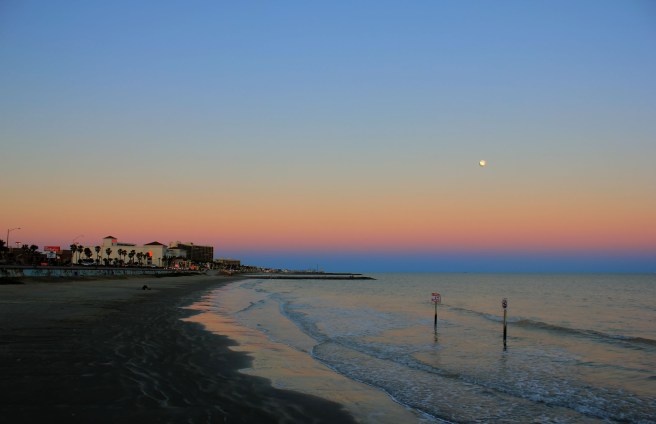
Dusk is here.
It’s a strange time. The transition between day and night.
Day and night are clearly marked in our routine of existence. Each of us associates certain activities with day and night – everything has a place in one or both. Day is when we get up, for example, as many of us work in the day. Some of us though work at night, so day is when we sleep and everything is reversed.
Dusk is different though. I can’t think of something I associate with dusk.
It seems solely to exist to mark the transition from day to night. The fading light a reminder that day is ending and night is beginning.
Signalling endings. Signalling beginnings.
Maybe there is a place for this signalling elsewhere in our lives?
Maybe then change wouldn’t be so scary?
Maybe the signalling could be seen as a celebration of a new beginning?
The celebration of a time passing and a chance to enjoy what that time gave?
Maybe every transition and change programme needs dusk?

How often do you change what you do?
I don’t mean change job or your career. I mean change behaviour.
How much of your daily, weekly, monthly routine is just that, routine?
Do you get up at the same time? Wash, dress and eat in the same order? Do you always have a cup of tea? Eat the same things, drink the same juice? Do you go to work the same way, leave at the same time, make the same checks before leaving? Do you have the same routines on arrival at work? Get a coffee, hang up your coat, switch on your computer, go to your locker…? Do you have lunch at the same time, eat the same choices, go with the same people? Do you leave at the same time, get the same bus or train, have the same routine when you walk through the door at home?
Do you shop the same day of the week? Wash the car or cut the grass Saturday or Sunday? Do you do the washing or ironing on a set day? Do the kids have after school club every Tuesday? Do you go skiing every year, or have a week in the sun?
How often do you deliberately change things?
Do you change more than you don’t?
Do you maintain more than you alter?
What might happen if you changed more?
It’s not that change is intrinsically good or bad, it’s simply that so much of what we do becomes an unconscious pattern, a sloppy given, an unthinking routine. It’s a missed opportunity to experiment, to learn, to improve.

As you move through the world you will have touched people. Some you will know. Family. Friends. Colleagues. Loved ones.
These people will recall you. They will feel connected. Your life and theirs inextricably linked through a bond. Maybe the bond is tangible, physical. Maybe it is emotional. Maybe it is transparent, maybe it is just there in the system, felt in the ether.
Others you have touched, you may not even realise it to be so.
In the midst of your own hectic, muddled life, you may have inadvertently dropped little traces of you on your journey. Like a dusting of you, cascading in your wake. Equally you may have deliberately acted, not seeking gain, not cognisant perhaps of the lasting impact or significant consequences that result for that person, or those close to them. You may have done this through…
An impromptu smile
A comforting word
A timely glance
A small act of kindness
Listening when someone needed to be heard
Witnessing someone’s truth
A small but critical thank you
A heartfelt hug
A positive thought
With fairy-like footprints, we invisibly stand in people’s lives, often unaware of those we have touched.
But they remember. They know. They thank you.

If you were to replay your last 24 hours in reverse, what might you change?
Would you add something in? Something you meant to do, or with the benefit of the ‘end of day’ hindsight, something you would have slotted in?
Would you take something out? Something that didn’t add value or which, with the benefit of knowing the whole, the end point, you might just simply not do?
Would you change the sequence? Swap two pieces around?
Would you start something earlier or later? Or maybe finish something sooner?
Would you change durations? Do more of something or less of something?
Do you have any regrets?
If we start from the end of our day, looking back, how might our choices be different? Tomorrow, imagine you are starting at the end. What choices might you make, before you begin?
Then, at the end of tomorrow, review your day. Anything different?
Sketch by: Joe Nammour

What if Brussels sprouts were square?
What if turkey meat was blue?
What if parsnips tasted of coconut?
Believable things? Maybe, maybe not. But you can imagine them.
What if next Christmas you were more aware of what you do and why?
What if next Christmas you knew your purpose in life, why you are here?
What if next Christmas you understood more about your unconscious beliefs and motivations; what made some things possible and some things hard for you?
What if knowing these things gave you more choice, more freedom, more joy?
Imagine that.
Merry Christmas
image by t1na (deviantart.com)
 illuminated dandelion