the transition to Autumn

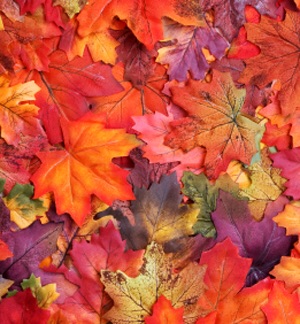
autumn season
I like this time of year.

The light is different. The colours somehow deeper. The air somehow crisper.

Change is coming, as evidenced in the leaves and the trees, yet there is something peaceful about the shades of Autumn. A calm, crisp beauty and a rich palette of colour in nature.

I notice how the properties of Autumn align for me with things that matter to me. Light, depth, peace, beauty and a uniqueness of difference in colour reflecting human diversity…

Maybe your favourite season is Autumn too, but it says something different to you?

Maybe your season is Spring? New shoots, new life, bracing breezes, changeable weather, possibilities?

Maybe Summer? Maybe Winter?

Which season is your favourite and what does it say about you?

the move for movement

movement change reflection now
Water seldom stands still.

Part of the endless water cycle. Rain, snow, hail and other precipitation falls. It runs from mountain to valley, it seeps into the ground, it pours into rivers. Driven by gravity, it is drawn down towards the earth. Providing a life source for plants, humans and other species. Then, from the land, the oceans and seas, evaporation and condensation draw the water up again, high into the atmosphere where the cycle begins again.

Water in many forms, with many uses. Always moving, always transforming, always serving.

As human beings we too seem drawn to movement. To move away from a past or present truth or to move towards a future one. Drawn too to transformation. Drawn to experiment. To change our state. To experience change. To work towards something. To grow our usefulness. To breathe life into something, someone. To find a new place. To simply find a place.

The inevitability of movement.

Yet water pauses too. Beads of water hesitate in the arms of the leaf, pause as a dew droplet on a blade of grass, hang in the air in a foggy breath, rest for a moment in the rock pool. Socialise with friends in the puddle, the lake.

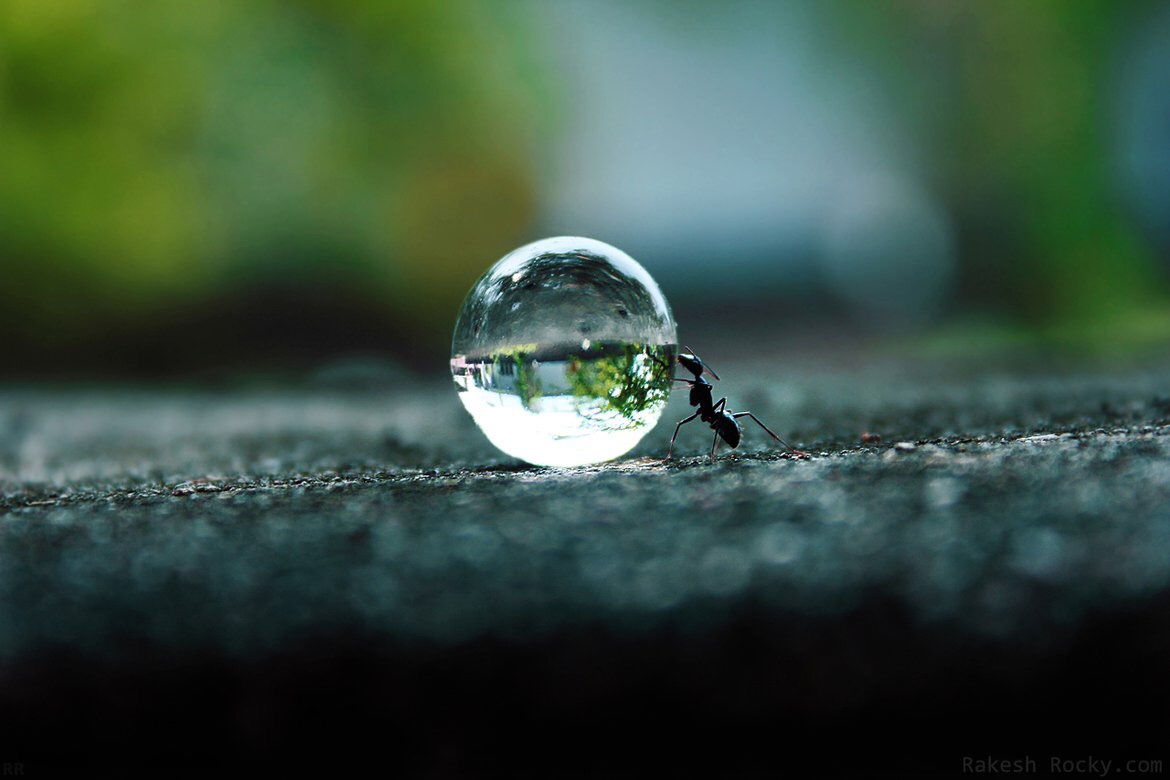
Water reflects the beauty of now. The glassy eye of the water bead displaying its surroundings in a full panorama. The puddle reflecting passers by, life in action.

As human beings we would do well to mimic this behaviour too. To pause in the moment of now. Life comes in these moments of rest, these moments of reflection, these moments of connection with each other and the world we live in. For in one sense this is our purpose.

The cycle of movement will continue, relentlessly. It will happen whether we seek it or not. Just like the water cycle, it will complete. But like the water droplet, we would do well to pause, to reflect the light around us. Ours and that of others.

if you could choose your ideal job…

life purpose as a job
Let’s abandon traditional job titles. Job titles that attempt to describe what you do. If instead your job title described your life purpose, what would it be?

I don’t mean a weird job title that tries to cleverly describe your role, what you do. Such as…

sheep shifter
domestic engineer
arboreal yoda
chief chatter champion

I mean a weird job title that describes your reason for being. Something like…

people grower
chief purpose finder
harmoniser
problem breaker
human cuddler
difference designer
balance wizard
planet protector
lightbulb moment illuminator
humanity harvester
purveyor of good
life lover
future planter
human story animator
dream alchemist
trickiness disheveller
peace percolator
imagination sparker…

What would yours be?

time, choice and freedom

time choice freedom
Our lives are complicated.

Work has changed for many of us. The ‘always on’ technology-driven communication possibilities mean that many of us are slaves to our email, our social media connections, electronic meetings and diaries. They have become all pervasive. The global world means many of us are in meetings, conversing or delivering to deadlines spanning a full twenty four hours; with an increasing expectation to be available whenever required. Technology has become more complex, not least because it changes constantly. Upgrade, upgrade, upgrade. Many commercial activities have become more complex, driven in part by the opportunity technology affords us. Consequently many business processes have become more complicated, not less.

And how do we respond? We blur boundaries, we work ‘more flexibly’, from home or away from interruption; we work evenings, weekends, so we can catch up with our email, sort out our admin, stay on top of things.

There is a knock on effect on our families, our non-work life. An impact on our wellbeing. On our health.

Of course these same globalisation, always on, technology driven changes work in our favour too. As consumers. The ability to access knowledge, products, services instantly, at the touch of a button on one of our many devices, anywhere, any time, is highly desirable. It buys us time, a precious commodity. It gives us choice, freedom.

Yet we are ceding control. Irony of ironies. The time, choice and freedom we have won is eaten up by the work demands on our time, choice and freedom.

Time to simplify?
Time to recreate boundaries?
Time to take control back?
Time to makes choices?
Time to win freedom?

change is the one ever present truth

change
Change is ever present in our human lives.

The world around us changes constantly. Not just with the seasons, the passing years, but the tools of living, the way of living, the world in which we live. And we change too…

From birth we change, learning to communicate, to walk, to make friends, to become part of the family, to find our place. We learn to learn, we go to nursery, to school, to university, at each stage taking more responsibility for ourselves. Our family may move house, add family members, lose them too. Our friends may change. Our location. Our journeys. At work, our job roles change. Our bosses. Our colleagues. Our employers. We change our house, our car, our hairstyle, our look. Our hopes, ambitions, desires change. We meet new people, new friends, new loves. We start a family. We nurture them, they grow, they leave. Later, illness may strike and our lives change again. Relationships falter and new ones are born. We leave the world of work. We become grandparents, great grandparents. Challenges and opportunities emerge constantly in our human lives and we respond, changing to adapt, to thrive, to grow. We choose to change, incessantly.

Much of this change has a connection to learning and growth. The opportunity to become more. Positive outcomes. Yet often we are worried by change. Anxious about what it will mean. Will we cope, will it be good, will we be good enough, are we doing the right thing? It can become a psychological and emotional wave machine. Hard to keep your head up. Hard to put your feet down. Hard to breathe.

I am fortunate enough to have the opportunity of a six month career break. An incredible opportunity to take time out, travel, try something new, recharge. Yet I’m worried. It will be a change. Not the routine I have become used to. Will I be prepared enough, planned enough to reap the rewards? How will things have moved on whilst I’m away? Will I want to return? Will I be able to do the things I want? How will relationships change? How will I change?

I notice that all the uncertainty, all the doubt, is in my head. Imagined. Foretold. I have become an anxious soothsayer.

We do this at times of change, particularly in work, in organisations – catastrophising, worrying about the impact, the implications, the problems. Yet when we look back, after the change, we seem able to find good. To find benefits, positives. A new lease of life. Fresh shoots. New learning. Even in the most extreme circumstance we are, as human beings, remarkably resilient and accommodating of change.

Yet still the worry persists.
Why is it there?
What’s its purpose?
How does it serve me?

what’s your worst bad habit?

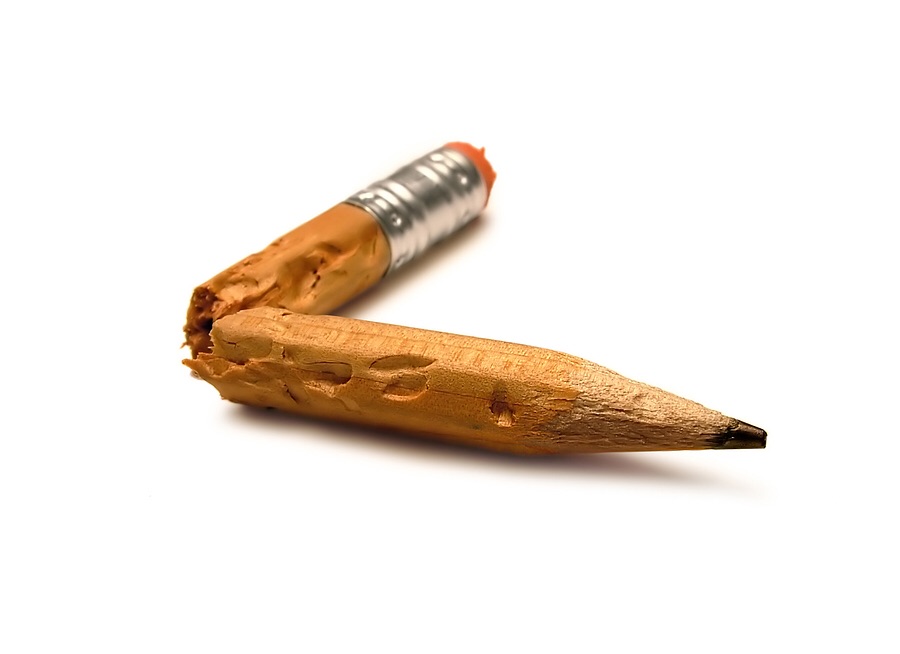
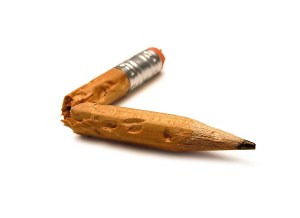
bad habit chewing pencil
From childhood we are alerted to the dark path of the bad habit.

Don’t suck your thumb
Don’t bite your nails
Don’t twirl your hair
Don’t fidget, sit still
Don’t pick your nose…

Of course in these examples it is the parent speaking, the adult. They have decided this behaviour is ‘bad’. For many, this is because they were conditioned as children to believe these habits were bad, by their own parents, by ‘society’. It is as if we have passed the judgement ‘bad’ down through the generations.

But what is a habit? Convention might say a habit is a practice, a manner, a behaviour that has become a pattern. A pattern that is hard to give up. Change requires the exercising of that thing we call ‘will power’.

I have spoken before here about behaviour being purposeful, having a structure. Trigger, behaviour, reward.

Those childhood habits I have mentioned might share similar triggers … a sense of worry, anxiety, restlessness, feeling exposed, alone, needing comfort? They might also share a reward? They all seem to have a property of physical connection to ourselves, be it thumb, hair, fidgety bottom, fingers, nose. Maybe a form of comfort from connecting to our own bodies?

So why bad?

One definition of a bad habit is one that has the potential to be detrimental to our physical or mental health.

Convention in the adult world might list such things as smoking, eating too much fast food, gambling, drinking too much, late night snacking as bad habits. Again, maybe it is society that creates this assessment, this valuation of bad? Not just invented though, not just handed down in stories and tales from elders, we have researched the medical implications of smoking, drinking, over-eating. We have hard evidence. We know.

Take a smoker. They know it is harmful, yet they persist. Why? Lack of will power? Maybe. Maybe that’s just another way of saying the reward is too important to me?

I was once in a training, where we were asked to list the benefits or rewards from smoking. Many were social – an opportunity to socialise, connect with like-minded people. Some described it as relaxing. We listed over forty benefits, from a room of sixty people, only a quarter of whom smoked. But one delegate offered a very powerful benefit. They described how it helped them remember their father – who had died of lung cancer. An odd behaviour at a logical level? But, that’s a very powerful reward. I suggest it might trump will power every time.

So paying attention to the triggers and rewards, might be useful here? It is these that drive the habit. The rewards can be well hidden, logically hard to rationalise and so hard to unearth. Seeking them out can be tricky. Be persistently curious. Keep asking ‘what do I get from behaving like this?’ Finding another way to get that reward will help you change the habit.

Maybe we need to talk not so much of ‘bad habits’, but more of ‘rewarded habits’?

So, what IS your worst bad habit?

Not because society labels it bad, but because it carries a reward you very much want or need. Your most rewarded habit? And, if you would like to change the habit or behaviour, how might you get that reward another way?

if there were human being shops…

change me
Self awareness offers choice.

Once the choice to be different is apparent to me, visible, possible; Once I know what I want, I’m ready to move. Impatient. I can see the sweeties on the shelf and I want them … now!

At moments of deep realisation for my coaching clients, I often get asked in those sessions where the sweeties become apparent, a question a bit like this one … “So how do I change that?”

This question intrigues me.

Of course, it presupposes change is possible and that’s great in a coaching context; we want our clients to come keen to achieve their goals. But the presupposed simplicity implied within the question is another matter.

Often the new awareness pertains to a way of being that we have honed for many years; It is well practiced, in the muscle, part of how we are.  The idea we can shift to a new model, a new way of being through one or two simple steps is fascinating.

We all possess many ‘things’ in this ‘modern’ world. If they stop functioning to our needs we fix them, or replace them. It is as if we somehow seek to apply the laws of our materialistic consumerist ‘thing’ world to our very humanity. I’m ready to change me, where do I go, who has the upgrade part?

If my car stops working, I take it to a dealer or garage and say please fix this. Generally that works. In part, that’s because the car is one of many identical models. It has a specification. The mechanics are trained and no doubt have detailed manuals describing how every part works, along with the knowledge and experience required to breathe life back into those parts that don’t.

If I have a two slice toaster and more family members are eating together I can upgrade to a four slice model. No matter how long I have lived with the two slice, my needs have changed, so I can just change that aspect of my life. An hour down the shops, five minutes on line, change made, life easier.

But, here’s the thing…
human beings are inordinately more complicated and each one is stunningly and beautifully unique.

No manuals. No upgrade models down the shops.

To hope that all of your learning, life experience and behavioural pattern making since birth can somehow be re-modelled in a few simple steps … a bit like reprogramming the central heating timer … is curious.

And yet we do. It’s almost as if we believe we’ve just missed out on a chapter in the book ‘How to be a happy human being’. Or perhaps we misinterpreted some instruction along the living highway which explained how we were supposed to be? Or maybe that we think someone else messed it up for us, but now we know that, we can just pull the tiller and steer the right course? Whatever our thinking about how we came to be like this, we seem to think this ‘expert’ in front of us, this ‘human mechanic’, this ‘coach’ can somehow put us right.

Changing ourselves is hard work.  Possible.  The prizes can be enormous. Life changing. But it’s always hard work.

are you busy? too busy to read this?

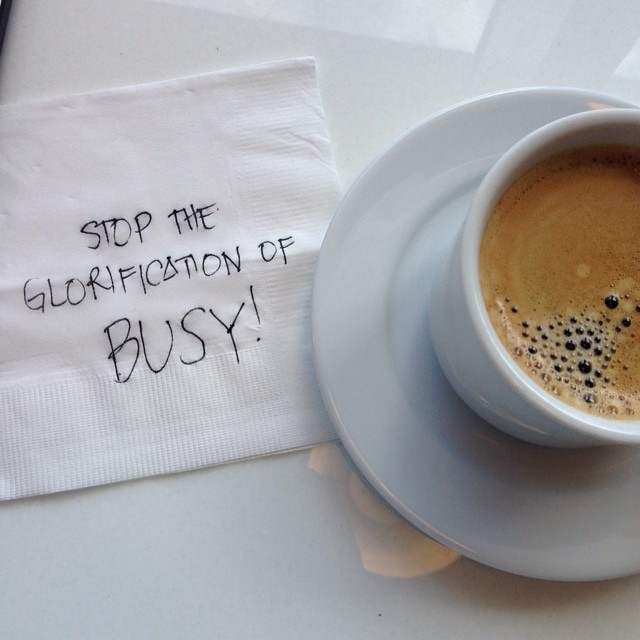
stop the glorification of busy
Are you busy? Too busy to read this? If so, maybe you should read it…

In recent months I have noticed the conversation starter at the coffee machine at work follows a familiar path, when you meet someone you haven’t seen in a while, whoever it may be. Maybe you recognise it? Or maybe you instigate it?

It goes something like this …
“Hi long time no see. What are you busy working on at the moment?”
or
“How are you?” Back comes the reply, “Really busy. You?”
or
“Hello, not seen you in a while.” “No things have been really busy…”

If you’re really busy you might want to stop reading this now.

If you live to an average life expectancy you have a total of around 620,000 hours. Given that we sleep for around a third of that, you have about 410,000 usable hours.

Time is a strange concept though isn’t it? I mean, what is an hour?

I often have the following debate with my wife when the clocks change – she’ll say something like “We gain an hour this week-end” and I’ll respond, “No we don’t, it’s just that what we call it has changed. Six o’clock is now known as five o’clock.” The Earth, Moon and Sun still move in the same harmonious rhythm. We still have the same amount of time in our lives. What we call the time is just that, it’s what we call it.

And we can call ourselves busy. Too busy to spend a few minutes on someone or something that is really important to us.

What matters most is how you use your time; those precious hours that are in short supply.

When was the last time you simply did something you love?
The last time you were kind to yourself?
The last time you carried out a random act of kindness?
The last time you stopped and really noticed another human being?
The last time you checked in with yourself, properly?
The last time you gave someone the gift of your full attention?

Next time you meet someone at the coffee machine, if the conversation starts down the ‘busy’ route, ask them a great coaching question and really listen to their response.
Maybe something like …
“… and how would you like it to be?”
or
“… and if you weren’t busy, what would you be?”

or maybe just invite them to contemplate what they would be doing right now if they were doing something they love.

And now you’ve read this … go and take five minutes for yourself.

what is your baseline state, where you live your life?

state
What is your baseline state? Where do you live most of the time?

Do you live in a state of worry, or a state of restlessness, or a state of trying (to be better, good enough…)? Do you know your baseline state?

You’re probably aware when your state changes. We change state all the time. You’ve probably experienced a state change when you’re hungry or tired – it may be harder to concentrate, perhaps you’re a little irritable? Our state impacts our behaviour, our ability and also our choices.

Changing state is unique to our individual humanness. Take moving from asleep to awake. When I awake, it’s like a gradual wave of consciousness. Often my mind becomes active almost immediately, but my body, particularly my eyes often need longer – fifteen to twenty minutes sometimes. It’s as if in that initial awake state I am focused internally and not yet ready to engage with the world. For others, waking is like a switch – mind, body, emotions ready to go, almost instantly. Be curious about your version of a state.

A state involves thoughts, feeling and physiology – bodily clues exist as well as emotional and mental ones. Posture may change. There may be a rise in heart rate, shallower breathing, churning stomach or hunched shoulders.

States are often associated with our environment, what’s going on around us and what we feel, think and do in response. We’ve all experienced a euphoria or joy when something good happens, or a sudden moment of panic when something scary or bad occurs.

States, thinking, physiology, feelings are all interconnected. Each impacting on each other. Like a five-a-side football team these four play in formation with environment. One moves, makes a run in one direction, the others move in response. Constant momentum, like a roller coaster loop – twisting, rising, falling without end.

We attempt to control this wild ride, primarily through thinking. Yet four other parts are on the ride too.

Change your environment, your state changes, your feelings shift, your thinking alters. We’ve all walked in the fresh air to clear our heads. Experiment. Sometimes your environment or physiology are easier to alter. Do you run, so that your head clears, so that the endless thoughts subside? This is changing your state.

In this way, our state isn’t just the result of our thinking or emotions. It can also change them.

So, what’s your baseline state? The state you are in when the other four players aren’t moving position on the pitch? If your baseline state is anxious, or striving, or hurried, or confused, or afraid, or something else that isn’t working for you, change it.

Live your life in a state that works for you. That way when you’re blown off course, you know where you want to get back to.


are you scared?

scared change
Are you scared?

Sometimes I am.

The world is changing at an unbelievable pace.

Did you know that there are now more people in the world with access to a mobile phone than access to a toilet?

That would have been inconceivable only a decade ago. If change happens that fast, what will be true in ten years time?

And will you cope?

The world is changing. Business is changing. Communication is changing. Your job is changing. Are you changing?

The irony is that at this time of unprecedented change, what we most need … is an ability to change.

To change ourselves.

Not to become someone else, but to adapt, to be more agile, to learn quickly and change our approach, change our behaviour, change our thinking, change our response, change our direction.

Put simply we have two choices. We can shoot the change. Complain. Try and stop it. Avoid or hide from it. Run away. Deny it.

Or … we can stop looking outside and look inside. At ourselves.

It starts with giving ourselves attention, building our capability to understand ourselves; this enables choice, agility, resilience, freedom, learning, growth, happiness.

Maybe in ten years time, more human beings will have full access to themselves than currently have access to a parking space?

How cool would that be?