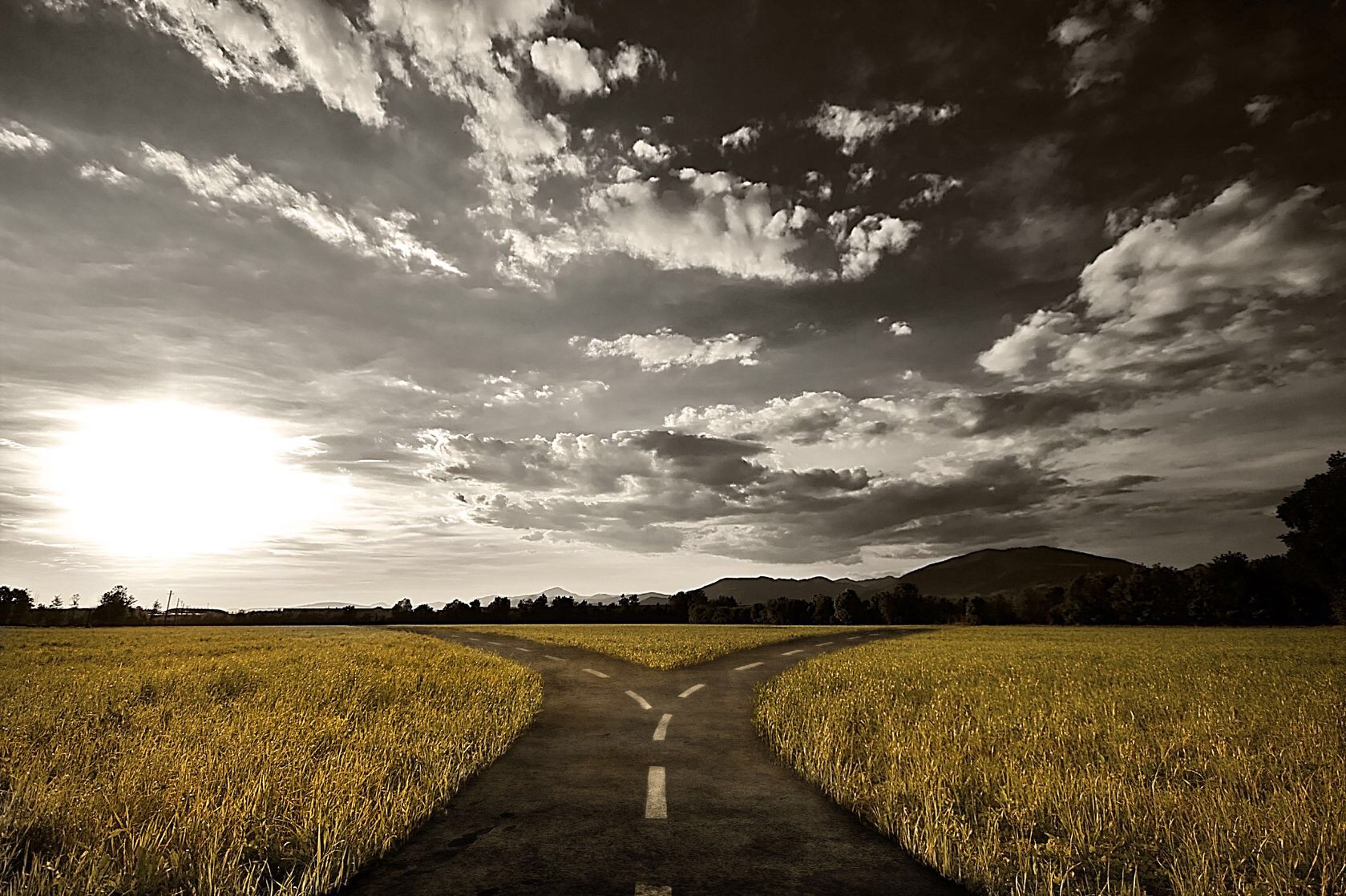
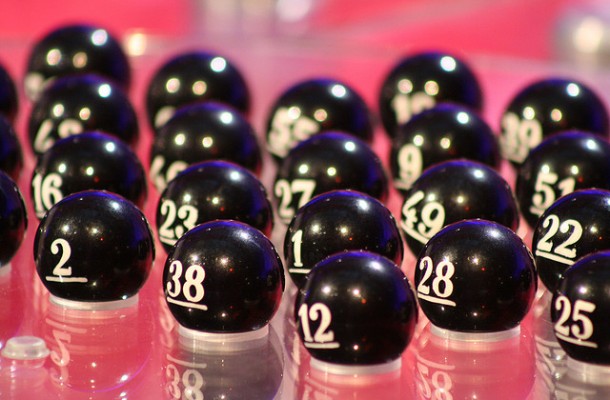
life as a pot of numbered balls

random happenstance life
I’ve just watched the FA Cup first round draw.

Clubs matched randomly. Balls with numbers on, drawn blind from a perspex receptacle.

Imagine if our lives were determined this way. Our relationships determined by the number on the drawn ball. Our life longevity similarly. Our quality of life. Our ails and illnesses drawn randomly from the pot.

What if there were no choice? If this random selective ‘fate’ determined every twist and turn. The grabbing of a numbered ball swirling around in the pot of life deciding our future. The school we went to. The friends we made. The job we secured. Our performance and pay in that job. What if the balls determined our future, our choices at every stage? What if there was in fact no free will?

Ironically much is in fact determined by happenstance. Either because certain life choices determine subsequent choices, or because we are ‘run automatically’ by our beliefs, our values, our early life experiences coding all our subsequent behaviour.

Maybe we are more like the first round draw than we think?

stuck in the tunnel of life

stuck tunnel life
My tube train stopped today at Edgware Road. The driver informed us that we would be held there for a while. There was a problem with the train in front.

It got me thinking. If a train becomes completely immovable, what happens then? The tunnel, the only route forward, is blocked. I guess we would all decamp and be forced to exit the platform, leave the station and find another way to our destination. Or I guess we could wait. Wait for life, for someone else to remove the blockage so that we can continue on our chosen path.

It struck me that in the event that this happened, we would just cope. Sure we might moan that we’ll be late, gripe about the cost of tickets and the poor service, worry that we don’t know how to get to our destination, but we would find a way. We would move on. Yet in life we often get stuck and stay stuck. Unable to see another path, we become disabled.

Of course London Underground would probably have staff available. Advice would be on hand. Guidance about how to get to our destination. Failing that, we would simply surface and surf. The Internet would tell us what to do.

Life isn’t like that. Even if people are around to listen or to give advice, our life situation is more complex, more individual, more unique, than the tube journey. The Internet doesn’t offer solutions to complicated life problems, riddled with feelings, entwined with complexities of relationship, weighed down with challenges of expectation, paralysed with the fear of coming up short in some way.

As fellow human beings, we seem hopelessly ill equipped to support each other, even if we were minded to.

Maybe this is the Internet we really need?

needs and wants, wants and needs

want need
Waiting in for a plumber. I’m not good at waiting for someone. Deliveries, tradesmen etc. My choice is removed. I’m in their control.

I want to get out.

I need to wait though. We may have a leak. A telltale little brown patch has appeared on a ceiling.

I should wait. The leak could get worse. Despite this more sensible course of action, I’m still drawn to go out. Nowhere special, just to have the freedom to decide. It’s the freedom I want. The expert opinion I probably need.

The tension between what we want and what we need is intriguing. Are needs more powerful than wants? Are needs more fundamental to our sense of self and our wellbeing? Certainly needing shelter, water, food would seem to be basic needs. Yet wanting something can be a pretty strong draw too. Wanting to move, wanting freedom, growth, learning, progression, choice. These too are powerful motivators.

Refugees and economic migrants pouring into Europe seem to demonstrate the power of wanting a better life for your family. Wanting opportunity. Wanting freedom. Or is the migration need driven? The need for safety, for security?

I wonder if our modern world has confused the two? Do I need a new phone, or do I simply want one? Do I want a hug, or are there times I absolutely need one?

Do we know the difference any more? The difference between a need and a want? How the difference motivates our thinking? Which has more feeling? Which trumps the other? Which do we value more? The things we want and have, or the things we need and have?

Are the words interchangeable, or is it some other orientation in our lives that motivates us to prefer one word over the other? Do independent people have a penchant for wanting things? Is wanting essentially selfish? Wanting something certainly implies choice, preference. Needing something suggests less choice. It suggests necessity.

But is it the same for us all? Is there a common thread to our humanity? Or is this a more personal matter?

Maybe you want to know? Or need to? Maybe you don’t? Understanding that which motivates us would seem to be useful though? How your choice of language impacts your thinking, your emotions, your behaviours?

if you could choose your ideal job…

life purpose as a job
Let’s abandon traditional job titles. Job titles that attempt to describe what you do. If instead your job title described your life purpose, what would it be?

I don’t mean a weird job title that tries to cleverly describe your role, what you do. Such as…

sheep shifter
domestic engineer
arboreal yoda
chief chatter champion

I mean a weird job title that describes your reason for being. Something like…

people grower
chief purpose finder
harmoniser
problem breaker
human cuddler
difference designer
balance wizard
planet protector
lightbulb moment illuminator
humanity harvester
purveyor of good
life lover
future planter
human story animator
dream alchemist
trickiness disheveller
peace percolator
imagination sparker…

What would yours be?

time, choice and freedom

time choice freedom
Our lives are complicated.

Work has changed for many of us. The ‘always on’ technology-driven communication possibilities mean that many of us are slaves to our email, our social media connections, electronic meetings and diaries. They have become all pervasive. The global world means many of us are in meetings, conversing or delivering to deadlines spanning a full twenty four hours; with an increasing expectation to be available whenever required. Technology has become more complex, not least because it changes constantly. Upgrade, upgrade, upgrade. Many commercial activities have become more complex, driven in part by the opportunity technology affords us. Consequently many business processes have become more complicated, not less.

And how do we respond? We blur boundaries, we work ‘more flexibly’, from home or away from interruption; we work evenings, weekends, so we can catch up with our email, sort out our admin, stay on top of things.

There is a knock on effect on our families, our non-work life. An impact on our wellbeing. On our health.

Of course these same globalisation, always on, technology driven changes work in our favour too. As consumers. The ability to access knowledge, products, services instantly, at the touch of a button on one of our many devices, anywhere, any time, is highly desirable. It buys us time, a precious commodity. It gives us choice, freedom.

Yet we are ceding control. Irony of ironies. The time, choice and freedom we have won is eaten up by the work demands on our time, choice and freedom.

Time to simplify?
Time to recreate boundaries?
Time to take control back?
Time to makes choices?
Time to win freedom?

change is the one ever present truth

change
Change is ever present in our human lives.

The world around us changes constantly. Not just with the seasons, the passing years, but the tools of living, the way of living, the world in which we live. And we change too…

From birth we change, learning to communicate, to walk, to make friends, to become part of the family, to find our place. We learn to learn, we go to nursery, to school, to university, at each stage taking more responsibility for ourselves. Our family may move house, add family members, lose them too. Our friends may change. Our location. Our journeys. At work, our job roles change. Our bosses. Our colleagues. Our employers. We change our house, our car, our hairstyle, our look. Our hopes, ambitions, desires change. We meet new people, new friends, new loves. We start a family. We nurture them, they grow, they leave. Later, illness may strike and our lives change again. Relationships falter and new ones are born. We leave the world of work. We become grandparents, great grandparents. Challenges and opportunities emerge constantly in our human lives and we respond, changing to adapt, to thrive, to grow. We choose to change, incessantly.

Much of this change has a connection to learning and growth. The opportunity to become more. Positive outcomes. Yet often we are worried by change. Anxious about what it will mean. Will we cope, will it be good, will we be good enough, are we doing the right thing? It can become a psychological and emotional wave machine. Hard to keep your head up. Hard to put your feet down. Hard to breathe.

I am fortunate enough to have the opportunity of a six month career break. An incredible opportunity to take time out, travel, try something new, recharge. Yet I’m worried. It will be a change. Not the routine I have become used to. Will I be prepared enough, planned enough to reap the rewards? How will things have moved on whilst I’m away? Will I want to return? Will I be able to do the things I want? How will relationships change? How will I change?

I notice that all the uncertainty, all the doubt, is in my head. Imagined. Foretold. I have become an anxious soothsayer.

We do this at times of change, particularly in work, in organisations – catastrophising, worrying about the impact, the implications, the problems. Yet when we look back, after the change, we seem able to find good. To find benefits, positives. A new lease of life. Fresh shoots. New learning. Even in the most extreme circumstance we are, as human beings, remarkably resilient and accommodating of change.

Yet still the worry persists.
Why is it there?
What’s its purpose?
How does it serve me?

what’s your worst bad habit?

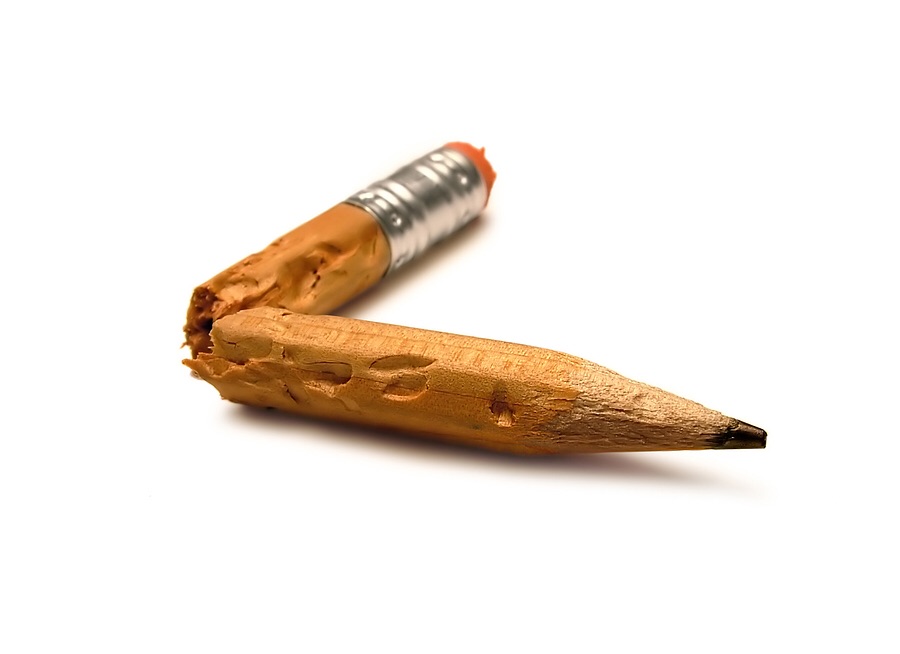
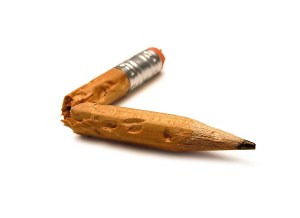
bad habit chewing pencil
From childhood we are alerted to the dark path of the bad habit.

Don’t suck your thumb
Don’t bite your nails
Don’t twirl your hair
Don’t fidget, sit still
Don’t pick your nose…

Of course in these examples it is the parent speaking, the adult. They have decided this behaviour is ‘bad’. For many, this is because they were conditioned as children to believe these habits were bad, by their own parents, by ‘society’. It is as if we have passed the judgement ‘bad’ down through the generations.

But what is a habit? Convention might say a habit is a practice, a manner, a behaviour that has become a pattern. A pattern that is hard to give up. Change requires the exercising of that thing we call ‘will power’.

I have spoken before here about behaviour being purposeful, having a structure. Trigger, behaviour, reward.

Those childhood habits I have mentioned might share similar triggers … a sense of worry, anxiety, restlessness, feeling exposed, alone, needing comfort? They might also share a reward? They all seem to have a property of physical connection to ourselves, be it thumb, hair, fidgety bottom, fingers, nose. Maybe a form of comfort from connecting to our own bodies?

So why bad?

One definition of a bad habit is one that has the potential to be detrimental to our physical or mental health.

Convention in the adult world might list such things as smoking, eating too much fast food, gambling, drinking too much, late night snacking as bad habits. Again, maybe it is society that creates this assessment, this valuation of bad? Not just invented though, not just handed down in stories and tales from elders, we have researched the medical implications of smoking, drinking, over-eating. We have hard evidence. We know.

Take a smoker. They know it is harmful, yet they persist. Why? Lack of will power? Maybe. Maybe that’s just another way of saying the reward is too important to me?

I was once in a training, where we were asked to list the benefits or rewards from smoking. Many were social – an opportunity to socialise, connect with like-minded people. Some described it as relaxing. We listed over forty benefits, from a room of sixty people, only a quarter of whom smoked. But one delegate offered a very powerful benefit. They described how it helped them remember their father – who had died of lung cancer. An odd behaviour at a logical level? But, that’s a very powerful reward. I suggest it might trump will power every time.

So paying attention to the triggers and rewards, might be useful here? It is these that drive the habit. The rewards can be well hidden, logically hard to rationalise and so hard to unearth. Seeking them out can be tricky. Be persistently curious. Keep asking ‘what do I get from behaving like this?’ Finding another way to get that reward will help you change the habit.

Maybe we need to talk not so much of ‘bad habits’, but more of ‘rewarded habits’?

So, what IS your worst bad habit?

Not because society labels it bad, but because it carries a reward you very much want or need. Your most rewarded habit? And, if you would like to change the habit or behaviour, how might you get that reward another way?

The seduction of addiction

seduction of addiction
Drug addiction can be a destructive thing.

Yet we are all drug addicts and at the same time drug pushers.

Our addiction in life is often our way of being. It is seductive to stay with the familiar, however much that familiar harms us, limits us, hurts us.

Being exhausted. Lonely. Always moving. Looking out. Looking in. Critical. On the edge. Miserable. Hyped. Caring for others. Not caring for yourself. Catastrophising. Leaking power. Being guilty. Hiding. Needing love. Taking responsibility. Blaming. Saving. Out of balance. Looking back… and many more drugs of familiarity. Each with a high. Each with a low.

We can also become used to beating ourselves up in that internal dialogue of not good enough, not smart enough, not beautiful enough, not talented enough… In a strange way the familiarity keeps us safe. It becomes seductive to keep doing it. Hard to kick the habit. We find ways to give ourselves the fix – seeking evidence to prove the theory, so we can reaffirm its ‘truth’ again, and so stay safe.

We can do this in relationships too. Give our power away. Bemoan the way the behaviour of others makes us think or feel. Yet we are often drawn back, to get another dose. Sometimes because there is an element of that interaction, that relationship, which meets an unspoken need deep within. It gives us a reward. An unconscious lift, an energising boost, a buzz. But all before we experience the fall, the difficult feeling, the disappointment, the hurt, the down after the drug wears off.

Beware the pushers. Those who draw you in with their sweeties. But especially look out for the pusher within. The part of you that also gets you hooked; seduces you; feeds you the familiar yet painful drug.

Choose what you consume. Notice what is addictive. Seek out the truth of the seduction.

Don’t hurt me…

hurt
Sometimes we interact with people and feel hurt, anger, pain, frustration following their action or words.

Sometimes we keep that emotion inside, but sometimes we throw it out with a statement such as…

“You hurt me when you did that…”
“He really makes me angry when he says that…”
“When she says that, it really annoys me…”
“You upset me when you don’t…”

The notion that one human being has the power to create a powerful emotion in another, by saying or not saying something, by doing or not doing something is intriguing. A dark art.

In reality of course, as receivers, we do it to ourselves.  It is our interpretation, our meaning making that generates the hurt, the anger, the pain.  It is our internal sense of ourselves that allows the action, inaction or words to generate the feeling. Our own beliefs or values.

Maybe the better response would be…

“I allow what you do to hurt me”
“I take his words and I use them to create a sense of anger within me”
“I convert her words into a feeling of annoyance within me”
“I interpret your inaction in a way that enables me to generate feelings of upset within me”

Owning the feeling we have, the feeling we generate, gives us power and choice. To no longer blame or attribute the emotion to someone else, but to say this is mine allows us to change it.

if there were human being shops…

change me
Self awareness offers choice.

Once the choice to be different is apparent to me, visible, possible; Once I know what I want, I’m ready to move. Impatient. I can see the sweeties on the shelf and I want them … now!

At moments of deep realisation for my coaching clients, I often get asked in those sessions where the sweeties become apparent, a question a bit like this one … “So how do I change that?”

This question intrigues me.

Of course, it presupposes change is possible and that’s great in a coaching context; we want our clients to come keen to achieve their goals. But the presupposed simplicity implied within the question is another matter.

Often the new awareness pertains to a way of being that we have honed for many years; It is well practiced, in the muscle, part of how we are.  The idea we can shift to a new model, a new way of being through one or two simple steps is fascinating.

We all possess many ‘things’ in this ‘modern’ world. If they stop functioning to our needs we fix them, or replace them. It is as if we somehow seek to apply the laws of our materialistic consumerist ‘thing’ world to our very humanity. I’m ready to change me, where do I go, who has the upgrade part?

If my car stops working, I take it to a dealer or garage and say please fix this. Generally that works. In part, that’s because the car is one of many identical models. It has a specification. The mechanics are trained and no doubt have detailed manuals describing how every part works, along with the knowledge and experience required to breathe life back into those parts that don’t.

If I have a two slice toaster and more family members are eating together I can upgrade to a four slice model. No matter how long I have lived with the two slice, my needs have changed, so I can just change that aspect of my life. An hour down the shops, five minutes on line, change made, life easier.

But, here’s the thing…
human beings are inordinately more complicated and each one is stunningly and beautifully unique.

No manuals. No upgrade models down the shops.

To hope that all of your learning, life experience and behavioural pattern making since birth can somehow be re-modelled in a few simple steps … a bit like reprogramming the central heating timer … is curious.

And yet we do. It’s almost as if we believe we’ve just missed out on a chapter in the book ‘How to be a happy human being’. Or perhaps we misinterpreted some instruction along the living highway which explained how we were supposed to be? Or maybe that we think someone else messed it up for us, but now we know that, we can just pull the tiller and steer the right course? Whatever our thinking about how we came to be like this, we seem to think this ‘expert’ in front of us, this ‘human mechanic’, this ‘coach’ can somehow put us right.

Changing ourselves is hard work.  Possible.  The prizes can be enormous. Life changing. But it’s always hard work.