
Every exit is an entrance to somewhere else.
Tom Stoppard
As you move towards the end of 2015, consider what exits you will step through. What opportunities will you open as a result? What might you step in to next year?

Every exit is an entrance to somewhere else.
Tom Stoppard
As you move towards the end of 2015, consider what exits you will step through. What opportunities will you open as a result? What might you step in to next year?
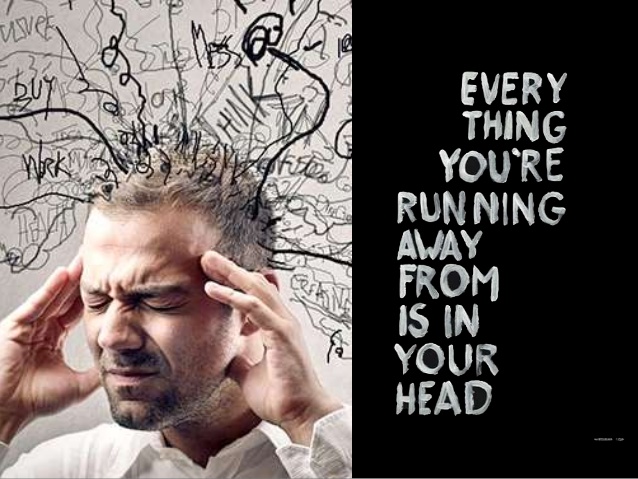
The next time you have a thought… let it go
Ron White
We can become slave to our heads.
We ping pong between the past and the future. What has happened and what might happen. What we need to do. What we did or didn’t do. Experiences we have had. Opportunities to come. Lists of things to do. Things we did, or should have done.
Our thoughts begin to run us.
I must do this…
If only I hadn’t…
What if…?
Don’t forget…
What did I say…?
Should I…?
Why…?
When can I…?
Find instead a place where the mind is quiet. The body is present.
The space to be.
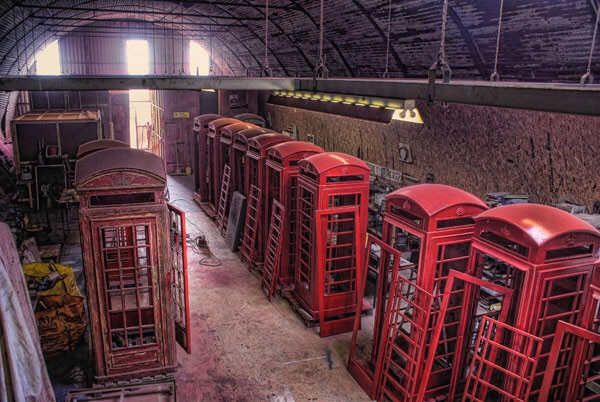
When I was a teenager, telephone boxes were how you communicated when outside the home. They were on every street corner. Red, glass and steel boxes that served as communication portals to friends, family, emergency services and, most importantly, they served to secure you a lift back home after a night out. Now of course they are almost non existent. Back then, I took them for granted. I couldn’t conceive of the telephone box being in my pocket.
All of us take things for granted.
Things that just are. Things we have known to be so, for so long, we simply don’t question them.
And the challenge with noticing the things we take for granted is… well, we take them for granted.
In a sense they become invisible to us.
Looking back in time can provide clues as to things we once all took for granted. One hundred years ago, 25% of us would have been servants. Many would have taken that for granted. Telling the time required a pocket watch, subsequently a wrist watch. We carried the time with us. That was just how it was. Now, the time is everywhere in our digital world, and fewer kids wear watches. Fires were how we kept warm, now we have central heating, under floor heating.
Just 15 years ago, access to the Internet would only have been possible in certain locations with specific equipment. Now we take for granted we can access it anywhere anytime, on many devices. And when we can’t, we become frustrated. We almost take it for granted now. Soon we will.
Just living day to day, many of us take things for granted. Having a roof over our heads. Food to eat. Sleeping. Clothes. Cars. Roads. Water. Toilets. Power. The sun coming up. Language. Medicines. Microwaves. Refrigerators. Government. Peace.
Of course, taking some of these things for granted is fine, for the most part.
The question is, what do you currently take for granted that closes your mind to possibility?
What can you not see, because something you take for granted, just is? It’s there obstructing your ability to see things differently.
Don’t take for granted what you take for granted.

When I was a child I believed in Father Christmas.
In part because my parents told the tale and I believed in them. I trusted them as parents. As adults.
In part also because it served me well. I was rewarded. Brightly wrapped presents, sweets and other childhood delights were bestowed upon my compliance. My letter to Santa, brought me gifts.
In part also because everyone else in my child world believed too. I was fitting in by believing, rather than being outside the group.
*Spoiler alert* I don’t believe in Father Christmas now; although I perpetuated the myth with my own children when they were small.
Our beliefs about the world change over time. So too our beliefs about ourselves.
What I believed about work when I was 12 was quite different to what I believed twenty years later at 32. What I believed about the value of money has shifted again in the last twenty years. Certainly my beliefs about girls were very different at 12 to those I held at 22. My beliefs at 40 about human beings, compassion, possibilities are quite different to those my sixteen year old self held. My beliefs about what is important have shifted too. So too my beliefs about my abilities. And much more.
The point here is that our beliefs change over time.
I wonder how would it be if we set an intent to shift a belief in advance? Rather than it shifting simply through the ageing process and maturity, as a result of situation, life experience, context. What if we decided now, what we wanted to believe in say a decade?
What do I want to believe in ten years about money, about fun, about time, about learning, about being healthy, about happiness, about relaxing, about pleasure, about society, about religions, about conflict, about equality, about difference, about humanity?
Can I in some way change my future if I set out, now, to have a different belief about these things in my own future?
Maybe different gifts are possible? Not those delivered by Father Christmas, but by increasing my awareness of myself and by setting out to believe different things about me and the world I live in… what might be?
Now that, might be worth wrapping with a bow.
“Inspiration could be called inhaling the memory of an act never experienced”
Ned Rorem
What gets a lexicographer up in the morning? Where does the energy come from?
Maybe the advent of new words? Maybe the evolution of old ones?
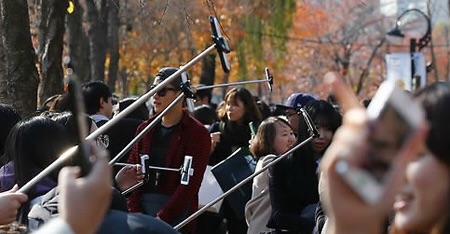
Selfie is a new word. This sudden penchant for capturing ourselves against our current environment. Looking at ourselves in our context. Getting an arms length perspective. Using a selfie stick to get even greater perspective. To see from further out. To fit more of our situation in.
Our desire to share these 2D representations of self in these static snapshots of life, is curious. We seem strangely reluctant to show ourselves in living 3D, in reality, as we exist in the world with other human beings. Alive. Both beautiful and beautifully flawed.
Of course we have always had the ability to look at ourselves from the outside. Inside our head. Long before technology gave us the ability to record an image, many of us did that in our mind’s eye. Imagined it. We see ourselves in that awkward conversation. See ourselves in that meeting where we were criticised. See ourselves in that beautiful moment of joy, of fun, of love.
Our mind’s eye has an important advantage over the selfie. We are not limited to the current moment. Not limited to a selfie snap and a hard drive of past experiences captured in still reflection. Inside, we can do this imaging, this ‘selfie’, for our future too. Imagine our own future. Our upcoming holiday. Our new home to be. We can manipulate the image – past or present. Make it brighter, more colourful, turn it around, zoom in or out. Take parts out, add parts in.
Take a mental selfie now of where you will be next week, next month, next year.
Perspective and context are crucial to our humanity. They allow us to see possibility, to reflect, to dream, to make sense, to know we’re ok.
Click.
Remember too though that living, sharing, enjoying reality in the moment are more deeply human. Share the gift of you, now, in glorious living technicolour. Not just in smiling, staged, two dimension tomorrow.
Don’t just take a selfie. Be one.
Lexicographers – let’s add ‘be a selfie’

Where is your future?
I don’t mean, is your future in finance, or owning your own business, or getting your boss’s job. I don’t mean a little villa in Spain, or retiring at 45, I mean where is it? In relationship to you, now.
Point to it.
So where did you point?
Now try pointing to your past.
Did they both have a direction? A direction that was pretty obvious to you?
Isn’t that weird? We appear to have a sense of time – past and future – in relation to our physicality.
You may well have pointed in front of you to indicate your future. Maybe straight in front, maybe a little to one side, the right perhaps, as if pointing to one o’clock with midday straight ahead?
If you did point ahead of you, it’s possible you then pointed behind you to indicate your past.
Alternatively, your directional map may have been very different … you may have pointed to your right to indicate your future, sort of 2, 2:30 or 3 pm if straight ahead were 12 noon. Your past may then be to the left, maybe between 9 and 10:30? The past and future may be connected in a curve or a straight line.
Maybe you have another configuration?
Check out where ‘now’ is.
Right in front of your eyes, inside your head, where you’re standing?
Welcome to your timeline. An ‘unconscious’ orientation to your past, present and future. A guide to how you process time.
If your future is in front and past behind, you could be called ‘in time’; that is you are standing in your timeline as it were, journeying towards your future. Sometimes ‘in time’ people can be very focused on their next goal – they can after all ‘see’ it in front of them. They may not be inclined to make longer term plans or lists though, as those are ‘obscured’ by shorter term futures. They may use language such as ‘looking back’ or even wave their hand over their shoulder when talking about the past, thereby signalling the way they hold time.
If your future is to the right and past to the left, you could be described as ‘through time’. You can see through time, a little like a diary planner, with recent past events just a little to the left and older memories further left, whilst your near future is a little to the right of centre, with longer term goals further to your right. Sometimes ‘through time’ people are good planners and good timekeepers – they can see their timeline laid out like an open calendar.
Be curious about your orientation to time. Be curious about the hand or body movements and any language that suggests your orientation to time. Be curious about the patterns of other people too.
Time and the way you unconsciously hold your relationship to it has more impact on your life than you may ever have realised.
 illuminated dandelion