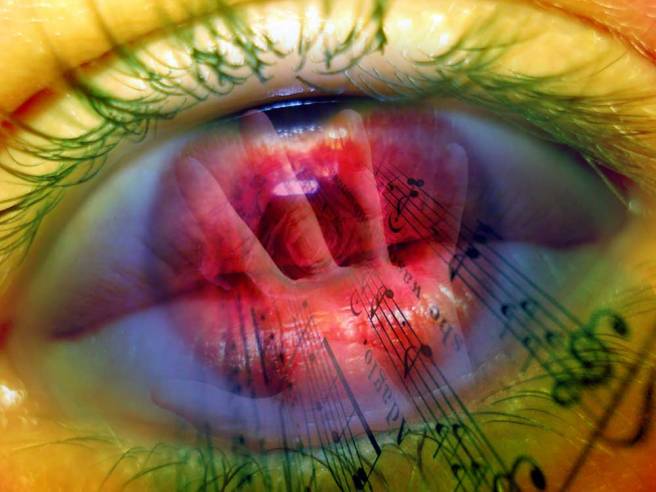
let’s see what the pain looks like

synaesthesia

Someone once uttered those words to me.

‘Let’s see what the pain looks like’.

The context was around an organisational change. I remember at the time being momentarily confused. Don’t you feel pain? I don’t know what it looks like, any more than I can taste it or hear it.

On reflection I realised it was an interesting insight to the speaker’s inner world. I regretted the missed opportunity of exploring with them what pain looked like for them. Did it have a colour? A hue? Was it a picture, a particular image, a personal memory? Was it sharp, blurred? Was it a still image, a movie? Was it 2D or 3D?

Beyond the curiosity about their representation, I wondered what had led them to see, rather than feel, pain. Was it that feeling it made it too real? Was it a defence mechanism, to stay a little removed and observe the pain rather than taking it into the body? Was it safer? Were other feelings also seen? Did they feel anything and, if so, what was ‘feelable’ and what wasn’t?

Was this only related to pain and other feelings or did they ‘see’ everything? Could they see smells or see tastes too? Did they see freshly mown grass when the smell wafted into their nostrils? Did they see musical notes as they listened or played? Did they have other synaesthesia, such as hearing smells, tasting sounds or smelling images?

A missed opportunity, but one that still serves as a learning, one that stays with me as a curiosity about the uniqueness of our human experience.

 

weighty language

visual, auditory and kinaesthetic NLP
The other evening a television news reporter began his report from Jerusalem…

“This is often a very heavy city and the weight of its history hangs over it…”

This kinaesthetic language helps you ‘feel’ the experience of being in this city steeped in history and rich with turmoil. The phrases ‘heavy’, ‘weight’ and ‘hangs over’ describe felt sensations and help the listener sense the mood in the city.

They work in much the same way as idioms such as ‘hold their feet to the fire’, ‘head over heels in love’, ‘hot under the collar’, ‘it makes your flesh crawl’, ‘ants in his pants’ or ‘the weight of expectation’. Each describes a physical sensation which brings the experience more to life.

Auditory language might talk about ‘the staccato popping of distant gunfire…’ Visual language might describe ‘the ghostly pall of smoke painting a blue grey background to the skirmish…’

How would you describe the picture on this blog post?

‘the twisted trunk and aching branches pained by years of tortured weather…’?
‘the crispy leaves and creaking branches rustling in the moaning wind…’?
‘the distant dark copse framing the monochrome tree in stark parchment sepia…’?

Be curious about your language and how it describes your inner world.

does this make sense to you?

senses NLP
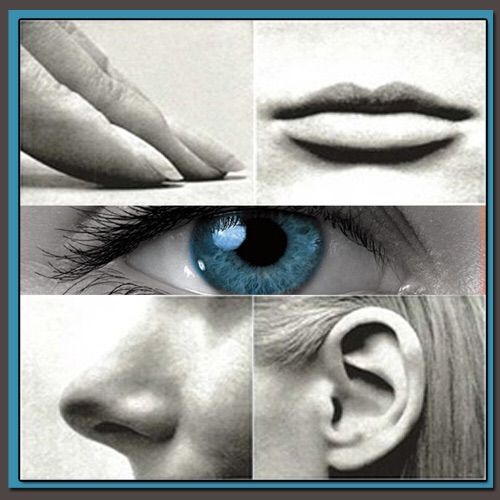
We experience life through our senses. We see, hear, feel, smell and taste our experiences.

Our brains code them in this way. Our memories are accessible through our senses and, when recalled, we experience, represent or rather ‘re-present’ them through our senses.

If you recall now something that happened to you last week, you will be doing so either by seeing the situation in your mind’s eye, or by re-feeling how you felt then, or by hearing the conversation again, maybe even smelling something…

This process works both ways. We ‘think’ of a memory and re-present it through our senses. Or, we have a sensory experience today and that triggers another memory where the sensory experience was similar. Have you ever had the experience of a smell taking you back to a childhood memory?

This process also works for the future – imagined future experiences are presented to us through our senses. We can imagine our holiday or that difficult conversation we have next week and we can create images, feelings, internal dialogue predicting that future experience.

We all have favourite senses to use for this. I wrote about this some weeks ago when I asked How do you think? and hypothesised that without our senses we have no experience.

We often have a primary sense, for many that is visual, but might be auditory or feeling, backed up by one or two other senses that create our experience. Some senses are less available to us in this process.

Our language reveals our preference. It shows on the outside, the way we are coding our experience on the inside.

“I hear what you say” is different to “I see what you mean”.

There are many idioms in English that we use to signal our sensory preferences for coding our own experience. Often we’re not consciously aware, nor are those around us. But it can be useful to know.

Do phrases such as these appear in the way you describe things? “Let’s get a different perspective” or “Let’s take a closer look at this”? These might be examples of a visual storage system. Whereas, “That doesn’t sound right to me”, “This really speaks to me” or “Once we get into the rhythm of the meeting” might suggest an auditory preference. Those who work with feeling, or kinaesthetically, might say “I need to take the pressure off” or “I’m aching to get on with this”…

This will be a recurring theme on this blog in coming weeks, so be curious about your practice and about what makes sense to you.