what’s in a name?

will i am name identity
Someone I know is a teacher. She teaches in a primary school.

It’s a tough job, but with huge rewards.

The other day she told me about a child in her class. She had noticed he was unable to spell his own name. There were different versions, but mostly incorrect.

Initially surprised at this basic lack she decided to address it. So, after a few weeks allowing him to settle in class and building a relationship of trust, she took the boy aside for twenty minutes at lunchtime one day. They worked step by step, using phonics, using visual recognition, building the letter patterns for the little boy. With practice, time and again he wrote his name correctly.

He left with a huge grin.

Throughout the remainder of the week he was found writing his name everywhere. Inside the front of his book, on the white board, on scraps of paper in snatched moments between the activities of the lesson.

What a gift! The gift of giving this youngster a tangible connection with who he is. His identity. The joy unbounded.

What’s in a name?

Everything, if it’s part of who you are.

growing at the edges

learning on the edge
Trees would look strange with spindle-like trunks supporting thick-set heavy branches. New shoots necessarily grow at the tips. Established branches and the trunk, thicken to support this expansion.

My wife and I walked around a housing development site the other day – new houses being built near us. As we walked further in to the development, roads were less complete, houses half finished, before we reached a temporary fence and gate through which we could peek at groundwork for a subsequent phase. New growth building literally on established infrastructure.

Across the country, roads themselves are built at the extremity of existing roads. Sensible really, as a road that is unconnected to the network is pretty useless.

You only have to observe weeds pushing through paving and tarmac to see what power lies at the most delicate tip of the plant. The drive to push through, to break new ground, belying the tender fragility of that new growth.

So too it would seem with our development as human beings. Growth comes at the edge. It builds on what already exists. At first it is new, a little fragile, but gradually with confidence and practice it strengthens and opens up new possibilities for learning and growth.

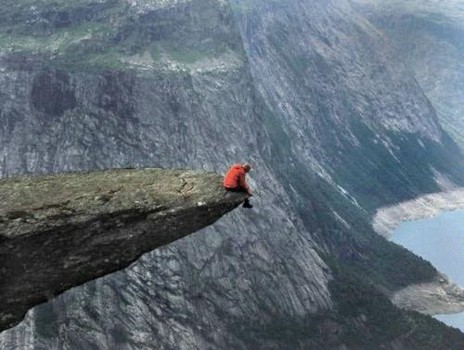
Sometimes we don’t want to go to the edge. It can be scary. A little uncertain. A little too new. We feel vulnerable.

But if we don’t go to the edge, we won’t grow new shoots, expand our capability, learn more about ourselves and our potential.

Stand at the edge of yourself. Branch out. Literally.

change is the one ever present truth

change
Change is ever present in our human lives.

The world around us changes constantly. Not just with the seasons, the passing years, but the tools of living, the way of living, the world in which we live. And we change too…

From birth we change, learning to communicate, to walk, to make friends, to become part of the family, to find our place. We learn to learn, we go to nursery, to school, to university, at each stage taking more responsibility for ourselves. Our family may move house, add family members, lose them too. Our friends may change. Our location. Our journeys. At work, our job roles change. Our bosses. Our colleagues. Our employers. We change our house, our car, our hairstyle, our look. Our hopes, ambitions, desires change. We meet new people, new friends, new loves. We start a family. We nurture them, they grow, they leave. Later, illness may strike and our lives change again. Relationships falter and new ones are born. We leave the world of work. We become grandparents, great grandparents. Challenges and opportunities emerge constantly in our human lives and we respond, changing to adapt, to thrive, to grow. We choose to change, incessantly.

Much of this change has a connection to learning and growth. The opportunity to become more. Positive outcomes. Yet often we are worried by change. Anxious about what it will mean. Will we cope, will it be good, will we be good enough, are we doing the right thing? It can become a psychological and emotional wave machine. Hard to keep your head up. Hard to put your feet down. Hard to breathe.

I am fortunate enough to have the opportunity of a six month career break. An incredible opportunity to take time out, travel, try something new, recharge. Yet I’m worried. It will be a change. Not the routine I have become used to. Will I be prepared enough, planned enough to reap the rewards? How will things have moved on whilst I’m away? Will I want to return? Will I be able to do the things I want? How will relationships change? How will I change?

I notice that all the uncertainty, all the doubt, is in my head. Imagined. Foretold. I have become an anxious soothsayer.

We do this at times of change, particularly in work, in organisations – catastrophising, worrying about the impact, the implications, the problems. Yet when we look back, after the change, we seem able to find good. To find benefits, positives. A new lease of life. Fresh shoots. New learning. Even in the most extreme circumstance we are, as human beings, remarkably resilient and accommodating of change.

Yet still the worry persists.
Why is it there?
What’s its purpose?
How does it serve me?

how will your future you advise the younger you?

wisdom
If you were your own mentor … what would you tell yourself?

If an older, wiser you could guide the younger you and impart some wisdom, some gem of learning from life’s journey, what might that be?

Novelist Cheryl Strayed’s advice to her twenty-two year-old self from a viewpoint two decades further on was …

“There are some things you can’t understand yet. Your life will be a great and continuous unfolding. Understand that what you have resolved will need to be resolved again. And again. You will come to know things that can only be known with the wisdom of age and the grace of years. Most of these things will have to do with forgiveness.”

Sound advice. What would yours be?