the pain of living and the drug of dreams

image

T. S. Eliot wrote in his Animula poem of ‘the pain of living and the drug of dreams.’

Dreams can be like that, can’t they? Addictive.

And like a drug, somehow drawing us away from reality. Taking us to another world.

We speak of them quite lightly. We talk about such things as ‘our dream holiday’, ‘my dream job’. We speak about ‘a dream house’ or ‘a dream car’.

Dreaming about material things seems easy. Dreaming about things we might do, almost as easy.

Dreaming about who we want to be, often harder. So we avoid it. For the most part.

We  just plough on with life. With living. Same routines. Same thoughts. Same feelings. Same pain.

But dreams bring about change. Dreams inspire. Dreams provide hope. Dreams enable. Dreams motivate. Dreams create reality.

What I dream matters and for that moment the world exists that way

Benjamin Zander
mourning the loss of an unused love

mourning the loss

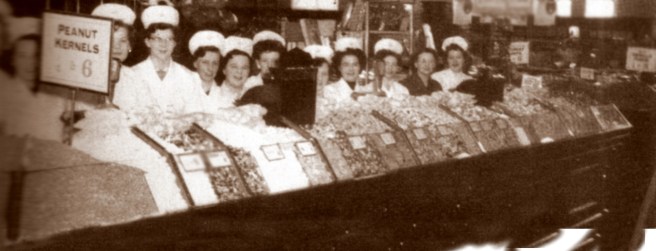
As a child I loved Woolworths.

I confess to wandering around and around the pick and mix island scouring the wooden parquet floor for fallen booty, which I would quickly and joyfully snaffle up as I threaded my small frame between adult legs. I loved equally the thrill of legitimately choosing a bag of your own sweets. The power, choice, influence and sheer excitement was palpable. I had a number of toys from Woolworths, including a favourite teddy bear, called Button Nose; I recall he cost sixpence (old money).

Once I became a teenager and adult I never shopped there. Their stores became more modern, but somehow drab, soulless sheds with a random array of merchandise, hard to locate and often cheap and tacky. Woolworths closed subsequently.

The news today that BHS is closing reminded me of the loss of Woolworths.

It reminds me too of mourning the loss of a capability, a passion, a dream.

In a coaching session today, my client said several times ‘in my youth I used to do that…’, ‘when I was younger I would have…’.  I noticed how they were reflecting on a loss of a way of being. A freedom and spirit once enjoyed had been lost to the drudgery of work and earning an income. Mourning the loss of an unused love, perhaps?

Where was the excitement of a pick and mix visit?
Where is the love of a childhood teddy bear?


life’s guest house

image

This being human is a guest house.  Every morning is a new arrival.

A joy, a depression, a meanness, some momentary awareness comes as an unexpected visitor…

Welcome and entertain them all.  Treat each guest honorably.

The dark thought, the shame, the malice, meet them at the door laughing, and invite them in. Be grateful for whoever comes, because each has been sent as a guide from beyond.

Rumi

Each thought, each feeling that arrives in your awareness, greet it, thank it for its wisdom, its desire to speak to you. Each is a messenger. Each a mentor.

Do not turn them away or shun them. Do not hasten to compost them. Be curious about their story. Enquire of their intent; how they seek to serve you. Each has a purpose, each a meaning. We’re usually just too busy to notice. Too dismissive of this errant thought, this unwelcome sensation in the body, this repeating voice.

They seek to help us grow.

bigger life, smaller life?

image

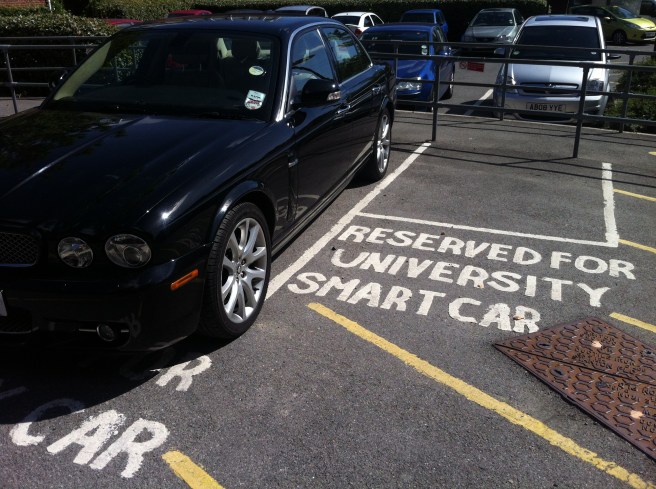
Just seen a stretch limousine followed by a Smart car.
Amusing somehow; big and small.
But, as Harry Hill might say, “Which is better?”

Some things, it seems, we have a desire to go large on. Generally we aspire to own a bigger house or attain a larger salary. Indeed some things seem only to come in one desirable size. More leg room on a plane for example – I’ve never heard anyone seek less. Nor do you hear of people praising a smaller heart; having a big heart is a positive thing.

Some things though come with an aspiration for smaller. For little. Many aspire to a smaller waist and maybe a smaller appetite. It’s rare to hear someone say I really want an extra few inches around my middle.  I’ve never wanted a bigger spot on my chin. A smaller inbox might be desirable; more emails anyone? And, as if in counterbalance to the heart, a big ego is often deemed a negative thing. A smaller ego might be seen as preferable.

Sometimes our size preference shifts. Occasionally we downsize, go smaller. Maybe retire to a little house with less maintenance? Or a smaller job, with less pressure?

We all used to aspire to a smaller phone, now it seems we seek a larger one.

Bigger or smaller seems to apply to much stuff in our lives but not so much to our lives themselves.

Do you aspire to a bigger life, to smaller thoughts, to bigger feelings?

Why not? Why don’t we assess these things in similar size ways?

Now that could be smart.


neat living?

image

I need to cut the grass. It’s a routine during three seasons. Mostly a chore. Weekend job.

We cut a lot of things that grow.

Outside we not only cut grass, we prune roses, clip shrubs, pull up weeds, lop branches.

On our own bodies we clip nails, cut hair, exfoliate skin, pluck eyebrows, shave underarm hair, trim beards or shave them off all together; each day, often at prescribed times.

Most of this cutting seems to serve a tidiness purpose.

But our children grow their knowledge and we cut that too. Don’t do this, don’t say that, run away and play, not now, because I say so… Not tidy. Just timely. For us.

Our own knowledge grows wild, unkempt, organically. We prune that too. Discarding things which might be useful because they’re someone else’s opinion, experience, idea, viewpoint. Tossing our own experiences aside because we cannot find meaning or make sense of it. Often because we don’t have time to. Not tidy. Just timely.

Meanwhile, out of control, inexorably, experience washes over us. And we randomly accept knowledge and learning every day, through every interaction, every experience. Our brains filing it away with dutiful order and precision. Some to be recalled, some to be lost forever in the grey matter. There is no real plan, no real order, no tidy symmetry. Structured randomness.

Unkempt sense making, messy knowing, time restricted learning, disorderly growth.

Neat gardens, neat hair, neat nails, neat lawns, neat children.

Neat lives?


even freedom needs rules


I stumbled upon a small graveyard today in Oxfordshire. It was squeezed between some houses and seemed somewhat out of place.

A pair of wooden gates were invitingly ajar, snug beneath a small lychgate.

Wandering in, I discovered it was a war cemetery, with headstones for fallen RAF crew from the Second World War. Many were 18,19,20 when they lost their barely begun lives.

Under the lychgate was a laminated notice detailing the ‘rules’ of the cemetery. It spanned three portrait A4 pages.

Gazing upon it, some of these rules intrigued me…

“Toys may only be left at the graveside for a period of 12 months after burial.”

“Silk flowers, appropriate to the season, may be used, but must be removed when they become faded or bedraggled.”

“Nicknames or pet names may be used in addition to baptismal name, but only if placed in inverted commas.”

Rules.

We like rules.

Our lives, our society, our organisations are riddled with them.

It seems even in death, when you have given up so much, rules are to be obeyed.

Ironic since these brave young men lost their lives in the name of freedom.

choosing when to have wind…

image

When a man doesn’t know what harbour he is making for,
no wind is the right wind

Seneca

I was speaking to a prospective coach client this morning. They described themselves as lost. The work appears to be about self, about who they are.

They asked me how they would know when they had achieved their goal; I responded with a question, asking how they know now?  How they know they need to come to coaching, that they are indeed ‘lost’?

They responded that they ‘feel it’. And so I said, ‘that’s how you will know.’

Sometimes knowing where we are headed is important, but so too is knowing how we will know we have arrived. Without this, any wind, any movement, is without purpose and just as likely to take us the wrong way as to take us the right way.

keep, charity, dump

image

House clearing today.
Seven people busying themselves boxing, bagging, sorting.

A new language emerged. People passing each other, muttering ‘keep, charity, dump?’. People holding items, asking for advice, ‘keep, charity, dump?’  People checking whether the black bag in the corner of the room, or at their feet, was ‘keep, charity, dump?’  Three piles in rooms.  Three piles in the garage.  Three piles by cars. Keep, charity, dump.

There are things in our lives which fit these criteria too. Parts of ourselves we should most definitely keep. Parts we could give to others, to bring something into their lives. Parts we could dispose of, no longer relevant or useful to us.

Keep, charity, dump.


is it cable ties I really need?

tangledcables

Are you tied in knots?

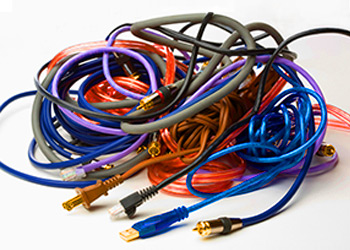
All over my house, in sockets, in drawers, in boxes I have cables.  Cables to connect devices to other devices, cables to charge the devices, cables carrying data, sound, pictures. Many I have forgotten what they do. Some I have duplicates because two or three devices have provided them, but I keep them… just in case.

We have many things in life too that connect us to things. To old ways of thinking, to sad memories, to things long forgotten or no longer needed. Do you play the Christmas card game? Sending cards to people you haven’t seen or spoken to in years? Do you have things in your loft, attic, cellar which are boxed up, stored away, long forgotten, but we keep them, just like the cables… just in case.

It seems cables are not the only way we get tied in knots.