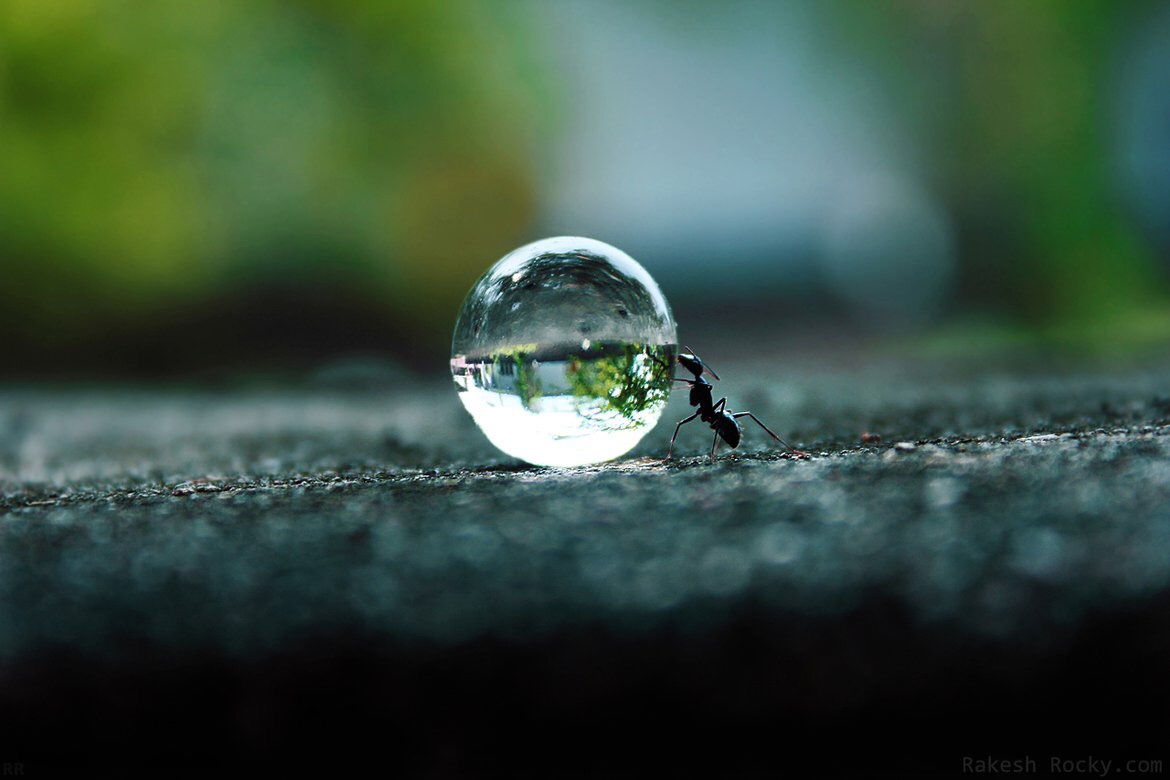
the move for movement

movement change reflection now
Water seldom stands still.

Part of the endless water cycle. Rain, snow, hail and other precipitation falls. It runs from mountain to valley, it seeps into the ground, it pours into rivers. Driven by gravity, it is drawn down towards the earth. Providing a life source for plants, humans and other species. Then, from the land, the oceans and seas, evaporation and condensation draw the water up again, high into the atmosphere where the cycle begins again.

Water in many forms, with many uses. Always moving, always transforming, always serving.

As human beings we too seem drawn to movement. To move away from a past or present truth or to move towards a future one. Drawn too to transformation. Drawn to experiment. To change our state. To experience change. To work towards something. To grow our usefulness. To breathe life into something, someone. To find a new place. To simply find a place.

The inevitability of movement.

Yet water pauses too. Beads of water hesitate in the arms of the leaf, pause as a dew droplet on a blade of grass, hang in the air in a foggy breath, rest for a moment in the rock pool. Socialise with friends in the puddle, the lake.

Water reflects the beauty of now. The glassy eye of the water bead displaying its surroundings in a full panorama. The puddle reflecting passers by, life in action.

As human beings we would do well to mimic this behaviour too. To pause in the moment of now. Life comes in these moments of rest, these moments of reflection, these moments of connection with each other and the world we live in. For in one sense this is our purpose.

The cycle of movement will continue, relentlessly. It will happen whether we seek it or not. Just like the water cycle, it will complete. But like the water droplet, we would do well to pause, to reflect the light around us. Ours and that of others.

where is your career going?

career life journey
We are encouraged to think about our career, constantly. It starts from an early age. Parents, teachers, school and further education all refer to career, as we make choices about schools, subjects, classes, areas of study, qualifications… We are encouraged to aspire. Aspiration often measured by the grades we get, the university or college we go to, the job we get, the seniority we attain, the pay level we reach…

How will we spend our working lives? In a profession, as a manager, owning our own business, with a portfolio career, following a vocation…? What kind of work do we want to do? What expertise, qualifications, skills, learning do we need for that?

Then when we start work, chances are we have a performance review or a discussion with a line manager, exploring how we might develop our career. We are encouraged to seek new challenges, new opportunities, new skills, new experiences. Maybe we get bored with our job, or learn what satisfies us or motivates us, and so seek to move our career to a different path?

Career seems almost to have become a synonym for life at work, for progression, recorded by the job sequence captured on our CV, our roles, our employers, our promotions, our job titles…

The origin of words is fascinating, especially in the context of how they are understood and used today.

Career comes from the Latin Carrus – a wheeled vehicle. Taking us on a journey. Adopted in French as Carrière and Italian as Carriera, it referred to the road we take. One Oxford English Dictionary definition of career is a person’s “course or progress through life”. Life’s journey if you will.

It doesn’t specify work, job, promotion, pay, skills, grade or profession.

So, maybe the question “Where is your career going?” is in itself limiting? Perhaps a better question would be “How do you plan to progress through life?”

This bigger perspective widens our choices. I might, for example, respond to this question, ‘being kind to other human beings’ or ‘being at peace with myself’ or ‘learning forever’ or ‘having fun’ or ‘being exhilarated by new challenges’.

This opens up possibilities. My choices are more rounded, more whole life. I can still occupy myself and earn a living in the context of these responses, but equally I can pursue them in all parts of my life. Home, hobbies, pastimes, leisure. With family, friends, alone or with like-minded individuals.

So maybe ask yourself not “Where is my career going?”

Instead ask yourself “How am I going to progress through life?” Or “What life course do I want?” Or “What will my life journey be?”

This may afford you more possibility, more freedom, more balance, more happiness.

What is your journey?

journey
What is your life journey?

Is it a saunter along a meandering woodland path? Is it a route march along a Roman road? Is it an invigorating swim across an extensive lake? Is it a breathtaking parachute descent from 30,000 feet? Is it a dizzying playground roundabout spin? Is it a race down the motorway? Is it a steady climb up a long spiral staircase? Is it a lazy river float? Is it an absail down a deep rugged ravine? Is it an underground exploration? Is it the soaring glide of an eagle over mountains? Is it a scramble down a rough rocky track? Is it a sightseeing bus ride through an unfamiliar city? Is it a run through the surf on a sunset beach? Is it a speeding train ride through a blurring countryside? Is it a tightrope walk over a cavernous gorge? Is it a deep dive from a towering cliff top into a deep green sea? Is it a horseback gallop through a never ending desert? Is it a precarious rope bridge crossing over a river torrent?

What is your life journey?

how are you spending your life … literally

spending time
If you were given £750,000 the day you were born, and knew that was all you would ever get, how would your choices be different?

At home the other week, we were discussing changing our carpets upstairs. I’m sure you have such conversations in your lives too … can we afford to replace the car, should we re-do the bathrooms, where shall we go on holiday this year, can I afford that training course I’d love to do?

Often a factor in such conversations is money and a choice about what we can afford. We play one thing off against another. Money is a currency we understand.  It gives us choices, informs our priorities.  We strive to acquire more, so that we can have more choice.  But what if there was a finite sum?

Time is a currency too.

The offer of £750,000 reflected the fact that most of us, living a full life into our mid 80s, will have around 750,000 hours on this planet. You can’t buy or earn any more.

Yet time, we fritter away with less conscious attention than a handful of small change.

We allow others to spend it for us.  Especially in work.  I’m required to be in that meeting. I need to travel to Glasgow. I have to finish that report this week-end. I must spend a few hours this evening getting on top of my email…

Even worse, we do this with our energy.

Our lives become dominated by things that not only eat into our time on this earth, but also which drain us of our energy.

That dull meeting you wish you weren’t in. The hours commuting. The dinner party with the couple you don’t really like. The hours in the gym you hate, but tell yourself you ought to do. The tedious job you wish was different.

Meanwhile, the simple things in life that energise us, we find less time for. Reading a book. Playing with the children. Enjoying an amazing view. That hour of yoga. Baking some bread.

You have around 750,000 hours in your life. It’s your choice how you spend it. Spend more of it on the things that inspire you and less on the things that are other people’s choices or that allow your energy, your very life essence, to leak away.

photo credit: BramstonePhotography via photopin cc