
dance like it’s your birthday

Why born
We celebrated a birthday in our family the other week. Some cake, some cards, a few presents. Nothing grand. I’m sure you do the same. Children’s birthdays are often more lavish affairs, as are so called important or landmark birthdays. These were decided by someone, once. 18, 21, 30, 40, 50 etc… I’m sure any of you celebrating some of these would like to have words with that person.

Our date of birth seems to be important. Yet it has a large element of chance. I wasn’t, but I’m sure if you were, born at one minute to, or one minute past midnight, you might wonder at the possible alternative? We are seldom born on the day we were ‘due’.

Yet our somewhat chance date of birth seems to be important. We are often asked for it as a kind of identifier or label as to who we are.

A relative of mine celebrated the wrong birthday for many years, until they were required to extract their birth certificate and realised they were born on a different day. It hadn’t changed who they were.

Many organisations such as banks, insurers, our employers even, use our date of birth as a key identifier of who we are. At my doctor’s surgery you can sign in on arrival using a terminal. The first question is ‘what is your date of birth?’  The system then presents a list of letters – the initials of surnames – presumably those people of that birth date, registered at the surgery or with an appointment that day?

At school we are batch educated, based on our date of birth. If you happen to be born late in August, you will be in one year group. Born a few days later, you will be in another. We even classify people by decade or period – child of the 60’s, generation z…

Yet our date of birth really says very little about who we are. It says no more than our job title does, or our place of residency, or the university we went to, even the name we were given.

Yet ask someone who they are, and this is often where they start.  “I’m Graham, I’m forty three, I’m a taxidermist, I live in Cippenham with my wife and three children. We have two dogs.” Labels, just like a date of birth, we use to describe who we are.

Try this.  Ask ‘Graham’ again. “Yes and who are you Graham?”  This time you might get something like ‘I’m a family man and I love nature and the beauty of the natural world around us’.

Repeat again. It takes time, but gradually you may find out about ‘Graham’. What matters to him, what he values, what he believes in, his motivations, his dreams and much much more. You might find out who he is.

One of my favourite quotes is by Mark Twain

The two most important days in your life are the day you are born and the day you find out why

What if we celebrated that second day, not the first? Cake and party poppers for something more significant, more real, more impactful on our lives?

It seems to me that requires more celebration. Finding your reason for being, finding out who you are, is to be rejoiced over. Far more than the incidental day you began to breathe.
 

to run or not to run…?

tube run steve
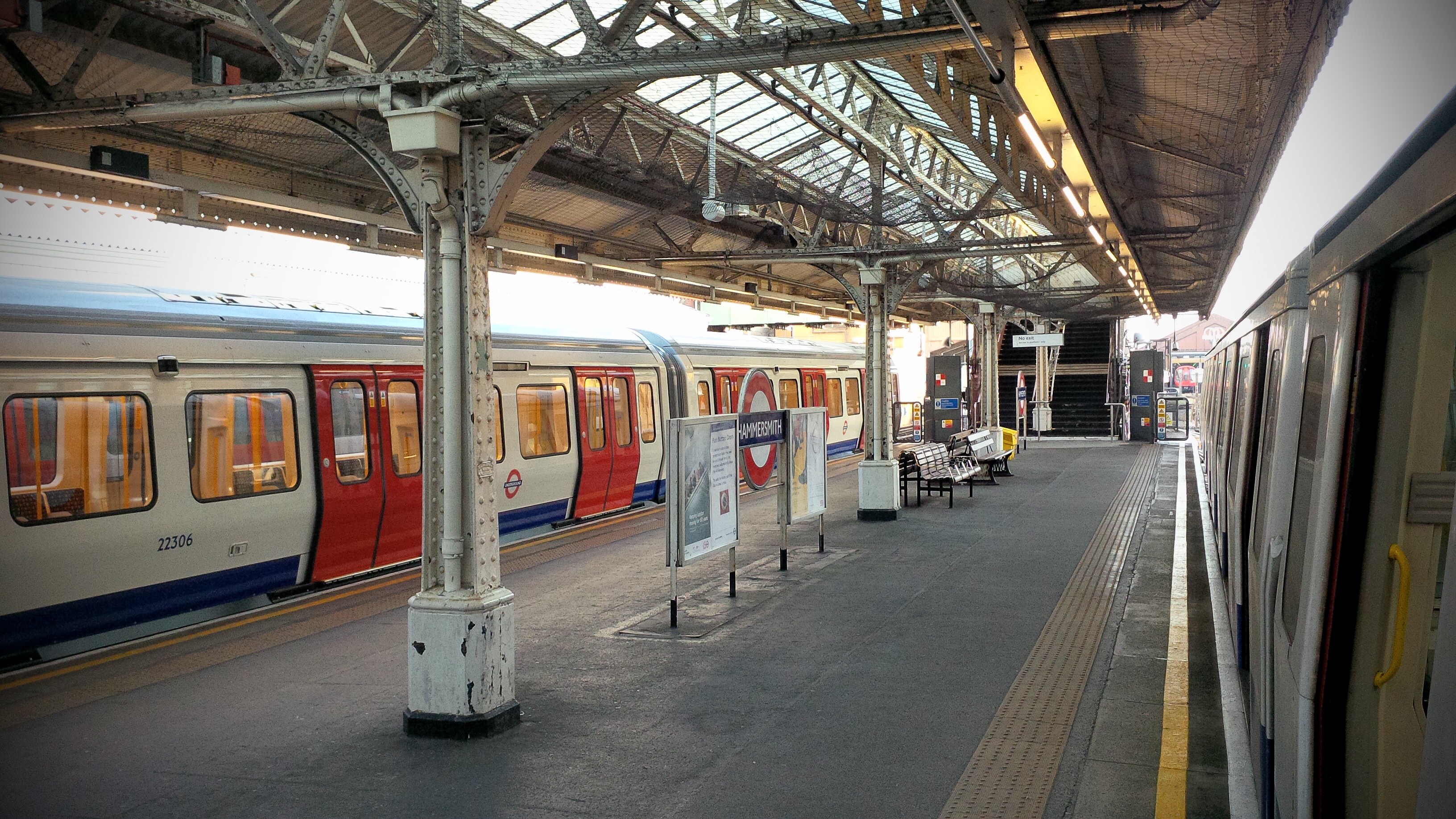
The other week I posted something about my NLP training in Hammersmith and the coffee experience. I attended the training with a friend, and at the end of each day we would go to the tube station – the Hammersmith and City line rather than the Piccadilly. It’s a terminus, so trains are usually ready in the station, waiting patiently at a platform for their fresh cargo.

Each and every day we would stroll up to the ticket barrier, move through and see the display board signalling which platform the next train departed from. Most days there would be a train at that platform.

Then something strange would happen.

My friend would quicken his pace and often break into a run. Sometimes a sprint. I would be left to saunter down the platform and find him in his chosen carriage.

After a few experiences of this we began to ‘unpack’ these two contrasting behaviours. Initially I mocked him, because I had never missed the train, but we were curious about what lay deeper in this behaviour.

There was superficial evidence that might support certain theories. My friend was a runner. He ran for pleasure regularly. I did not. He was, and probably still is, much fitter than me – so he had more capability to behave that way and running was a familiar activity. Typically I don’t run for anything.

At a deeper level though, time isn’t important to me. So the possibility of missing a train wasn’t a significant issue, but more than that, it presented an opportunity. I would have time to watch the world and the people in it. I would have time to sit quietly and ‘be’. My friend’s map of the world was different – he had many things to do, things to get done, so missing a train would deny him possibilities.

We still see this pattern today, not with trains, but elsewhere. He tries to fit a lot into his life. I’m more content to see what life offers in this moment.

There will of course be more depth, more detail in explaining our run/saunter behaviour at Hammersmith, but the joy is discovering that.

So be curious about what you do … every little thing, from choosing what to eat for lunch, to buying new shoes, to how you plan your weekend or even how you live your life.

It’s not about running or not running. It’s about knowing or not knowing.

If you don’t take time to know yourself, who else is going to?

the true meaning of coffee …

beliefs change
Many years ago I trained as a master practitioner in Neuro Linguistic Programming. I trained with a friend.

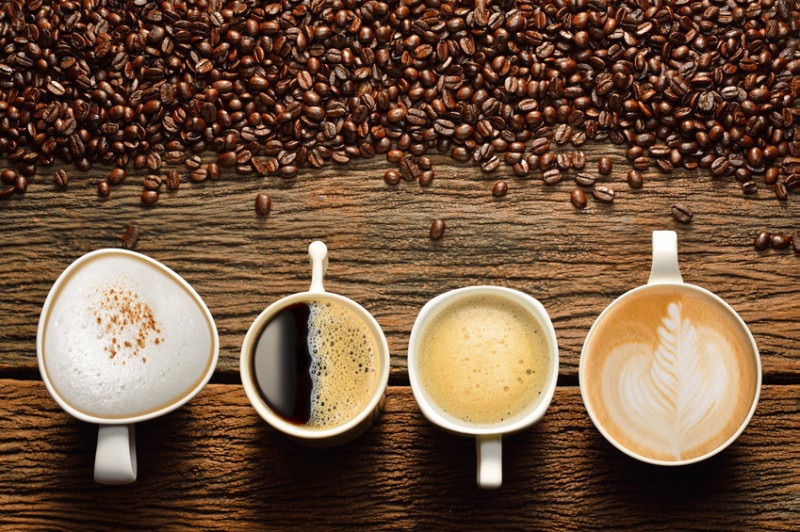
The training was near Hammersmith in London and at the beginning of each day we would go for a cappuccino and a bacon sandwich at a little Turkish coffee shop nearby. Although the training modules were several months apart, on seeing us enter at the beginning of a new module the owner would always recall our order – one sandwich on white, one brown, one without butter etc.

That coffee shop has sadly gone now, but that experience still anchors me to that time of learning, and I doubt the owner and his cheery waitress have any knowledge of how much that stays in my memory.

It serves to remind me that interactions between human beings can sometimes have more importance than their seemingly ‘low level’ content might suggest; they can carry more meaning than those involved at the time might ever realise; the spoken word or behaviour may have a completely different result or impact to that intended at the time – indeed one NLP presupposition is that the meaning of the communication is the result it elicits, not necessarily the one the giver intended.

Every day, all day, we give out communication, consciously and unconsciously. Everyone we meet takes their own meaning from that, even if several people experience the same ‘message’, each will create their own meaning.

In our early years, much of this gives rise to our beliefs about the world. Some of that serves us well in later life. Some does not.

The parent with the adolescent child, studying for their exams, will doubtless have the best intention to support them. Comments such as ‘never mind, you did your best’ or ‘all you can do is try’, have positive intentions. Yet I have seen such people in the middle of their lives, still running a belief that ‘I’m not good enough’ or ‘I have to work hard’ or even a more complex belief such as ‘If I don’t succeed nobody will love me’.

Spoiler alert: you probably believed in Father Christmas when you were small. Your parents span the yarn. It served you to believe – you got toys, chocolate, the excitement of presents to unwrap, and as a child that’s desirable. My guess is most of you no longer believe in Father Christmas.

The meaning we take at one point in our lives doesn’t have to be the meaning we live with. Trying hard when you’re 15 might be useful – please a parent, pass an exam. Trying hard later in life, when your work life balance is out of kilter, or when you’re in a job you loathe, or when you’re burning out through effort, or when you just want your boss to notice you, isn’t necessarily so helpful.

The barista can make many coffees.

You have a choice whether yours will always be the same.