unspecific waftings

image
I find myself sometimes making unintentionally sweeping statements.

You know the kind of thing. You may recognise their nature. Typically something occurs to us and we respond with a vague generalisation, wafted out into the world as if by setting our disappointment, frustration, anger, bewilderment free, we make it better. Earlier today, having been obstructed by several people whilst trying to push a shopping laden trolley across a precinct to a car park, I uttered…

“People are annoying aren’t they?”

This sentence of course, excludes detail as to specifically which people, in what specific circumstances, by which specific actions. It also suggests these unnamed people are causing annoyance in me. Of course they can’t, only I can create that in me, through interpretation of their actions.

We postulate generalisation such as this all the time though.

“Sometimes I wonder about this business!”
“Why me?”
“What are the parents doing?”
“I can’t abide stuff like that”
“I’ve got so much to do”
“Middle lane drivers!”

Each misses out specifics about who, what, when, where and how.

Maybe we would benefit from recovering the specifics, so that our response can be more attributable, more actionable, more accountable?

But maybe that’s why we do it, so we don’t have to act, or own it?

let’s see what the pain looks like

synaesthesia

Someone once uttered those words to me.

‘Let’s see what the pain looks like’.

The context was around an organisational change. I remember at the time being momentarily confused. Don’t you feel pain? I don’t know what it looks like, any more than I can taste it or hear it.

On reflection I realised it was an interesting insight to the speaker’s inner world. I regretted the missed opportunity of exploring with them what pain looked like for them. Did it have a colour? A hue? Was it a picture, a particular image, a personal memory? Was it sharp, blurred? Was it a still image, a movie? Was it 2D or 3D?

Beyond the curiosity about their representation, I wondered what had led them to see, rather than feel, pain. Was it that feeling it made it too real? Was it a defence mechanism, to stay a little removed and observe the pain rather than taking it into the body? Was it safer? Were other feelings also seen? Did they feel anything and, if so, what was ‘feelable’ and what wasn’t?

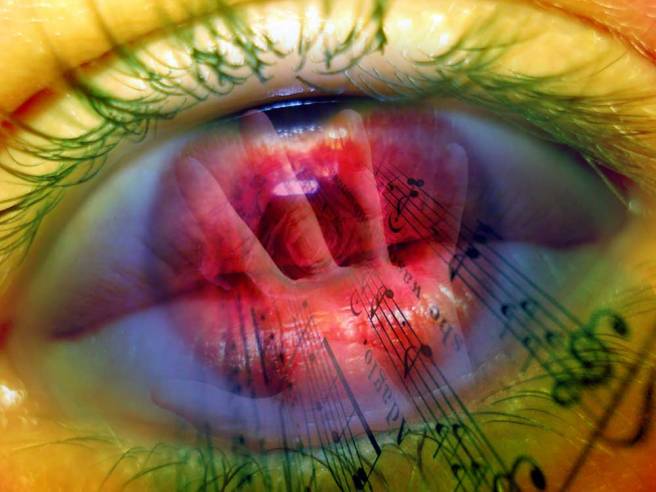
Was this only related to pain and other feelings or did they ‘see’ everything? Could they see smells or see tastes too? Did they see freshly mown grass when the smell wafted into their nostrils? Did they see musical notes as they listened or played? Did they have other synaesthesia, such as hearing smells, tasting sounds or smelling images?

A missed opportunity, but one that still serves as a learning, one that stays with me as a curiosity about the uniqueness of our human experience.


what do you know and how do you know it?

knowing NLP filters truth map
Do you know what you know because you read it? Maybe in a text book, an academic study, a newspaper report, on-line in a blog or on social media?

Do you know what you know because someone told you it was true?

These are both verbal exchanges. Auditory. They are spoken, written, heard or read. Stories if you will. The exchange of knowledge through written or spoken communication. Someone else provides their knowing and we hear or read it and accept it as knowledge we will also hold to be true. It is, in a sense, second or third hand knowledge. Knowing we agree to add to our own knowing. Or not.

Our acceptance of this knowing involves an unseen process of convincing. Maybe I accept it because I trust the author. Maybe I trust the method by which their knowledge was acquired? Maybe I trust the method of conveying the knowledge to me?

Do you know what you know because that’s the widely accepted truth?

It’s the word of the society, culture, religion, community, organisation… the word of the system if you will. In a sense, story, tale, myth, evidence become fact, truth, reality through the weight or volume of saying it. If enough people speak something, it tends to absorb a validity or truth amongst others. This is how customs and culture are formed.

Maybe I am convinced of this knowing because I have heard it many times from different sources within the system? Maybe I accept it because doing so affirms my belonging to the group? Maybe the groups I belong to therefore narrow my ability to know?

Do you know what you know because you have assembled a truth, through collecting, filing, connecting new data, new knowing, into your own existing knowing?

I know for example that many people see images in their heads. I know this because I have read about it, I have heard about it in training sessions, I have experienced it through coaching many people who can vividly describe the videos or stills in their mind’s eye, I have personally seen pictures in my own head. I have experimented with this knowing to extend, broaden, widen and deepen it. I have purposefully sought out additional knowing, making sense, making patterns and making new neural connections to create an enriched personal knowing.

Maybe I readily accept this knowing? Convinced because it fits with other knowing I already have?

Maybe what I know already, informs what I seek to know? I am, in a sense, blind to new knowing because my existing knowledge guides and channels me to seek knowing which corroborates knowing I already have.

Do you know what you know because you have experienced it and therefore know it to be true? Do you know what you know because you have seen it? Seen it with your own eyes? Tasted it with your own tongue?

I have tried coriander, and I know I don’t like the taste. I have in a sense created my own personal knowing. Others may also have this knowing; but a hundred, or a thousand people not liking coriander doesn’t make coriander something nobody eats, a poisonous food. We are happy to create our own version of knowing, a personal truth.

In fact through all of these methods, we create our own version of truth, our own subset of knowing.

Whether our knowing comes from historic sages, from trusted texts, from reliable friends, from assembled self knowing, from tasted, smelled or observed personal experience, our knowing comes through a hidden process of filtering, selection and trust which makes our knowing personally true. Often this process makes others’ knowing false as a result. That’s how arguments, wars start.

We should be curious about our own personal process of knowing.

How we know what we know. Our hidden process of validation and acceptance. Our process of exploring knowing to expand and develop it. Learning, if you will. This matters, because if our personal process is flawed, broken in some way; if we are blind to certain pieces of knowing, closed to experiencing certain knowing or inexperienced in different ways of assembling knowing… then we are limited.

If we are limited, we are not fulfilling our human potential.

… and that’s worth knowing.

the problem with the junior doctor debate…

prejudice map truth NLP
I listened this morning on the radio to a debate about the proposed changes to junior doctors contracts and pay.

First the minister, Jeremy Hunt, spoke about the intention, what was proposed and why it was needed. Then a junior doctor spoke about concerns, what they perceive is really going on and what was needed.

I don’t know the truth. I don’t know much about the health service. I don’t know what is reality today. I don’t know what will address any concerns and make the future better. I don’t know who is right, who is wrong or indeed if either are.

Yet I noticed my own prejudice appearing. Firstly, politicians aren’t to be trusted, are they? Whereas surely I can trust a doctor? Then, the doctor described how they would lose a third of their income, yet weren’t currently working longer hours than legislation required … “Really? Aren’t you exaggerating for effect?” I thought. Then after each quoted statistics about weekend deaths, different of course, I noticed my mistrust of statistics emerging – “you can make any number say whatever you want”. There was talk of strike action, which fired up my dislike of the concept of unions, who purport to protect workers yet often operate out of lavish premises funded by their members subsidies. And so it continued…

I can’t get to the truth.

Not just because each party is portraying their version of the truth in the media to their own ends, but because, even if that weren’t so, my own prejudice prevents me from seeing and knowing what is. From being clean. From knowing the truth.

How often do we blind ourselves to truth? Whether that be unconscious bias in diversity, judgement based on looks, preconceived boxes we put people, roles, attitudes into? Beliefs about the world which make our map of its workings uniquely distorted to us?

I don’t know what the right thing to do is in the junior doctor debate and I can’t influence an outcome. But I now know more about how much I prevent myself from accessing that awareness, accessing a truth.

I can do something about that.

trick or treat?

trick or treat memory
Tonight is All Hallows’ Evening, or Halloween.

To most it signifies dressing up, makeup, trick or treat. Probably pumpkins, with cut outs illuminated by candle, casting an eerie visage? Maybe a party, maybe a bonfire and fireworks?

I wonder how many revellers realise that many believe it is a night to remember the dead? Those martyrs, saints and believers who have passed on. Lighting candles is thought to attract their souls.

Of course, as with much that is ritualistic and ancient, there are other theories too. We simply cannot be sure.

We don’t need religious or historic events though to carry with us to the present day a misnomer or false interpretation of reality. Many of us do it with our own memories … and we were actually there when they happened!

Often a childhood memory lives with us. But often it is distorted, mis-remembered. It carries the understanding of the child. Parts of the actual occurrence are deleted, parts twisted to fit our childhood emotional need, parts simply forgotten in the story. Yet we run this edited inaccurate story throughout our adult lives. It holds us, trapped in a mythical past, caught in a story of fiction and we behave today as if it were true. We carry the remnants of the experience in the form of a broken relationship or a belief about ourselves that no longer serves. It was probably never true, but we made it so, and now we have run it as a video, or heard it as a story in our heads, so many times that we hold it to be a reality. It now controls us. Limits us. Makes us smaller.

Maybe we would be well served to honour it as dead? Just like the souls Halloween remembers? Maybe we would be well served to think of it as a myth, a fable, a misinterpreted story of long ago? Maybe we should move on and pay more attention to now?

Treat yourself, don’t trick yourself.

Look after your soul, not that of a long dead memory.

weighty language

visual, auditory and kinaesthetic NLP
The other evening a television news reporter began his report from Jerusalem…

“This is often a very heavy city and the weight of its history hangs over it…”

This kinaesthetic language helps you ‘feel’ the experience of being in this city steeped in history and rich with turmoil. The phrases ‘heavy’, ‘weight’ and ‘hangs over’ describe felt sensations and help the listener sense the mood in the city.

They work in much the same way as idioms such as ‘hold their feet to the fire’, ‘head over heels in love’, ‘hot under the collar’, ‘it makes your flesh crawl’, ‘ants in his pants’ or ‘the weight of expectation’. Each describes a physical sensation which brings the experience more to life.

Auditory language might talk about ‘the staccato popping of distant gunfire…’ Visual language might describe ‘the ghostly pall of smoke painting a blue grey background to the skirmish…’

How would you describe the picture on this blog post?

‘the twisted trunk and aching branches pained by years of tortured weather…’?
‘the crispy leaves and creaking branches rustling in the moaning wind…’?
‘the distant dark copse framing the monochrome tree in stark parchment sepia…’?

Be curious about your language and how it describes your inner world.

facing ourselves is the hardest direction to look

not looking at ourselves
It seems like we stand in the centre of the world.  In the centre of our world.

From this place we can observe all. See sights. See situations. See people. Be drawn towards. Turn away. Fit.

From our vantage point, with our map of the world as the world should be, we can assess everything, place a value on it, judge it. We can rank things, place them in hierarchies of choice, want, need. We can compare this external vista of things, people and their actions with our perception of right and wrong, good and bad.

And we do…

We critique the behaviour, choices, necessities of others. We glance at the unsightly homeless person from the corner of our eye, thereby maintaining a dignified separation. We wince at the teenager’s language and lack of respect in the street, like we skipped that life stage. We place the drunk man in a story, a story of our own creation, so that we can explain his ‘condition’. We assess the parents and their actions towards their screaming toddler, like frustration, tiredness, learning are all experiences we have never had or at least have always handled better. We gossip about the neighbour and the affair we think they’re having, so that we can stay in the ‘moral’ club through our action of placing them in the ‘immoral’ one. We whisper with colleagues about the boss who seems oblivious to the impact of their actions, because there is safety in collusion. We mutter about the Sunday driver who meanders when we’re in a hurry to be somewhere, like they have no intent or purpose.

That person is good, this one less so. We’re OK, because they’re not. How can he do that? Why is she so…? Why don’t they…? I wouldn’t do that. Who wears that? Does she know what she looks like? Really … pink? Why doesn’t he wash his hair? Another holiday!? Why can’t she just say? He’s a waster. She doesn’t realise what she’s doing to him. Amazing, awful, not good enough, disgraceful, shameful, good heavens…

We all do it, every day.  It comes easy. Too easy.

Maybe because in our map of the world, our view of right and wrong, of good and bad, we can be exonerated? We are innocent. Never guilty. We are successful. Never a failure. We are ethically and morally just. Never wicked.

But maybe facing ourselves is merely the hardest direction to look?


needs and wants, wants and needs

want need
Waiting in for a plumber. I’m not good at waiting for someone. Deliveries, tradesmen etc. My choice is removed. I’m in their control.

I want to get out.

I need to wait though. We may have a leak. A telltale little brown patch has appeared on a ceiling.

I should wait. The leak could get worse. Despite this more sensible course of action, I’m still drawn to go out. Nowhere special, just to have the freedom to decide. It’s the freedom I want. The expert opinion I probably need.

The tension between what we want and what we need is intriguing. Are needs more powerful than wants? Are needs more fundamental to our sense of self and our wellbeing? Certainly needing shelter, water, food would seem to be basic needs. Yet wanting something can be a pretty strong draw too. Wanting to move, wanting freedom, growth, learning, progression, choice. These too are powerful motivators.

Refugees and economic migrants pouring into Europe seem to demonstrate the power of wanting a better life for your family. Wanting opportunity. Wanting freedom. Or is the migration need driven? The need for safety, for security?

I wonder if our modern world has confused the two? Do I need a new phone, or do I simply want one? Do I want a hug, or are there times I absolutely need one?

Do we know the difference any more? The difference between a need and a want? How the difference motivates our thinking? Which has more feeling? Which trumps the other? Which do we value more? The things we want and have, or the things we need and have?

Are the words interchangeable, or is it some other orientation in our lives that motivates us to prefer one word over the other? Do independent people have a penchant for wanting things? Is wanting essentially selfish? Wanting something certainly implies choice, preference. Needing something suggests less choice. It suggests necessity.

But is it the same for us all? Is there a common thread to our humanity? Or is this a more personal matter?

Maybe you want to know? Or need to? Maybe you don’t? Understanding that which motivates us would seem to be useful though? How your choice of language impacts your thinking, your emotions, your behaviours?