problem or opportunity?

towards away from
Interesting that some of us are stuck unless we can ask and answer the question “What’s the problem we need to fix?”

For others, the question is “What’s possible?”

It seems some of us need to know what we need to resolve, to put right. The weakness or failing of what exists now. This motivates us to move to change. To move away from the problems and challenges of now. To fix things.

Others are motivated by possibility. By opportunity. What could we achieve? What dream, goal, target, objective can we move towards? The possibility motivates us to change. Sometimes we have no sight of the actual goal, it’s the possibility there might be possibilities that motivates and excites us.

What’s your pattern? How open are you to another perspective? How disabled are you if those around you have a different perspective?

the distortion of reality

distort, generalise, delete
Earlier this week, I wrote here about wasps and my propensity to engage them in an imaginary karate-like self defence of mime. Our creation of our reality through the process of deletion, distortion and generalisation.

In my example I am deleting, distorting and generalising the experience as well as the possible outcomes.  My language can reveal which process I am using.  For example I might say “I’m scared of wasps”, but what specifically am I scared about? What is deleted in that sentence? The buzz? The pain of the sting? The swelling and itching?… I’m behaving as if all buzzing equals a wasp threat; but that is a generalisation, revealed by the ‘all’.  Equally I’m generalising that all wasps are out to get me; generalising a wasp’s presence will always lead to a sting.  I’m distorting the risk; creating a perceived significant risk of a sting, despite lack of evidence as I haven’t been stung for decades.

Yet it’s my version of reality in that moment, so I thrash, I dance in an embarrassing battle with my aggressor, miming attack, defence, bravery, fear, victory, defeat.

Neuro Linguistic Programming (NLP) refers to this human truth through its presupposition ‘the map is not the territory’. Essentially what we believe to be true, our interpretations of events past, present and future. These are only OUR truth. Not THE truth. Everyone creates their own truth, their own map. We do this in these three interconnected ways, and in one sense this process of individualised deletion, generalisation and distortion creates our own unique interpretation, our version of truth. Just as with the colleague passing us without saying hello. All of which might suggest there isn’t one version, one truth, one territory; no reality in fact, just our reality.

Our deepest memories are coloured by this process. Twisted. Enhanced and also reduced. Yet those memories shape our behaviours, our way of being, our beliefs about what matters, what is true, today and going forward. We recall experiences and hold great store by them, but the very memory is only a partial truth, an incomplete reality.

A strange way to base current and future behaviour, don’t you think?  Human, but not always helpful perhaps?

pretending there is a reality

mime reality map territory NLP
I’m not a fan of wasps. A wasp buzzing near me will cause me to flap like a crazed Indiana Jones extra, chopping my way through an invisible mist of cobwebs in a deep, dark cavern. If that doesn’t work, I will duck, sway, even run away.

I don’t specifically recall being stung as a child and I have no evidence that wasps are seeking me out, just to sting me. Sometimes this frantic dance happens before I even know it’s a wasp. Just a buzzing insect can invoke this manic mime artist routine.

In a sense I am creating a false wasp / imagined wasp implication ‘reality’.

We all do this – not with wasps I suspect – but, act as if a ‘reality’ is true. Have you ever seen something shiny on the ground and paused to check, believing it to be of value? Have you ever mislaid something and convinced yourself someone else has moved it, because you ‘know’ you haven’t?

These are somewhat frivolous, innocuous examples. Something to giggle about. But we do the same thing in all our day to day experiences and interactions. Given as human beings we experience things constantly, this is something to pay attention to. Neither frivolous nor innocuous.

Often experiences are shared. We will be in the same situation as a friend, partner, colleague or stranger. It would be easy to assume therefore that we all have the same experience of the same situation. There must be facts? Truths? Reality? Things said, things meant? Actions and words we can all agree on? They happened, right?

Think again.

Let’s say someone you know walks past you at work without saying hello – what’s your reaction, your interpretation? You might think they are ignoring you, that you have upset them? You might think they have more important things to attend to, because after all you’re not important enough? You might think you’ve got it wrong, they don’t like you after all, even though you thought you had a relationship? You might just think you don’t have an interesting contribution to make, nothing to say that your colleague wants to hear?

Of course you can’t know their truth, so you create yours, by deleting, distorting and generalising your experience. Noticing some things, ignoring others; interpreting and distorting the experience to make it ‘fit’ with your map of the world. Then relating this experience to others and unconsciously grouping it with other ‘similar’ ones to create generalised groupings of meaning – eg people never notice me.

This creation of our own reality is the product of our brains pattern matching and making meaning quickly But we are miming.

Miming reality.

what’s your worst bad habit?

bad habit chewing pencil
From childhood we are alerted to the dark path of the bad habit.

Don’t suck your thumb
Don’t bite your nails
Don’t twirl your hair
Don’t fidget, sit still
Don’t pick your nose…

Of course in these examples it is the parent speaking, the adult. They have decided this behaviour is ‘bad’. For many, this is because they were conditioned as children to believe these habits were bad, by their own parents, by ‘society’. It is as if we have passed the judgement ‘bad’ down through the generations.

But what is a habit? Convention might say a habit is a practice, a manner, a behaviour that has become a pattern. A pattern that is hard to give up. Change requires the exercising of that thing we call ‘will power’.

I have spoken before here about behaviour being purposeful, having a structure. Trigger, behaviour, reward.

Those childhood habits I have mentioned might share similar triggers … a sense of worry, anxiety, restlessness, feeling exposed, alone, needing comfort? They might also share a reward? They all seem to have a property of physical connection to ourselves, be it thumb, hair, fidgety bottom, fingers, nose. Maybe a form of comfort from connecting to our own bodies?

So why bad?

One definition of a bad habit is one that has the potential to be detrimental to our physical or mental health.

Convention in the adult world might list such things as smoking, eating too much fast food, gambling, drinking too much, late night snacking as bad habits. Again, maybe it is society that creates this assessment, this valuation of bad? Not just invented though, not just handed down in stories and tales from elders, we have researched the medical implications of smoking, drinking, over-eating. We have hard evidence. We know.

Take a smoker. They know it is harmful, yet they persist. Why? Lack of will power? Maybe. Maybe that’s just another way of saying the reward is too important to me?

I was once in a training, where we were asked to list the benefits or rewards from smoking. Many were social – an opportunity to socialise, connect with like-minded people. Some described it as relaxing. We listed over forty benefits, from a room of sixty people, only a quarter of whom smoked. But one delegate offered a very powerful benefit. They described how it helped them remember their father – who had died of lung cancer. An odd behaviour at a logical level? But, that’s a very powerful reward. I suggest it might trump will power every time.

So paying attention to the triggers and rewards, might be useful here? It is these that drive the habit. The rewards can be well hidden, logically hard to rationalise and so hard to unearth. Seeking them out can be tricky. Be persistently curious. Keep asking ‘what do I get from behaving like this?’ Finding another way to get that reward will help you change the habit.

Maybe we need to talk not so much of ‘bad habits’, but more of ‘rewarded habits’?

So, what IS your worst bad habit?

Not because society labels it bad, but because it carries a reward you very much want or need. Your most rewarded habit? And, if you would like to change the habit or behaviour, how might you get that reward another way?

the eyes to the right have it

NLP eye movement
Since my NLP training I have been fascinated by eye movements.

I have noticed some people in particular search with their eyes for memories, associations or for connections when you ask them questions. I worked with such a client recently and the tiny eye movements were predictable … left, left, left, right, right, right, up, down. Then, left, left, left, right, right, right, up, down. A repeating pattern, as if searching for something.

The other day I read an article on the BBC website about sleep and REM research. The study has followed the neurological activity of sleeping Epilepsy patients for four years.

The lead doctor, Dr Nir, describes how when the patients were awake and shown a picture, especially one associated with a memory, the researchers saw a particular pattern of brain activity. “The activity of these neurons doesn’t reflect image processing. It’s more about signalling to the brain about a refresh of the mental imagery and the associations or related concepts.” says the report.
“…about 0.3 seconds after the picture appears, these neurons burst – they become vigorously active…”

It seems the same brain activity occurs during REM as when you simply close your eyes and imagine a picture or think of related concepts. Almost as if the brain is using the eye movements to aid filing memories or searching for existing memories or concepts with which to associate the new ones.

I am fascinated by the possibility that we do this when fully awake too. When asked a question or asked to think we search using our eyes for stored associations, memories and understanding with which to answer. In some people these eye movements are more noticeable, as with some of my clients.

NLP refers to these as eye accessing cues.

Neuroscience presents the most exciting possibilities for new discovery about the way we work and, I for one, look forward to the next ten years and discovering more.

Meanwhile, be curious about eye movements. Those little flicks left and right have significance far beyond out current awareness.


does this make sense to you?

senses NLP
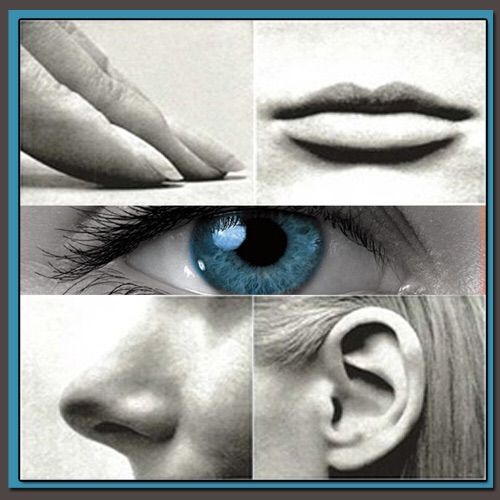
We experience life through our senses. We see, hear, feel, smell and taste our experiences.

Our brains code them in this way. Our memories are accessible through our senses and, when recalled, we experience, represent or rather ‘re-present’ them through our senses.

If you recall now something that happened to you last week, you will be doing so either by seeing the situation in your mind’s eye, or by re-feeling how you felt then, or by hearing the conversation again, maybe even smelling something…

This process works both ways. We ‘think’ of a memory and re-present it through our senses. Or, we have a sensory experience today and that triggers another memory where the sensory experience was similar. Have you ever had the experience of a smell taking you back to a childhood memory?

This process also works for the future – imagined future experiences are presented to us through our senses. We can imagine our holiday or that difficult conversation we have next week and we can create images, feelings, internal dialogue predicting that future experience.

We all have favourite senses to use for this. I wrote about this some weeks ago when I asked How do you think? and hypothesised that without our senses we have no experience.

We often have a primary sense, for many that is visual, but might be auditory or feeling, backed up by one or two other senses that create our experience. Some senses are less available to us in this process.

Our language reveals our preference. It shows on the outside, the way we are coding our experience on the inside.

“I hear what you say” is different to “I see what you mean”.

There are many idioms in English that we use to signal our sensory preferences for coding our own experience. Often we’re not consciously aware, nor are those around us. But it can be useful to know.

Do phrases such as these appear in the way you describe things? “Let’s get a different perspective” or “Let’s take a closer look at this”? These might be examples of a visual storage system. Whereas, “That doesn’t sound right to me”, “This really speaks to me” or “Once we get into the rhythm of the meeting” might suggest an auditory preference. Those who work with feeling, or kinaesthetically, might say “I need to take the pressure off” or “I’m aching to get on with this”…

This will be a recurring theme on this blog in coming weeks, so be curious about your practice and about what makes sense to you.

learn to unlearn you must

yoda unlearn
Your brain is a meaning making machine. The greatest meaning making machine we know.

It works through patterns. Once learned, those patterns repeat, time and again. Once meaning is learned, it is adhered to relentlessly.

Most of this is out of consciousness. Some estimates suggest that the unconscious mind is as much as 95% of brain activity. Trigger … response, carried out automatically without what you might consider as ‘thinking’.

The challenge is that most of these patterns are shaped in childhood. Experiences early in our lives create emotions and child-like cause and effect reasoning; meaning making which creates our sense of self, our rules of the world, our beliefs about our place in the world and how to belong in it, all at a time when we are very unworldly.  A necessary process for the very survival of our ancestors – the ability to learn quickly and create strategies, crucial.

This process continues today though, and patterns and strategies learned in childhood repeat, over and over, as we progress into adulthood. Often the patterns no longer have relevance in an adult world, or the meaning has changed, or maybe was simply misinterpreted originally by the seven year old?

Running on automatic with patterns, strategies and meaning which disable rather than empower, limit rather than enable, constrain rather than offer choice, is at the heart of our struggle to reach our potential. These are limiting beliefs.

So, unlearning patterns of thinking, patterns of feeling, patterns of doing could be the most important learning you will ever do.

The first step is to become conscious of the pattern. Then explore its origins – where did it start, what’s your earliest memory of believing that? Is that belief or strategy relevant now? Does it serve you? What are you distorting in that memory? What has been deleted? Where is today’s evidence and what gets generalised in your thinking?

Start now, be curious, what needs to be unlearned?

where is your future?

timeline past present future
Where is your future?

I don’t mean, is your future in finance, or owning your own business, or getting your boss’s job. I don’t mean a little villa in Spain, or retiring at 45, I mean where is it? In relationship to you, now.

Point to it.

So where did you point?

Now try pointing to your past.

Did they both have a direction? A direction that was pretty obvious to you?

Isn’t that weird? We appear to have a sense of time – past and future – in relation to our physicality.

You may well have pointed in front of you to indicate your future. Maybe straight in front, maybe a little to one side, the right perhaps, as if pointing to one o’clock with midday straight ahead?

If you did point ahead of you, it’s possible you then pointed behind you to indicate your past.

Alternatively, your directional map may have been very different … you may have pointed to your right to indicate your future, sort of 2, 2:30 or 3 pm if straight ahead were 12 noon. Your past may then be to the left, maybe between 9 and 10:30? The past and future may be connected in a curve or a straight line.

Maybe you have another configuration?

Check out where ‘now’ is.

Right in front of your eyes, inside your head, where you’re standing?

Welcome to your timeline. An ‘unconscious’ orientation to your past, present and future. A guide to how you process time.

If your future is in front and past behind, you could be called ‘in time’; that is you are standing in your timeline as it were, journeying towards your future. Sometimes ‘in time’ people can be very focused on their next goal – they can after all ‘see’ it in front of them. They may not be inclined to make longer term plans or lists though, as those are ‘obscured’ by shorter term futures. They may use language such as ‘looking back’ or even wave their hand over their shoulder when talking about the past, thereby signalling the way they hold time.

If your future is to the right and past to the left, you could be described as ‘through time’. You can see through time, a little like a diary planner, with recent past events just a little to the left and older memories further left, whilst your near future is a little to the right of centre, with longer term goals further to your right. Sometimes ‘through time’ people are good planners and good timekeepers – they can see their timeline laid out like an open calendar.

Be curious about your orientation to time. Be curious about the hand or body movements and any language that suggests your orientation to time. Be curious about the patterns of other people too.

Time and the way you unconsciously hold your relationship to it has more impact on your life than you may ever have realised.


to run or not to run…?

tube run steve
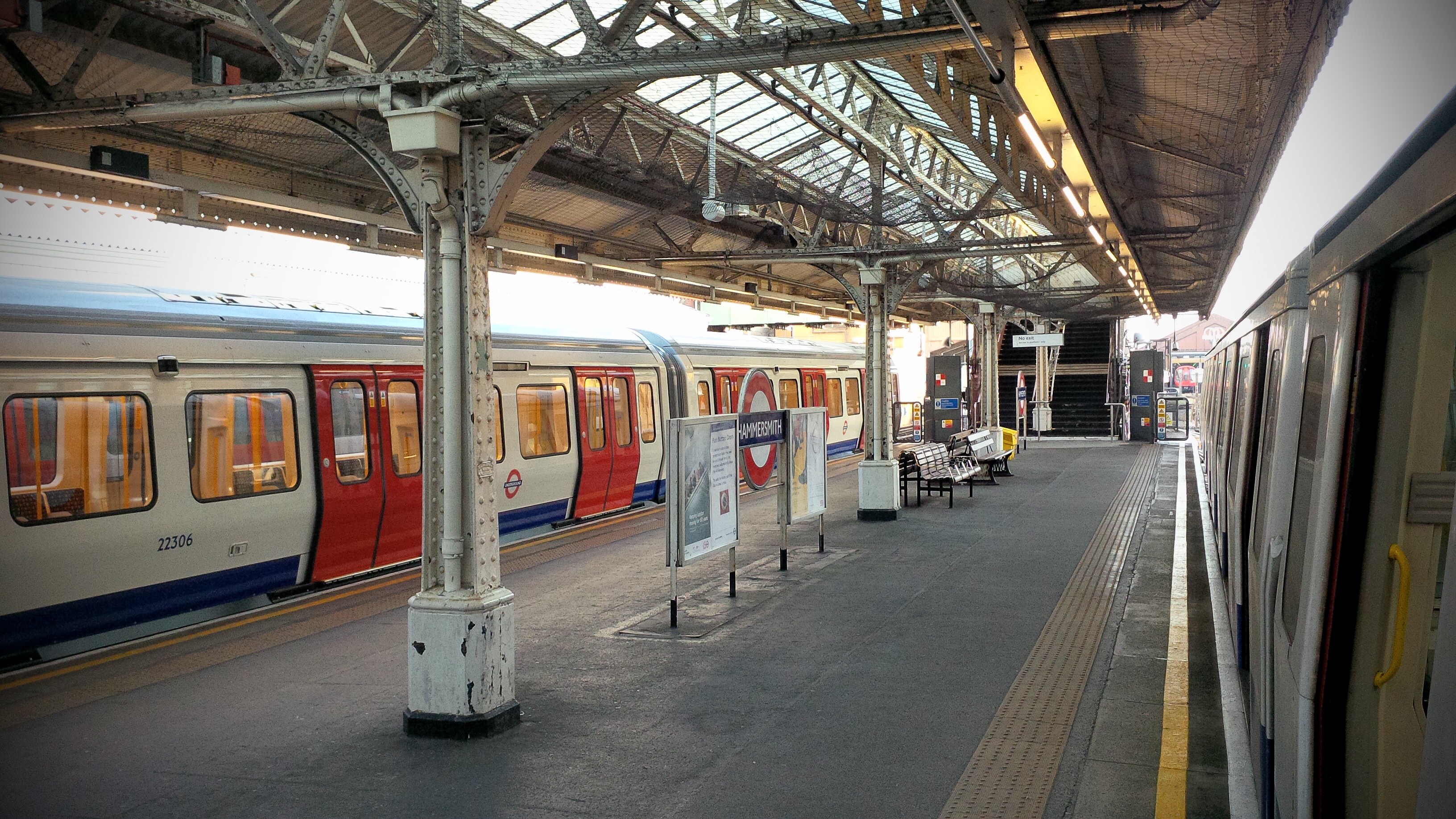
The other week I posted something about my NLP training in Hammersmith and the coffee experience. I attended the training with a friend, and at the end of each day we would go to the tube station – the Hammersmith and City line rather than the Piccadilly. It’s a terminus, so trains are usually ready in the station, waiting patiently at a platform for their fresh cargo.

Each and every day we would stroll up to the ticket barrier, move through and see the display board signalling which platform the next train departed from. Most days there would be a train at that platform.

Then something strange would happen.

My friend would quicken his pace and often break into a run. Sometimes a sprint. I would be left to saunter down the platform and find him in his chosen carriage.

After a few experiences of this we began to ‘unpack’ these two contrasting behaviours. Initially I mocked him, because I had never missed the train, but we were curious about what lay deeper in this behaviour.

There was superficial evidence that might support certain theories. My friend was a runner. He ran for pleasure regularly. I did not. He was, and probably still is, much fitter than me – so he had more capability to behave that way and running was a familiar activity. Typically I don’t run for anything.

At a deeper level though, time isn’t important to me. So the possibility of missing a train wasn’t a significant issue, but more than that, it presented an opportunity. I would have time to watch the world and the people in it. I would have time to sit quietly and ‘be’. My friend’s map of the world was different – he had many things to do, things to get done, so missing a train would deny him possibilities.

We still see this pattern today, not with trains, but elsewhere. He tries to fit a lot into his life. I’m more content to see what life offers in this moment.

There will of course be more depth, more detail in explaining our run/saunter behaviour at Hammersmith, but the joy is discovering that.

So be curious about what you do … every little thing, from choosing what to eat for lunch, to buying new shoes, to how you plan your weekend or even how you live your life.

It’s not about running or not running. It’s about knowing or not knowing.

If you don’t take time to know yourself, who else is going to?

the true meaning of coffee …

beliefs change
Many years ago I trained as a master practitioner in Neuro Linguistic Programming. I trained with a friend.

The training was near Hammersmith in London and at the beginning of each day we would go for a cappuccino and a bacon sandwich at a little Turkish coffee shop nearby. Although the training modules were several months apart, on seeing us enter at the beginning of a new module the owner would always recall our order – one sandwich on white, one brown, one without butter etc.

That coffee shop has sadly gone now, but that experience still anchors me to that time of learning, and I doubt the owner and his cheery waitress have any knowledge of how much that stays in my memory.

It serves to remind me that interactions between human beings can sometimes have more importance than their seemingly ‘low level’ content might suggest; they can carry more meaning than those involved at the time might ever realise; the spoken word or behaviour may have a completely different result or impact to that intended at the time – indeed one NLP presupposition is that the meaning of the communication is the result it elicits, not necessarily the one the giver intended.

Every day, all day, we give out communication, consciously and unconsciously. Everyone we meet takes their own meaning from that, even if several people experience the same ‘message’, each will create their own meaning.

In our early years, much of this gives rise to our beliefs about the world. Some of that serves us well in later life. Some does not.

The parent with the adolescent child, studying for their exams, will doubtless have the best intention to support them. Comments such as ‘never mind, you did your best’ or ‘all you can do is try’, have positive intentions. Yet I have seen such people in the middle of their lives, still running a belief that ‘I’m not good enough’ or ‘I have to work hard’ or even a more complex belief such as ‘If I don’t succeed nobody will love me’.

Spoiler alert: you probably believed in Father Christmas when you were small. Your parents span the yarn. It served you to believe – you got toys, chocolate, the excitement of presents to unwrap, and as a child that’s desirable. My guess is most of you no longer believe in Father Christmas.

The meaning we take at one point in our lives doesn’t have to be the meaning we live with. Trying hard when you’re 15 might be useful – please a parent, pass an exam. Trying hard later in life, when your work life balance is out of kilter, or when you’re in a job you loathe, or when you’re burning out through effort, or when you just want your boss to notice you, isn’t necessarily so helpful.

The barista can make many coffees.

You have a choice whether yours will always be the same.