“Inspiration could be called inhaling the memory of an act never experienced”
Ned Rorem

“Inspiration could be called inhaling the memory of an act never experienced”
Ned Rorem
What gets a lexicographer up in the morning? Where does the energy come from?
Maybe the advent of new words? Maybe the evolution of old ones?
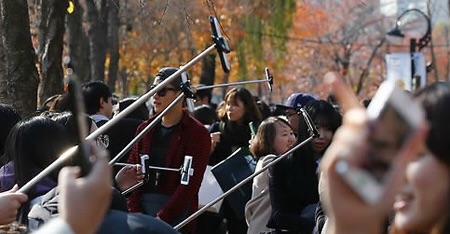
Selfie is a new word. This sudden penchant for capturing ourselves against our current environment. Looking at ourselves in our context. Getting an arms length perspective. Using a selfie stick to get even greater perspective. To see from further out. To fit more of our situation in.
Our desire to share these 2D representations of self in these static snapshots of life, is curious. We seem strangely reluctant to show ourselves in living 3D, in reality, as we exist in the world with other human beings. Alive. Both beautiful and beautifully flawed.
Of course we have always had the ability to look at ourselves from the outside. Inside our head. Long before technology gave us the ability to record an image, many of us did that in our mind’s eye. Imagined it. We see ourselves in that awkward conversation. See ourselves in that meeting where we were criticised. See ourselves in that beautiful moment of joy, of fun, of love.
Our mind’s eye has an important advantage over the selfie. We are not limited to the current moment. Not limited to a selfie snap and a hard drive of past experiences captured in still reflection. Inside, we can do this imaging, this ‘selfie’, for our future too. Imagine our own future. Our upcoming holiday. Our new home to be. We can manipulate the image – past or present. Make it brighter, more colourful, turn it around, zoom in or out. Take parts out, add parts in.
Take a mental selfie now of where you will be next week, next month, next year.
Perspective and context are crucial to our humanity. They allow us to see possibility, to reflect, to dream, to make sense, to know we’re ok.
Click.
Remember too though that living, sharing, enjoying reality in the moment are more deeply human. Share the gift of you, now, in glorious living technicolour. Not just in smiling, staged, two dimension tomorrow.
Don’t just take a selfie. Be one.
Lexicographers – let’s add ‘be a selfie’

The concept of ‘now’ intrigues me.
I have always considered myself someone who is very present, in the moment, in the ‘now’. But reading something in a book by Steve Chapman the other day, gave me a different language to describe it. This is what I took from what I read…
Time as we know it, is a social construction, a human invention, something that over many centuries we have honed and agreed universally as a good way of orienting ourselves to movements of the solar system, and to getting to our next meeting on time!
The most obvious ever-present reminders of the concept of time, are the clock and the calendar. These have developed over centuries from lunar calendars to solar calendars, sundials etc… to, I guess, the i-watch.
This clock time, or chronos time – the on going perpetual march of seconds, minutes, hours – ticks away on our watches, clocks and electronic systems all over the world.
Daniel Stern argues that if chronos time were real, then the moment of ‘now’ would be so fleeting that we would never be able to dwell on it long enough to make meaning of the experience. We would in effect be goldfish, with each ‘now’ moment lasting +/- one second; the unit of chronos.
The Greek concept of kairos offers an alternative perspective. Kairos is a moment of indeterminate time in which everything happens. While chronos is quantitative, kairos has a qualitative, permanent nature. In kairos there are no seconds, minutes, hours, just the idea that kairos time is a passing moment of consciousness, in which something happens that offers us new meaning in our experience.
The author of my book summarises the two like this…
chronos time is a concept informed by clocks
kairos time is a concept informed by meaning
What would happen in organisations if we abandoned chronos time and just interacted, communicating, learning, until a new collective meaning emerged?
Meetings wouldn’t have agenda items with start and end points, but each item would be explored until collective new meaning emerged. Some agenda items might take five minutes, some items ten times as long.
Of course for this to work, people need to be open to learning, open to having generative conversations, open to enquiry with others as to where collective meaning existed, or was lacking. People would need to be very present in this ‘moment of meaning making’. No longer slaves to chronos time, people would interact throughout the day until sufficient meaning had emerged for individuals to move forward, for the business to move forward.
In such a kairos informed culture I wonder if this would make us more curious, more exploratory, more accepting of alternative viewpoints and enable us to both seek meaning in our work and in our lives? It might also free us to play with our creative spirit.
What would happen if we lived our lives to kairos time? Not just at work, but all our experiences?
Even as you read this, you may be seeking to find new meaning for you?
Welcome to kairos 🙂
In the sunshine at Leyton Orient today.
Half time and my team are 1-0 up.
We have been singing ‘Barmy Army’. All except one. His contribution seems to be ar-eee ar-eee. For ‘Blue Army’, it’s ooo-ar-eee.
It works though. Lost in the crowd. It adds to the noise and would seem to be quite economical. No need to waste consonants. No need to use facial muscle to form lips, mouth and jowel to enunciate all the suggested letters and sounds.
Where else can we be economical and still fit in? Save energy and still be part of the team? Go through the motions but still add something?
At work, at home, with friends, with colleagues, in relationships…?
Maybe at times we all do that?
Maybe we signal agreement, dissent, act as if we are together, pulling as one, but our commitment is only partial. Without consonants perhaps? Partially present, noisy, but somehow incomplete?

Some time back I facilitated a workshop during which we experimented with silence.
It’s a difficult art.
Delegates had individually completed a five minute exploration of one aspect of themselves, resulting in a few written sentences. The second part of the exercise was to pair up and share that with a colleague. The only ask I made of those listening was to say nothing. Yes, to remain fully present. Yes, to listen completely, not just for what was said, but for deeper meaning and what wasn’t being said. But to remain silent. For the full five minutes.
They were all unable to avoid asking questions. So we explored that when we came back together.
It transpired the questions were all for the benefit of the questioner. Questions to clarify the questioner’s understanding. Questions for the questioner to understand context. Questions for the questioner to compare with their own experience. Questions for the questioner to shape appropriate feedback, input, opinion. Questions for the questioner to demonstrate they were listening. Questions for the questioner to collude. Questions for the questioner to feel they were adding value, helping in some way. Questions for the questioner to demonstrate empathy.
“When does this happen?” “What have you tried?” “What happened when you…?” “Could you speak to…?” “How long has this been like this? “If you approached it this way…?” “I know what you mean, it’s hard isn’t it?” “What did they say when you did that?” “How can I help?” …
It seems we have become accustomed to ask questions for our own benefit.
Shifting focus to only ask questions for the benefit of the other person is a skill. It offers the other person a way to expand their own understanding, broaden their own awareness. It offers the other person an opportunity to explore choices, possibilities. It offers the other person the opportunity to learn, to grow.
Above and beyond this enhanced learning, to have someone be with us, solely in service of us, is rare. To have someone listen that deeply, to witness but not judge, to empathise not sympathise, can be a very connected experience. To be given space to be with our own experience is a gift, humbling and trust laden. At this level, silence becomes the deepest form of listening. The purest form of being with someone.
In many of our conversations, our human interactions, we fall into the pattern of asking questions to broaden our own understanding or to feed our own need to be useful. Questions to find solutions for the person, to be helpful and affirm our own value… to ourselves.
Seeking questions solely to broaden the speaker’s awareness offers a different way.
Be curious about the true intent behind the questions you ask.
Practice seeking questions which broaden the other person’s exploration of their own experience and to find new learning, new possibilities, new meaning for themselves. Practice too the art of silence.

Driving to the station this morning, I passed joggers, cyclists, walkers and of course other cars. I’m on the train now speeding to London.
All around me are people. They’re not physically moving. They’re sitting, standing, temporarily they’re trapped, encased in this rocking rolling glass and steel box, mounted on wheels, planted on rails, transporting us all to work or to some other activity.
As I observe my fellow passengers though, they are still moving. Mentally they are all moving. Books, iPads, laptops, papers, thoughtful looks, animated conversations, all indicators that they are moving, planning, preparing, reflecting, thinking…
On my iPod I’m listening to Rolling Stone by Passenger. The lyrics go … ‘I’m always moving. I never notice because I never stand still’
So true.
When did you last stand still? Just stop? Think of nothing? Do nothing? Just be? Notice only you, your physicality, your breathing, all parts of your physical body – your presence in the world. Your very existence.
It’s an amazing thing. Try it.
image credit: taylormmeredith.com

Where is your future?
I don’t mean, is your future in finance, or owning your own business, or getting your boss’s job. I don’t mean a little villa in Spain, or retiring at 45, I mean where is it? In relationship to you, now.
Point to it.
So where did you point?
Now try pointing to your past.
Did they both have a direction? A direction that was pretty obvious to you?
Isn’t that weird? We appear to have a sense of time – past and future – in relation to our physicality.
You may well have pointed in front of you to indicate your future. Maybe straight in front, maybe a little to one side, the right perhaps, as if pointing to one o’clock with midday straight ahead?
If you did point ahead of you, it’s possible you then pointed behind you to indicate your past.
Alternatively, your directional map may have been very different … you may have pointed to your right to indicate your future, sort of 2, 2:30 or 3 pm if straight ahead were 12 noon. Your past may then be to the left, maybe between 9 and 10:30? The past and future may be connected in a curve or a straight line.
Maybe you have another configuration?
Check out where ‘now’ is.
Right in front of your eyes, inside your head, where you’re standing?
Welcome to your timeline. An ‘unconscious’ orientation to your past, present and future. A guide to how you process time.
If your future is in front and past behind, you could be called ‘in time’; that is you are standing in your timeline as it were, journeying towards your future. Sometimes ‘in time’ people can be very focused on their next goal – they can after all ‘see’ it in front of them. They may not be inclined to make longer term plans or lists though, as those are ‘obscured’ by shorter term futures. They may use language such as ‘looking back’ or even wave their hand over their shoulder when talking about the past, thereby signalling the way they hold time.
If your future is to the right and past to the left, you could be described as ‘through time’. You can see through time, a little like a diary planner, with recent past events just a little to the left and older memories further left, whilst your near future is a little to the right of centre, with longer term goals further to your right. Sometimes ‘through time’ people are good planners and good timekeepers – they can see their timeline laid out like an open calendar.
Be curious about your orientation to time. Be curious about the hand or body movements and any language that suggests your orientation to time. Be curious about the patterns of other people too.
Time and the way you unconsciously hold your relationship to it has more impact on your life than you may ever have realised.
I am the unnoticed, the unnoticeable man;
The man who sat on your right in the morning train
The man who looked through like a windowpane
The man who was the colour of the carriage, the colour of the mounting
morning pipe smoke.I am the man too busy with a living to live
Too hurried and worried to see and smell and touch
The man who is patient too long and obeys too much
And wishes too softly and seldom.
I am the man they call the nation’s backbone,
Who am boneless – playable catgut, pliable clay
The Man they label Little, lest one day
I dare to grow.I am the rails on which the moment passes,
The megaphone for many words and voices
I am the graph diagram,
Composite face.I am the led, the easily-fed,
The tool, the not-quite-fool,
The would-be-safe-and-sound,
The uncomplaining, bound,
The dust fine-ground,
Stone-for-a-statue, wave worn pebble-round
A.S.J. Tessimond
 illuminated dandelion