taking for granted what we take for granted

image

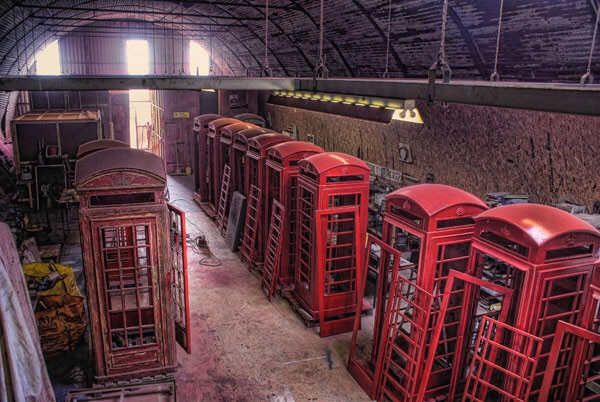
When I was a teenager, telephone boxes were how you communicated when outside the home. They were on every street corner. Red, glass and steel boxes that served as communication portals to friends, family, emergency services and, most importantly, they served to secure you a lift back home after a night out. Now of course they are almost non existent. Back then, I took them for granted. I couldn’t conceive of the telephone box being in my pocket.

All of us take things for granted.

Things that just are. Things we have known to be so, for so long, we simply don’t question them.

And the challenge  with noticing the things we take for granted is… well, we take them for granted.

In a sense they become invisible to us.

Looking back in time can provide clues as to things we once all took for granted. One hundred years ago, 25% of us would have been servants. Many would have taken that for granted. Telling the time required a pocket watch, subsequently a wrist watch. We carried the time with us. That was just how it was. Now, the time is everywhere in our digital world, and fewer kids wear watches. Fires were how we kept warm, now we have central heating, under floor heating.

Just 15 years ago, access to the Internet would only have been possible in certain locations with specific equipment. Now we take for granted we can access it anywhere anytime, on many devices. And when we can’t, we become frustrated. We almost take it for granted now. Soon we will.

Just living day to day, many of us take things for granted. Having a roof over our heads. Food to eat. Sleeping. Clothes. Cars. Roads. Water. Toilets. Power. The sun coming up. Language. Medicines. Microwaves. Refrigerators. Government. Peace.

Of course, taking some of these things for granted is fine, for the most part.

The question is, what do you currently take for granted that closes your mind to possibility?

What can you not see, because something you take for granted, just is? It’s there obstructing your ability to see things differently.

Don’t take for granted what you take for granted.


run, hide, tell

hideandseek
I have just been signposted to the Government’s stay safe advice in the threat of armed terrorist attack.

In a nutshell, run, hide, tell.

Run away, if that option exists without risking further danger to yourself
Hide somewhere if you can’t run
Tell someone official where the threat is

I don’t seek to disparage what might be necessary advice to keep me and others safe, but I was immediately transported back to the age of six.

I was in a field at the back of my house playing hide and seek with some friends. As the seeker I held my hands over my eyes whilst my playmates ran to their hastily identified hiding place. Like most six year olds, I peeked through my fingers. Only peeked mind, because if they could see my eyes they would know I was looking. My friends ran, randomly. No plan of where to hide, just run away from the seeker as quickly as possible and then, once a safe distance away, look for somewhere safe to hide. As seeker we would prowl the area, hastily darting between the same places they hid last time and the time before. Always looking for a shoddily concealed arm, or a careless toe, peeking out from the impromptu hiding place. Then we would tell. Shout out where they were, or run back ‘home’ to declare them found.

I was struck by the transportation of those skills the child in us takes into adulthood.

Running. Running from difficulty. From inner truths. From facing ourselves. Running from others. From uncomfortable situations. Running from feelings. From inner voices. From fears.

Hiding. Assuming that if I don’t look at you, you can’t see me. We do this all the time. Not literally. Not peeking through slitted fingers. But not showing our true selves, for fear of being truly seen.

Telling. Seeing a part of someone, like the carelessly exposed arm or toe from the child’s game, but as adults seeing one action, one behaviour, one socio-economic or cultural badge, one gender or sexual preference and ‘telling’ others who that person is or where they are hiding. Judging. Exposing them.

Run, Hide, Tell.

Childlike simplicity.
Safety in the face of terrorism.
Safety in the very humanness of our humanity.


when the solution we seek stops us seeing

image

Freedom from the desire for an answer is essential to the understanding of a problem.

Jiddu Krishnamurti

This seems relevant in the context of recent world events. Our desire, and that of our leaders, to fix the current situation seems to blind us to the true nature of the problem. We must take action. Seek a solution. Find an answer.

What if we sought understanding? What if we employed curiosity? What if we questioned to heighten awareness, rather than to judge?

It seems this is a reflection of our society. The pace of change. The need to know, and to know now.

Contemplation. Reflection. Awareness. Stillness. Compassion. Humanity. These might be everyone’s ally.

#prayforParis

what do you know and how do you know it?

knowing NLP filters truth map
Do you know what you know because you read it? Maybe in a text book, an academic study, a newspaper report, on-line in a blog or on social media?

Do you know what you know because someone told you it was true?

These are both verbal exchanges. Auditory. They are spoken, written, heard or read. Stories if you will. The exchange of knowledge through written or spoken communication. Someone else provides their knowing and we hear or read it and accept it as knowledge we will also hold to be true. It is, in a sense, second or third hand knowledge. Knowing we agree to add to our own knowing. Or not.

Our acceptance of this knowing involves an unseen process of convincing. Maybe I accept it because I trust the author. Maybe I trust the method by which their knowledge was acquired? Maybe I trust the method of conveying the knowledge to me?

Do you know what you know because that’s the widely accepted truth?

It’s the word of the society, culture, religion, community, organisation… the word of the system if you will. In a sense, story, tale, myth, evidence become fact, truth, reality through the weight or volume of saying it. If enough people speak something, it tends to absorb a validity or truth amongst others. This is how customs and culture are formed.

Maybe I am convinced of this knowing because I have heard it many times from different sources within the system? Maybe I accept it because doing so affirms my belonging to the group? Maybe the groups I belong to therefore narrow my ability to know?

Do you know what you know because you have assembled a truth, through collecting, filing, connecting new data, new knowing, into your own existing knowing?

I know for example that many people see images in their heads. I know this because I have read about it, I have heard about it in training sessions, I have experienced it through coaching many people who can vividly describe the videos or stills in their mind’s eye, I have personally seen pictures in my own head. I have experimented with this knowing to extend, broaden, widen and deepen it. I have purposefully sought out additional knowing, making sense, making patterns and making new neural connections to create an enriched personal knowing.

Maybe I readily accept this knowing? Convinced because it fits with other knowing I already have?

Maybe what I know already, informs what I seek to know? I am, in a sense, blind to new knowing because my existing knowledge guides and channels me to seek knowing which corroborates knowing I already have.

Do you know what you know because you have experienced it and therefore know it to be true? Do you know what you know because you have seen it? Seen it with your own eyes? Tasted it with your own tongue?

I have tried coriander, and I know I don’t like the taste. I have in a sense created my own personal knowing. Others may also have this knowing; but a hundred, or a thousand people not liking coriander doesn’t make coriander something nobody eats, a poisonous food. We are happy to create our own version of knowing, a personal truth.

In fact through all of these methods, we create our own version of truth, our own subset of knowing.

Whether our knowing comes from historic sages, from trusted texts, from reliable friends, from assembled self knowing, from tasted, smelled or observed personal experience, our knowing comes through a hidden process of filtering, selection and trust which makes our knowing personally true. Often this process makes others’ knowing false as a result. That’s how arguments, wars start.

We should be curious about our own personal process of knowing.

How we know what we know. Our hidden process of validation and acceptance. Our process of exploring knowing to expand and develop it. Learning, if you will. This matters, because if our personal process is flawed, broken in some way; if we are blind to certain pieces of knowing, closed to experiencing certain knowing or inexperienced in different ways of assembling knowing… then we are limited.

If we are limited, we are not fulfilling our human potential.

… and that’s worth knowing.

facing ourselves is the hardest direction to look

not looking at ourselves
It seems like we stand in the centre of the world.  In the centre of our world.

From this place we can observe all. See sights. See situations. See people. Be drawn towards. Turn away. Fit.

From our vantage point, with our map of the world as the world should be, we can assess everything, place a value on it, judge it. We can rank things, place them in hierarchies of choice, want, need. We can compare this external vista of things, people and their actions with our perception of right and wrong, good and bad.

And we do…

We critique the behaviour, choices, necessities of others. We glance at the unsightly homeless person from the corner of our eye, thereby maintaining a dignified separation. We wince at the teenager’s language and lack of respect in the street, like we skipped that life stage. We place the drunk man in a story, a story of our own creation, so that we can explain his ‘condition’. We assess the parents and their actions towards their screaming toddler, like frustration, tiredness, learning are all experiences we have never had or at least have always handled better. We gossip about the neighbour and the affair we think they’re having, so that we can stay in the ‘moral’ club through our action of placing them in the ‘immoral’ one. We whisper with colleagues about the boss who seems oblivious to the impact of their actions, because there is safety in collusion. We mutter about the Sunday driver who meanders when we’re in a hurry to be somewhere, like they have no intent or purpose.

That person is good, this one less so. We’re OK, because they’re not. How can he do that? Why is she so…? Why don’t they…? I wouldn’t do that. Who wears that? Does she know what she looks like? Really … pink? Why doesn’t he wash his hair? Another holiday!? Why can’t she just say? He’s a waster. She doesn’t realise what she’s doing to him. Amazing, awful, not good enough, disgraceful, shameful, good heavens…

We all do it, every day.  It comes easy. Too easy.

Maybe because in our map of the world, our view of right and wrong, of good and bad, we can be exonerated? We are innocent. Never guilty. We are successful. Never a failure. We are ethically and morally just. Never wicked.

But maybe facing ourselves is merely the hardest direction to look?


the emergence of the selfie

looking at self
What gets a lexicographer up in the morning? Where does the energy come from?

Maybe the advent of new words? Maybe the evolution of old ones?

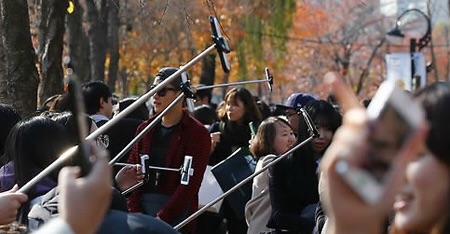
Selfie is a new word. This sudden penchant for capturing ourselves against our current environment. Looking at ourselves in our context. Getting an arms length perspective. Using a selfie stick to get even greater perspective. To see from further out. To fit more of our situation in.

Our desire to share these 2D representations of self in these static snapshots of life, is curious. We seem strangely reluctant to show ourselves in living 3D, in reality, as we exist in the world with other human beings. Alive. Both beautiful and beautifully flawed.

Of course we have always had the ability to look at ourselves from the outside. Inside our head. Long before technology gave us the ability to record an image, many of us did that in our mind’s eye. Imagined it. We see ourselves in that awkward conversation. See ourselves in that meeting where we were criticised. See ourselves in that beautiful moment of joy, of fun, of love.

Our mind’s eye has an important advantage over the selfie. We are not limited to the current moment. Not limited to a selfie snap and a hard drive of past experiences captured in still reflection. Inside, we can do this imaging, this ‘selfie’, for our future too. Imagine our own future. Our upcoming holiday. Our new home to be. We can manipulate the image – past or present. Make it brighter, more colourful, turn it around, zoom in or out. Take parts out, add parts in.

Take a mental selfie now of where you will be next week, next month, next year.

Perspective and context are crucial to our humanity. They allow us to see possibility, to reflect, to dream, to make sense, to know we’re ok.

Click.

Remember too though that living, sharing, enjoying reality in the moment are more deeply human. Share the gift of you, now, in glorious living technicolour. Not just in smiling, staged, two dimension tomorrow.

Don’t just take a selfie. Be one.

Lexicographers – let’s add ‘be a selfie’

how does your inner self see you?

self image
I’ve just followed a chap wearing a trilby and a waistcoat.

In my head, that would be me.

I’m not a sweater man.

I would have a funky moustache with those little waxed twirled ends. A cool haircut, as befits the younger me (I’m not sure I know what a cool haircut is, but I’d have one). Maybe some sunglasses, but only in the summer.

My clothes would be strong colours. No patterns. Just blocks of orange, yellow, green, cyan etc. No red, it’s not me.

Stylish shoes. Expensive. Well made.

I’m an individual.

I have a few of these things in my current ‘me’, but I wonder why not more? Why is my inner sense of me and my image different from that I show outwardly? I suspect it’s about judgement. Judgement of myself.

I wonder what it would be like to lose that judgement and to let the real me out?

What does your inner sense of you look like?

What would it be like to let it free?