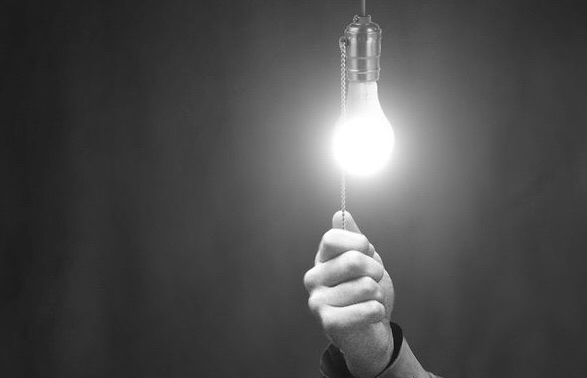
when the power is lost, the lights go out

giving power away
A colleague at work has been leading a new project. She has surveyed the territory, read the research, summarised the viewpoints and gathered the core material. It’s time to document our stance and intended direction.

She invited others to share this work, valuing a collective approach. Now a couple of drafts have been produced, attributed to their shared work, but my colleague is disappointed. Disappointed in herself.

I discussed it with her. The work has lost the essence and the inspiration she found through the research, but also, it no longer reflects her.

We explored how she has given her power away.

We can all do this.

We give our power away when we doubt ourselves. When we try to make everyone happy or look for others approval and validation, thereby over-empowering them.
We give our power away when we fail to honour or share our personal truth. We do it when we compare ourselves to others or worry what other people will think. We do it when we forget that we know what we’re doing and that we are good at it. We do it when we have poor boundaries and allow others emotional activity to intimidate us and leak into our world. We do it when we lose sight of what we need or want, instead placing focus on what we see externally in the world as the blocker – lack of money, time, ability, looks, weight…

But giving your power away diminishes you, disables you, casts your personal light in shadow.

facing ourselves is the hardest direction to look

not looking at ourselves
It seems like we stand in the centre of the world.  In the centre of our world.

From this place we can observe all. See sights. See situations. See people. Be drawn towards. Turn away. Fit.

From our vantage point, with our map of the world as the world should be, we can assess everything, place a value on it, judge it. We can rank things, place them in hierarchies of choice, want, need. We can compare this external vista of things, people and their actions with our perception of right and wrong, good and bad.

And we do…

We critique the behaviour, choices, necessities of others. We glance at the unsightly homeless person from the corner of our eye, thereby maintaining a dignified separation. We wince at the teenager’s language and lack of respect in the street, like we skipped that life stage. We place the drunk man in a story, a story of our own creation, so that we can explain his ‘condition’. We assess the parents and their actions towards their screaming toddler, like frustration, tiredness, learning are all experiences we have never had or at least have always handled better. We gossip about the neighbour and the affair we think they’re having, so that we can stay in the ‘moral’ club through our action of placing them in the ‘immoral’ one. We whisper with colleagues about the boss who seems oblivious to the impact of their actions, because there is safety in collusion. We mutter about the Sunday driver who meanders when we’re in a hurry to be somewhere, like they have no intent or purpose.

That person is good, this one less so. We’re OK, because they’re not. How can he do that? Why is she so…? Why don’t they…? I wouldn’t do that. Who wears that? Does she know what she looks like? Really … pink? Why doesn’t he wash his hair? Another holiday!? Why can’t she just say? He’s a waster. She doesn’t realise what she’s doing to him. Amazing, awful, not good enough, disgraceful, shameful, good heavens…

We all do it, every day.  It comes easy. Too easy.

Maybe because in our map of the world, our view of right and wrong, of good and bad, we can be exonerated? We are innocent. Never guilty. We are successful. Never a failure. We are ethically and morally just. Never wicked.

But maybe facing ourselves is merely the hardest direction to look?


what’s your worst bad habit?

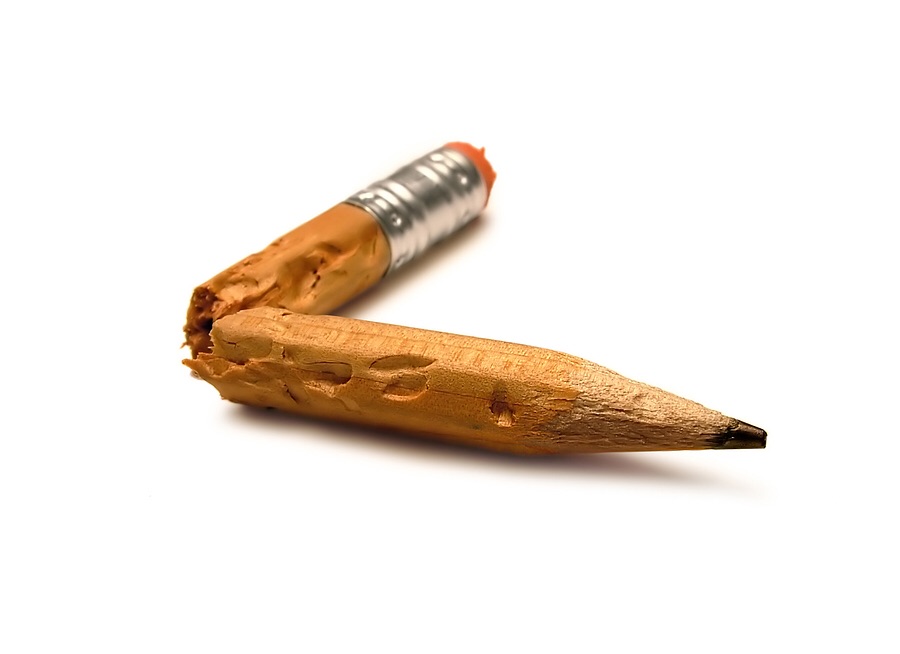
bad habit chewing pencil
From childhood we are alerted to the dark path of the bad habit.

Don’t suck your thumb
Don’t bite your nails
Don’t twirl your hair
Don’t fidget, sit still
Don’t pick your nose…

Of course in these examples it is the parent speaking, the adult. They have decided this behaviour is ‘bad’. For many, this is because they were conditioned as children to believe these habits were bad, by their own parents, by ‘society’. It is as if we have passed the judgement ‘bad’ down through the generations.

But what is a habit? Convention might say a habit is a practice, a manner, a behaviour that has become a pattern. A pattern that is hard to give up. Change requires the exercising of that thing we call ‘will power’.

I have spoken before here about behaviour being purposeful, having a structure. Trigger, behaviour, reward.

Those childhood habits I have mentioned might share similar triggers … a sense of worry, anxiety, restlessness, feeling exposed, alone, needing comfort? They might also share a reward? They all seem to have a property of physical connection to ourselves, be it thumb, hair, fidgety bottom, fingers, nose. Maybe a form of comfort from connecting to our own bodies?

So why bad?

One definition of a bad habit is one that has the potential to be detrimental to our physical or mental health.

Convention in the adult world might list such things as smoking, eating too much fast food, gambling, drinking too much, late night snacking as bad habits. Again, maybe it is society that creates this assessment, this valuation of bad? Not just invented though, not just handed down in stories and tales from elders, we have researched the medical implications of smoking, drinking, over-eating. We have hard evidence. We know.

Take a smoker. They know it is harmful, yet they persist. Why? Lack of will power? Maybe. Maybe that’s just another way of saying the reward is too important to me?

I was once in a training, where we were asked to list the benefits or rewards from smoking. Many were social – an opportunity to socialise, connect with like-minded people. Some described it as relaxing. We listed over forty benefits, from a room of sixty people, only a quarter of whom smoked. But one delegate offered a very powerful benefit. They described how it helped them remember their father – who had died of lung cancer. An odd behaviour at a logical level? But, that’s a very powerful reward. I suggest it might trump will power every time.

So paying attention to the triggers and rewards, might be useful here? It is these that drive the habit. The rewards can be well hidden, logically hard to rationalise and so hard to unearth. Seeking them out can be tricky. Be persistently curious. Keep asking ‘what do I get from behaving like this?’ Finding another way to get that reward will help you change the habit.

Maybe we need to talk not so much of ‘bad habits’, but more of ‘rewarded habits’?

So, what IS your worst bad habit?

Not because society labels it bad, but because it carries a reward you very much want or need. Your most rewarded habit? And, if you would like to change the habit or behaviour, how might you get that reward another way?

why do we question?

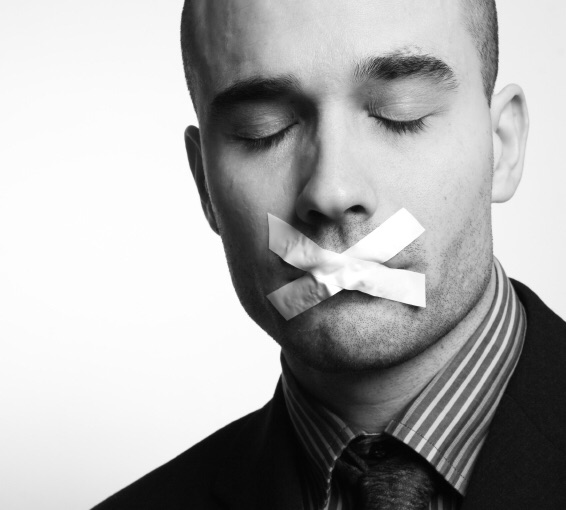
question listen silence
Some time back I facilitated a workshop during which we experimented with silence.

It’s a difficult art.

Delegates had individually completed a five minute exploration of one aspect of themselves, resulting in a few written sentences. The second part of the exercise was to pair up and share that with a colleague. The only ask I made of those listening was to say nothing. Yes, to remain fully present. Yes, to listen completely, not just for what was said, but for deeper meaning and what wasn’t being said. But to remain silent. For the full five minutes.

They were all unable to avoid asking questions. So we explored that when we came back together.

It transpired the questions were all for the benefit of the questioner. Questions to clarify the questioner’s understanding. Questions for the questioner to understand context. Questions for the questioner to compare with their own experience. Questions for the questioner to shape appropriate feedback, input, opinion. Questions for the questioner to demonstrate they were listening. Questions for the questioner to collude. Questions for the questioner to feel they were adding value, helping in some way. Questions for the questioner to demonstrate empathy.

“When does this happen?” “What have you tried?” “What happened when you…?” “Could you speak to…?” “How long has this been like this? “If you approached it this way…?” “I know what you mean, it’s hard isn’t it?” “What did they say when you did that?” “How can I help?” …

It seems we have become accustomed to ask questions for our own benefit.

Shifting focus to only ask questions for the benefit of the other person is a skill. It offers the other person a way to expand their own understanding, broaden their own awareness. It offers the other person an opportunity to explore choices, possibilities. It offers the other person the opportunity to learn, to grow.

Above and beyond this enhanced learning, to have someone be with us, solely in service of us, is rare. To have someone listen that deeply, to witness but not judge, to empathise not sympathise, can be a very connected experience. To be given space to be with our own experience is a gift, humbling and trust laden. At this level, silence becomes the deepest form of listening. The purest form of being with someone.

In many of our conversations, our human interactions, we fall into the pattern of asking questions to broaden our own understanding or to feed our own need to be useful. Questions to find solutions for the person, to be helpful and affirm our own value… to ourselves.

Seeking questions solely to broaden the speaker’s awareness offers a different way.

Be curious about the true intent behind the questions you ask.

Practice seeking questions which broaden the other person’s exploration of their own experience and to find new learning, new possibilities, new meaning for themselves. Practice too the art of silence.

time to clean up?

human clean
Our lives are spent cleaning up.

At home for example, we’ve just had breakfast and we are headed out for the day. Each of us has showered, washed hair, groomed in our respective ways. We’ve cleaned up in the bathroom, to make space for the next visitor. We’ve washed up the breakfast crockery. Cleaned down work surfaces. Even washed the car windscreen for the drive ahead.

In our human lives we clean and tidy other things too, constantly – we seem compelled to keep order, space, a standard of existing, room to ‘be’. We tidy rooms, dust, vacuum. Clear garages. Windows are cleaned, inside and out, so that we can see the world more clearly. Cars get hosed and washed, waxed and polished. Gutters are cleared. Furniture gets realigned, wiped down. Gardens get tended. Old shoots are clipped away, grass mown and neatly edged. Leaves swept. Yards and paths are brushed and ‘broomed’. Toys are cleared up after use. Children’s faces wiped. Partially consumed foods are repackaged and stored, wrapped, clipped, boxed in a plastic container. All aspects of our selves and our homes kept clean and ready for re-use.

Our places of work are tidied too. Factory floors, office corridors, desks. Electronic storage is deleted, archived, filed away in folders. Physical storage too, books, articles, paper, reports. Each evening the cleaners arrive to ensure the place of work can function, efficiently, effectively the following day. Processes are run to ensure a state of commercial readiness. Billing, order processing, overnight processing schedules, backups and archives.

Even relationships get cleaned up. Apologies made. Gifts bought. Farewells said. Hugs offered. A good ‘let’s talk this through’ often used to clear things up for the next leg of the journey. Friends are remembered, some are forgotten. In social media we follow and unfollow, friend and unfriend to keep our electronic worlds clean and tidy for the next visit.

We are even learning to clean the planet.

But still the mess comes. More to tidy, more to clean.

Yet, there seems to be a focus on the exterior.

Our outside and the places it inhabits, works, moves to and through, all get attention. Our connections to others on occasion.

I wonder about our insides? Our memories and beliefs that we drag with us through life, limiting our potential, creating worry and angst. Our way of being. Our hurt, our shame, our grief. Our patterns of thinking and acting that run on automatic and serve us poorly now? When do we spring clean those?

if there were human being shops…

change me
Self awareness offers choice.

Once the choice to be different is apparent to me, visible, possible; Once I know what I want, I’m ready to move. Impatient. I can see the sweeties on the shelf and I want them … now!

At moments of deep realisation for my coaching clients, I often get asked in those sessions where the sweeties become apparent, a question a bit like this one … “So how do I change that?”

This question intrigues me.

Of course, it presupposes change is possible and that’s great in a coaching context; we want our clients to come keen to achieve their goals. But the presupposed simplicity implied within the question is another matter.

Often the new awareness pertains to a way of being that we have honed for many years; It is well practiced, in the muscle, part of how we are.  The idea we can shift to a new model, a new way of being through one or two simple steps is fascinating.

We all possess many ‘things’ in this ‘modern’ world. If they stop functioning to our needs we fix them, or replace them. It is as if we somehow seek to apply the laws of our materialistic consumerist ‘thing’ world to our very humanity. I’m ready to change me, where do I go, who has the upgrade part?

If my car stops working, I take it to a dealer or garage and say please fix this. Generally that works. In part, that’s because the car is one of many identical models. It has a specification. The mechanics are trained and no doubt have detailed manuals describing how every part works, along with the knowledge and experience required to breathe life back into those parts that don’t.

If I have a two slice toaster and more family members are eating together I can upgrade to a four slice model. No matter how long I have lived with the two slice, my needs have changed, so I can just change that aspect of my life. An hour down the shops, five minutes on line, change made, life easier.

But, here’s the thing…
human beings are inordinately more complicated and each one is stunningly and beautifully unique.

No manuals. No upgrade models down the shops.

To hope that all of your learning, life experience and behavioural pattern making since birth can somehow be re-modelled in a few simple steps … a bit like reprogramming the central heating timer … is curious.

And yet we do. It’s almost as if we believe we’ve just missed out on a chapter in the book ‘How to be a happy human being’. Or perhaps we misinterpreted some instruction along the living highway which explained how we were supposed to be? Or maybe that we think someone else messed it up for us, but now we know that, we can just pull the tiller and steer the right course? Whatever our thinking about how we came to be like this, we seem to think this ‘expert’ in front of us, this ‘human mechanic’, this ‘coach’ can somehow put us right.

Changing ourselves is hard work.  Possible.  The prizes can be enormous. Life changing. But it’s always hard work.

does this make sense to you?

senses NLP
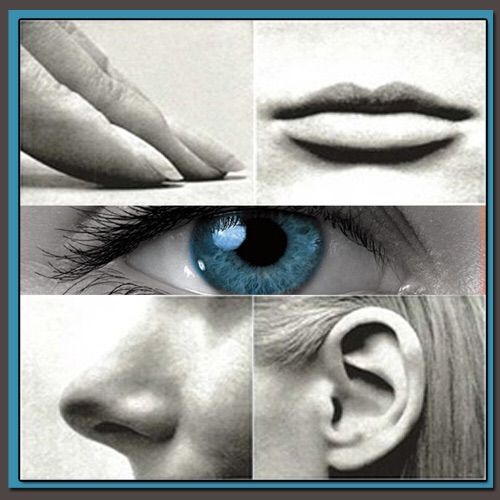
We experience life through our senses. We see, hear, feel, smell and taste our experiences.

Our brains code them in this way. Our memories are accessible through our senses and, when recalled, we experience, represent or rather ‘re-present’ them through our senses.

If you recall now something that happened to you last week, you will be doing so either by seeing the situation in your mind’s eye, or by re-feeling how you felt then, or by hearing the conversation again, maybe even smelling something…

This process works both ways. We ‘think’ of a memory and re-present it through our senses. Or, we have a sensory experience today and that triggers another memory where the sensory experience was similar. Have you ever had the experience of a smell taking you back to a childhood memory?

This process also works for the future – imagined future experiences are presented to us through our senses. We can imagine our holiday or that difficult conversation we have next week and we can create images, feelings, internal dialogue predicting that future experience.

We all have favourite senses to use for this. I wrote about this some weeks ago when I asked How do you think? and hypothesised that without our senses we have no experience.

We often have a primary sense, for many that is visual, but might be auditory or feeling, backed up by one or two other senses that create our experience. Some senses are less available to us in this process.

Our language reveals our preference. It shows on the outside, the way we are coding our experience on the inside.

“I hear what you say” is different to “I see what you mean”.

There are many idioms in English that we use to signal our sensory preferences for coding our own experience. Often we’re not consciously aware, nor are those around us. But it can be useful to know.

Do phrases such as these appear in the way you describe things? “Let’s get a different perspective” or “Let’s take a closer look at this”? These might be examples of a visual storage system. Whereas, “That doesn’t sound right to me”, “This really speaks to me” or “Once we get into the rhythm of the meeting” might suggest an auditory preference. Those who work with feeling, or kinaesthetically, might say “I need to take the pressure off” or “I’m aching to get on with this”…

This will be a recurring theme on this blog in coming weeks, so be curious about your practice and about what makes sense to you.

do we ever stand still?

moving just be
Driving to the station this morning, I passed joggers, cyclists, walkers and of course other cars. I’m on the train now speeding to London.

All around me are people. They’re not physically moving. They’re sitting, standing, temporarily they’re trapped, encased in this rocking rolling glass and steel box, mounted on wheels, planted on rails, transporting us all to work or to some other activity.

As I observe my fellow passengers though, they are still moving. Mentally they are all moving. Books, iPads, laptops, papers, thoughtful looks, animated conversations, all indicators that they are moving, planning, preparing, reflecting, thinking…

On my iPod I’m listening to Rolling Stone by Passenger. The lyrics go … ‘I’m always moving. I never notice because I never stand still’

So true.

When did you last stand still? Just stop? Think of nothing? Do nothing? Just be? Notice only you, your physicality, your breathing, all parts of your physical body – your presence in the world. Your very existence.

It’s an amazing thing. Try it.

image credit: taylormmeredith.com

where is your future?

timeline past present future
Where is your future?

I don’t mean, is your future in finance, or owning your own business, or getting your boss’s job. I don’t mean a little villa in Spain, or retiring at 45, I mean where is it? In relationship to you, now.

Point to it.

So where did you point?

Now try pointing to your past.

Did they both have a direction? A direction that was pretty obvious to you?

Isn’t that weird? We appear to have a sense of time – past and future – in relation to our physicality.

You may well have pointed in front of you to indicate your future. Maybe straight in front, maybe a little to one side, the right perhaps, as if pointing to one o’clock with midday straight ahead?

If you did point ahead of you, it’s possible you then pointed behind you to indicate your past.

Alternatively, your directional map may have been very different … you may have pointed to your right to indicate your future, sort of 2, 2:30 or 3 pm if straight ahead were 12 noon. Your past may then be to the left, maybe between 9 and 10:30? The past and future may be connected in a curve or a straight line.

Maybe you have another configuration?

Check out where ‘now’ is.

Right in front of your eyes, inside your head, where you’re standing?

Welcome to your timeline. An ‘unconscious’ orientation to your past, present and future. A guide to how you process time.

If your future is in front and past behind, you could be called ‘in time’; that is you are standing in your timeline as it were, journeying towards your future. Sometimes ‘in time’ people can be very focused on their next goal – they can after all ‘see’ it in front of them. They may not be inclined to make longer term plans or lists though, as those are ‘obscured’ by shorter term futures. They may use language such as ‘looking back’ or even wave their hand over their shoulder when talking about the past, thereby signalling the way they hold time.

If your future is to the right and past to the left, you could be described as ‘through time’. You can see through time, a little like a diary planner, with recent past events just a little to the left and older memories further left, whilst your near future is a little to the right of centre, with longer term goals further to your right. Sometimes ‘through time’ people are good planners and good timekeepers – they can see their timeline laid out like an open calendar.

Be curious about your orientation to time. Be curious about the hand or body movements and any language that suggests your orientation to time. Be curious about the patterns of other people too.

Time and the way you unconsciously hold your relationship to it has more impact on your life than you may ever have realised.


why do we seek to grow?

personal growth
It would seem to be a very human thing, to seek to grow, to strive, to learn, to somehow be bigger.

I’m not aware that other animals do this. They seem content to find food, water, shelter, to survive and maybe to indulge in what Sheldon from the Big Bang Theory might call ‘coitus’ – for the purpose of reproduction and survival of the species you understand.

So why do we seek more? Our desire to learn new things, have new experiences, achieve more, to get better at something, even to master it, seems to be an invisible force driving us on.

I’m not suggesting this is a bad thing. I like to learn or do something new as much as the next person. I’m curious though about the unending drive, and some of its consequences.

Where does contentment fit in? Can we ever be content? At peace with what is?

The drive for growth seems to fuel our desire to work harder, earn more, so that we can fund more growth, so that we can own more. Try snowboarding. Walk to Machu Picchu. Learn the piano. See the latest 3D movie on our 4K television. It seems to make us restless. I wonder how that tips over into other parts of our lives, impacting our relationships, our families, our work and our personal happiness?

Organisations for example – merely complex social systems of people – seem obsessed with growth. Is that even possible? Can they all grow inexorably? Are there enough global resources, is there endless demand, sufficient money in the system, enough personal drive for growth…?

In organisations we are encouraged to have goals, to strive to better ourselves and to do better. Encouraged to learn, become more skilled, more flexible, more agile. We are told to aspire, to seek promotion, betterment. It creates a sense of failure, if we don’t achieve.

It’s not very many years ago, our forefathers would have been bemused by this. They worked to live. Nothing more.

So what would happen if we sought growth less? Not abandoned it – it provides motivation, provides us with purpose in our lives. But … what would happen if we balanced this with contentment?

What if organisations equally rewarded contentment? Not complacency, but a general state of contented happiness? A ‘Bhutan-esque’ Gross National Happiness measure?

Maybe growth is a human condition?
I see some benefits.
But I also see a lack of contentment in our world.

Time for better balance I wonder?

Deviant art photograph by: RickHaigh