to experiment with your humanity

image

Just spent a fab afternoon in “the lab” with great folks, experimenting in the search for expansion of human awareness on the messy front line of human development

“The beginner sees many possibilities, the expert few. Be a beginner every day.”

Check it out here

get out of my shoes now


image

Empathy is the new black.

Schools are teaching empathy to children. Leaders are encouraged to display EQ as much as IQ. Many books explore building empathy. It’s a core coaching skill. Developmental psychiatrists and psychologists are exploring the roots of empathy in animals and the deep nature of its place in our humanity. True empathy is good. Deeply human.

To be clear empathy, as opposed to sympathy, could be described as feeling with someone, rather than feeling for someone. “I feel your anguish” as opposed to “I am sorry you’re hurting”.

It is standing in their shoes to experience their emotions.

But empathy requires thoughts as well as feelings. It is also a two person activity. So to be truly empathetic we need to balance thought and emotion as well as balance self and other. Recognising and sharing in someone else’s complex emotional state is in itself a complex inner experience, and it requires considerable self awareness and control to walk that line, be useful, be safe, keep them safe.

Otherwise empathy becomes a trap.

We can feel we are being held hostage by the other person’s feelings. Imprisoned in our own thought / feeling response. Balance requires us to have the self awareness and the dexterity and subtlety to pay attention to another’s needs whilst not sacrificing our own needs. We need to be able to recognise what is our stuff and what belongs to the person we are empathising with. Also what emerges in the soup of the empathetic interaction. What needs to stay in the soup, neither theirs nor ours.

Putting ourselves in someone else’s shoes is something the receiver can find deeply rewarding. Addictive even. That puts the onus on us to know when to extract ourselves from their shoes. And how.

Equally, overly empathic people may lose the ability to know what they want or need. They may have a diminished ability to make decisions in their own best interest, experience physical and psychological exhaustion from deflecting their own feelings.

We need to be able to stand in our own shoes too.


what do you know and how do you know it?

knowing NLP filters truth map
Do you know what you know because you read it? Maybe in a text book, an academic study, a newspaper report, on-line in a blog or on social media?

Do you know what you know because someone told you it was true?

These are both verbal exchanges. Auditory. They are spoken, written, heard or read. Stories if you will. The exchange of knowledge through written or spoken communication. Someone else provides their knowing and we hear or read it and accept it as knowledge we will also hold to be true. It is, in a sense, second or third hand knowledge. Knowing we agree to add to our own knowing. Or not.

Our acceptance of this knowing involves an unseen process of convincing. Maybe I accept it because I trust the author. Maybe I trust the method by which their knowledge was acquired? Maybe I trust the method of conveying the knowledge to me?

Do you know what you know because that’s the widely accepted truth?

It’s the word of the society, culture, religion, community, organisation… the word of the system if you will. In a sense, story, tale, myth, evidence become fact, truth, reality through the weight or volume of saying it. If enough people speak something, it tends to absorb a validity or truth amongst others. This is how customs and culture are formed.

Maybe I am convinced of this knowing because I have heard it many times from different sources within the system? Maybe I accept it because doing so affirms my belonging to the group? Maybe the groups I belong to therefore narrow my ability to know?

Do you know what you know because you have assembled a truth, through collecting, filing, connecting new data, new knowing, into your own existing knowing?

I know for example that many people see images in their heads. I know this because I have read about it, I have heard about it in training sessions, I have experienced it through coaching many people who can vividly describe the videos or stills in their mind’s eye, I have personally seen pictures in my own head. I have experimented with this knowing to extend, broaden, widen and deepen it. I have purposefully sought out additional knowing, making sense, making patterns and making new neural connections to create an enriched personal knowing.

Maybe I readily accept this knowing? Convinced because it fits with other knowing I already have?

Maybe what I know already, informs what I seek to know? I am, in a sense, blind to new knowing because my existing knowledge guides and channels me to seek knowing which corroborates knowing I already have.

Do you know what you know because you have experienced it and therefore know it to be true? Do you know what you know because you have seen it? Seen it with your own eyes? Tasted it with your own tongue?

I have tried coriander, and I know I don’t like the taste. I have in a sense created my own personal knowing. Others may also have this knowing; but a hundred, or a thousand people not liking coriander doesn’t make coriander something nobody eats, a poisonous food. We are happy to create our own version of knowing, a personal truth.

In fact through all of these methods, we create our own version of truth, our own subset of knowing.

Whether our knowing comes from historic sages, from trusted texts, from reliable friends, from assembled self knowing, from tasted, smelled or observed personal experience, our knowing comes through a hidden process of filtering, selection and trust which makes our knowing personally true. Often this process makes others’ knowing false as a result. That’s how arguments, wars start.

We should be curious about our own personal process of knowing.

How we know what we know. Our hidden process of validation and acceptance. Our process of exploring knowing to expand and develop it. Learning, if you will. This matters, because if our personal process is flawed, broken in some way; if we are blind to certain pieces of knowing, closed to experiencing certain knowing or inexperienced in different ways of assembling knowing… then we are limited.

If we are limited, we are not fulfilling our human potential.

… and that’s worth knowing.

making sense or making meaning?

making meaning making sense
Is there a difference for you between making sense of something and making meaning?

For me, making sense is largely, though not completely, a cognitive process. It’s one that facilitates understanding. It is how I comprehend things in the world around me.

So, if I look at the picture above, I might deduce that this is a teddy bear, that this teddy bear looks soft. He is brown. I know that teddy bears are toys, that often children have them. I might make sense of this teddy bear as a child’s teddy bear. A bear that has been posed to cover his eyes. Equally I might understand that teddy bears can be adult gifts to reflect tenderness, affection, love. I might be curious about the teddy bear’s size, because I know bears come in many sizes, and without background in the picture to contextualise and offer perspective I have to surmise whether it is small or large.

Making sense in this way is how we exchange and gather knowledge about our world, how things work, how to use them, their purpose.

Meaning making and seeking meaning however are inherently human processes at the heart of our humanity. Making meaning facilitates significance. It bonds us to our purpose and sense of self and creates a richer, deeper connection than simply understanding, or making sense. It highlights patterns to aid with new learning, new connections and systemic thinking. It stirs our emotions. It connects us to our experience, our memories, our values, our personal story. In short, it makes us human.

So, for me, the bear picture might remind me of my own teddy bears from my childhood. I might connect to the memories of my own children and their lives now as young adults, way beyond the teddy bear years. I might notice the teddy bear makes me sad and I might recall other times I have been sad. It might equally remind me of happy times. It might remind me that I too sometimes hide. Or that I like a hug. It may bring back memories of parents, of childhood games, of key events in my human story.

In this way meaning making is important. It connects our world experiences, our interactions to people, to activities and to things with our own sense of self. It connects us to our memories, and to our personal story through a deeper somatic awareness. It is more impactful, but also more useful, in that it enables us to form both new and tangential connections, which offer new learning, new meaning and new possible futures.

I can be taught to understand the world around me, to make sense of it, but making meaning of it is a very personal experience.

Maybe it’s the same for you?

if you don’t know, how do you know?

pass the parcel self awareness
I’m a convert to the notion of self awareness.

I have seen evidence and experienced personally the value of knowing who you are, knowing why you’re here, knowing what matters to you, what consciously and unconsciously drives your behaviour. I have seen people liberated through discovering and working on a limiting belief. I have seen people find peace, happiness, fulfilment through understanding their purpose and finding a way to congruence with it.

But I’m lucky. I had the opportunity to discover this, in others and for myself. Self awareness is a bit like a pass the parcel game; each layer you rip off reveals a new gift, a new sense of excitement, a new possibility and a sense of knowing that you are a step closer to a bigger prize within.

But what if you don’t know? What if you aren’t in the circle of the pass the parcel game? What if you aren’t aware of the party even existing?

How do you know how to start? How to be curious about yourself? How do you move on from the philosophy of that’s just how it is, my lot is my lot, some just get a bum deal. How do you even know that behaviour is purposeful, that it can be changed? How do you know that purpose, identity, values and beliefs exist and drive how you are, who you are, what is possible for you?

if you don’t know, how do you know?

you can’t have pizza without pizza

pizza self awareness change
These were the words I heard this morning.

I laughed at first, but then, on reflection, realised the logic was irrefutable.

My wife was explaining a need to go to the shop, to buy pizza, so that we could have pizza for tea. The sequence of the thinking intrigued me.

It seemed to highlight the significance of setting a goal and that once the goal is in place, the steps, the resources, the requirements to fulfil that goal can follow. They become almost inevitable. The goal is pizza, pizza is required, pizza comes from the shop.

So, if you can’t have pizza without pizza, maybe…

You can’t change without changing?
You can’t move without moving?
You can’t learn without learning?
You can’t grow without growing?
You can’t see without seeing?
You can’t feel without feeling?
You can’t be without being?

Of course, these action words necessitate a self awareness – a knowledge of both the intended goal. the current state and a means of connecting them. What is learning for me? What is it I want to change? What am I feeling and what do I want to feel? What am I moving towards and how do I create movement for me? Who am I, who is the person I’m seeking to be?

It is true you can’t have pizza without pizza, but knowing what pizza you want will certainly deliver a more satisfying meal.

I don’t know, I’m in two minds…

in two minds
As human beings we live in two worlds.

Day to day we interact with the world around us. Work, colleagues, friends and family, engage with us both verbally and behaviourally. We move around in this world, sometimes using mechanical transport, sometimes walking, sometimes aided by lifts, staircases and sometimes running. We engage with inanimate objects, follow daily living routines, complete work tasks, go shopping, read, watch and play on technology…

Then there is the world of our mind and imagination. Here a parallel world exists where people, their actions and words carry an internal meaning and significance. It is a virtual reality that can appear and feel just as real. When it comes to your emotions the virtual world of your mind can often be more real. Our own behaviours and actions have thoughts and feelings attached. The objects we interact with and the movements we make around our world, draw or repel us, enthuse or frustrate us, support or hinder us, anger or please us; they too carry their own significance and meaning, inside our heads and bodies.

So, which world is real?
Which world impacts us more?
In which world does change happen?
Which world, when as we would wish it, offers happiness and fulfilment?

I’m in two minds. You?

Sculpture by Anthony Cragg

a word from the led

leadership a word from the led

And in the end we follow them –
not because we are paid,
not because we might see some advantage,
not because of the things they have accomplished,
not even because of the dreams they dream
but simply because of who they are:
the man, the woman, the leader, the boss,
standing up there when the wave hits the rock,
passing out faith and confidence like life jackets,
knowing the currents, holding the doubts,
imagining the delights and terrors of every landfall;
captain, pirate, confidant and parent by turns,
the bearer of our countless hopes and expectations.
We give them our trust. We give them our effort.
What we ask in return is that they stay true.

The Contract – A word from the led by William Ayot

growing at the edges

learning on the edge
Trees would look strange with spindle-like trunks supporting thick-set heavy branches. New shoots necessarily grow at the tips. Established branches and the trunk, thicken to support this expansion.

My wife and I walked around a housing development site the other day – new houses being built near us. As we walked further in to the development, roads were less complete, houses half finished, before we reached a temporary fence and gate through which we could peek at groundwork for a subsequent phase. New growth building literally on established infrastructure.

Across the country, roads themselves are built at the extremity of existing roads. Sensible really, as a road that is unconnected to the network is pretty useless.

You only have to observe weeds pushing through paving and tarmac to see what power lies at the most delicate tip of the plant. The drive to push through, to break new ground, belying the tender fragility of that new growth.

So too it would seem with our development as human beings. Growth comes at the edge. It builds on what already exists. At first it is new, a little fragile, but gradually with confidence and practice it strengthens and opens up new possibilities for learning and growth.

Sometimes we don’t want to go to the edge. It can be scary. A little uncertain. A little too new. We feel vulnerable.

But if we don’t go to the edge, we won’t grow new shoots, expand our capability, learn more about ourselves and our potential.

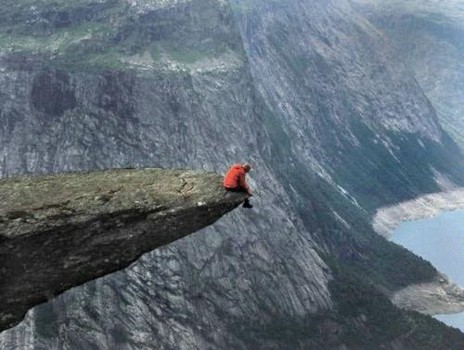
Stand at the edge of yourself. Branch out. Literally.

what is personal development?

Personal-Development Self Actualisation
The term is well-used. You may, like me, have a personal development plan. The ubiquitous PDP. It seems universally viewed as a good thing, to develop, personally.

But what counts as developing personally? If I go on a time management course, is that developing personally? Is learning to play saxophone developing personally? Maybe I want to learn to practice mindfulness – is that personal development? Is learning to drive? Learning to walk at 15 months even?

Those things would all seem to give me skills. Useful skills that may make me more effective, give me enormous pleasure in my free time, help me be more relaxed or just more mobile and independent.

I’ve been on courses before that were recommended, for my development. Many years ago I attended a negotiating skills course. I remember our trainer talking a lot about children and eating their greens to get puddings. I remember also the horror of being videoed and then made to watch myself back. It didn’t feel like personal development. Training yes, but not development.

So is there something about the development giving me something I want, something of value to me, something that enables me to fulfill my potential, to live my life to the max, as I perceive it?

In order to do that of course I need to know me. What matters to me, who I am, what satisfies me, makes me happy. My dreams and aspirations. Self awareness in effect. But then to be self aware I need to be curious. To want to understand me and how I function, motivate myself, learn, grow. Also to understand how I limit myself. I need to be open to self exploration. Open to self discovery. That way, as I explore myself I can become more self aware.

I also need some sense of my place in the world, what gives me meaning and purpose and how I propose to shape my future to fulfill that. Self realisation in a sense.

So is personal development really about self? About exploration and discovery of self? About awareness of self? About development of self, so that we can be who we think we are? Actualise our sense of self. Complete oneself to the fullest potential?

Maslow talked about self actualisation. I believe he once described it as “intrinsic growth of what is already in the organism, or more accurately of what is the organism itself.”

Is this personal development?