making meaning from now

making meaning from now
The concept of ‘now’ intrigues me.

I have always considered myself someone who is very present, in the moment, in the ‘now’. But reading something in a book by Steve Chapman the other day, gave me a different language to describe it. This is what I took from what I read…

Time as we know it, is a social construction, a human invention, something that over many centuries we have honed and agreed universally as a good way of orienting ourselves to movements of the solar system, and to getting to our next meeting on time!

The most obvious ever-present reminders of the concept of time, are the clock and the calendar.  These have developed over centuries from lunar calendars to solar calendars, sundials etc… to, I guess, the i-watch.

This clock time, or chronos time – the on going perpetual march of seconds, minutes, hours – ticks away on our watches, clocks and electronic systems all over the world.

Daniel Stern argues that if chronos time were real, then the moment of ‘now’ would be so fleeting that we would never be able to dwell on it long enough to make meaning of the experience.  We would in effect be goldfish, with each ‘now’ moment lasting +/- one second; the unit of chronos.

The Greek concept of kairos offers an alternative perspective. Kairos is a moment of indeterminate time in which everything happens. While chronos is quantitative, kairos has a qualitative, permanent nature. In kairos there are no seconds, minutes, hours, just the idea that kairos time is a passing moment of consciousness, in which something happens that offers us new meaning in our experience.

The author of my book summarises the two like this…

chronos time is a concept informed by clocks
kairos time is a concept informed by meaning

What would happen in organisations if we abandoned chronos time and just interacted, communicating, learning, until a new collective meaning emerged?

Meetings wouldn’t have agenda items with start and end points, but each item would be explored until collective new meaning emerged. Some agenda items might take five minutes, some items ten times as long.

Of course for this to work, people need to be open to learning, open to having generative conversations, open to enquiry with others as to where collective meaning existed, or was lacking.  People would need to be very present in this ‘moment of meaning making’. No longer slaves to chronos time, people would interact throughout the day until sufficient meaning had emerged for individuals to move forward, for the business to move forward.

In such a kairos informed culture I wonder if this would make us more curious, more exploratory, more accepting of alternative viewpoints and enable us to both seek meaning in our work and in our lives? It might also free us to play with our creative spirit.

What would happen if we lived our lives to kairos time? Not just at work, but all our experiences?

Even as you read this, you may be seeking to find new meaning for you?

Welcome to kairos 🙂

needs and wants, wants and needs

want need
Waiting in for a plumber. I’m not good at waiting for someone. Deliveries, tradesmen etc. My choice is removed. I’m in their control.

I want to get out.

I need to wait though. We may have a leak. A telltale little brown patch has appeared on a ceiling.

I should wait. The leak could get worse. Despite this more sensible course of action, I’m still drawn to go out. Nowhere special, just to have the freedom to decide. It’s the freedom I want. The expert opinion I probably need.

The tension between what we want and what we need is intriguing. Are needs more powerful than wants? Are needs more fundamental to our sense of self and our wellbeing? Certainly needing shelter, water, food would seem to be basic needs. Yet wanting something can be a pretty strong draw too. Wanting to move, wanting freedom, growth, learning, progression, choice. These too are powerful motivators.

Refugees and economic migrants pouring into Europe seem to demonstrate the power of wanting a better life for your family. Wanting opportunity. Wanting freedom. Or is the migration need driven? The need for safety, for security?

I wonder if our modern world has confused the two? Do I need a new phone, or do I simply want one? Do I want a hug, or are there times I absolutely need one?

Do we know the difference any more? The difference between a need and a want? How the difference motivates our thinking? Which has more feeling? Which trumps the other? Which do we value more? The things we want and have, or the things we need and have?

Are the words interchangeable, or is it some other orientation in our lives that motivates us to prefer one word over the other? Do independent people have a penchant for wanting things? Is wanting essentially selfish? Wanting something certainly implies choice, preference. Needing something suggests less choice. It suggests necessity.

But is it the same for us all? Is there a common thread to our humanity? Or is this a more personal matter?

Maybe you want to know? Or need to? Maybe you don’t? Understanding that which motivates us would seem to be useful though? How your choice of language impacts your thinking, your emotions, your behaviours?

are you busy? too busy to read this?

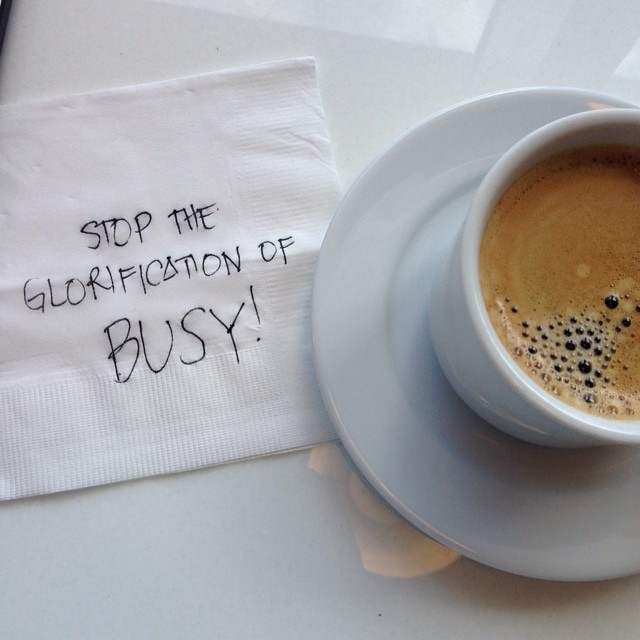
stop the glorification of busy
Are you busy? Too busy to read this? If so, maybe you should read it…

In recent months I have noticed the conversation starter at the coffee machine at work follows a familiar path, when you meet someone you haven’t seen in a while, whoever it may be. Maybe you recognise it? Or maybe you instigate it?

It goes something like this …
“Hi long time no see. What are you busy working on at the moment?”
or
“How are you?” Back comes the reply, “Really busy. You?”
or
“Hello, not seen you in a while.” “No things have been really busy…”

If you’re really busy you might want to stop reading this now.

If you live to an average life expectancy you have a total of around 620,000 hours. Given that we sleep for around a third of that, you have about 410,000 usable hours.

Time is a strange concept though isn’t it? I mean, what is an hour?

I often have the following debate with my wife when the clocks change – she’ll say something like “We gain an hour this week-end” and I’ll respond, “No we don’t, it’s just that what we call it has changed. Six o’clock is now known as five o’clock.” The Earth, Moon and Sun still move in the same harmonious rhythm. We still have the same amount of time in our lives. What we call the time is just that, it’s what we call it.

And we can call ourselves busy. Too busy to spend a few minutes on someone or something that is really important to us.

What matters most is how you use your time; those precious hours that are in short supply.

When was the last time you simply did something you love?
The last time you were kind to yourself?
The last time you carried out a random act of kindness?
The last time you stopped and really noticed another human being?
The last time you checked in with yourself, properly?
The last time you gave someone the gift of your full attention?

Next time you meet someone at the coffee machine, if the conversation starts down the ‘busy’ route, ask them a great coaching question and really listen to their response.
Maybe something like …
“… and how would you like it to be?”
or
“… and if you weren’t busy, what would you be?”

or maybe just invite them to contemplate what they would be doing right now if they were doing something they love.

And now you’ve read this … go and take five minutes for yourself.

are you scared?

scared change
Are you scared?

Sometimes I am.

The world is changing at an unbelievable pace.

Did you know that there are now more people in the world with access to a mobile phone than access to a toilet?

That would have been inconceivable only a decade ago. If change happens that fast, what will be true in ten years time?

And will you cope?

The world is changing. Business is changing. Communication is changing. Your job is changing. Are you changing?

The irony is that at this time of unprecedented change, what we most need … is an ability to change.

To change ourselves.

Not to become someone else, but to adapt, to be more agile, to learn quickly and change our approach, change our behaviour, change our thinking, change our response, change our direction.

Put simply we have two choices. We can shoot the change. Complain. Try and stop it. Avoid or hide from it. Run away. Deny it.

Or … we can stop looking outside and look inside. At ourselves.

It starts with giving ourselves attention, building our capability to understand ourselves; this enables choice, agility, resilience, freedom, learning, growth, happiness.

Maybe in ten years time, more human beings will have full access to themselves than currently have access to a parking space?

How cool would that be?

to run or not to run…?

tube run steve
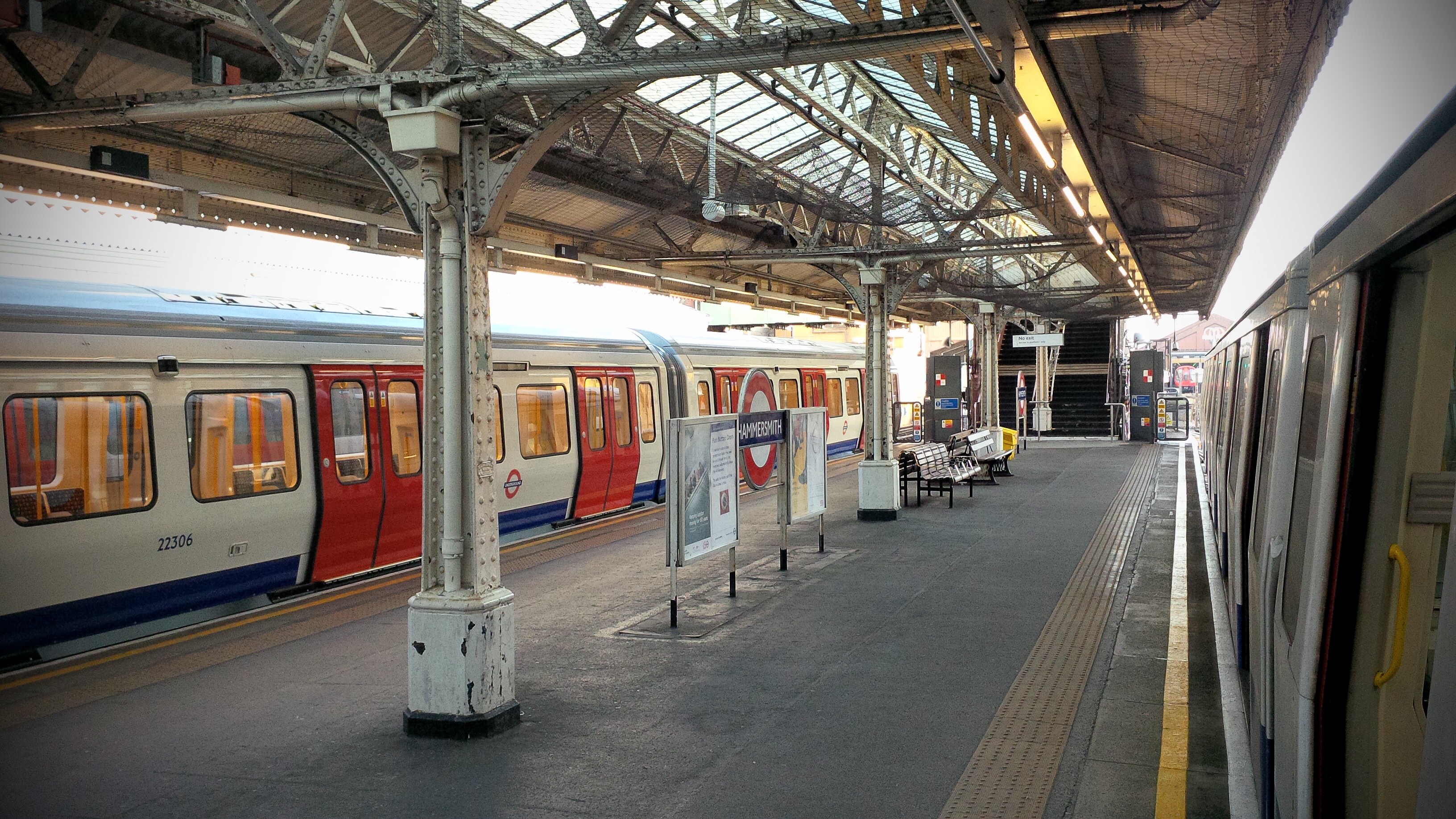
The other week I posted something about my NLP training in Hammersmith and the coffee experience. I attended the training with a friend, and at the end of each day we would go to the tube station – the Hammersmith and City line rather than the Piccadilly. It’s a terminus, so trains are usually ready in the station, waiting patiently at a platform for their fresh cargo.

Each and every day we would stroll up to the ticket barrier, move through and see the display board signalling which platform the next train departed from. Most days there would be a train at that platform.

Then something strange would happen.

My friend would quicken his pace and often break into a run. Sometimes a sprint. I would be left to saunter down the platform and find him in his chosen carriage.

After a few experiences of this we began to ‘unpack’ these two contrasting behaviours. Initially I mocked him, because I had never missed the train, but we were curious about what lay deeper in this behaviour.

There was superficial evidence that might support certain theories. My friend was a runner. He ran for pleasure regularly. I did not. He was, and probably still is, much fitter than me – so he had more capability to behave that way and running was a familiar activity. Typically I don’t run for anything.

At a deeper level though, time isn’t important to me. So the possibility of missing a train wasn’t a significant issue, but more than that, it presented an opportunity. I would have time to watch the world and the people in it. I would have time to sit quietly and ‘be’. My friend’s map of the world was different – he had many things to do, things to get done, so missing a train would deny him possibilities.

We still see this pattern today, not with trains, but elsewhere. He tries to fit a lot into his life. I’m more content to see what life offers in this moment.

There will of course be more depth, more detail in explaining our run/saunter behaviour at Hammersmith, but the joy is discovering that.

So be curious about what you do … every little thing, from choosing what to eat for lunch, to buying new shoes, to how you plan your weekend or even how you live your life.

It’s not about running or not running. It’s about knowing or not knowing.

If you don’t take time to know yourself, who else is going to?

is it vital to be alive?

alive vitality

Take a moment to reflect on your year so far.

On what occasion, in what scenario, did you feel most alive?

I mean truly alive. Alive in a whole body way. Physically and emotionally buzzing, an energy coursing through you like you were plugged in.

Maybe you achieved a work goal, maybe you experienced an adrenalin rush on your first parachute jump, maybe you were walking alone in the forest at dawn, maybe you had a deep realisation about yourself, maybe you completed your first ever triathlon and felt on top of the world, maybe you presented to a group something important to you and won them over, maybe you had a tender moment of love with someone close to you…

Vitality.

If you can’t find something. Go further back. Look for it like it’s a pot of gold at the end of the rainbow. Seek it tirelessly. If you can’t find a single experience, look to understand components, smaller parts that provide clues to where your vitality rests, then build, add, try, experiment.

Maybe you find it easier to locate the opposite? A sense of fatigue, of being drained, of a kind of deadness? Somehow we have become conditioned to notice this more. The drudge of the commute, the dull but necessary task, the unfulfilled aspiration, the tiresome social gathering…

It’s a useful exercise to list down how you spend your time and then reflect on what nourishes you and what depletes you. Simply getting better balance in your life will improve your state of mind, your sense of happiness or fulfilment, your well-being – swap some draining activities for ones that inspire you, lift you, nourish you.

But more than that, be curious about the nature of that nourishment. Score them. Look at ones that deliver most. Why is that? What properties do they have that align with who you are, what matters to you, what gives you pleasure, what gives you meaning and purpose?

Here lie clues to that vital experience, that vitality, that sense of aliveness experienced in a whole body way – psychologically, emotionally, physically

Never stop looking. It’s vital.

You think you are alive because you breathe air?  Shame on you, that you are alive in such a limited way

Rumi

the true meaning of coffee …

beliefs change
Many years ago I trained as a master practitioner in Neuro Linguistic Programming. I trained with a friend.

The training was near Hammersmith in London and at the beginning of each day we would go for a cappuccino and a bacon sandwich at a little Turkish coffee shop nearby. Although the training modules were several months apart, on seeing us enter at the beginning of a new module the owner would always recall our order – one sandwich on white, one brown, one without butter etc.

That coffee shop has sadly gone now, but that experience still anchors me to that time of learning, and I doubt the owner and his cheery waitress have any knowledge of how much that stays in my memory.

It serves to remind me that interactions between human beings can sometimes have more importance than their seemingly ‘low level’ content might suggest; they can carry more meaning than those involved at the time might ever realise; the spoken word or behaviour may have a completely different result or impact to that intended at the time – indeed one NLP presupposition is that the meaning of the communication is the result it elicits, not necessarily the one the giver intended.

Every day, all day, we give out communication, consciously and unconsciously. Everyone we meet takes their own meaning from that, even if several people experience the same ‘message’, each will create their own meaning.

In our early years, much of this gives rise to our beliefs about the world. Some of that serves us well in later life. Some does not.

The parent with the adolescent child, studying for their exams, will doubtless have the best intention to support them. Comments such as ‘never mind, you did your best’ or ‘all you can do is try’, have positive intentions. Yet I have seen such people in the middle of their lives, still running a belief that ‘I’m not good enough’ or ‘I have to work hard’ or even a more complex belief such as ‘If I don’t succeed nobody will love me’.

Spoiler alert: you probably believed in Father Christmas when you were small. Your parents span the yarn. It served you to believe – you got toys, chocolate, the excitement of presents to unwrap, and as a child that’s desirable. My guess is most of you no longer believe in Father Christmas.

The meaning we take at one point in our lives doesn’t have to be the meaning we live with. Trying hard when you’re 15 might be useful – please a parent, pass an exam. Trying hard later in life, when your work life balance is out of kilter, or when you’re in a job you loathe, or when you’re burning out through effort, or when you just want your boss to notice you, isn’t necessarily so helpful.

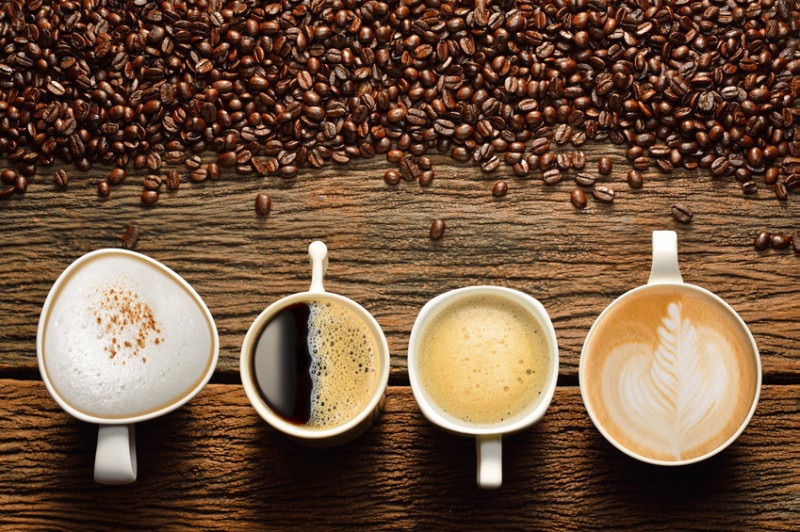
The barista can make many coffees.

You have a choice whether yours will always be the same.

if you think you think, think again…

Chocolate behaviour

We are at the top of the food chain. Our ability to think, to cognitively assess, decide and act is unparalleled.

Or is it?

Yesterday afternoon I ate a large chocolate bar.
I wasn’t hungry. I know it’s not good for my waistline. Only the other day I was reading about the hidden threat of too much sugar in our diet. I had a banana on my desk, which, despite its curvaceous yellow appeal, remained ignored.

Human behavior is complex and rarely, if ever, purely rational. In fact our rational internal dialogue almost always loses out to a deeper, hidden, irrational, impulsive, unconscious drive to act.

But, behavior doesn’t happen by chance or out of the blue. It has a structure – trigger, behaviour, reward. In one real sense we are machines: input, action, output. Mechanistic rather than thinking.

Behaviour can be conscious or subconscious, mental or physical, learned or inherited, voluntary or involuntary… some behaviour is genetically and biologically underpinned – we all withdraw our hand from the hot saucepan handle, from pain, without thinking. Some behaviour is influenced by social and cultural norms. Some by persuasion or even coercion.

That doesn’t however explain my chocolate addiction.
Nor does it explain much of our behaviour day to day.

I’m not genetically coded, socially expected or forced to curse that driver sat in the middle lane of the motorway. Nor to stop working on what I should be doing to do something more interesting. Nor to be late for that meeting. Nor to run for the bus. Nor to buy those trousers I don’t need.

No, these behaviours are motivated internally, by our beliefs, values and biases. By hidden patterns developed and evolved by our life story.

I regularly curse middle lane drivers. I’ve examined this behaviour closely. It’s not that I’m a stickler for the Highway Code – I confess I don’t always follow it. It’s not that I’m in the habit of moaning at people. It’s not that I’m often late and they’re simply in my way. For me, it’s because they aren’t honouring, recognising, making space for a fellow human being. They’re self absorbed. That value drives other behaviours in me; some I’m not proud of and that just happen before I can rationally think. So the unfortunate motorist is merely the trigger. My reward is I can honour a personal value – yet the irony of my own behaviour contradicting that very value is not lost on me and therein lies another behaviour puzzle. What remains true is that in that moment, the behaviour is unthinking, subconscious, mechanistic, programmed … out of my control.

Or is it?

You see, consciously understanding my internal motivation, beliefs, values and world map gives me choice. Noticing the triggers and the rewards of my behaviour gives me choice. So be curious about you.

If you think you think, think again…


have you noticed who has control?

eye_earth


I am me.

In all the world, there is no one else exactly like me.
Everything that comes out of me is authentically mine, because I alone chose it – I own everything about me: my body, my feelings, my mouth, my voice, all my actions, whether they be to others or to myself. I own my fantasies, my dreams, my hopes, my fears. I own my triumphs and successes, all my failures and mistakes.

Because I own all of me, I can become intimately acquainted with me. By so doing, I can love me and be friendly with all my parts. I know there are aspects about myself that puzzle me, and other aspects that I do not know – but as long as I am friendly and loving to myself, I can courageously and hopefully look for solutions to the puzzles and ways to find out more about me.

However I look and sound, whatever I say and do, and whatever I think and feel at a given moment in time is authentically me. If later some parts of how I looked, sounded, thought, and felt turn out to be unfitting, I can discard that which is unfitting, keep the rest, and invent something new for that which I discarded.

I can see, hear, feel, think, say, and do.
I have the tools to survive, to be close to others, to be productive, and to make sense and order out of the world of people and things outside of me.
I own me, and therefore, I can engineer me.
I am me, and I am Okay.

A declaration of self esteem
Virginia Satir

how are you spending your life … literally

spending time
If you were given £750,000 the day you were born, and knew that was all you would ever get, how would your choices be different?

At home the other week, we were discussing changing our carpets upstairs. I’m sure you have such conversations in your lives too … can we afford to replace the car, should we re-do the bathrooms, where shall we go on holiday this year, can I afford that training course I’d love to do?

Often a factor in such conversations is money and a choice about what we can afford. We play one thing off against another. Money is a currency we understand.  It gives us choices, informs our priorities.  We strive to acquire more, so that we can have more choice.  But what if there was a finite sum?

Time is a currency too.

The offer of £750,000 reflected the fact that most of us, living a full life into our mid 80s, will have around 750,000 hours on this planet. You can’t buy or earn any more.

Yet time, we fritter away with less conscious attention than a handful of small change.

We allow others to spend it for us.  Especially in work.  I’m required to be in that meeting. I need to travel to Glasgow. I have to finish that report this week-end. I must spend a few hours this evening getting on top of my email…

Even worse, we do this with our energy.

Our lives become dominated by things that not only eat into our time on this earth, but also which drain us of our energy.

That dull meeting you wish you weren’t in. The hours commuting. The dinner party with the couple you don’t really like. The hours in the gym you hate, but tell yourself you ought to do. The tedious job you wish was different.

Meanwhile, the simple things in life that energise us, we find less time for. Reading a book. Playing with the children. Enjoying an amazing view. That hour of yoga. Baking some bread.

You have around 750,000 hours in your life. It’s your choice how you spend it. Spend more of it on the things that inspire you and less on the things that are other people’s choices or that allow your energy, your very life essence, to leak away.

photo credit: BramstonePhotography via photopin cc