does every question..?

questions

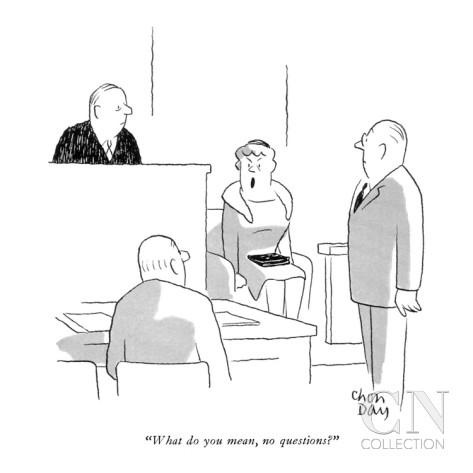
Does every question have a presupposition?

Well it seems that one does. It’s worded to suggest they do. It presupposes all questions, without exception. It presupposes you know what a question is, or a presupposition indeed.

Some coach colleagues and I were discussing this. Playing a game if you like. Who can come up with a question that is presupposition free? We couldn’t.

Even the simplest questions do.  For example, ‘When?’  The question presupposes you have a language for date and time. It presupposes you know what I’m talking about in relation to ‘when?’. It presupposes that I want to know, that you know, and that you want to tell me.

So if every question has a presupposition (and I welcome suggestions of ones which don’t), does that mean that we, the questioner, have a view, a plan, a judgement, a perspective even before we phrase the question? Maybe conscious, maybe outside our awareness?

Does it mean that the question is really in service of us?

The questioner’s need. Could it be that it’s about confirming our prejudice, our view as the questioner? Or could it be about filling in our gaps in knowledge, or about extending our knowing? Or about confirming our map of the world; fitting your world in, for congruence? Or about our belonging or our sense making?

We think of questions as ways in which we expand the perspective of those we throw them at, but maybe they are instead a means to reaffirm our already held perspectives?


 

one world … each

image

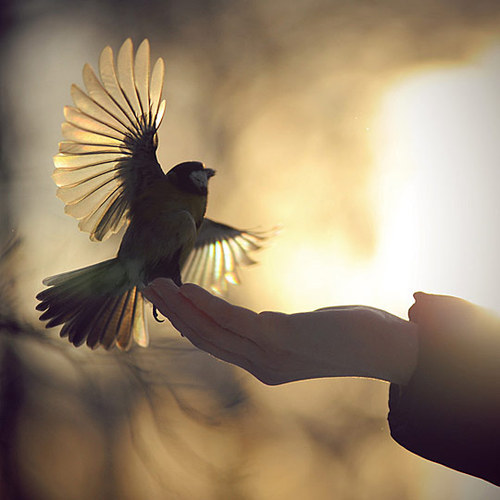
He offered her the world.  She said she had her own.

Monique Duval

There is no reality. There is your reality, my reality, his reality, her reality. The simple fact is that what we see, what we hear, what we pay attention to, what we interpret, what we delete, what we distort, what we generalise, what makes sense for us… is all uniquely us, even when we seemingly experience exactly the same thing.

His world, her world, my world, your world.


losing things

losing things

Do you lose things?

I do.  Keys are a favourite. Today I lost my phone – only for half an hour.

Sometimes I lose things that aren’t actually things.  Like losing my way, or losing interest. I seem to lose time too.  I look up and realise I seem to have lost several hours.

How do you lose something that doesn’t physically exist?

Ultimately though, these are all recoverable, or when push comes to shove, they don’t really matter. They can be replaced, recovered or simply forgotten about.  We move on.

Don’t ever lose your curiosity though. Or your sense of fun. Or your compassion for yourself. Or your sense of who you are. Or your sense of belonging. Or your sense of value, or place in this world. Or your humanity. Don’t lose yourself.

These are harder to recover from. Hold them close. Guard them devotedly.

free the dancing star in your life

You need chaos in your soul to give birth to a dancing star

Friedrich Nietzsche

There are many interpretations for this quote. My meaning I take to be…

Only with a freedom in your heart, a freedom to be yourself, to discover and embrace your existence, with all the chaos and complexity that might bring, only then can you bring your dancing star to the surface. A free, expressive version of your ‘self’ that brings light and wonder to the world.


reflections on reflections

image

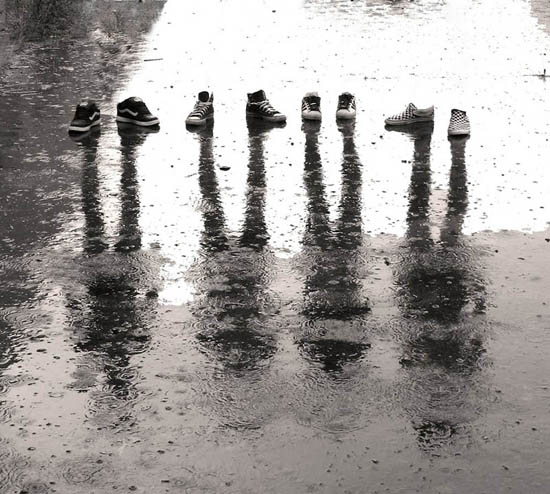
One of the most necessary liberations comes when you discover that what other people think of you is not the same as who you are.

When you can stop identifying yourself with the stories, mistruths and assessments of others, you can also free yourself from a constant inner pressure to appear as you think people want, or expect you to.

But once you know this, another wisdom must be taken on.

You have to understand that other people are not the same as your stories, perspectives or assessments either. That means that whatever you think you know about them can only ever be partial; one aspect, a single angle on a situation way more complex than you’ve allowed for. Whatever you see, know you are blind.

Once these truths are mastered, know also that the story you tell yourself about you, about your own limitations, your acceptance in the world, your abilities or inabilities, is also not who you are. They too are a judgement, blind to the whole you; distorted tales from long distant memories or unintended fabrications from your past. Knowing this allows you to silence your inner critic. It relieves you from the self imposed weight of expectation, the burden of disappointment, the constant sniping at your capability, your value, your contribution, how you come to this world.

This awareness makes space for compassion. Compassion for others and compassion for self.

That’s liberating.

our very public privacy

image

I invite you to imagine yourself in a large theatre, standing on a stage in front of an audience of 200 strangers. You are about to speak out, frankly, about your most private moments.

Ready to go? Happy? Begin…

No?

Oddly, public transport seems to provide a safe environment for us to do this. To share our most private moments. A train carriage, packed with 200 strangers for example.

In only the last week I have witnessed three examples whilst travelling on a train.

Maybe it’s the imagined intimacy of the one to one telephone conversation, the background hum of the train on the tracks? Maybe it’s the intensity and the emotion of the content of the exchange, taking us into ourselves?  I don’t know, but somehow these people become so absorbed by their conversation that their awareness of their audience is seemingly totally lost. They find a freedom and a frankness in front of strangers; all sense of potentially prying eyes and ears, any sense of vulnerability, of exposure, of visibility seems to desert them.

Whether it be a lady initially informing her husband she will be late and is having to stand, descending into a row about him never listening to her and a very honest view of his sister’s shortcomings; or a young woman, speaking to a (presumed) friend, recounting her night out, which culminated in her boyfriend hitting her; or a conversation face to face between two standing passengers, conducted at unnecessary volume, one initially exploring a ‘client’ emotionally falling for her (I’m sure there are ethical limits here) and culminating in a sharing of bluntly truthful views on their respective partners and their children…

Maybe we should be more cognisant of our surroundings and the words, thoughts and feelings tumbling out?

Or maybe we could benefit from such honesty, such openness, such trust in our everyday lives?

seen and unseen, illusion and reality

image

Our shadow is always with us. Always connected.

Often we cannot see it. Occasionally so faded, so feint, it cannot be detected by our human eye. Sometimes fragmented, in parts; distorted by multiple light sources.

In the right light though our shadow is clearly us. It responds to our movement, to our very being. It is an extension of us. A monochrome, two dimensional form, that adopts the contours of our surroundings.

A shadow part of our complex humanity perhaps? Intrinsically us; yet sometimes hidden, sometimes not. Impacted by our environment. By conditions. Sometimes we can see this part of ourselves, sometimes others see it when we do not, sometimes it is invisible to all. Our shadow responds to our other parts, our thoughts, actions, behaviours. Our movements and motion. Always responding.

Light and shade.  Effect and cause. Seen and unseen. Illusion and reality.


you’re not…

image

You’re not the mistake you made.
You’re not the failure of your most recent project.
You’re not the loss of your job.
You’re not that indulgence you should have resisted.
You’re not the disappointment at not having come first.
You’re not that missed deadline or average result.

You’re not your success, your fame, your glowing reputation, either.

You’re not the letters after your name, your job title, your exam results, your qualifications, your place in the organisational hierarchy.

You’re not your bank balance, your debt, your smart suit, that designer frock, your car, your house.

You’re not your ability, or your disability.
You’re not your weight, your muscles, your illness, that blemish.
You’re not your happiness, your sadness, your rage, your shame, your dream.

How could you be any of these, given that any of them are liable to change at any time?

Any of them.

These things are all a blink in the timeline of your life.

It’s a huge misunderstanding of what humans being are, and one that your inner critic can go wild upon. That voice can be demanding that you fix, or change, or hide, or be ashamed of these things.  Or that you hold on ever so tight to what you’ve got, for fear of losing it, and what it represents.

You are not your circumstance.

Perhaps there is a new kind of freedom you can find from knowing this? A new kind of acceptance of the transience of the world, and a new recognition of your own strength and constancy, a new discovery of your essence, your soul… a new kind of hope.

image by: GranitKrasniqi – deviantart.com

short human platforms

image

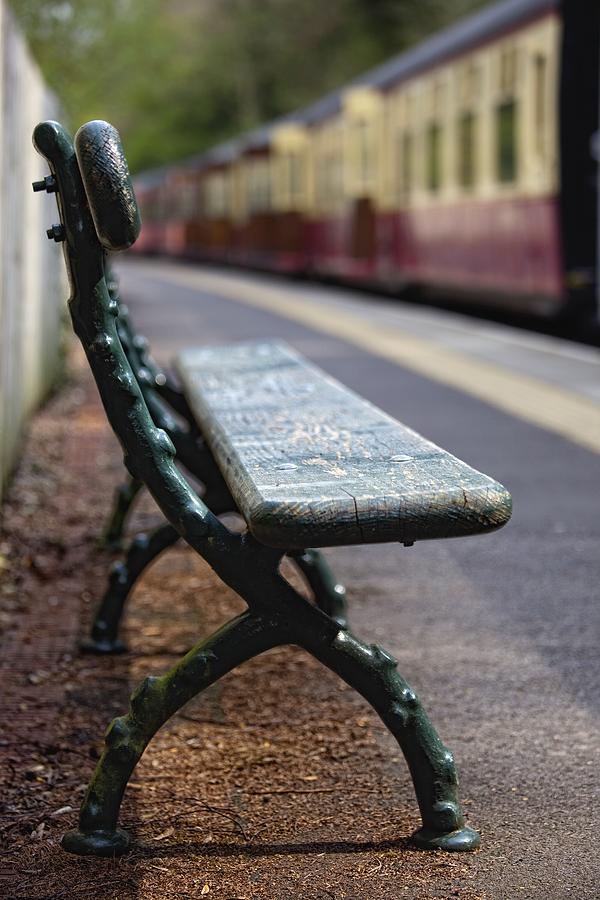
A number of station platforms on my journey are too short for the train.

Each evening the train manager announces which carriages will fit. Passengers in carriages unable to alight are advised to make their way through to an alternative carriage.

The infrastructure is no longer fit for purpose. Stations and platforms built many years ago, now insufficient for the train lengths demanded by busy commuters. Worse, I suspect the train operators might like to add more carriages, as traffic grows and so infrastructure becomes increasingly inadequate.

Having infrastructure unable to cope with growing needs is a problem elsewhere. You only have to own a phone to know that. Or drive around the M25.

Our world is changing fast. The military use a phrase, now prevalent in business and leadership. VUCA – volatile, uncertain, complex and ambiguous. It describes the rapidly changing, unpredictable, uncertain world we live in. The inexorable expansion of stimulus, the pace of change, the ‘always on’ information flow, the societal pressures to perform, to excel, to achieve, to compete. All add to the stresses on our own human infrastructure. Sometimes it too comes up short. Unable to accommodate the sheer volume and inordinate complexity of the experiences we have, travelling on our own train of modern life.

Anxiety and mental illness is on the increase. Reported happiness increasing in some quarters but decreasing in others. Loneliness in the young growing. Society across the globe increasingly fractious, disruptive, searching for something absent.

Maybe our human infrastructure is struggling too with the modern demands of our busy world? Maybe our platforms are too short, our carriageways not wide enough, our bandwidth clogged?

Time perhaps to invest in self?