
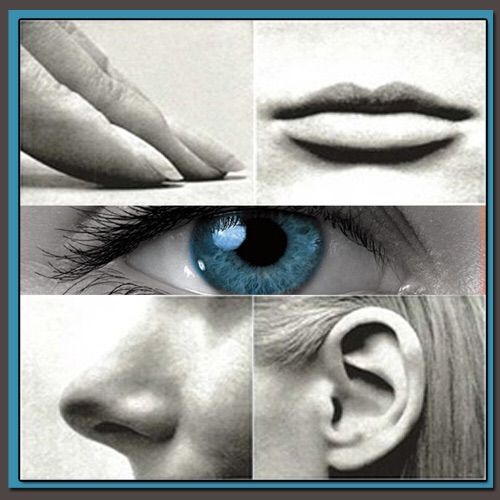
We experience life through our senses. We see, hear, feel, smell and taste our experiences.
Our brains code them in this way. Our memories are accessible through our senses and, when recalled, we experience, represent or rather ‘re-present’ them through our senses.
If you recall now something that happened to you last week, you will be doing so either by seeing the situation in your mind’s eye, or by re-feeling how you felt then, or by hearing the conversation again, maybe even smelling something…
This process works both ways. We ‘think’ of a memory and re-present it through our senses. Or, we have a sensory experience today and that triggers another memory where the sensory experience was similar. Have you ever had the experience of a smell taking you back to a childhood memory?
This process also works for the future – imagined future experiences are presented to us through our senses. We can imagine our holiday or that difficult conversation we have next week and we can create images, feelings, internal dialogue predicting that future experience.
We all have favourite senses to use for this. I wrote about this some weeks ago when I asked How do you think? and hypothesised that without our senses we have no experience.
We often have a primary sense, for many that is visual, but might be auditory or feeling, backed up by one or two other senses that create our experience. Some senses are less available to us in this process.
Our language reveals our preference. It shows on the outside, the way we are coding our experience on the inside.
“I hear what you say” is different to “I see what you mean”.
There are many idioms in English that we use to signal our sensory preferences for coding our own experience. Often we’re not consciously aware, nor are those around us. But it can be useful to know.
Do phrases such as these appear in the way you describe things? “Let’s get a different perspective” or “Let’s take a closer look at this”? These might be examples of a visual storage system. Whereas, “That doesn’t sound right to me”, “This really speaks to me” or “Once we get into the rhythm of the meeting” might suggest an auditory preference. Those who work with feeling, or kinaesthetically, might say “I need to take the pressure off” or “I’m aching to get on with this”…
This will be a recurring theme on this blog in coming weeks, so be curious about your practice and about what makes sense to you.

 illuminated dandelion