shower or bath today?


How do we choose?

Mostly, we are one or the other. Bath or shower. At some past point we chose. Selected a preference. Now we are loyal, typically. We are in the bath camp or the shower camp. A few of us may be ambidextrous, fickle, users or abusers. Employing both for different needs. Both is itself a choice.

But why?

Is our choice down to practicalities or pampering? Speed or relaxation? Morning or evening? Felt sensations or logical economies? Time to be, or time to do? Purpose or pleasure? Logistics or preference? Conscious or unconscious? Habit or variety? Selfish or selfless?

Can we learn about our other choices from something so basic, so routine?

Maybe it’s time to clean up our choice making?


work or play?

image

I must finish my work before I can play

or

I can play anytime I like

Which of these is more you?

Often when I ask a room of people to make their choice, the room divides.

Those choosing the former, talk of not being able to enjoy their relaxation or play until the work is done. The list of jobs needs to be ticked off. Completing the work is in itself enjoyable. The play is a reward for completing the work. They sometimes mention responsibility or duty.

Those choosing the latter, talk of performing better when they have had down time, play or relaxation. They speak of choice. They describe making work into play, to increase their enjoyment.

Occasionally someone stands between the two, recognising a different stance in different circumstances, such as work or home.

I’ve never experienced someone not knowing.

I don’t recall the lesson in school where we learned this? I don’t recall the conversation with mum or dad, where they explained the pros and cons or the virtues of each approach?

It seems we just know. Somehow in life, we have learned through experience. That learning is often so well ingrained we don’t even see a possible alternative. It just is.

There are many opposites like this, not just work and play, where we have a position, a life stance. Many, I suspect, we have never been consciously taught which is best, we have just absorbed this into our existence, our way of being.

Weird eh? Enabling sometimes, disabling at other times. Strange that such life impacting choices seem invisible, out of conscious awareness. They just are.

how foolish we feel

image

This morning I tricked my wife.

Her car has been away for a repair and is due back this evening. At 7:15 this morning I woke her to tell her the car had just pulled up outside. She cursed and hauled herself to the window to peep out. She scanned left and right. No car. The smiling husband proclaims, “April Fool!”

It felt oddly satisfying to have duped her. I was pleased with myself. I remember saying to myself, be alert, don’t get caught out, you’ve won.

Only an hour later, my wife tapped on the bathroom door. I opened it, half dried from my shower. She was holding the phone. “It’s your Dad,” she said. “He wants to know where you put the spare kettle.” (Two weeks ago we thought his kettle had broken and bought a replacement, only to discover it was still working). I grabbed the phone. “Hi,” I said, “Dad? Dad?”

Suddenly it dawned. I too had been had. April Fool.

The feelings we experience when we have been clever, or won, or outsmarted someone, are quite different to those we feel when we are caught out, tricked, beaten or made to feel small.

We would do well to recall how the other person might feel in all our interactions with each other. Not just the fun ones on April 1st.

even freedom needs rules


I stumbled upon a small graveyard today in Oxfordshire. It was squeezed between some houses and seemed somewhat out of place.

A pair of wooden gates were invitingly ajar, snug beneath a small lychgate.

Wandering in, I discovered it was a war cemetery, with headstones for fallen RAF crew from the Second World War. Many were 18,19,20 when they lost their barely begun lives.

Under the lychgate was a laminated notice detailing the ‘rules’ of the cemetery. It spanned three portrait A4 pages.

Gazing upon it, some of these rules intrigued me…

“Toys may only be left at the graveside for a period of 12 months after burial.”

“Silk flowers, appropriate to the season, may be used, but must be removed when they become faded or bedraggled.”

“Nicknames or pet names may be used in addition to baptismal name, but only if placed in inverted commas.”

Rules.

We like rules.

Our lives, our society, our organisations are riddled with them.

It seems even in death, when you have given up so much, rules are to be obeyed.

Ironic since these brave young men lost their lives in the name of freedom.

what is the value of a thought?

deep in thought

What purpose does a thought serve?

They seem sometimes merely to generate new thoughts, which in turn father more and yet more.

They seem to occupy us. Keep us busy. Deflect us from our experience in the moment.

They seem to be our ticket to our claim of species superiority. World domination. Although recent world events and the erosion of the planet’s resources might argue otherwise.

They seem to be the root of judgement.  Judgement of others. Judgement of ourselves.

They seem to be the foundation of our communication. The exchange of ideas and knowledge with fellow thinkers. Yet two things seem to be true here; firstly, whilst we exchange thoughts we are often distracted from, and dismissive of, our own feelings. The thoughts, and their exchange with other thoughts from other thinkers, perhaps a distraction from an unspoken truth about how we feel. Secondly, our thinking stops us listening.  We are so busy marshalling our own thoughts we don’t really hear the thoughts of those we are supposedly communicating with.

Yet, thoughts seem to be the catalyst for our learning. Generating new awareness, new understanding, new skills.

So I wonder… is the value of a thought always clear?
Is the value worth the cost?
It seems to me… sometimes, but equally sometimes not.

image by: Lisette Wennström

unlearning agility

image

Most teachers waste their time by asking questions which are intended to discover what a pupil does not know; whereas the true art of questioning has for its purpose to discover what the pupil knows, or is capable of knowing.

Albert Einstein

The world is changing at pace.

What we know today may largely be irrelevant in the future. What matters most is no longer what we know, but our ability to learn new things. To keep pace with the changing world.

I wonder if Einstein would have recognised this and modified this wisdom to emphasise ‘…is capable of knowing’ and remove ‘…what the pupil knows’?

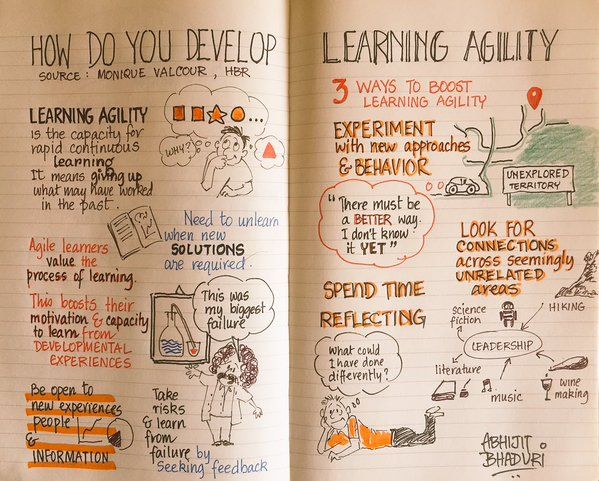
Recent research correlates success to our learning agility – our ability to be aware of our experience, be curious, seek feedback, find meaning, learn and unlearn.

Einstein was possibly good at that?

the only one real decision

image

You can’t let other people tell you who you are.
You have to decide that for yourself

Recent world events show us how easily individuals can be persuaded.

How the voice of others can tell us what to be, who to be, how to behave. They tell us who is good, who is bad, who is right and who is wrong. When individuals are led by others, they diminish themselves.

In reality we all need to decide for ourselves who we are, what we stand for and how we will live our lives.


reading between the lines

image

I followed a van the other day.

Its brightly decorated paintwork advertised service, repair and maintenance. I gazed absent mindedly at the contact details. A number and a website.

A Quaking.

Service and repair after an earthquake? Wow, that’s a niche market.

I looked again… and moved the space. Aquaking. “Aqua King” not “A Quaking”.

Misunderstanding and misinterpretation. Sometimes the signs are hard to read. As they can be in life. Our own signs in particular. Learning to read yourself is perhaps the best skill you can acquire. Understand and interpret wisely, for misunderstanding and misinterpreting your own thoughts, feelings and behaviours could cause significant tremors.


reality blind?

We have seen this road sign many times – it is familiar as an image.

We don’t need to read the sign. We are conditioned to know red means stop. The words are somehow irrelevant.

We have seen this context too. Roadworks, queues, lights, single file traffic…

So, if this sign said, “WHEN GREEN LIGHT SHOWS WAIT HERE”, would we stop? Probably not.

I wonder how often in life do we ignore what we are being told, verbally or visually, because we have been programmed to create our understanding, our awareness, by what we have experienced before?

How often might we delete, distort or generalise the information, because our programming  tells us what we need to know?

In reality, how blind are we to reality?