tracks of plenty

image

I travelled into London this morning by train. I arrive at Paddington, a busy station in the rush hour.

Leaving the train I noticed something I have experience before, but usually I am irritated by it, whereas this time I was curious.

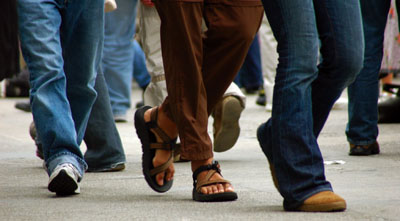
As I stepped from the train, I found myself bumping into fellow travellers. Passengers who had exited the train from an adjacent door or another carriage further down the train; these people were passing along the platform ‘hugging the train’, rather than choosing to move to the centre of a wide concourse, away from disembarking passengers.

I was struck by this behaviour and the potential metaphors for human existence and interaction…

Staying close to where we’ve come from, our roots.
Not exposing ourselves in the throng of humanity and diversity.
Taking the shortest route in life.
Focusing on self and not noticing others.
Being in our own head and not present in the moment.
Staying protected and safe: using a train as a barrier.
Travelling tried and tested paths; the route the train took.
Seeking the beginning or end of our journey.

They seemed plentiful.  I may stay curious.
here’s a line…

vertical line

I have been in a discussion today where at one point we explored what might happen if we had no line management.

We discussed how the activities associated with management could be fulfilled in other ways, by technology, by other people, through other relationships.

It left me curious though about the term and, in one sense, its ridiculous notion – that as line managers we are managers of lines.

Here’s a line … manage it.

green man, red light

walking

I cross a busy junction in London regularly, and noticed something yesterday as I waited with maybe sixty or seventy other commuters.

It’s a pedestrian crossing, so comes complete with red and green men.  The crossing is on a bend in the road. A busy road in Central London.

The traffic lights began to change, amber to red, signalling the traffic to temporarily cease its urgent flow through the arteries of the capital.

Around me, several people urged forward as the red traffic light shone brightly.  Some cast a glance at the vehicles looming down on the crossing, presumably to check that the drivers were obeying the rules of the road. I moved forwards too, moving around someone in front of me; someone diligently waiting for the little green man to shine his instructive self.

Across the other side of the road, the other 50% of the crossing pedestrians were also dividing into two groups for a couple of seconds.  Those who acted upon the traffic signal and those awaiting the pedestrian signal.  A melee briefly ensued as human beings paused, thrust forward, side stepped and chose.

I wondered about motivations.

Rule breakers and rule followers?
Safety conscious and risk takers?
Aware of bigger picture and focused on linear instruction?
Patient and impatient?

How did we divide up and were these behaviours and motivations present in other aspects of each of our human lives?

choosing when to have wind…

image

When a man doesn’t know what harbour he is making for,
no wind is the right wind

Seneca

I was speaking to a prospective coach client this morning. They described themselves as lost. The work appears to be about self, about who they are.

They asked me how they would know when they had achieved their goal; I responded with a question, asking how they know now?  How they know they need to come to coaching, that they are indeed ‘lost’?

They responded that they ‘feel it’. And so I said, ‘that’s how you will know.’

Sometimes knowing where we are headed is important, but so too is knowing how we will know we have arrived. Without this, any wind, any movement, is without purpose and just as likely to take us the wrong way as to take us the right way.

keep, charity, dump

image

House clearing today.
Seven people busying themselves boxing, bagging, sorting.

A new language emerged. People passing each other, muttering ‘keep, charity, dump?’. People holding items, asking for advice, ‘keep, charity, dump?’  People checking whether the black bag in the corner of the room, or at their feet, was ‘keep, charity, dump?’  Three piles in rooms.  Three piles in the garage.  Three piles by cars. Keep, charity, dump.

There are things in our lives which fit these criteria too. Parts of ourselves we should most definitely keep. Parts we could give to others, to bring something into their lives. Parts we could dispose of, no longer relevant or useful to us.

Keep, charity, dump.


is it cable ties I really need?

tangledcables

Are you tied in knots?

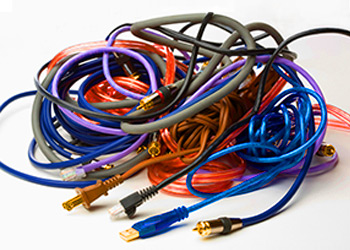
All over my house, in sockets, in drawers, in boxes I have cables.  Cables to connect devices to other devices, cables to charge the devices, cables carrying data, sound, pictures. Many I have forgotten what they do. Some I have duplicates because two or three devices have provided them, but I keep them… just in case.

We have many things in life too that connect us to things. To old ways of thinking, to sad memories, to things long forgotten or no longer needed. Do you play the Christmas card game? Sending cards to people you haven’t seen or spoken to in years? Do you have things in your loft, attic, cellar which are boxed up, stored away, long forgotten, but we keep them, just like the cables… just in case.

It seems cables are not the only way we get tied in knots.

weirdly new, weirdly human

weirdly new

I’ve just taken delivery of a new car.

It’s the same as my old one.  Same manufacturer. Same model. Same specification. Same colour.  Sure a couple of minor details have changed as they have updated the styling, but essentially it’s the same car.

I’m really excited though.  Strange how the smell of a new car is so good.  I feel like a child at Christmas.

I’ve walked around it several times and lovingly stroked it or removed an imaginary blemish or tiny sign of dirt.

I’m driving carefully too – around a car park, at least.  Strange because it’s the same shape and size, yet I’m being ultra cautious.

Given so little is different.
Given so little has changed.
Why is my behaviour so markedly altered?

How we respond to change.  How our behaviour is connected to our thoughts – real or imagined.  How our senses influence our reactions and our imagination.  Weird, but very human.

what if I’d had a latte?

choice matrix

I have had to make a decision today.

We make them all the time of course, many at a relatively mundane level – what coffee shall I have? Should I walk or take the lift? What vegetables go with this meal?

Sometimes we make more important decisions.  Is it safe to cross the road now? Can I afford that holiday? Is it right for me to apply for that promotion?

Sometimes we make major life decisions. Shall we start a family? Should I opt for that major surgery? Should I move in with my partner?

My decision today was significant. I didn’t know I had to make it until yesterday and I had to make it by tomorrow.  I don’t know all the facts; there are many future options, unknowns and uncertainties. My decision though could have implications for the rest of my life. Curiously, I’m strangely relaxed about it.

Interesting how we respond to decision making.  Sometimes they are almost unconscious, often fleeting with little pause for true reflection. Sometimes we pore over the decision for a long time, considering possible outcomes, pros and cons; very conscious, measured decisions. Sometimes we make significant decisions on a whim. This decision making process doesn’t always line up to importance – I’ve spent ages choosing my main course in a restaurant before, yet picked an expensive holiday in a moment.

Sometimes, after the event, we dwell on the implications, the outcomes, the ‘what ifs’ of decisions we have made, sometimes not.

Personally, I’ve never wondered ‘what if I’d had a latte?’

And now, I’m not wondering ‘what if I’d chosen differently today?’

they’re your rules, believe it or not

truth

We all have beliefs.

I’m not referring here to spiritual, religious beliefs. I refer instead to the invisible beliefs we hold about the world, about who we are and about what we are capable of.

I’m referring to the truths we hold, sometimes consciously, but mostly out of consciousness, such as “I can’t sing”, or “I’m not beautiful”, or “People are amazing” or “If I set my mind to it, I can achieve anything”, or “I’m stupid”, or “Working hard brings rewards”.

Such beliefs are typically generalisations, typically unconscious patterns, meta to our experience. They can be enabling, or they can be limiting. They act as a post-hypnotic suggestion and they direct future behaviour to confirm them.  They provide context, meaning, causation, structure and as such are irrefutable.  We will deny their inaccuracy, even in the face of cognitive evidence. They are in effect our own personal rules of the world.

Take “Working hard brings rewards”. A generalisation, in that it assumes always. A generalisation in that it doesn’t define work, or how hard, or what rewards? But, someone believing this, will work hard, they will, in all likelihood, value the rewards that work brings and justify or explain those as being earned by the hard work. The ‘truth’ of the belief, or personal world rule, is both acted out now and assumed to be required in future – after all, its truth is without doubt, its cause and effect undeniable, its outcome inevitable – such is the nature of a belief.

Meanwhile, work that doesn’t bring rewards, or rewards unconnected with working hard, may be dismissed as of little note, or simply go unnoticed. The belief could be enabling, in that it provides motivation, the believer will doubtless work hard, will attain and will get rewards. It could also be limiting, in that the believer will probably give up leisure time, family time, time for self and may be pressured with a weight of reward earning responsibility, or may burn out over time.

So what do you believe?  Do you know?

How do your beliefs enable you and how do they limit you?


what exchange rate do you set?

rocklayers

Time is the coin of your life. It is the only coin you have, and only you can determine how it will be spent. Be careful lest you let other people spend it for you

Carl Sandberg

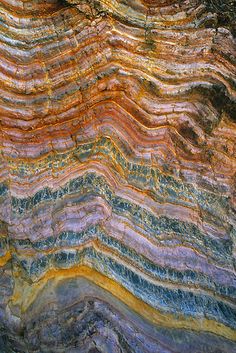
We lay down the layers of our life through the use of our time. Knowing how we want that to be and to be seen by others. Choosing the legacy we will leave. This matters.