heads up or heel?

crufts

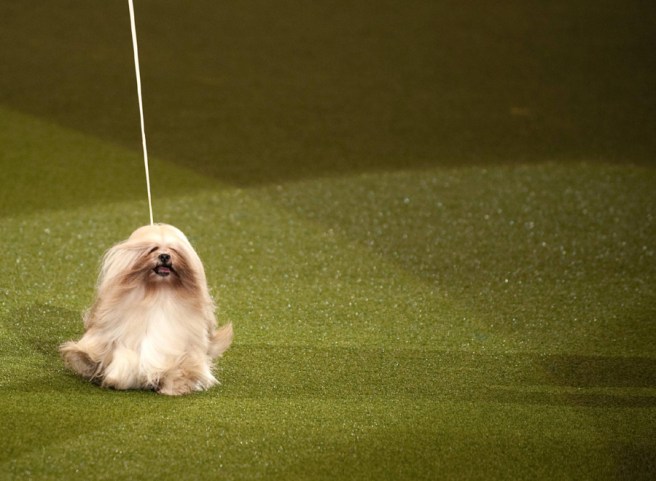
I watched a few minutes of Crufts the other day.

Handlers parade their dogs around a ring, holding the lead taught and seemingly uncomfortably high, so that the dog’s posture looks good. So that they can be displayed at their best.

Outside just now, across the street, a man was walking his dog on a lead.  One of those retractable leads where the dog’s freedom can be moderated; the lead shortened or extended at the push of a button, curtailing the extent of the dog’s freedom to roam, bringing it to heel.

I wonder if as human beings we hold our own lead sometimes?

Sometimes pulled taught to show us off at our best, yet maybe inauthentic? Sometimes reining us in from our full potential?  The lead, or leash, often invisible to us.

Where would freedom take us?


denuding me

image

Much in our lives is seemingly over engineered.

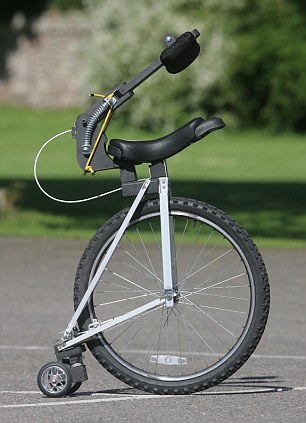
This is the ‘Velofeet’, a unicycle with stabilisers that the rider sits astride and walks. Yes, a sitting walking device.

I have a new electric toothbrush which throbs to tell me when to move to another part of my mouth and has a light which flashes should I press too hard. There are forks that do something similar if you eat too much, too quickly!

I saw an article the other week about a toilet that is internet enabled, so that you can raise or lower the seat using an app on your phone before you arrive at the bathroom.

There’s a ‘smart mug’ with a sophisticated temperature and light system to tell you whether your drink is still warm or is too hot to drink.

Don’t get me wrong, technology is a remarkable thing. I still marvel at the ‘magic’ that is… my microwave oven.

But this kind of technology led innovation, trumping any consumer led need is a growing phenomenon. Over engineering products, because we can.

It denudes us of our human reflection, thinking, judgement and decision making.

My toothbrush makes me lazy. It stops me thinking. I start to rely on the light and the throb, rather than thinking about what I’m doing. Personally, I’ve had this issue with SatNav for a while. I stop noticing. I become blind to my route, landmarks, orientations, distances. I stop seeing what is around me and instead become a slave to a voice, or a picture, telling me to turn now. The result being I have no learning. I don’t learn how to get somewhere, I just learn to rely on the technology.

This stripping away of the natural use of our senses, diluting our reading of the signs, removing our need to think, taking control of our judgement and decision making, denying us learning, is impacting our interaction with each other too.

Bit by bit we become less human.


a beauty, still

Today seems still.

Little or no wind. Trees firm, statesman-like, statuesque. Clouds spread like a cottonwool blanket across the sky; not racing to a future destination, not rain laden, not billowing. The light calm and purposeful. A constant. Not indecisive, not pulled asunder by cloud and cloud break, not overpowering, just there.

As a result, wildlife seems content. Happy to be. The birds seem at peace. Much seems slower. The shadows seem an equal fixture to that that is physical; holding their place alongside the things that cast them.

Sounds seem more balanced, more in harmony with the stillness around. They seem to complement what can be seen and felt. Sensory symphony.

Still is good.

signalling endings, signalling beginnings

dusk

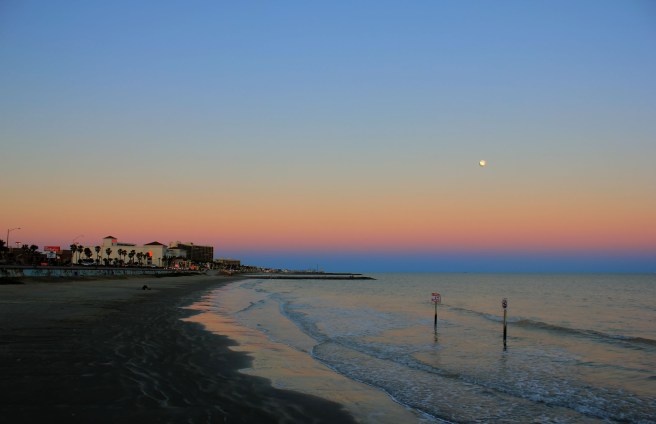
Dusk is here.

It’s a strange time. The transition between day and night.

Day and night are clearly marked in our routine of existence.  Each of us associates certain activities with day and night – everything has a place in one or both. Day is when we get up, for example, as many of us work in the day.  Some of us though work at night, so day is when we sleep and everything is reversed.

Dusk is different though.  I can’t think of something I associate with dusk.

It seems solely to exist to mark the transition from day to night.  The fading light a reminder that day is ending and night is beginning.

Signalling endings. Signalling beginnings.

Maybe there is a place for this signalling elsewhere in our lives?
Maybe then change wouldn’t be so scary?
Maybe the signalling could be seen as a celebration of a new beginning?
The celebration of a time passing and a chance to enjoy what that time gave?

Maybe every transition and change programme needs dusk?


when the conditions are right…

image

Flowers are amazing.

As Spring approaches and the first flowers of the season are out, it’s hard not to wonder at their sophistication.

They reach up and face the sun in an attempt to maximise their potential. They become open, literally, to possibilities. When night draws in and growth is no longer fed by the nourishing sunlight, they close and bow their heads, patiently waiting for the next surge of life expanding light and warmth.

They are hugely diverse, bright, colourful in a range of sizes. All are welcome in the garden.

We could learn so much.


two ‘i’s in me?

twoismeandyou

Someone today said to me, “I tell myself I should…”

I’m always curious when I hear language like this…

Sentences like “I think I am…” or “I sometimes ask myself…”

In sentences like this we are implying two parts of ‘self’.
They beg the question, “Which I?” or “Who is speaking to whom?”

Not some weird illness generally, but rather a useful indication of some separation within us, often manifesting in an internal dialogue. Integrating these parts, or at least raising awareness of the value arising from their distinction might be useful?


internal finger tips

finger tips

I can feel the steering wheel in my hands. The gloves on my fingers. My skin when I scratch an itch. I can feel my hair through my fingers. My feet on the ground. Sand between my toes. Rain on my face. Sunshine. I can feel my thighs on the chair seat. My arms when they’re folded. I can feel the bag on my shoulder. My knee when it aches. I can even describe the feeling when my toes are so cold I can’t feel them. I can hold something in my hands, blindfold, and probably tell what it is. Its size, shape, texture, hardness, weight…

We are used to feeling. On the outside.

But feelings on the inside are harder. We have less language. Less awareness. Less dexterity in our explanation.

We say things like I’m nervous or I feel good, I feel sick in my stomach or I’m just not feeling too well. I’m happy or I’m anxious or upset. Describing where in our bodies we feel that, and precisely what the sensation is; how the feeling is moving, its temperature, its intensity. This seems harder.

Strange that what our own bodies tell us is more elusive to us than our contact with the external world?

image by: Andreas Roseneder

proceed with caution

image

Flashing amber lights are a familiar sign of the need to proceed with caution.

On the roads at junctions, near schools, at points for pedestrians to cross, in roadworks. On the back or top of vehicles, as warnings or indications of intended direction. At building sites, airports, stations.

What a shame we don’t have them at the junctions and intersections between human beings. Alerts to slow down, stop, be wary, proceed with caution.