travelling how?

travelling through life

How do you travel through life?

Do you roll, like a smooth pebble; always moving, rolling ever onwards to the sea?

Do you dance like a starling at dusk, part of the whirling, ever changing murmuration?

Do you drift like a cloud, morphing as life’s winds blow?

Do you dive like a kingfisher, arrowed and true, breaking the surface for what lies beneath?

Do you set your SatNav to avoid the tolls, so that life is trouble free and scenic?

Do you let life come to you, like the leaf of a tree, mellowing through the seasons?

Do you run like the prey, staying safe and ever alert to dangers?

Do you hunt like the predator, opportunistic and meeting your needs?

Do you melt slowly like a sugar cube, sweetening your surroundings?

Do you float on a cloud of your perpetual dreams and imagination?

Do you travel light, ready to soar on an upward current of unexpected breeze rising from life’s hot desert?

Do you speed like a train, sure of your path, keen to remain on track and to get there quickly?

Do you skate like a water boatman; surfacing all, never diving deep?

Do you build stepping stones across the fast flowing river, sure of your place as the current rushes between your feet?

Do you stay in the pack, travelling where the pack goes, hidden within?

Do you fall like a snowdrop, gently drifting in life’s beauty until you melt away?

Do you sway like tall grass, whispering to the grasses around you?

Do you shine like a sun ray; enlightening, growing and warming those you touch?

How do you travel through life?


when much becomes too much

when much becomes too much

Saw a property advertised here the other day.

Just over $4,000,000

So, substantial.

That money gets you a lot of property and land, plus… 10.9 bathrooms apparently.

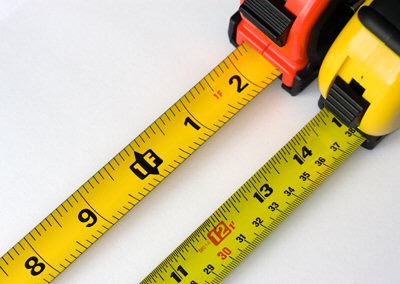
Money buys accuracy too it seems. For when bathrooms exceed ten, you move to measure them in decimals, naturally.

How much do we need, really? And has it become too much?


pop my candy

image

“Too cold to hold and got to be sold.” he called out.

It drew my attention and my gaze caught his.

“Don’t let dehydration ruin your vacation.” he grinned.

“Can I refresh you today?” he invited as I approached. “Guaranteed to cool you out without a doubt…”

This street trader’s appreciation of the value in selling not the product but the benefits, had won me over in the New Orleans heat of early afternoon. I could sense how it would feel to be refreshed and sated by one of his ice cold drinks. I duly purchased a beverage from the ice filled cool boxes at his feet.

Talking about value, contribution, benefits and outcomes seems effective. Doing so in language that engages the senses, even more so.

What might happen if we adopted this approach in organisations when we discuss people? Not, she’s top talent or he’s well qualified. But, she’ll energise you with a deep passion that washes over you like a wave of effervescent bubbles from popping candy. His courage and insight will inspire you like the view from the banks of the raging Mississippi with all its power and direction in the flush of Spring.

What if?

the bricks and mortar of personality

image

New Orleans seems a chill out, fun loving city. It’s French heritage giving it a relax and ‘take it easy’ style, which it marries with a party hard and ‘be who you are’ mentality. It’s unique, it knows it and it’s proud to be who it is.

Memphis seemed a city proud of its heritage – it’s musical and black freedom roots at its heart. Yet somehow stuck there, in its past. Desperately holding on. Maybe scared or unable to change?

Boston seemed a confident city. Wise, relaxed and fun loving. Proud of its foundations and confident of its place, yet not shouty. Not, ‘come look at me’.

Washington seemed noble. Clean, sharp dressed, well presented. DC knows its role and presents itself with dignity, as if putting on a good show for the parents. It’s not forced though, just befitting of its status.

Nashville, it seemed to me was trying to grow up. Musically the home of country, now trying to become a modern city. And in that growing up, a little confused. Like any teenager.

Chicago seemed to carry a weight. Heavy. It seemed to be trying, perhaps too hard? Architecturally a little confused. Working city, tourist city, modern city, industrial city. Its race to build taller, seeming, in contrast to Boston, to be a ‘look at me’ stance, almost like the second child.

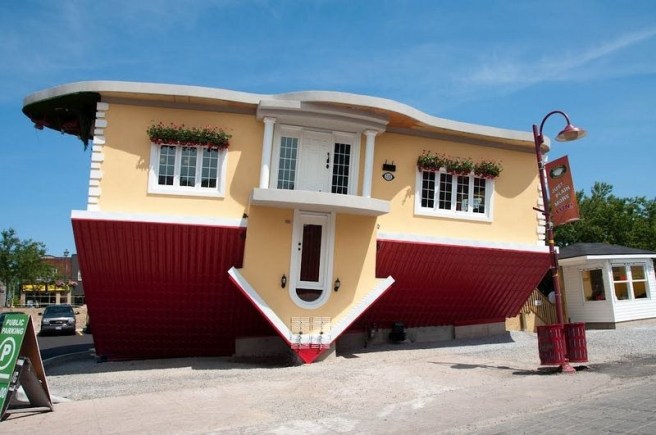
Cities seem to have personalities, like us.

Personalities grounded in their past, like us.

And if our personality doesn’t fit our city, I guess we move on? Or rebuild ourselves?

which three fifths do you choose?

www.illuminateddandelion.com

Having visited the National Civil Rights Museum in Memphis, the second new learning which stayed with me was this…

In 1787, after independence, the three fifths clause of the United States Constitution was enacted. “Three-fifths of the number of slaves in any particular state would be added to the total number of free white persons, including bond servants, but not Indians, to the estimated number of congressmen each state would send to the House of Representatives.”

Effectively each black man or woman was worth three fifths of a white man or woman, when it came to ‘democratic’ representation. It seems shocking; indeed a few people audibly gasped when the video at the museum shared this.

How do you fraction a human being? Why three fifths? And which three fifths?

And I wonder on reflection, do we still do this today? Unconsciously? Do we value certain people more, or less? Is it just that we no longer write it down, make it law?

And do we hide parts of ourselves too? Only present to the world the part(s) we feel comfortable with? Do we show up, not as our whole self, but as the fraction we believe is acceptable to those around us, in our context, in our environment, now at this time?

If you could offer a fraction of yourself and discount the remainder, which fraction would you choose?

which doll makes you feel better?


I visited the National Civil Rights Museum in Memphis yesterday.

It’s sited on the spot Dr Martin Luther King Jr. was gunned down in April 1968 – the Lorraine Motel. Moving scenes.

Following the struggle of the Afican American through three centuries of slavery, abuse and segregation is a sobering insight into the darker side of human beings.

Maybe it reflects my own experience and knowing, but I found it more troubling to read of the twentieth century travesties than the seventeenth, where the importing of slave labour from Africa – somehow seems unreal; from a time gone by. The abuse in the street and the segregation however, in education, on buses, in everyday life… shaming stuff.

I learned much. Two things struck me in particular. I will cover the second tomorrow.

The first however was that in the 1950s a long legal battle came to a head, relating to segregation in schools. The legal team had contacted a group of psychologists who had researched the psychology of segregation. Their test was simple – it was called the doll test. They simply gave children, aged 3-7, four identical dolls. Identical, except for their colour. They asked them a number of simple questions to establish which doll they preferred. Overwhelmingly the children, whether white or black themselves , preferred the white doll.

The evidence was used to show how self esteem, a sense of inferiority and self confidence were affected by society, environment and prejudice.

The Supreme Court cited the work implicitly in the following passage: “To separate African-American children from others of similar age and qualifications solely because of their race generates a feeling of inferiority as to their status in the community that may affect their hearts and minds in a way unlikely ever to be undone.”

Really? No s***?

Something we should hold on to perhaps? The notion that some form of judgement made arbitrarily might impact the self esteem of those judged and give them a sense of inferiority.

‘don’t walk’ growing pains

image

We’re all standing, looking at the red hand. There are no cars. The road is just two lanes. Yet we stand and wait. Waiting for the ‘walk’ sign. To be told it is safe to cross.

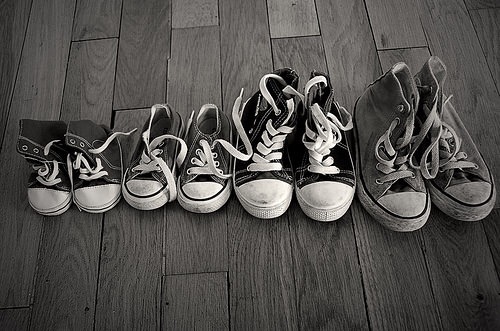
We think that we’re grown up just because we’ve hit adulthood, have flown the nest, or because we’ve taken on a position of leadership in our organisation.

But so many of us are still looking for parents who can save us from life’s difficulty, confirm the right course of action, or who can tell us we’re doing ok.

As long as we’re looking for parents, we expect the leaders of our organisations, or others in society to know what to do, to know all the answers, to tell us what’s needed, and to rescue us. We hold back from speaking truth or acting confidently because we’re scared they’ll judge us or reject us. Meanwhile, they’re scared they will get found out; found wanting. So they are happy to parent us. To be seen as wise and all knowing.

And in this parental game, we blame them for sticking to their rigid parental ways. And, when things don’t turn out the way we want them, we blame them for failing us, instead of stepping up and taking action and responsibility ourselves. We give up our capacity for independent thought so we can keep ourselves in a dependent, child-like role.

And they, for their part, give up truly leading. Instead they parent, patronise and push change, to show they know best.

All of this is happening even at the most senior levels of multi-national organisations, because – it turns out – being senior, and being grown up, are not the same thing.

It explains much about why change can be so difficult in organisations. Why we fail to own our own change and why we have created an industry called ‘change management’ – like all that’s needed are more parents.

All of this makes the ongoing task of adult development so critical for each of us and for our organisations. Truly growing into ourselves, being ourselves and growing up is challenging work. But it means we can become self confident and genuinely be adults in the world – without relying on a saviour.

And once we can act like responsible grown ups, that allows us to take collective responsibility first for our institutions, and then for our society as a whole.

Then we can walk.

the secret myth revealed

image

You know when you’re looking for wifi and a whole host of wifi networks appear on you phone or tablet?

So, the other day, one appeared called ‘Hidden wifi’.

Not so hidden then!?

A few days ago, standing outside Pennsylvania Avenue, amongst the crowds, there were a dozen Secret Service operatives.

Is that what they’re called? Operatives? Or have I seen too many films? Agents maybe? No that’s definitely films.

Anyhow, the thing that struck me was, they were all wearing a vest, on the front of which were the words SECRET SERVICE. Capitalised and boldly displayed. Not so secret then?  If it says what you do on your t-shirt.

We like secrets. More though when we can reveal them. “Have you heard…?” “Did you know…?” Knowing a secret is in itself a currency we value.

What’s that about?

the ministry of free wifi baptists

image

A squint was called for.

Surely it didn’t say that?

“A ministry of free wifi baptists”?

The illuminated sign, beside the steps leading to the building, had the expected proclamation associated with the building’s function; urging, as it did, passers by to heed God’s word. Above that communication, and below its ministerial name, was this strange subtitle.

Now, a few steps closer, all was revealed. As was a small chuckle. To self.

“A ministry of free will baptists”

Strange how our expectations and understanding of what we are seeing are shifted over time. Our presumptions coloured by the language of the day, not those of yester year. Our interpretation directed by the values of that time. Free will lost to the modern vernacular of free wifi.

A sign of the times, or a sign from above?

Something lost and something gained perhaps?

I chuckled again.