
“A ship is safe in harbour, but that’s not what ships are for.”
Shedd

“A ship is safe in harbour, but that’s not what ships are for.”
Shedd

… we find honesty hard.
We seek it from others. We say we are honest, when challenged. We mostly value it as a good thing in others. A positive trait. Mostly, we try hard to be honest.
But we find real honesty hard.
It means facing ourselves. It means honouring who we are. It means accepting ourselves. Accepting that we are emerging, that we are growing, learning. It means accepting ourselves, for all our qualities and also for all our struggles and blind spots.
Honesty with ourselves allows honesty with others.

The other evening a television news reporter began his report from Jerusalem…
“This is often a very heavy city and the weight of its history hangs over it…”
This kinaesthetic language helps you ‘feel’ the experience of being in this city steeped in history and rich with turmoil. The phrases ‘heavy’, ‘weight’ and ‘hangs over’ describe felt sensations and help the listener sense the mood in the city.
They work in much the same way as idioms such as ‘hold their feet to the fire’, ‘head over heels in love’, ‘hot under the collar’, ‘it makes your flesh crawl’, ‘ants in his pants’ or ‘the weight of expectation’. Each describes a physical sensation which brings the experience more to life.
Auditory language might talk about ‘the staccato popping of distant gunfire…’ Visual language might describe ‘the ghostly pall of smoke painting a blue grey background to the skirmish…’
How would you describe the picture on this blog post?
‘the twisted trunk and aching branches pained by years of tortured weather…’?
‘the crispy leaves and creaking branches rustling in the moaning wind…’?
‘the distant dark copse framing the monochrome tree in stark parchment sepia…’?
Be curious about your language and how it describes your inner world.

Someone I know passed away very recently.
Their partner is still grieving and confided in me that they felt so alone. Not lonely, but alone.
I was curious about loneliness and alone, so researched a little. Here’s what I found…
Loneliness can be described as a state of mind. It is a lack, a feeling that something is missing, a pain, a depression, a need, an incompleteness, an absence.
If you are feeling lonely it means that, even if you are with other people, you are missing something or someone. Somehow, you feel empty inside. I suspect this is what my friend experienced.
On the other hand, being alone means you are without company, isolated. It is a state of being – you are alone.
‘Aloneness’ can be presence, fullness, a sense of being alive, joy of being. You are complete. Nobody and nothing is needed. You are enough.

These were the words I heard this morning.
I laughed at first, but then, on reflection, realised the logic was irrefutable.
My wife was explaining a need to go to the shop, to buy pizza, so that we could have pizza for tea. The sequence of the thinking intrigued me.
It seemed to highlight the significance of setting a goal and that once the goal is in place, the steps, the resources, the requirements to fulfil that goal can follow. They become almost inevitable. The goal is pizza, pizza is required, pizza comes from the shop.
So, if you can’t have pizza without pizza, maybe…
You can’t change without changing?
You can’t move without moving?
You can’t learn without learning?
You can’t grow without growing?
You can’t see without seeing?
You can’t feel without feeling?
You can’t be without being?
Of course, these action words necessitate a self awareness – a knowledge of both the intended goal. the current state and a means of connecting them. What is learning for me? What is it I want to change? What am I feeling and what do I want to feel? What am I moving towards and how do I create movement for me? Who am I, who is the person I’m seeking to be?
It is true you can’t have pizza without pizza, but knowing what pizza you want will certainly deliver a more satisfying meal.
No snowflake ever falls in the wrong place.
Zen proverb

Much in our world is provided to keep us safe.
Black and white stripes on a road just one mechanism to make crossing a road safer. “Beware of the dog”. Safety shoes to prevent damaged toes. Safety glasses to prevent damaged eyes. Policies to ensure we don’t get sued, laws to allow us to sue. Use by dates to alert us to the dangers of eating food that might harm us. Bans on games of conkers to avoid bruised hands or worse. Maximum dose eight tablets in 24 hours. Road signs warning of adverse camber, liability of freezing, low bridge or simply to ‘give way’. “Don’t run”. “Slippery when wet”. Barriers at the end of footpaths to ensure we don’t inadvertently run out into the road. Safety belts. Medical screening for illness and disease. No standing upstairs on the bus. ‘Safety’ matches. Fire extinguishers, expensive sprinkler systems and fire drills. Warnings for children on who to talk to and who not to. Fire guards, safety catches, automatic cut-offs. “Eat five a day”. Jabs for our holidays. Pinhole glasses for solar eclipses. Masks to filter our breathing. Catalytic converters to trap pollutants. Helmets for bike riders and sportsmen. “Contains 20% of daily saturated fat”. Life jackets. “Smoking kills”. The list is endless.
Yet when we engage with the world as a human being, put ourselves at emotional and psychological risk. When we show ourselves. When we face judgement. When we risk belonging. When we make mistakes. When we face fear. When we feel lonely. When we show vulnerability …
… then we are on our own.
We have to work it out for ourselves. Try things. Get hurt. Learn quickly. We have to look after our own wellbeing. We work out our own policies and rules. We build our own safety mechanisms. Tell ourselves what is acceptable and what isn’t. Build our own beliefs, values and behaviours to act as barriers to keep us safe. Talk to ourselves, reassure ourselves, beat ourselves up.
Where is the support really needed? I wonder if we have the right balance, the right focus?
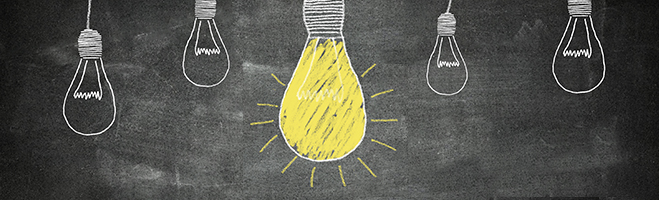
I have been speaking these past two days about giving your power away. How it diminishes you and your potential.
So who or what have you handed control to?
Is it your boss? Or is it your partner, your spouse or your lover? Have you handed it to a parent or a sibling? Does fear have your power? Do you give it to controlling and domineering people? Have you handed it to another part of you? Maybe the ambitious part, maybe the parent in you, maybe to the part of you that fears being great?
Have you given it to comfort foods, alcohol, drugs or other forms of escape? Have you given it to taking care of everyone else? Or to the people you see as more worthy than you? Do you let people who are unhappy drain and suck your energy? Have you given your power away to money or time, the scarcity or lack of it?
Or have you given your power to a social institution such as the government, a religion or a philosophy? Or to someone in authority or a position of power, such as a doctor, a lawyer?
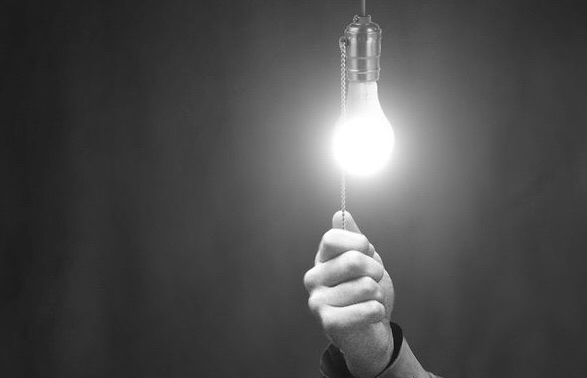
Take back control of your dimmer switch and turn yourself up bright.

I wrote yesterday about giving our power away.
We do this in our patterns of thought too. Our habits of mind can cause our power to leak away. Dissipate. Below is only a partial list of ways you might do this. Study the list. Notice your habits.
Do you spend time, in your head, beating yourself up?
Do you have regular thoughts about being better than…?
Or about not being as good as…?
Do you judge yourself and come up short?
Do you focus on pleasing others?
Do you catastrophise and fear the worst before it’s happened?
Do you regret old failures or lost opportunities?
Do you replay old hurts or difficult conversations in your head?
Is it a pattern of thought to be bitter about circumstance and to think about how unfair things are?
Do you over focus on enemies or on revenge?
Are your thoughts directed to taking control?
Or maybe you have another pattern of thought?
Your life energy is a resource – you can use it wisely or squander it just like any other resource. Make an estimate of how much of your thought you spend on habitual thinking which gives away your power. Then address it.
A colleague at work has been leading a new project. She has surveyed the territory, read the research, summarised the viewpoints and gathered the core material. It’s time to document our stance and intended direction.
She invited others to share this work, valuing a collective approach. Now a couple of drafts have been produced, attributed to their shared work, but my colleague is disappointed. Disappointed in herself.
I discussed it with her. The work has lost the essence and the inspiration she found through the research, but also, it no longer reflects her.
We explored how she has given her power away.
We can all do this.
We give our power away when we doubt ourselves. When we try to make everyone happy or look for others approval and validation, thereby over-empowering them.
We give our power away when we fail to honour or share our personal truth. We do it when we compare ourselves to others or worry what other people will think. We do it when we forget that we know what we’re doing and that we are good at it. We do it when we have poor boundaries and allow others emotional activity to intimidate us and leak into our world. We do it when we lose sight of what we need or want, instead placing focus on what we see externally in the world as the blocker – lack of money, time, ability, looks, weight…
But giving your power away diminishes you, disables you, casts your personal light in shadow.
 illuminated dandelion