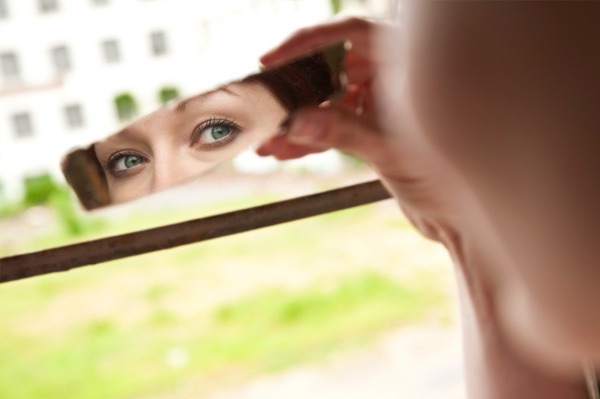
facing ourselves is the hardest direction to look

not looking at ourselves
It seems like we stand in the centre of the world.  In the centre of our world.

From this place we can observe all. See sights. See situations. See people. Be drawn towards. Turn away. Fit.

From our vantage point, with our map of the world as the world should be, we can assess everything, place a value on it, judge it. We can rank things, place them in hierarchies of choice, want, need. We can compare this external vista of things, people and their actions with our perception of right and wrong, good and bad.

And we do…

We critique the behaviour, choices, necessities of others. We glance at the unsightly homeless person from the corner of our eye, thereby maintaining a dignified separation. We wince at the teenager’s language and lack of respect in the street, like we skipped that life stage. We place the drunk man in a story, a story of our own creation, so that we can explain his ‘condition’. We assess the parents and their actions towards their screaming toddler, like frustration, tiredness, learning are all experiences we have never had or at least have always handled better. We gossip about the neighbour and the affair we think they’re having, so that we can stay in the ‘moral’ club through our action of placing them in the ‘immoral’ one. We whisper with colleagues about the boss who seems oblivious to the impact of their actions, because there is safety in collusion. We mutter about the Sunday driver who meanders when we’re in a hurry to be somewhere, like they have no intent or purpose.

That person is good, this one less so. We’re OK, because they’re not. How can he do that? Why is she so…? Why don’t they…? I wouldn’t do that. Who wears that? Does she know what she looks like? Really … pink? Why doesn’t he wash his hair? Another holiday!? Why can’t she just say? He’s a waster. She doesn’t realise what she’s doing to him. Amazing, awful, not good enough, disgraceful, shameful, good heavens…

We all do it, every day.  It comes easy. Too easy.

Maybe because in our map of the world, our view of right and wrong, of good and bad, we can be exonerated? We are innocent. Never guilty. We are successful. Never a failure. We are ethically and morally just. Never wicked.

But maybe facing ourselves is merely the hardest direction to look?


where are the confused people?

confused angry emotion
You know that exercise we do after conferences or meetings, where before we check out the facilitator says, “Let’s do a temperature check”. “Let’s go around the room. Everyone sum up how they are feeling in one word”.

They’re asking because we’ve just been told something and we might be having an emotional reaction to it.

How many synonyms are there for thoughtful?
Reflective, pensive, contemplative, pondering …

How many synonyms are there for open minded?
Curious, wondering, intrigued, anticipating …

These are neutral. We can’t be challenged on them. They’re to be expected almost. We’ve just been told some new information, something is changing, why wouldn’t we be thinking about this new information and why wouldn’t we be open to what we’re being told is to be the new reality anyway?

I wonder though…

Where are the confused people?
Where are the angry people?
Where are the scared people?
Where are the resentful people?
Where are the lost people?

Our language for emotions in organisations is woefully lacking and our ability to connect with and honour our personal truth, in such a public forum, is so hard to reach.

the distortion of reality

distort, generalise, delete
Earlier this week, I wrote here about wasps and my propensity to engage them in an imaginary karate-like self defence of mime. Our creation of our reality through the process of deletion, distortion and generalisation.

In my example I am deleting, distorting and generalising the experience as well as the possible outcomes.  My language can reveal which process I am using.  For example I might say “I’m scared of wasps”, but what specifically am I scared about? What is deleted in that sentence? The buzz? The pain of the sting? The swelling and itching?… I’m behaving as if all buzzing equals a wasp threat; but that is a generalisation, revealed by the ‘all’.  Equally I’m generalising that all wasps are out to get me; generalising a wasp’s presence will always lead to a sting.  I’m distorting the risk; creating a perceived significant risk of a sting, despite lack of evidence as I haven’t been stung for decades.

Yet it’s my version of reality in that moment, so I thrash, I dance in an embarrassing battle with my aggressor, miming attack, defence, bravery, fear, victory, defeat.

Neuro Linguistic Programming (NLP) refers to this human truth through its presupposition ‘the map is not the territory’. Essentially what we believe to be true, our interpretations of events past, present and future. These are only OUR truth. Not THE truth. Everyone creates their own truth, their own map. We do this in these three interconnected ways, and in one sense this process of individualised deletion, generalisation and distortion creates our own unique interpretation, our version of truth. Just as with the colleague passing us without saying hello. All of which might suggest there isn’t one version, one truth, one territory; no reality in fact, just our reality.

Our deepest memories are coloured by this process. Twisted. Enhanced and also reduced. Yet those memories shape our behaviours, our way of being, our beliefs about what matters, what is true, today and going forward. We recall experiences and hold great store by them, but the very memory is only a partial truth, an incomplete reality.

A strange way to base current and future behaviour, don’t you think?  Human, but not always helpful perhaps?

pretending there is a reality

mime reality map territory NLP
I’m not a fan of wasps. A wasp buzzing near me will cause me to flap like a crazed Indiana Jones extra, chopping my way through an invisible mist of cobwebs in a deep, dark cavern. If that doesn’t work, I will duck, sway, even run away.

I don’t specifically recall being stung as a child and I have no evidence that wasps are seeking me out, just to sting me. Sometimes this frantic dance happens before I even know it’s a wasp. Just a buzzing insect can invoke this manic mime artist routine.

In a sense I am creating a false wasp / imagined wasp implication ‘reality’.

We all do this – not with wasps I suspect – but, act as if a ‘reality’ is true. Have you ever seen something shiny on the ground and paused to check, believing it to be of value? Have you ever mislaid something and convinced yourself someone else has moved it, because you ‘know’ you haven’t?

These are somewhat frivolous, innocuous examples. Something to giggle about. But we do the same thing in all our day to day experiences and interactions. Given as human beings we experience things constantly, this is something to pay attention to. Neither frivolous nor innocuous.

Often experiences are shared. We will be in the same situation as a friend, partner, colleague or stranger. It would be easy to assume therefore that we all have the same experience of the same situation. There must be facts? Truths? Reality? Things said, things meant? Actions and words we can all agree on? They happened, right?

Think again.

Let’s say someone you know walks past you at work without saying hello – what’s your reaction, your interpretation? You might think they are ignoring you, that you have upset them? You might think they have more important things to attend to, because after all you’re not important enough? You might think you’ve got it wrong, they don’t like you after all, even though you thought you had a relationship? You might just think you don’t have an interesting contribution to make, nothing to say that your colleague wants to hear?

Of course you can’t know their truth, so you create yours, by deleting, distorting and generalising your experience. Noticing some things, ignoring others; interpreting and distorting the experience to make it ‘fit’ with your map of the world. Then relating this experience to others and unconsciously grouping it with other ‘similar’ ones to create generalised groupings of meaning – eg people never notice me.

This creation of our own reality is the product of our brains pattern matching and making meaning quickly But we are miming.

Miming reality.

our stories of self

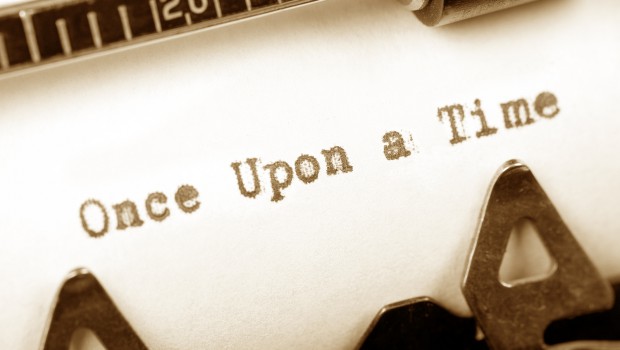
once upon a time
We have a story for ourselves.  Sometimes more than one. Sometimes the story we tell, is not the story we live in.

This was beautifully expressed to me recently when a coach colleague shared this experience

A coach I met recently shared a fascinating story with me about a client they were working with and some profound learning they had experienced.

By their third session, the coach noticed how hard they were finding it to connect with the client and find the truth in the stories the client was sharing. They had a growing sense that the client was not being authentic. The coach noticed how this was affecting their own flow in the sessions.

After this third session, the coach spent much time reflecting on why they felt so uneasy about the situation and admitted to themselves that something just wasn’t right.  Maybe they just weren’t good enough as a coach to support this client?

The coach decided to share their unease with their client at the next session. Whilst waiting for the client to arrive, the coach convinced themselves that the client might be better off with a more experienced coach as the coach clearly had now developed some bias that would get in the way.

The coach gently approached the subject with the client and said “I’m truly sorry, but I have to admit I am struggling to connect with you and more importantly I find myself doubting whether you bring real events in your stories or ones you imagine yourself having”……this last part changed everything !

The client shared how they had imagined when they were younger, that their life would be so very different from what it was now. It transpired the client was mourning the life they had hoped they would have and the person they believed they would become. Their unconscious grief for this representation of self, resulted in the invention of a new reality in which the client remained the same age, the same values and the same personal goals they had had 25 years ago.

This realisation had a profound affect on the coach and resulted in transformation for the client.

This story is both a brilliant reminder of what we do as coaches and at the same time a sobering reminder of the complexity of our humanity.

As coaches our gift to our clients is to support them navigating their personal truth in search of something more whole, more true, more fulfilling – the story is heartwarming in that regard.

Yet the story also serves to show how ‘wierdly’ our very humanness can work for us.

Our brains and bodies can take us on strange journeys, through thought and feeling patterns, to strange places. In this case, for this client, from clarity of vision for self, to grief for an unfulfilled, imagined self, to the creation of a false self, with all its stories, false realities and ties that bind that client to a life less than their potential.

It shows also the power of our stories of self.  The story we imagine for ourselves, the story we exist in, and the story of what we might be.

Stop being who you were or who you could have been… instead, be kind to yourself and be who you are.

change is the one ever present truth

change
Change is ever present in our human lives.

The world around us changes constantly. Not just with the seasons, the passing years, but the tools of living, the way of living, the world in which we live. And we change too…

From birth we change, learning to communicate, to walk, to make friends, to become part of the family, to find our place. We learn to learn, we go to nursery, to school, to university, at each stage taking more responsibility for ourselves. Our family may move house, add family members, lose them too. Our friends may change. Our location. Our journeys. At work, our job roles change. Our bosses. Our colleagues. Our employers. We change our house, our car, our hairstyle, our look. Our hopes, ambitions, desires change. We meet new people, new friends, new loves. We start a family. We nurture them, they grow, they leave. Later, illness may strike and our lives change again. Relationships falter and new ones are born. We leave the world of work. We become grandparents, great grandparents. Challenges and opportunities emerge constantly in our human lives and we respond, changing to adapt, to thrive, to grow. We choose to change, incessantly.

Much of this change has a connection to learning and growth. The opportunity to become more. Positive outcomes. Yet often we are worried by change. Anxious about what it will mean. Will we cope, will it be good, will we be good enough, are we doing the right thing? It can become a psychological and emotional wave machine. Hard to keep your head up. Hard to put your feet down. Hard to breathe.

I am fortunate enough to have the opportunity of a six month career break. An incredible opportunity to take time out, travel, try something new, recharge. Yet I’m worried. It will be a change. Not the routine I have become used to. Will I be prepared enough, planned enough to reap the rewards? How will things have moved on whilst I’m away? Will I want to return? Will I be able to do the things I want? How will relationships change? How will I change?

I notice that all the uncertainty, all the doubt, is in my head. Imagined. Foretold. I have become an anxious soothsayer.

We do this at times of change, particularly in work, in organisations – catastrophising, worrying about the impact, the implications, the problems. Yet when we look back, after the change, we seem able to find good. To find benefits, positives. A new lease of life. Fresh shoots. New learning. Even in the most extreme circumstance we are, as human beings, remarkably resilient and accommodating of change.

Yet still the worry persists.
Why is it there?
What’s its purpose?
How does it serve me?

our eyes face the wrong way…

eyes
Our eyes face the wrong way.

Oh sure, looking outwards has its uses – fewer lampposts walked into, glorious sunsets to admire, great novels to read, smiles to warm our hearts, choosing your next Krispy Kreme donut (that may just be me)

The problem is that so much of our truth, our success, our learning, our qualities, our gifts, our struggle, our reason for being, our beauty, our essence, our soul … lies inside us.

And we can’t see it.

Yet it drives our behaviour, our choices, our joy, our sadness, our fulfillment, our happiness.

The world outside can be beautiful, but take a moment to look inside.

That can be beautiful too.

the courage of truth…

truth self be
I have just read an article in the paper.

The story is told by a grandmother and is of her five year old grandson, who wants to be a girl.

The author writes of the challenges the parents face, buoyed by a steely desire to support their son’s ‘wholeness’, but conscious of the white rapids of gender politics, judgement and bigotry society will toss them through.

The author also writes how her five year old grandson is teaching her. Teaching her about truth, mostly her own. Wrestling with her own inner dialogue daily – are we indulging him, what will people think of me? – she describes how she has had to turn to her own discomfort, own her own prejudice and confront the worst her imagination can conjure. She recognises the most unpalatable truth; that her own thoughts, words and actions questioning what she and the family are doing, have been about protecting herself.

What courage. What honesty. What love.

Would that we could all face our truth as this grandmother and her grandson are.

what’s your worst bad habit?

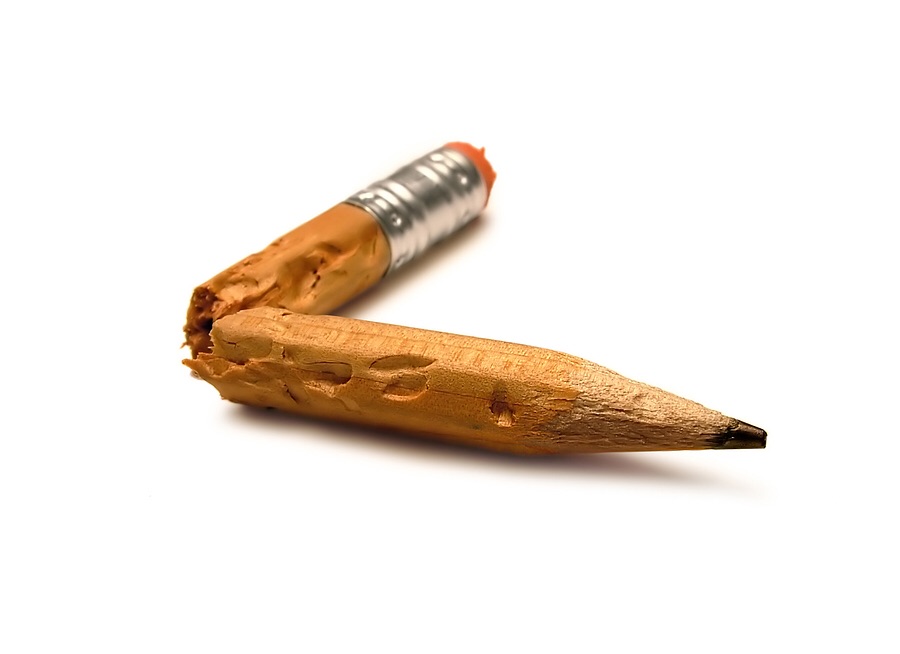
bad habit chewing pencil
From childhood we are alerted to the dark path of the bad habit.

Don’t suck your thumb
Don’t bite your nails
Don’t twirl your hair
Don’t fidget, sit still
Don’t pick your nose…

Of course in these examples it is the parent speaking, the adult. They have decided this behaviour is ‘bad’. For many, this is because they were conditioned as children to believe these habits were bad, by their own parents, by ‘society’. It is as if we have passed the judgement ‘bad’ down through the generations.

But what is a habit? Convention might say a habit is a practice, a manner, a behaviour that has become a pattern. A pattern that is hard to give up. Change requires the exercising of that thing we call ‘will power’.

I have spoken before here about behaviour being purposeful, having a structure. Trigger, behaviour, reward.

Those childhood habits I have mentioned might share similar triggers … a sense of worry, anxiety, restlessness, feeling exposed, alone, needing comfort? They might also share a reward? They all seem to have a property of physical connection to ourselves, be it thumb, hair, fidgety bottom, fingers, nose. Maybe a form of comfort from connecting to our own bodies?

So why bad?

One definition of a bad habit is one that has the potential to be detrimental to our physical or mental health.

Convention in the adult world might list such things as smoking, eating too much fast food, gambling, drinking too much, late night snacking as bad habits. Again, maybe it is society that creates this assessment, this valuation of bad? Not just invented though, not just handed down in stories and tales from elders, we have researched the medical implications of smoking, drinking, over-eating. We have hard evidence. We know.

Take a smoker. They know it is harmful, yet they persist. Why? Lack of will power? Maybe. Maybe that’s just another way of saying the reward is too important to me?

I was once in a training, where we were asked to list the benefits or rewards from smoking. Many were social – an opportunity to socialise, connect with like-minded people. Some described it as relaxing. We listed over forty benefits, from a room of sixty people, only a quarter of whom smoked. But one delegate offered a very powerful benefit. They described how it helped them remember their father – who had died of lung cancer. An odd behaviour at a logical level? But, that’s a very powerful reward. I suggest it might trump will power every time.

So paying attention to the triggers and rewards, might be useful here? It is these that drive the habit. The rewards can be well hidden, logically hard to rationalise and so hard to unearth. Seeking them out can be tricky. Be persistently curious. Keep asking ‘what do I get from behaving like this?’ Finding another way to get that reward will help you change the habit.

Maybe we need to talk not so much of ‘bad habits’, but more of ‘rewarded habits’?

So, what IS your worst bad habit?

Not because society labels it bad, but because it carries a reward you very much want or need. Your most rewarded habit? And, if you would like to change the habit or behaviour, how might you get that reward another way?