life as a pot of numbered balls

random happenstance life
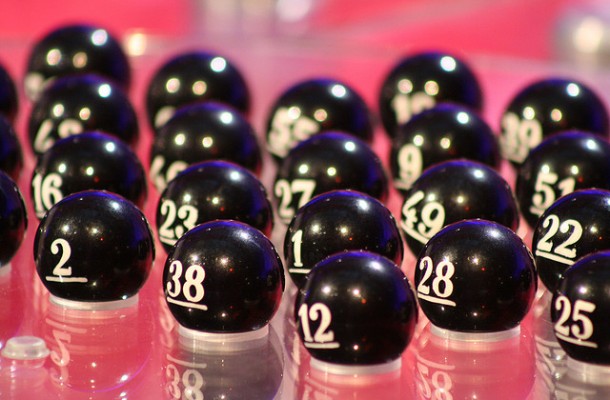
I’ve just watched the FA Cup first round draw.

Clubs matched randomly. Balls with numbers on, drawn blind from a perspex receptacle.

Imagine if our lives were determined this way. Our relationships determined by the number on the drawn ball. Our life longevity similarly. Our quality of life. Our ails and illnesses drawn randomly from the pot.

What if there were no choice? If this random selective ‘fate’ determined every twist and turn. The grabbing of a numbered ball swirling around in the pot of life deciding our future. The school we went to. The friends we made. The job we secured. Our performance and pay in that job. What if the balls determined our future, our choices at every stage? What if there was in fact no free will?

Ironically much is in fact determined by happenstance. Either because certain life choices determine subsequent choices, or because we are ‘run automatically’ by our beliefs, our values, our early life experiences coding all our subsequent behaviour.

Maybe we are more like the first round draw than we think?

leaking power through thought

habits of thought leaking power
I wrote yesterday about giving our power away.

We do this in our patterns of thought too. Our habits of mind can cause our power to leak away. Dissipate. Below is only a partial list of ways you might do this. Study the list. Notice your habits.

Do you spend time, in your head, beating yourself up?
Do you have regular thoughts about being better than…?
Or about not being as good as…?
Do you judge yourself and come up short?
Do you focus on pleasing others?
Do you catastrophise and fear the worst before it’s happened?
Do you regret old failures or lost opportunities?
Do you replay old hurts or difficult conversations in your head?
Is it a pattern of thought to be bitter about circumstance and to think about how unfair things are?
Do you over focus on enemies or on revenge?
Are your thoughts directed to taking control?

Or maybe you have another pattern of thought?

Your life energy is a resource – you can use it wisely or squander it just like any other resource. Make an estimate of how much of your thought you spend on habitual thinking which gives away your power. Then address it.

I don’t know, I’m in two minds…

in two minds
As human beings we live in two worlds.

Day to day we interact with the world around us. Work, colleagues, friends and family, engage with us both verbally and behaviourally. We move around in this world, sometimes using mechanical transport, sometimes walking, sometimes aided by lifts, staircases and sometimes running. We engage with inanimate objects, follow daily living routines, complete work tasks, go shopping, read, watch and play on technology…

Then there is the world of our mind and imagination. Here a parallel world exists where people, their actions and words carry an internal meaning and significance. It is a virtual reality that can appear and feel just as real. When it comes to your emotions the virtual world of your mind can often be more real. Our own behaviours and actions have thoughts and feelings attached. The objects we interact with and the movements we make around our world, draw or repel us, enthuse or frustrate us, support or hinder us, anger or please us; they too carry their own significance and meaning, inside our heads and bodies.

So, which world is real?
Which world impacts us more?
In which world does change happen?
Which world, when as we would wish it, offers happiness and fulfilment?

I’m in two minds. You?

Sculpture by Anthony Cragg

does this make sense to you?

senses NLP
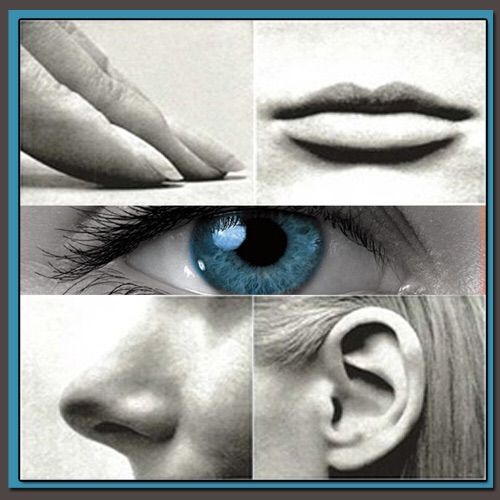
We experience life through our senses. We see, hear, feel, smell and taste our experiences.

Our brains code them in this way. Our memories are accessible through our senses and, when recalled, we experience, represent or rather ‘re-present’ them through our senses.

If you recall now something that happened to you last week, you will be doing so either by seeing the situation in your mind’s eye, or by re-feeling how you felt then, or by hearing the conversation again, maybe even smelling something…

This process works both ways. We ‘think’ of a memory and re-present it through our senses. Or, we have a sensory experience today and that triggers another memory where the sensory experience was similar. Have you ever had the experience of a smell taking you back to a childhood memory?

This process also works for the future – imagined future experiences are presented to us through our senses. We can imagine our holiday or that difficult conversation we have next week and we can create images, feelings, internal dialogue predicting that future experience.

We all have favourite senses to use for this. I wrote about this some weeks ago when I asked How do you think? and hypothesised that without our senses we have no experience.

We often have a primary sense, for many that is visual, but might be auditory or feeling, backed up by one or two other senses that create our experience. Some senses are less available to us in this process.

Our language reveals our preference. It shows on the outside, the way we are coding our experience on the inside.

“I hear what you say” is different to “I see what you mean”.

There are many idioms in English that we use to signal our sensory preferences for coding our own experience. Often we’re not consciously aware, nor are those around us. But it can be useful to know.

Do phrases such as these appear in the way you describe things? “Let’s get a different perspective” or “Let’s take a closer look at this”? These might be examples of a visual storage system. Whereas, “That doesn’t sound right to me”, “This really speaks to me” or “Once we get into the rhythm of the meeting” might suggest an auditory preference. Those who work with feeling, or kinaesthetically, might say “I need to take the pressure off” or “I’m aching to get on with this”…

This will be a recurring theme on this blog in coming weeks, so be curious about your practice and about what makes sense to you.

learn to unlearn you must

yoda unlearn
Your brain is a meaning making machine. The greatest meaning making machine we know.

It works through patterns. Once learned, those patterns repeat, time and again. Once meaning is learned, it is adhered to relentlessly.

Most of this is out of consciousness. Some estimates suggest that the unconscious mind is as much as 95% of brain activity. Trigger … response, carried out automatically without what you might consider as ‘thinking’.

The challenge is that most of these patterns are shaped in childhood. Experiences early in our lives create emotions and child-like cause and effect reasoning; meaning making which creates our sense of self, our rules of the world, our beliefs about our place in the world and how to belong in it, all at a time when we are very unworldly.  A necessary process for the very survival of our ancestors – the ability to learn quickly and create strategies, crucial.

This process continues today though, and patterns and strategies learned in childhood repeat, over and over, as we progress into adulthood. Often the patterns no longer have relevance in an adult world, or the meaning has changed, or maybe was simply misinterpreted originally by the seven year old?

Running on automatic with patterns, strategies and meaning which disable rather than empower, limit rather than enable, constrain rather than offer choice, is at the heart of our struggle to reach our potential. These are limiting beliefs.

So, unlearning patterns of thinking, patterns of feeling, patterns of doing could be the most important learning you will ever do.

The first step is to become conscious of the pattern. Then explore its origins – where did it start, what’s your earliest memory of believing that? Is that belief or strategy relevant now? Does it serve you? What are you distorting in that memory? What has been deleted? Where is today’s evidence and what gets generalised in your thinking?

Start now, be curious, what needs to be unlearned?

where is your future?

timeline past present future
Where is your future?

I don’t mean, is your future in finance, or owning your own business, or getting your boss’s job. I don’t mean a little villa in Spain, or retiring at 45, I mean where is it? In relationship to you, now.

Point to it.

So where did you point?

Now try pointing to your past.

Did they both have a direction? A direction that was pretty obvious to you?

Isn’t that weird? We appear to have a sense of time – past and future – in relation to our physicality.

You may well have pointed in front of you to indicate your future. Maybe straight in front, maybe a little to one side, the right perhaps, as if pointing to one o’clock with midday straight ahead?

If you did point ahead of you, it’s possible you then pointed behind you to indicate your past.

Alternatively, your directional map may have been very different … you may have pointed to your right to indicate your future, sort of 2, 2:30 or 3 pm if straight ahead were 12 noon. Your past may then be to the left, maybe between 9 and 10:30? The past and future may be connected in a curve or a straight line.

Maybe you have another configuration?

Check out where ‘now’ is.

Right in front of your eyes, inside your head, where you’re standing?

Welcome to your timeline. An ‘unconscious’ orientation to your past, present and future. A guide to how you process time.

If your future is in front and past behind, you could be called ‘in time’; that is you are standing in your timeline as it were, journeying towards your future. Sometimes ‘in time’ people can be very focused on their next goal – they can after all ‘see’ it in front of them. They may not be inclined to make longer term plans or lists though, as those are ‘obscured’ by shorter term futures. They may use language such as ‘looking back’ or even wave their hand over their shoulder when talking about the past, thereby signalling the way they hold time.

If your future is to the right and past to the left, you could be described as ‘through time’. You can see through time, a little like a diary planner, with recent past events just a little to the left and older memories further left, whilst your near future is a little to the right of centre, with longer term goals further to your right. Sometimes ‘through time’ people are good planners and good timekeepers – they can see their timeline laid out like an open calendar.

Be curious about your orientation to time. Be curious about the hand or body movements and any language that suggests your orientation to time. Be curious about the patterns of other people too.

Time and the way you unconsciously hold your relationship to it has more impact on your life than you may ever have realised.