the asterisked correlation

communication pace of life correction text
*correction

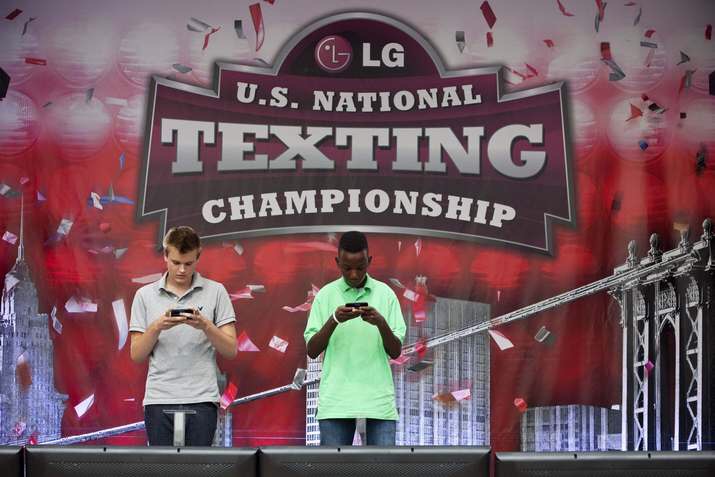
The growth of text talk has seen the rise of another phenomenon. That of the second text. The text that follows, moments later, containing an asterisk and a single word.

The *correction text

The sender has realised after hitting SEND that they have made a typo, or that predictive text… hasn’t.

Since when did we start communicating in a manner where, checking what we were saying after we had said it, was the norm?

Perhaps it is a reflection of the speed of our lives that we are so keen to press send, to move on, to get to the next thing that we just accept the need to be brief, to rush, the need for pace in everything. Taking our time seems unfashionable.

It has been said that as much as 90% of our communication is non verbal. Yet we have embraced the hurried text, the garbled few words typed whilst walking down the street; the hastily thrown response, punched out with a single thumb whilst holding on to the handle on the swaying bus; the abbreviated language, peppered with emoticons, which seeks to communicate fully to another human being.

Maybe we would do well to slow down here? To reflect on the emotion we are trying to convey. To stand in the shoes of the recipient, interpreting this stream of characters and letters without the advantage of seeing our faces, hearing the tone of our voice, seeing our smile…

Walk along any busy street these days and we are all nose deep in our phones, communicating constantly. I was told recently that more people in the world have access to a mobile phone than have access to a toilet. More communication than ever before. Always on. Global.

Yet perhaps the quality of that communication has suffered at the hands of the quantity?

Time perhaps to reflux?

*reflect?

LOL

what do you know and how do you know it?

knowing NLP filters truth map
Do you know what you know because you read it? Maybe in a text book, an academic study, a newspaper report, on-line in a blog or on social media?

Do you know what you know because someone told you it was true?

These are both verbal exchanges. Auditory. They are spoken, written, heard or read. Stories if you will. The exchange of knowledge through written or spoken communication. Someone else provides their knowing and we hear or read it and accept it as knowledge we will also hold to be true. It is, in a sense, second or third hand knowledge. Knowing we agree to add to our own knowing. Or not.

Our acceptance of this knowing involves an unseen process of convincing. Maybe I accept it because I trust the author. Maybe I trust the method by which their knowledge was acquired? Maybe I trust the method of conveying the knowledge to me?

Do you know what you know because that’s the widely accepted truth?

It’s the word of the society, culture, religion, community, organisation… the word of the system if you will. In a sense, story, tale, myth, evidence become fact, truth, reality through the weight or volume of saying it. If enough people speak something, it tends to absorb a validity or truth amongst others. This is how customs and culture are formed.

Maybe I am convinced of this knowing because I have heard it many times from different sources within the system? Maybe I accept it because doing so affirms my belonging to the group? Maybe the groups I belong to therefore narrow my ability to know?

Do you know what you know because you have assembled a truth, through collecting, filing, connecting new data, new knowing, into your own existing knowing?

I know for example that many people see images in their heads. I know this because I have read about it, I have heard about it in training sessions, I have experienced it through coaching many people who can vividly describe the videos or stills in their mind’s eye, I have personally seen pictures in my own head. I have experimented with this knowing to extend, broaden, widen and deepen it. I have purposefully sought out additional knowing, making sense, making patterns and making new neural connections to create an enriched personal knowing.

Maybe I readily accept this knowing? Convinced because it fits with other knowing I already have?

Maybe what I know already, informs what I seek to know? I am, in a sense, blind to new knowing because my existing knowledge guides and channels me to seek knowing which corroborates knowing I already have.

Do you know what you know because you have experienced it and therefore know it to be true? Do you know what you know because you have seen it? Seen it with your own eyes? Tasted it with your own tongue?

I have tried coriander, and I know I don’t like the taste. I have in a sense created my own personal knowing. Others may also have this knowing; but a hundred, or a thousand people not liking coriander doesn’t make coriander something nobody eats, a poisonous food. We are happy to create our own version of knowing, a personal truth.

In fact through all of these methods, we create our own version of truth, our own subset of knowing.

Whether our knowing comes from historic sages, from trusted texts, from reliable friends, from assembled self knowing, from tasted, smelled or observed personal experience, our knowing comes through a hidden process of filtering, selection and trust which makes our knowing personally true. Often this process makes others’ knowing false as a result. That’s how arguments, wars start.

We should be curious about our own personal process of knowing.

How we know what we know. Our hidden process of validation and acceptance. Our process of exploring knowing to expand and develop it. Learning, if you will. This matters, because if our personal process is flawed, broken in some way; if we are blind to certain pieces of knowing, closed to experiencing certain knowing or inexperienced in different ways of assembling knowing… then we are limited.

If we are limited, we are not fulfilling our human potential.

… and that’s worth knowing.

where has the magic gone?

#onthemoon metaphor meaning
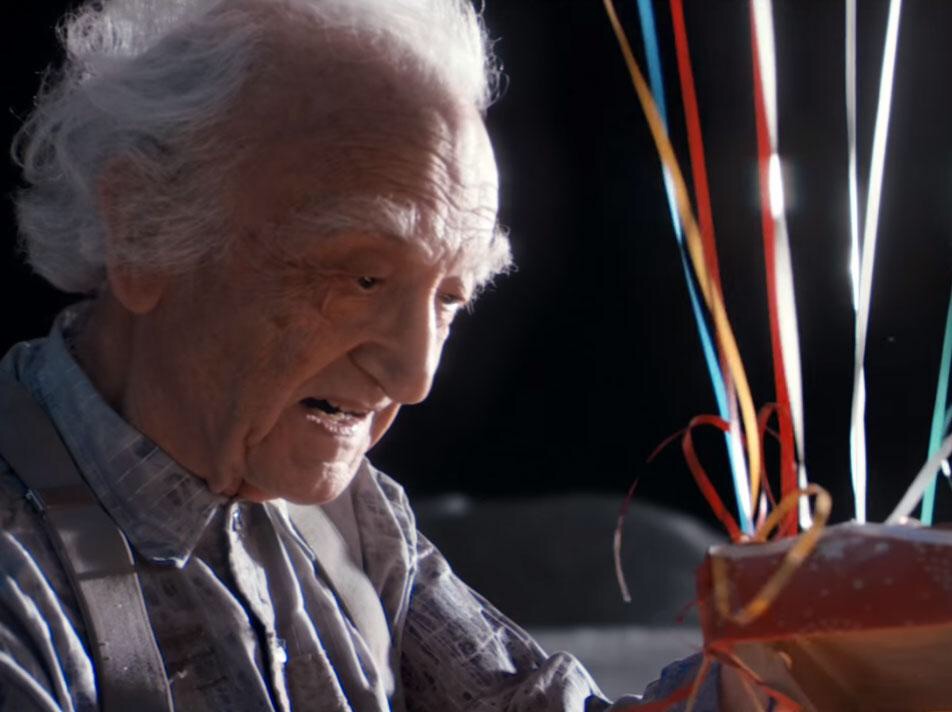
The John Lewis Christmas advert is out. The man on the moon. Its intent is to highlight the loneliness of many old people at Christmas and to champion the concept of giving.

But the scientists, the cynics, the ‘ne’er be happies’, the journalists are already criticising the story. In the Guardian the other day, an article entitled “Who is moon Hitler?” appeared. How can a girl have a telescope that magnifies the moon so well? What is a man doing on the moon in a shack? Is he a banished criminal? How can he breathe? Balloons could not carry a gift to the moon, don’t people understand the physics?…

I wonder, have we lost the magic of metaphor? Where have the dreams gone? Does humankind not draw inspiration from the improbable any more? How do we progress without imagination? Where on our journey did we lose that childhood gift?

I have been with a number of people who, on seeing the advert, have shed a tear. Of course they have. As I was discussing here the other day, meaning making is an inherent human need and this beautiful piece of cinematic art gives us meaning. It connects us to our emotions. It reminds us of family, of loved ones, of Christmas, of being alone and of loneliness. That creates meaning for us.

John Lewis is being commercial, naturally. The advert is not entirely altruistic. But its association with Age UK is intended to highlight the number of people, particularly old people, who will feel loneliness this Christmas. A worthy human cause.

Notwithstanding the commerciality, the charitable intent and the human story though. Surely, even in a commercial, money driven world, there is space in our humanity still for hope, for imagination, for a wonder delivered through the magic of metaphor? If not, then as human beings we have fallen far.

We should look to our children, where magic and wonder still thrive. Where story and metaphor is still rich and wondrous, filled with meaning. Where experimentation and imagination fuel learning and growth. As adults we would do well to reconnect with the child in us.

Otherwise, where has the magic gone?

making sense or making meaning?

making meaning making sense
Is there a difference for you between making sense of something and making meaning?

For me, making sense is largely, though not completely, a cognitive process. It’s one that facilitates understanding. It is how I comprehend things in the world around me.

So, if I look at the picture above, I might deduce that this is a teddy bear, that this teddy bear looks soft. He is brown. I know that teddy bears are toys, that often children have them. I might make sense of this teddy bear as a child’s teddy bear. A bear that has been posed to cover his eyes. Equally I might understand that teddy bears can be adult gifts to reflect tenderness, affection, love. I might be curious about the teddy bear’s size, because I know bears come in many sizes, and without background in the picture to contextualise and offer perspective I have to surmise whether it is small or large.

Making sense in this way is how we exchange and gather knowledge about our world, how things work, how to use them, their purpose.

Meaning making and seeking meaning however are inherently human processes at the heart of our humanity. Making meaning facilitates significance. It bonds us to our purpose and sense of self and creates a richer, deeper connection than simply understanding, or making sense. It highlights patterns to aid with new learning, new connections and systemic thinking. It stirs our emotions. It connects us to our experience, our memories, our values, our personal story. In short, it makes us human.

So, for me, the bear picture might remind me of my own teddy bears from my childhood. I might connect to the memories of my own children and their lives now as young adults, way beyond the teddy bear years. I might notice the teddy bear makes me sad and I might recall other times I have been sad. It might equally remind me of happy times. It might remind me that I too sometimes hide. Or that I like a hug. It may bring back memories of parents, of childhood games, of key events in my human story.

In this way meaning making is important. It connects our world experiences, our interactions to people, to activities and to things with our own sense of self. It connects us to our memories, and to our personal story through a deeper somatic awareness. It is more impactful, but also more useful, in that it enables us to form both new and tangential connections, which offer new learning, new meaning and new possible futures.

I can be taught to understand the world around me, to make sense of it, but making meaning of it is a very personal experience.

Maybe it’s the same for you?

we walk differently in the rain

state physiology rain
It’s drizzling.

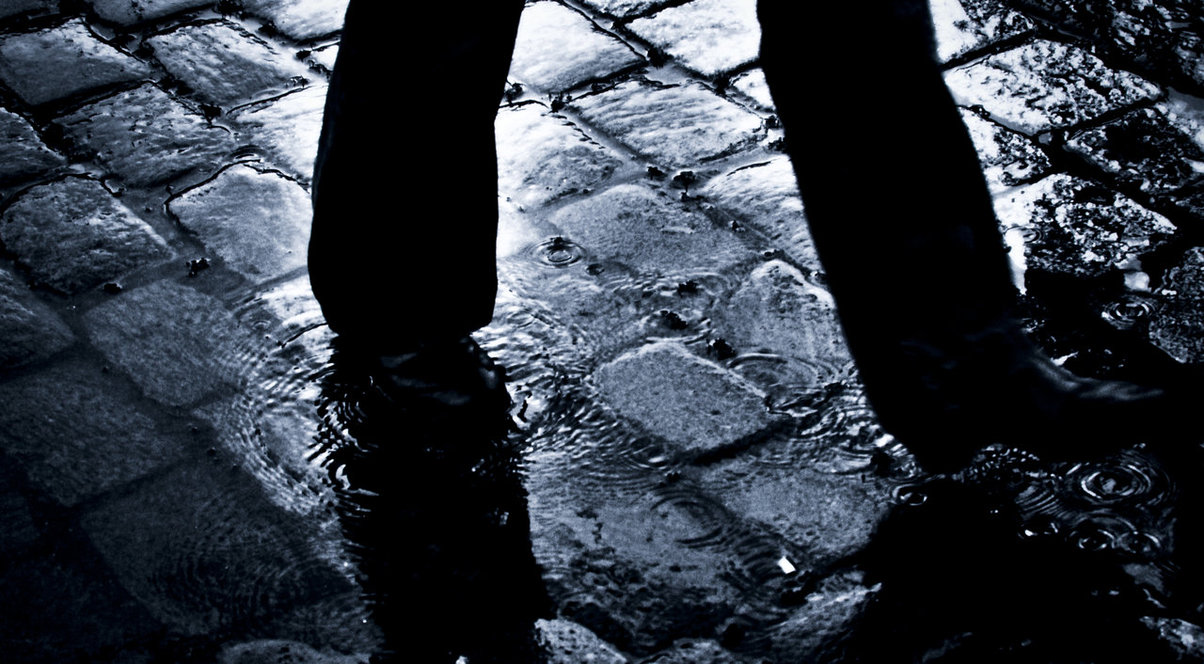
Earlier I walked from Aldgate to Tower Hill tube in the drizzle. I had an umbrella, but noticed the way I was walking was different to the way I might have walked in the sunshine.

My eyes were turned down, seeking slip hazards, puddles, potential splash zones. My shoulders were a little hunched and my elbows tucked in, a sort of self imposed protection posture, to keep the wind and rain out. I was partially hidden under my umbrella, peeking out on occasion to avoid human collisions in busy streets. My pace was more deliberate, seeking to minimise time in the rain.

I wonder to what extent we do this when our emotional and psychological state reflects drizzly? When we are feeling a little weather worn, when we are feeling the need to protect ourselves, when we are aware of potential external ‘attacks’ on our safety and well-being? Do we also shrink a little in posture, strike out with only occasional awareness of those around us, become more sensitive to personal trip hazards, take cover from the precipitation?

How consciously aware are we of our body language, its connection to our state?

How could we learn from paying more attention and being curious?

the problem with the junior doctor debate…

prejudice map truth NLP
I listened this morning on the radio to a debate about the proposed changes to junior doctors contracts and pay.

First the minister, Jeremy Hunt, spoke about the intention, what was proposed and why it was needed. Then a junior doctor spoke about concerns, what they perceive is really going on and what was needed.

I don’t know the truth. I don’t know much about the health service. I don’t know what is reality today. I don’t know what will address any concerns and make the future better. I don’t know who is right, who is wrong or indeed if either are.

Yet I noticed my own prejudice appearing. Firstly, politicians aren’t to be trusted, are they? Whereas surely I can trust a doctor? Then, the doctor described how they would lose a third of their income, yet weren’t currently working longer hours than legislation required … “Really? Aren’t you exaggerating for effect?” I thought. Then after each quoted statistics about weekend deaths, different of course, I noticed my mistrust of statistics emerging – “you can make any number say whatever you want”. There was talk of strike action, which fired up my dislike of the concept of unions, who purport to protect workers yet often operate out of lavish premises funded by their members subsidies. And so it continued…

I can’t get to the truth.

Not just because each party is portraying their version of the truth in the media to their own ends, but because, even if that weren’t so, my own prejudice prevents me from seeing and knowing what is. From being clean. From knowing the truth.

How often do we blind ourselves to truth? Whether that be unconscious bias in diversity, judgement based on looks, preconceived boxes we put people, roles, attitudes into? Beliefs about the world which make our map of its workings uniquely distorted to us?

I don’t know what the right thing to do is in the junior doctor debate and I can’t influence an outcome. But I now know more about how much I prevent myself from accessing that awareness, accessing a truth.

I can do something about that.

crow or duck?

metaphor birds
How might your stance, your way of being, be reflected in the nature of a bird?

Might you strut your stuff, chest out, proudly scampering across the ground like a little wagtail?

Might you be territorial? Red chested and willing to defend your patch, but still a firm favourite in the organisational garden, like a robin?

Might you play small, flit from undergrowth to undergrowth? Be hard to spot, whilst energetically going about your business, like a wren?

Might you majestically glide through the calm waters of life, proud, erect, showing no outward effort or emotion, whilst, should you and yours be threatened, you can come out fighting, with power and presence, like a swan?

Might you make a lot of noise, heard all around, even though you are high in the treetops; you get yourself noticed by the sound of your voice and your tendency to flock with birds of a feather, like a jackdaw?

Might you hide in the crowd? Swooping and swaying, ducking and diving with the group think; responding to the whims and movements of the flock, like a starling?

Might you be opportunistic? Looking for the chance meal, the roadside pickings of praise and being noticed? Surviving by the seat of your pants, scavenging for good experiences, successes and achievements, like a magpie?

Might you nurture those needing to grow? Taking the pain of the icy winds of change to keep the chick safe from cold and from predators, like a king penguin?

There are many birds. Each with its place. Each with a unique personality, but each playing its part in a rich ecosystem.

do you see yourself in your thoughts?

tranquil thoughts
Our lives are a reflection of our thoughts.

Nurture calm, tranquil, compassionate thoughts for yourself and others, and your life will reflect the peace that comes with those thoughts.

Draw your attention instead to the busy circumstances of a modern world, with all its urgency and expectation, then you can be drawn into a whirlpool of haste, a cacophony of noise, a blur of striving from which peace is hard to find.

Think about the life you want. Live the life you think.