is it really all in the numbers?

image

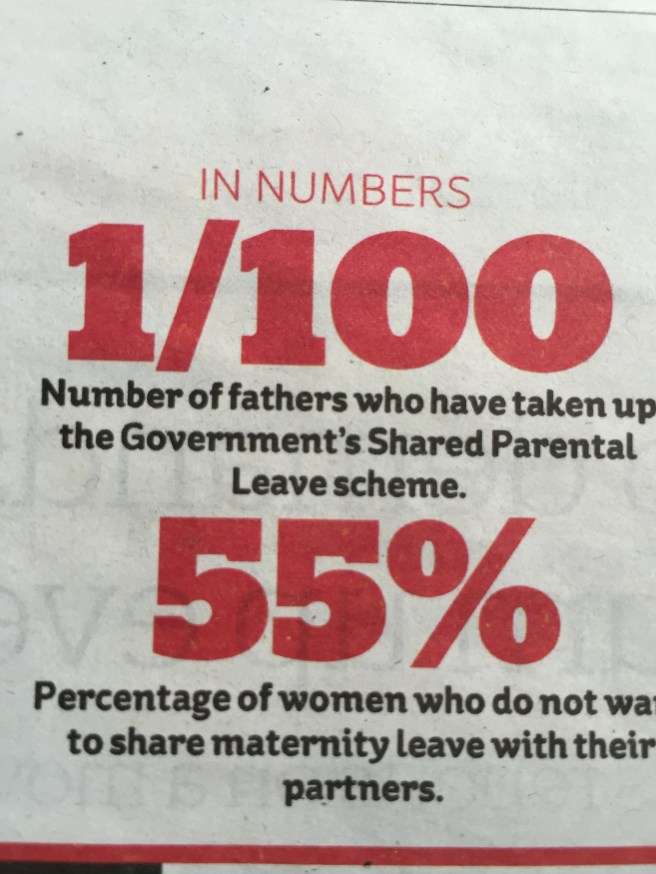
There seems a relatively new phenomena in our media to describe things through the medium of numbers. Newspaper articles are written around small colour panels, gleefully pronouncing ‘In numbers…’; these are summaries to draw in those who seemingly cannot be bothered to read and understand the depth of the article. It’s as if by providing a statistic, plucked from the vast expanse of a complicated subject, we can understand. Examples in the newspaper today include…

422 million people have diabetes;
1 in 5 people say social media makes them depressed;
124 refugees were taken to Turkey from Lesbos yesterday;

It mirrors the growth in need to know small snippets of many people’s lives in social media – glimpses on Facebook, 144 characters on Twitter. We are time poor, so we’re told, and so we need to pack a lot in. Scan rather then delve. Skim rather than comprehend.

The world seems to have developed into a place of ‘know a little, about a lot’.

This crosses over into what we know about ourselves.  Small amounts of knowledge used as labels to describe extraordinarily complex unique human beings. “I’m a completer finisher”, “my type is INTP”,  “I’m a big picture person”…

Let’s start reading the entire article.  Let’s start taking a deep dive into who we are.  Let’s be curious about other people and their glorious uniqueness…

You are not just a number.


days are lost lamenting over lost days

image

Each indecision brings its own delays and days are lost lamenting over lost days.
Are you in earnest?
Seize this very minute; whatever you can do or dream you can do, begin it.
For boldness has magic, power and genius in it.
Begin it now.

Johann Wolfgang von Goethe

Illustrator: Tim Lahan

don’t be disappointed but…

image

I received an email today. I was one of a number of recipients. It started…

“Don’t be disappointed, frustrated or any other negative emotion please, but…”

Until I read that, I wasn’t.

Upon reading it though, I am well prepared to take on any number of negative emotions, even before I get to understand what I am going to have to get emotional about.

My state, my intent has been pre-programmed by the writer, if you will.

Ironic really.


when losing is actually winning

noeyecontact

The other day I crossed the road, joining the opposite footpath at an elbow. A ninety degree corner in the road.

Coming towards me was a man.
He made a beeline for the apex of the corner.
That was my trajectory too.
We were on a collision course.
I looked at him, trying to read what his decision might be.
We can work this out, together, I urged.
No obvious signals.
No eye contact.
He stared steadfastly at the corner.
I looked straight at him.
Engage me, I said with my eyes.
Let’s work this through.
Nothing
A second had passed.
He stared at the corner.
No eye contact.
Collision seemed imminent.
Inevitable.
I broke my stride.
Created a gap in our flight paths.
He pushed on through.
I passed safely a pace behind him at the apex.
Disaster averted.
Still no eye contact.
No recognition of my existence.

Strange how eye contact allows the other person in. Denying it seems somehow to keep us safe. Protected. No need to feel any responsibility. Any connection. Any trust. Any shame. Any emotion at all.

The man got the corner.

I got more.

the in tray blanket

comfort_blanket

In our business, when claiming expenses, we have to post receipts to the relevant finance department. Their office is in a building over the road from mine, so today I wandered over to drop off some receipts in person.

Meanwhile a form with its monochrome content of figures and descriptions, constituting my expense claim, was coursing its way through the invisible veins of our finance system, pausing in a workflow for the arrival of its life affirming sister receipts. Proof of its very right to exist. Its stamp of validity.

I arrived in the office to discover there was an in-tray, on top of  filing cabinet.  A plastic in-tray with a laminated sign, propped up to indicate its purpose in life. ‘Expenses receipts’

I dropped in my receipts, stapled to a copy of my claim form.

I paused.  There is something strangely reassuring about an in-tray.

I’m old enough to remember in-trays and out-trays.  The satisfaction of processing work to empty the in-tray and move it to the out-tray.  Work arriving, often in envelopes, departed in much the same way,dropping into the internal mail system to wend its way to the next person in the work chain, safely enshrined in a manilla envelope, carefully addressed to the next recipient.  As for the pending tray – what the … was that all about?!

In our modern world, much has improved. Much is to be embraced.

This morning though, my brief dalliance with an old friend, the in-tray, led me to reminisce.

For all the joy of the new, we still enjoy hanging on to the familiar sometimes.

We do this in most aspects of our lives.  Fond throw backs to times gone by. Favourites from the past. Comfort blankets that all is well with the world.

This morning, a humble in-tray was my comfort blanket somehow.

Photo: Elky-Lou on Deviant Art


shower or bath today?


How do we choose?

Mostly, we are one or the other. Bath or shower. At some past point we chose. Selected a preference. Now we are loyal, typically. We are in the bath camp or the shower camp. A few of us may be ambidextrous, fickle, users or abusers. Employing both for different needs. Both is itself a choice.

But why?

Is our choice down to practicalities or pampering? Speed or relaxation? Morning or evening? Felt sensations or logical economies? Time to be, or time to do? Purpose or pleasure? Logistics or preference? Conscious or unconscious? Habit or variety? Selfish or selfless?

Can we learn about our other choices from something so basic, so routine?

Maybe it’s time to clean up our choice making?


work or play?

image

I must finish my work before I can play

or

I can play anytime I like

Which of these is more you?

Often when I ask a room of people to make their choice, the room divides.

Those choosing the former, talk of not being able to enjoy their relaxation or play until the work is done. The list of jobs needs to be ticked off. Completing the work is in itself enjoyable. The play is a reward for completing the work. They sometimes mention responsibility or duty.

Those choosing the latter, talk of performing better when they have had down time, play or relaxation. They speak of choice. They describe making work into play, to increase their enjoyment.

Occasionally someone stands between the two, recognising a different stance in different circumstances, such as work or home.

I’ve never experienced someone not knowing.

I don’t recall the lesson in school where we learned this? I don’t recall the conversation with mum or dad, where they explained the pros and cons or the virtues of each approach?

It seems we just know. Somehow in life, we have learned through experience. That learning is often so well ingrained we don’t even see a possible alternative. It just is.

There are many opposites like this, not just work and play, where we have a position, a life stance. Many, I suspect, we have never been consciously taught which is best, we have just absorbed this into our existence, our way of being.

Weird eh? Enabling sometimes, disabling at other times. Strange that such life impacting choices seem invisible, out of conscious awareness. They just are.

flat out


image

The picture on this post appears to show a path. The grass has been mown and so I can deduce it is a path. It seems to lead between two banks, heading into the countryside, and seems to be relatively flat. It could perhaps be anywhere?

However, if I walk maybe fifteen paces along the path and turn around, then this is the picture I see…

image

The path now seems steep not flat, as in a few paces I have reached the height of the roof of a rather splendid house. I now have a context and can place the path in the garden of a fine country house. There are other people around.

Changing perspective often reveals something previously hidden. It challenges assumptions made from the original place. It provides context, information, awareness.

You can do this by standing in someone else’s shoes; seeing things from their point of view.

You can also do this for yourself. Notice your feelings and thinking about a present situation, then move to look at the place where you had that thinking and felt those feelings.

See what changes from this new perspective.


how foolish we feel

image

This morning I tricked my wife.

Her car has been away for a repair and is due back this evening. At 7:15 this morning I woke her to tell her the car had just pulled up outside. She cursed and hauled herself to the window to peep out. She scanned left and right. No car. The smiling husband proclaims, “April Fool!”

It felt oddly satisfying to have duped her. I was pleased with myself. I remember saying to myself, be alert, don’t get caught out, you’ve won.

Only an hour later, my wife tapped on the bathroom door. I opened it, half dried from my shower. She was holding the phone. “It’s your Dad,” she said. “He wants to know where you put the spare kettle.” (Two weeks ago we thought his kettle had broken and bought a replacement, only to discover it was still working). I grabbed the phone. “Hi,” I said, “Dad? Dad?”

Suddenly it dawned. I too had been had. April Fool.

The feelings we experience when we have been clever, or won, or outsmarted someone, are quite different to those we feel when we are caught out, tricked, beaten or made to feel small.

We would do well to recall how the other person might feel in all our interactions with each other. Not just the fun ones on April 1st.

even freedom needs rules


I stumbled upon a small graveyard today in Oxfordshire. It was squeezed between some houses and seemed somewhat out of place.

A pair of wooden gates were invitingly ajar, snug beneath a small lychgate.

Wandering in, I discovered it was a war cemetery, with headstones for fallen RAF crew from the Second World War. Many were 18,19,20 when they lost their barely begun lives.

Under the lychgate was a laminated notice detailing the ‘rules’ of the cemetery. It spanned three portrait A4 pages.

Gazing upon it, some of these rules intrigued me…

“Toys may only be left at the graveside for a period of 12 months after burial.”

“Silk flowers, appropriate to the season, may be used, but must be removed when they become faded or bedraggled.”

“Nicknames or pet names may be used in addition to baptismal name, but only if placed in inverted commas.”

Rules.

We like rules.

Our lives, our society, our organisations are riddled with them.

It seems even in death, when you have given up so much, rules are to be obeyed.

Ironic since these brave young men lost their lives in the name of freedom.