What is your journey?

journey
What is your life journey?

Is it a saunter along a meandering woodland path? Is it a route march along a Roman road? Is it an invigorating swim across an extensive lake? Is it a breathtaking parachute descent from 30,000 feet? Is it a dizzying playground roundabout spin? Is it a race down the motorway? Is it a steady climb up a long spiral staircase? Is it a lazy river float? Is it an absail down a deep rugged ravine? Is it an underground exploration? Is it the soaring glide of an eagle over mountains? Is it a scramble down a rough rocky track? Is it a sightseeing bus ride through an unfamiliar city? Is it a run through the surf on a sunset beach? Is it a speeding train ride through a blurring countryside? Is it a tightrope walk over a cavernous gorge? Is it a deep dive from a towering cliff top into a deep green sea? Is it a horseback gallop through a never ending desert? Is it a precarious rope bridge crossing over a river torrent?

What is your life journey?

if there were human being shops…

change me
Self awareness offers choice.

Once the choice to be different is apparent to me, visible, possible; Once I know what I want, I’m ready to move. Impatient. I can see the sweeties on the shelf and I want them … now!

At moments of deep realisation for my coaching clients, I often get asked in those sessions where the sweeties become apparent, a question a bit like this one … “So how do I change that?”

This question intrigues me.

Of course, it presupposes change is possible and that’s great in a coaching context; we want our clients to come keen to achieve their goals. But the presupposed simplicity implied within the question is another matter.

Often the new awareness pertains to a way of being that we have honed for many years; It is well practiced, in the muscle, part of how we are.  The idea we can shift to a new model, a new way of being through one or two simple steps is fascinating.

We all possess many ‘things’ in this ‘modern’ world. If they stop functioning to our needs we fix them, or replace them. It is as if we somehow seek to apply the laws of our materialistic consumerist ‘thing’ world to our very humanity. I’m ready to change me, where do I go, who has the upgrade part?

If my car stops working, I take it to a dealer or garage and say please fix this. Generally that works. In part, that’s because the car is one of many identical models. It has a specification. The mechanics are trained and no doubt have detailed manuals describing how every part works, along with the knowledge and experience required to breathe life back into those parts that don’t.

If I have a two slice toaster and more family members are eating together I can upgrade to a four slice model. No matter how long I have lived with the two slice, my needs have changed, so I can just change that aspect of my life. An hour down the shops, five minutes on line, change made, life easier.

But, here’s the thing…
human beings are inordinately more complicated and each one is stunningly and beautifully unique.

No manuals. No upgrade models down the shops.

To hope that all of your learning, life experience and behavioural pattern making since birth can somehow be re-modelled in a few simple steps … a bit like reprogramming the central heating timer … is curious.

And yet we do. It’s almost as if we believe we’ve just missed out on a chapter in the book ‘How to be a happy human being’. Or perhaps we misinterpreted some instruction along the living highway which explained how we were supposed to be? Or maybe that we think someone else messed it up for us, but now we know that, we can just pull the tiller and steer the right course? Whatever our thinking about how we came to be like this, we seem to think this ‘expert’ in front of us, this ‘human mechanic’, this ‘coach’ can somehow put us right.

Changing ourselves is hard work.  Possible.  The prizes can be enormous. Life changing. But it’s always hard work.

why do we talk to ourselves?

self talk
I poured my muesli on the floor this morning.

The clipped corner of the 1kg bag hadn’t formed into its spout, its usual slippery slide – I like to imagine the cereal screaming “Wheeee!” as it enjoys the excitement of freedom. My eagerly awaiting bowl was teetering right on the edge of the kitchen worktop. I was distracted for a moment as my arm lifted the bag for the freeing release of oats and dried fruits…

Some muesli found the correct home, but some cascaded towards my feet, seeking more freedom than I was intending to offer.

“Oh you idiot” I said aloud.

Now I am eating the said breakfast, having cleared away the mess, I find myself wondering … why?

Why did I feel the need to comment aloud on my performance, my mistake? The comment drew attention from my wife, so my inadequate bag handling, pouring and spatial awareness were now more widely known.

We do that though, don’t we? Comment on ourselves.

Sometimes externally, out loud, like me this morning with my cereal. Often, internally, under our breath, inside our heads.

“You twit!”; “You’ve done it again haven’t you?”; “Why do you do that?”; “If only I …”; “Failed again”(or some ruder version); “Why me?”…

Sometimes there might be a positive “Yes!” but more often it’s a way of beating ourselves up, judging, criticising, highlighting our inadequacy or shortcoming, drawing our attention to our own pattern of being.

Why do we do that?

Notice your patterns. Are there particular ways you do this to yourself? Particular phrases? Particular situations?

There is a deeper, personal meaning. Maybe we are drawing our attention to something we need? Some unnoticed, unfulfilled part? Maybe we are seeking validation? Maybe we are noticing again something we have become familiar with, something that served us once, but now is just there, dragged around with us like a manacled weight?

Whatever the deeper reason, in that moment, your unconscious offered it to you.

Worth listening. Worth exploring.

the eyes to the right have it

NLP eye movement
Since my NLP training I have been fascinated by eye movements.

I have noticed some people in particular search with their eyes for memories, associations or for connections when you ask them questions. I worked with such a client recently and the tiny eye movements were predictable … left, left, left, right, right, right, up, down. Then, left, left, left, right, right, right, up, down. A repeating pattern, as if searching for something.

The other day I read an article on the BBC website about sleep and REM research. The study has followed the neurological activity of sleeping Epilepsy patients for four years.

The lead doctor, Dr Nir, describes how when the patients were awake and shown a picture, especially one associated with a memory, the researchers saw a particular pattern of brain activity. “The activity of these neurons doesn’t reflect image processing. It’s more about signalling to the brain about a refresh of the mental imagery and the associations or related concepts.” says the report.
“…about 0.3 seconds after the picture appears, these neurons burst – they become vigorously active…”

It seems the same brain activity occurs during REM as when you simply close your eyes and imagine a picture or think of related concepts. Almost as if the brain is using the eye movements to aid filing memories or searching for existing memories or concepts with which to associate the new ones.

I am fascinated by the possibility that we do this when fully awake too. When asked a question or asked to think we search using our eyes for stored associations, memories and understanding with which to answer. In some people these eye movements are more noticeable, as with some of my clients.

NLP refers to these as eye accessing cues.

Neuroscience presents the most exciting possibilities for new discovery about the way we work and, I for one, look forward to the next ten years and discovering more.

Meanwhile, be curious about eye movements. Those little flicks left and right have significance far beyond out current awareness.


the search for normal

normal or unique
“Is that normal?”

In my coaching work, that’s a phrase frequently added by my clients…

“I don’t see it like that. Is that normal?”
“I can feel it churning in my tummy. Is that normal?”
“I just don’t know what I want. Is that normal?”
“It’s like I have a conversation in my head. Is that normal?”
even, “If we were to meet every three weeks maybe? I don’t know, is that normal?”

The search for affirmation that we are in some way ‘normal’ seems to be intrinsically inside us.

Society reinforces this of course. You will know this if your ethnicity is different from the majority. If you have a disability. If your sexuality, or the way you dress, is in some way not the society imagined ‘norm’ then your belonging can be challenged. You can be ‘told’ directly or indirectly that you don’t ‘fit’. For some of course this drives an expressed desire to be ‘different’, to stand out, to be individual.

There seems to be a tension between individual and the crowd or majority; between unique and the same, individual and similar; a tension between who we are and the expectations of everyone else.

When one of my clients says something like “I’m just not that driven. Is that normal?”

I wonder if the first half of that proclamation is a statement of self. A statement of uniqueness. A statement of what is. A statement of who we are and how we work. A statement of truth.

I wonder if the second half is just a blanket for belonging. A sense that by showing who I am, I might be judged, rejected, cast out.

Of course, in reality we are all unique. Even those who band together under the cloak of ‘the normal’ are, in truth, unique individuals. Hiding their true uniqueness for fear of rejection.

Normal is a cloak though.

Unique IS normal.

Shine your light. Step into the sunshine. Be yourself. Celebrate your difference. For it is through your difference that your contribution to the world will be manifest.

where do you find yourself?

find yourself
I don’t mean now at this minute… in the office, walking to a meeting, having a coffee, in the bath… I don’t mean physically where are you at this precise moment.

I mean, where do you go, to find yourself?

Where do you re-group, resource yourself, check in? Where do you go to validate yourself? Where do you go to make sense and meaning from your interaction with the world, with life? Where do you check for congruence with you?

Maybe you meditate, or do yoga? Maybe you listen to music? Maybe you walk? Maybe you run? Maybe you sit alone and reflect quietly looking out of the window?

Maybe you don’t do something or go anywhere?

Maybe instead it’s an entirely internal process? Maybe you step outside of yourself and look – in your mind’s eye as it were? Maybe you go inside and connect with a feeling? Listen to your heart? Check out your gut feel? Maybe you have a known sense of you, a deep sense of self, a sense of your soul? Maybe you calibrate against that?

And what do you get from doing whatever you do?

Is it a way to preserve yourself? A way to survive? Is it a way to regroup? Is it about balance? Is it about correcting your course? Is it to find meaning? Is it to make sense? Is it so you know you haven’t lost yourself? Is it about resourcing yourself for the next step? Is it just a warm safe place? Maybe you just want to be sure of you?

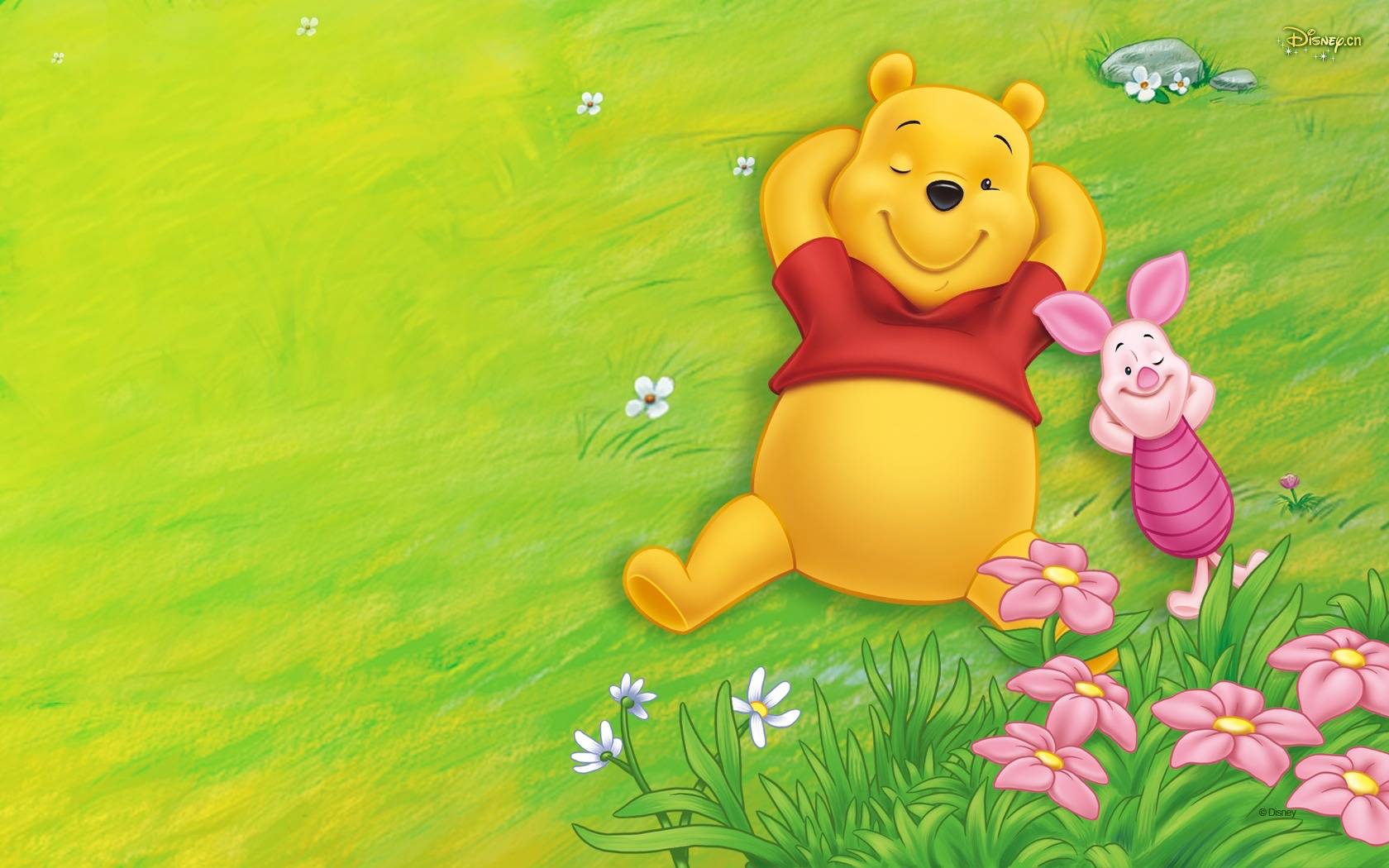
 “Piglet sidled up to Pooh from behind.
“Pooh!” he whispered.
“Yes, Piglet?”
“Nothing,” said Piglet, taking Pooh’s paw. “I just wanted to be sure of you.”

Be your own Piglet.
Be sure of your Pooh.

are you busy? too busy to read this?

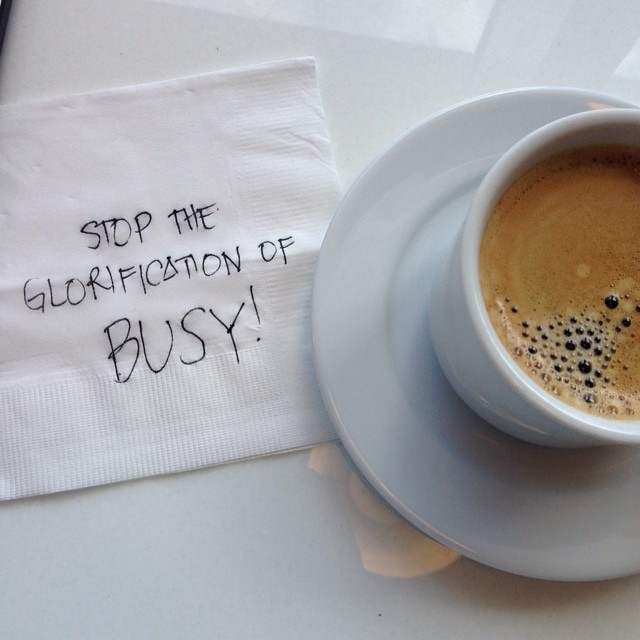
stop the glorification of busy
Are you busy? Too busy to read this? If so, maybe you should read it…

In recent months I have noticed the conversation starter at the coffee machine at work follows a familiar path, when you meet someone you haven’t seen in a while, whoever it may be. Maybe you recognise it? Or maybe you instigate it?

It goes something like this …
“Hi long time no see. What are you busy working on at the moment?”
or
“How are you?” Back comes the reply, “Really busy. You?”
or
“Hello, not seen you in a while.” “No things have been really busy…”

If you’re really busy you might want to stop reading this now.

If you live to an average life expectancy you have a total of around 620,000 hours. Given that we sleep for around a third of that, you have about 410,000 usable hours.

Time is a strange concept though isn’t it? I mean, what is an hour?

I often have the following debate with my wife when the clocks change – she’ll say something like “We gain an hour this week-end” and I’ll respond, “No we don’t, it’s just that what we call it has changed. Six o’clock is now known as five o’clock.” The Earth, Moon and Sun still move in the same harmonious rhythm. We still have the same amount of time in our lives. What we call the time is just that, it’s what we call it.

And we can call ourselves busy. Too busy to spend a few minutes on someone or something that is really important to us.

What matters most is how you use your time; those precious hours that are in short supply.

When was the last time you simply did something you love?
The last time you were kind to yourself?
The last time you carried out a random act of kindness?
The last time you stopped and really noticed another human being?
The last time you checked in with yourself, properly?
The last time you gave someone the gift of your full attention?

Next time you meet someone at the coffee machine, if the conversation starts down the ‘busy’ route, ask them a great coaching question and really listen to their response.
Maybe something like …
“… and how would you like it to be?”
or
“… and if you weren’t busy, what would you be?”

or maybe just invite them to contemplate what they would be doing right now if they were doing something they love.

And now you’ve read this … go and take five minutes for yourself.

we are merely part of the ceaseless becoming of the universe…

illuminate your self
I watched a BBC programme the other day on the ancient world and the philosophies of Buddha, Socrates and Confucius. This episode followed the life and ground breaking thinking of Buddha.

One moment stayed with me.

A part of Buddhist philosophy says … “We are merely a part of the ceaseless becoming of the universe”.

What an interesting and beautiful idea.

The programme showed that our sense of self, the notion of “I” does not begin with birth. We exist in the womb. We exist in the genes of our parents, and they in the genes of theirs. Our ancestors literally make us. Our version of “I” is constantly evolving, influenced by culture, society, experience. In this way the self is merely an imagined entity, manifested from your journey. It existed before you were born, evolves through your living and doubtless continues in your children and the legacy you leave in the universe.

I am not religious but I am attracted to this philosophy.

As the programme hypothesised – Buddha was espousing cognitive psychology twenty five centuries before it emerged. But for me also this connects to another interest of mine – the systemic constellation – the notion of the significance of the system and our relationship to other parts in that system.

Buddhism offers wisdom and compassion as a way forward. Not wisdom in the conventional cognitive, intellectual, knowledge sense but in the old Sanskrit sense of awareness, discernment, insight and consciousness.

That with compassion for yourself and others makes sense to me.

So… maybe bringing into awareness, into consciousness, with insight and compassion your sense of who you are, is a good step forward?

… maybe bringing into awareness your relationship to the rest of the universal system you belong to, is a good step forward?

… maybe having an emerging sense of why you’re here and what your legacy to the universe will be, is a good step forward?

Be your own lamp.
Illuminate yourself.

does this make sense to you?

senses NLP
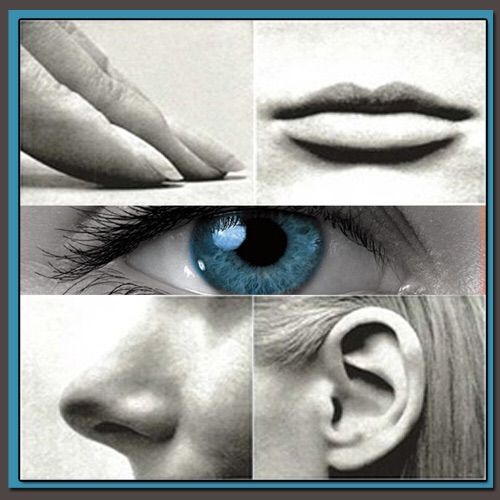
We experience life through our senses. We see, hear, feel, smell and taste our experiences.

Our brains code them in this way. Our memories are accessible through our senses and, when recalled, we experience, represent or rather ‘re-present’ them through our senses.

If you recall now something that happened to you last week, you will be doing so either by seeing the situation in your mind’s eye, or by re-feeling how you felt then, or by hearing the conversation again, maybe even smelling something…

This process works both ways. We ‘think’ of a memory and re-present it through our senses. Or, we have a sensory experience today and that triggers another memory where the sensory experience was similar. Have you ever had the experience of a smell taking you back to a childhood memory?

This process also works for the future – imagined future experiences are presented to us through our senses. We can imagine our holiday or that difficult conversation we have next week and we can create images, feelings, internal dialogue predicting that future experience.

We all have favourite senses to use for this. I wrote about this some weeks ago when I asked How do you think? and hypothesised that without our senses we have no experience.

We often have a primary sense, for many that is visual, but might be auditory or feeling, backed up by one or two other senses that create our experience. Some senses are less available to us in this process.

Our language reveals our preference. It shows on the outside, the way we are coding our experience on the inside.

“I hear what you say” is different to “I see what you mean”.

There are many idioms in English that we use to signal our sensory preferences for coding our own experience. Often we’re not consciously aware, nor are those around us. But it can be useful to know.

Do phrases such as these appear in the way you describe things? “Let’s get a different perspective” or “Let’s take a closer look at this”? These might be examples of a visual storage system. Whereas, “That doesn’t sound right to me”, “This really speaks to me” or “Once we get into the rhythm of the meeting” might suggest an auditory preference. Those who work with feeling, or kinaesthetically, might say “I need to take the pressure off” or “I’m aching to get on with this”…

This will be a recurring theme on this blog in coming weeks, so be curious about your practice and about what makes sense to you.