priority boarding

Illuminateddandelion.com

Waiting to board an aircraft. Sitting at the gate and priority boarding has been called. First class, business class and ‘members’.

Much of our human world prioritises wealth. Money buys you privilege.

The chosen ones look at us as we sit waiting to be called. We, the less fortunate, gaze on as the priority few pass through.

We judge them. They judge us. The world over.

Whereas goodness, kindness, compassion. These things curry no favour, yet are worth more perhaps?

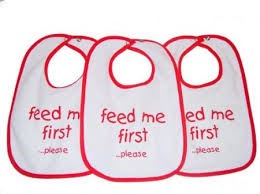
time to print a new set?

image

For the last few days I have been working south of the river in London, returning north of the Thames to catch a train home. The journey is typically about 35 minutes on a bus.

On the return journey in the evening, twice I have been inspired to get off the bus and walk, because the bus has been stationary for some time; gridlocked. I have walked the bus route passing buses. Buses going to my destination. Four yesterday. Walking trumps bus.

My train has been delayed travelling home on one day. Over an hour’s delay. So much so, that I possibly could have ridden a bike home faster.

Now I am on a train and, whilst I have a seat, hundreds are standing. Standing still, to travel tens of miles towards their homes. Standing and yet moving at maybe 90mph.

It seems in our ‘modern’, ‘advanced’ world that much is turning upside down. I wonder what else will do so over the next decade? Not just travel… but what we do, who we care for, what we pay attention to, who we communicate with and how, what we appreciate, what society is, what community is, what rewards us, where we find joy, where we find peace…

Maybe a new set of top trump cards is called for?

where does it all lead?

image

The early morning sky today reveals the past. Journeys taken by airplanes, one after another, thrusting their way to a common destination. The trails remain, for a while, then dissipate, lost into the passage of time.

I wonder if we have trails too? Human trails of being? Invisible to others, often invisible to us. Trails which reflect a path we have journeyed; a choice we made, a decision we took, a thought we encountered.

Maybe the paths, like airplane trails, fade quickly? So quickly we don’t see them overlaid, repeated. We lose sight of the flight paths previously flown. The recurring patterns of thought, behaviour, choice… The fact that they might follow a similar route, that they might point to a common destination, is lost to us. But if they did linger, maybe we could see their purpose? Their intent? Their focus?

Maybe then we would know what silent beacon calls them?

These human trails of being.


we generalise our truth and so make it our truth

Heavy downpour

It always rains at the weekend.

Generalisation.

Of course once we think it, we notice when it does rain, rather than when it doesn’t -thereby reinforcing our thinking. The term ‘always’ might suggest it is never not raining at the weekend. A veritable deluge on Saturday and Sunday, without fail, for a full twenty four hours. Not true of course.

We do this all the time though in our language…
We say “nobody understands me…” – Really, ‘nobody’?
Or we say “everyone’s against me…” – Really, ‘everyone’?
Or we say “they’re all the same…” – Really, ‘all’? And just who are ‘they’?

This occurs not only in our language, but also in our interpretation of action.

For example, if someone you know walks by without saying ‘hello’, what’s your reaction? You might think that they ignored you because you might have upset them? Or maybe they don’t like you really? This might make you feel guilty, hurt or rejected. So you might be tempted not to speak first, the next time you meet; to be more cautious. This could increase the bad feeling or uncertainty between you both and generate more feelings of guilt or rejection. If this occurred several times with several people you know, you might eventually generalise that you are at fault, maybe even that you are an unlikeable person. If this happened with enough people, you might even start to socially withdraw. But how well did you interpret the situation in the first place?

In essence, problems aren’t caused by situations themselves but by how we interpret them in our thoughts. These interpretations have an impact on our feelings, resultant actions and then subsequent thoughts.

We generalise our truth and in doing so, make it our truth.

Image by © Anthony Redpath/Corbis

we often say…

we often say

Looking across valleys. Looking out to sea. Looking at a sunset or a sunrise. Looking at mountain ranges. Looking from on high, across a landscape, we often use the phrase…

“What a beautiful view”.

What is it about large spaces, wide angled perspectives, panoramas that draws us to admire the view?

And why, so often in our lives, do we get close up? Rather than stepping back and seeing the context, the flow, the connections, the breadth, the beauty of the whole. Instead, we focus on a detail. We get transfixed by one aspect. We lose sight of the bigger picture, literally.


the misnomer of diversity

image

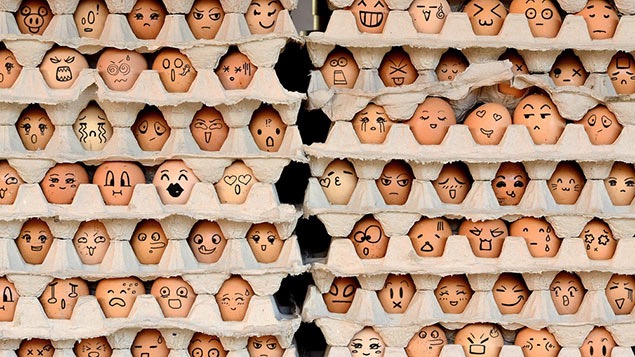
We speak of diversity in reference to gender, sexual orientation, disability, age, ethnic or religious background…

The problem with this is the labelling it creates and the notion that we need to take special steps for this labelled cohort. Diversity, and sister terms like ‘inclusion’, suggest acknowledging groups, often minority groups. But the very grouping, the very labelling of the group, is itself creating a boundary. An us and them.

In reality, we’re talking about difference, and we’re all different. All individually diverse. All totally unique.

The more we pay attention to who we are and how we come to the world, the more curious and open hearted we are; recognising that everyone around us does that differently… the better we will be. Everyone comes as their unique self. Everyone has a place.

Use what talents you possess; the woods would be very silent if no birds sang there except those that sang best

once upon a time…

illuminateddandelion.com

We love stories.

Not just stories told in books, or on film, or in conversation. We love our stories about ourselves.

We don’t speak them out loud often. We don’t act them out on stage or on screen. We don’t share them with the world, in our workplace or at home. Rather we tell them to ourselves. Quietly. So quietly they are merely whispers. To those around us, these stories have no discernible words, no beautifully drawn pictures to admire, no compelling narrative to hook our attention, no plot, no beginning or end.

Instead the stories play out in our thinking, in how we behave, in how we are in the world. They show up in what is possible and what limits us. They control us. They become a self fulfilling prophecy. We become the actor, the main character in our pastiche of ourselves.

And we run our stories over and over. Day in day out. Week in week out. Inside.

Your past is just a story…
and once you realise this, it has no power over you

Chuck Palahniuk

What we need is freedom from the story of our past.
Freedom to write a new story of our future.