what is personal development?

Personal-Development Self Actualisation
The term is well-used. You may, like me, have a personal development plan. The ubiquitous PDP. It seems universally viewed as a good thing, to develop, personally.

But what counts as developing personally? If I go on a time management course, is that developing personally? Is learning to play saxophone developing personally? Maybe I want to learn to practice mindfulness – is that personal development? Is learning to drive? Learning to walk at 15 months even?

Those things would all seem to give me skills. Useful skills that may make me more effective, give me enormous pleasure in my free time, help me be more relaxed or just more mobile and independent.

I’ve been on courses before that were recommended, for my development. Many years ago I attended a negotiating skills course. I remember our trainer talking a lot about children and eating their greens to get puddings. I remember also the horror of being videoed and then made to watch myself back. It didn’t feel like personal development. Training yes, but not development.

So is there something about the development giving me something I want, something of value to me, something that enables me to fulfill my potential, to live my life to the max, as I perceive it?

In order to do that of course I need to know me. What matters to me, who I am, what satisfies me, makes me happy. My dreams and aspirations. Self awareness in effect. But then to be self aware I need to be curious. To want to understand me and how I function, motivate myself, learn, grow. Also to understand how I limit myself. I need to be open to self exploration. Open to self discovery. That way, as I explore myself I can become more self aware.

I also need some sense of my place in the world, what gives me meaning and purpose and how I propose to shape my future to fulfill that. Self realisation in a sense.

So is personal development really about self? About exploration and discovery of self? About awareness of self? About development of self, so that we can be who we think we are? Actualise our sense of self. Complete oneself to the fullest potential?

Maslow talked about self actualisation. I believe he once described it as “intrinsic growth of what is already in the organism, or more accurately of what is the organism itself.”

Is this personal development?

reflecting

reflection
How and when do you reflect?

What does it mean, to reflect?

Often we reflect on situations that haven’t gone well. What could we have done differently? Usually the more difficult they were, the more impact there was, the more we reflect.

We may occasionally reflect on a situation that has gone brilliantly well, or one that was a memorable, amazing experience.

Reflecting on the extremes, seems to be the norm. But what about reflecting day to day, on the normal, the middle ground? What value lies there? It’s not something we all pay attention to.

Why not?

Noticing whether you’re feeling relaxed, playful, weary at a point in the day can be useful. Noticing you were less involved than normal in that meeting. Being curious about why you sensed a little stomach churn just before that phone call. Notice how busy your mind is. Notice patterns of thought. Notice words and phrases you use regularly. Words you say to others, but also words you say to yourself in your head. Notice how you’re distracted. Notice what’s distracting you. Notice familiar patterns of thought, of behaviour. Notice when you hold back, stay quiet. Notice when you don’t.

Reflecting on how we are, in the moment, can be useful. What our body and mind is doing, is telling us, should be heard. This is information. It’s free. It’s insightful. It’s valuable.

Let’s pay more attention to reflecting.

the perspective from the top deck

journey view metaphor life
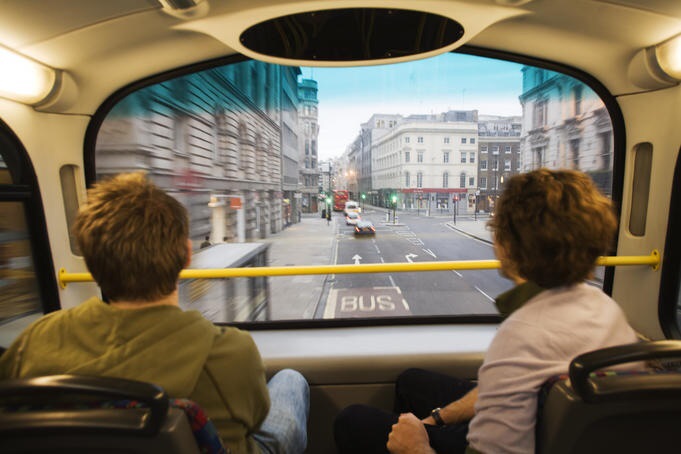
I journeyed the other evening on the top deck of the 436 bus. In the front seat.

The view was a panorama of life. Lights, noise, people, machines, movement. London at its liveliest.

Yet I noticed how journeying this way seems somewhat removed from reality. The bus sways in a slightly disconcerting manner. It rounds corners in a less than natural movement. An almost crab like sideways slide, conjoined with a floating sway. Perhaps delivered through a combination of where the front axle is and the height and flex of the bus carcass? The sensation in my seat is one of disconnect from the road. Not grounded. A little in conflict with the laws of motion; arguing against gravity.

My journey moved to train. A rhythmic sway, merged with sleepy hum as the world rushes past. Not the panorama of the bus front seat, but a sideways glance at a speeding blend of nature and manmade construct. More grounded in one sense, definitely more urgent, more purposeful, but a perspective on life and the world that sped past without detail, without richness.

My final leg was by car. In control, driving. Close to the ground, direct response between feet, hands and movement. Yet my attention focused solely on the road – the journey ahead, the vehicles, the junctions, the risks. No time for sideways glances, no time to really notice people, activity, beauty.

I wonder how much time we spend in our lives travelling in one of these metaphors?

Either stood back, with a wider perspective, but somehow floating above reality? A little disoriented. Observing, but not involved?

Or speeding forward, intent on reaching our goal quickly but with little opportunity to notice the world around us other than an oblique awareness of the blur of movement?

Or deciding our own path, in control of our destiny, our own speed, but necessarily focused on the journey ahead. One lens, one angle of view with little capacity for enjoying our surroundings?

so, how do I change that?

service change
If my car stops working, I take it to a dealer or garage and say please fix this. Generally that works. In part, that’s because the car is one of many identical models. It has a specification. The mechanics are trained and no doubt have detailed on line manuals describing how every part works as well as knowledge of the steps required to breathe life back into those parts that don’t.

We all possess many ‘things’.  If they stop functioning to our needs we fix them, or we replace them.

We are so used to this, we somehow seek to apply the same laws of our materialistic consumerist world to our very humanity.

But here’s the thing…
Human beings are inordinately more complicated and each one is stunningly and beautifully unique. No manual. No like for like replacements.

To hope that all of your learning, life experience and behavioural pattern making since birth, can somehow be re-modelled in a few simple steps … a bit like reprogramming the central heating timer … is curious.

And yet we do.

I often get asked in coaching sessions a question a bit like this one … “So how do I change that?”

It’s almost as if we believe we’ve just missed out on a chapter in the ‘How to be a happy human being’ book. Or perhaps misinterpreted some instruction along the living highway which explained how we were supposed to be. Or maybe that we think someone else messed it up for us, so now we have become aware we can just change course, tweak something, switch out one part for a new one. Whatever our thinking about how we came to be like this, we seem to think this ‘expert’ in front of us, this ‘human mechanic’, can somehow put us right.

Changing ourselves is hard work. Rewarding, but always hard work.

And as we set out on that journey, we would do well to remember that we are unique. To value that uniqueness. To seek to enhance and grow what is, not discard it as broken or not good enough.

the transition to Autumn

autumn season
I like this time of year.

The light is different. The colours somehow deeper. The air somehow crisper.

Change is coming, as evidenced in the leaves and the trees, yet there is something peaceful about the shades of Autumn. A calm, crisp beauty and a rich palette of colour in nature.

I notice how the properties of Autumn align for me with things that matter to me. Light, depth, peace, beauty and a uniqueness of difference in colour reflecting human diversity…

Maybe your favourite season is Autumn too, but it says something different to you?

Maybe your season is Spring? New shoots, new life, bracing breezes, changeable weather, possibilities?

Maybe Summer? Maybe Winter?

Which season is your favourite and what does it say about you?

the gift of light, the tune of life

light gets in

Ring the bells that still can ring
Forget your perfect offering
There is a crack in everything
That is how the light gets in

Leonard Cohen

We only see, because light enters our eyes.
Light illuminates everything.

Yet so often we try and keep light out. If we aren’t perfect, we attempt to conceal our weaknesses, our failings. Our judgement of self means we often wrap up our gifts, our truth, our own light. All sealed up like a neatly wrapped Christmas gift, with tape on every edge. Our gifts wrapped safe, but hidden from view.

We do this, not just in our work, our projects, our outputs, our external offerings to the world. So too with parts of our internal self, our humanity. We attempt to neatly package away our mistakes, our unwelcome behaviours, our memories, our judgements, our fears and our dreams.

Often we wrap them badly. So that despite our efforts, when shaken, the contents leak out.

Still we persist, as if boxing them neatly away is the best thing. The safe option. Yet as the lyric suggests, we simply give ourselves fewer bells. Our melody is simplified. Our music reduced to a few chords or notes. We are less.

Maybe we should embrace the cracks? Enjoy the light? Peek in through the partly open corner, remove a small piece of tape and see what the dim light illuminates?

Seek to play our tune with all of our musicality?
Percussion adding brightness to woodwind,
strings showing dexterity to booming brass,
baritone adding depth to our tenor?

the shadow cast by judgement

shadow judgement
I was struck the other day by two meanings for the word judgement.

In a meeting we were lamenting the loss of a capability to make judgement calls. The ability to hold uncertainty. How rules, laws, policies etc have made us over sensitive to getting it wrong.  What’s the ‘right way?’ we ask. Our risk averse nature in an essentially critical world would seem to make the art of judgement a difficult tool to handle.

In a separate conversation we were discussing the dangers of judgement. The judgement we all make about other people and about ourselves. The way, in an increasingly diverse and inclusive world, we still jump to conclusions about people and equally get stuck in our own patterns of judgement about ourselves.

Wanting greater judgement, yet at the same time challenging its use.

I looked to the dictionary.  The relevant definitions are “the ability to make considered decisions or come to sensible conclusions” or “an opinion or conclusion”

Perhaps that’s the point?  One misses the ‘considered’ or ‘sensible’.  Jumping to an opinion or conclusion without considering alternative perspectives, without seeking to explode well worn patterns and subjectivity?

Judging ourselves and judging others casts a shadow over our lives.

It strikes me, we need to get better at this, as human beings.


the emergence of the selfie

looking at self
What gets a lexicographer up in the morning? Where does the energy come from?

Maybe the advent of new words? Maybe the evolution of old ones?

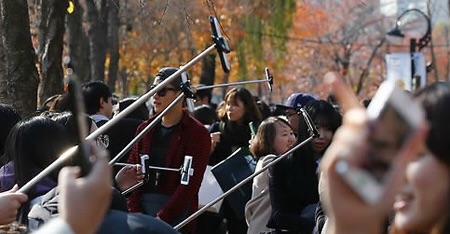
Selfie is a new word. This sudden penchant for capturing ourselves against our current environment. Looking at ourselves in our context. Getting an arms length perspective. Using a selfie stick to get even greater perspective. To see from further out. To fit more of our situation in.

Our desire to share these 2D representations of self in these static snapshots of life, is curious. We seem strangely reluctant to show ourselves in living 3D, in reality, as we exist in the world with other human beings. Alive. Both beautiful and beautifully flawed.

Of course we have always had the ability to look at ourselves from the outside. Inside our head. Long before technology gave us the ability to record an image, many of us did that in our mind’s eye. Imagined it. We see ourselves in that awkward conversation. See ourselves in that meeting where we were criticised. See ourselves in that beautiful moment of joy, of fun, of love.

Our mind’s eye has an important advantage over the selfie. We are not limited to the current moment. Not limited to a selfie snap and a hard drive of past experiences captured in still reflection. Inside, we can do this imaging, this ‘selfie’, for our future too. Imagine our own future. Our upcoming holiday. Our new home to be. We can manipulate the image – past or present. Make it brighter, more colourful, turn it around, zoom in or out. Take parts out, add parts in.

Take a mental selfie now of where you will be next week, next month, next year.

Perspective and context are crucial to our humanity. They allow us to see possibility, to reflect, to dream, to make sense, to know we’re ok.

Click.

Remember too though that living, sharing, enjoying reality in the moment are more deeply human. Share the gift of you, now, in glorious living technicolour. Not just in smiling, staged, two dimension tomorrow.

Don’t just take a selfie. Be one.

Lexicographers – let’s add ‘be a selfie’