if you could choose your ideal job…

life purpose as a job
Let’s abandon traditional job titles. Job titles that attempt to describe what you do. If instead your job title described your life purpose, what would it be?

I don’t mean a weird job title that tries to cleverly describe your role, what you do. Such as…

sheep shifter
domestic engineer
arboreal yoda
chief chatter champion

I mean a weird job title that describes your reason for being. Something like…

people grower
chief purpose finder
harmoniser
problem breaker
human cuddler
difference designer
balance wizard
planet protector
lightbulb moment illuminator
humanity harvester
purveyor of good
life lover
future planter
human story animator
dream alchemist
trickiness disheveller
peace percolator
imagination sparker…

What would yours be?

our stories of self

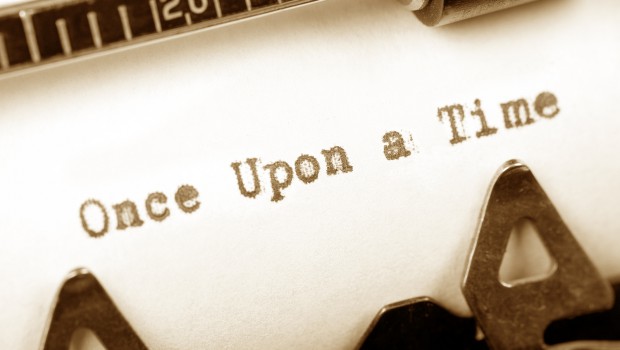
once upon a time
We have a story for ourselves.  Sometimes more than one. Sometimes the story we tell, is not the story we live in.

This was beautifully expressed to me recently when a coach colleague shared this experience

A coach I met recently shared a fascinating story with me about a client they were working with and some profound learning they had experienced.

By their third session, the coach noticed how hard they were finding it to connect with the client and find the truth in the stories the client was sharing. They had a growing sense that the client was not being authentic. The coach noticed how this was affecting their own flow in the sessions.

After this third session, the coach spent much time reflecting on why they felt so uneasy about the situation and admitted to themselves that something just wasn’t right.  Maybe they just weren’t good enough as a coach to support this client?

The coach decided to share their unease with their client at the next session. Whilst waiting for the client to arrive, the coach convinced themselves that the client might be better off with a more experienced coach as the coach clearly had now developed some bias that would get in the way.

The coach gently approached the subject with the client and said “I’m truly sorry, but I have to admit I am struggling to connect with you and more importantly I find myself doubting whether you bring real events in your stories or ones you imagine yourself having”……this last part changed everything !

The client shared how they had imagined when they were younger, that their life would be so very different from what it was now. It transpired the client was mourning the life they had hoped they would have and the person they believed they would become. Their unconscious grief for this representation of self, resulted in the invention of a new reality in which the client remained the same age, the same values and the same personal goals they had had 25 years ago.

This realisation had a profound affect on the coach and resulted in transformation for the client.

This story is both a brilliant reminder of what we do as coaches and at the same time a sobering reminder of the complexity of our humanity.

As coaches our gift to our clients is to support them navigating their personal truth in search of something more whole, more true, more fulfilling – the story is heartwarming in that regard.

Yet the story also serves to show how ‘wierdly’ our very humanness can work for us.

Our brains and bodies can take us on strange journeys, through thought and feeling patterns, to strange places. In this case, for this client, from clarity of vision for self, to grief for an unfulfilled, imagined self, to the creation of a false self, with all its stories, false realities and ties that bind that client to a life less than their potential.

It shows also the power of our stories of self.  The story we imagine for ourselves, the story we exist in, and the story of what we might be.

Stop being who you were or who you could have been… instead, be kind to yourself and be who you are.

Our monochrome contradictions

contradictions
Foreign policy is a balancing act. Lines are never clear. Neatly drawn. It’s a grey world rather than a monochrome extreme one.

Reading recently about the struggles in the Middle East highlights this clearly. Alliances between unlikely bedfellows; either battling against IS, resisting Iran’s regional dominance, seeking to create new states, or to destroy existing ones. Lines drawn between old enemies, new enemies, enemies for a reason, enemies for a season, enemies for a lifetime. Nation states trying to balance their contradictions. Not able to totally support one cause, because of complex overlapping interests in other causes.

It reminds me of our own human struggles. Our internal contradictions of self. That sense that a part of us wants something whilst another part wants something else, something contrary. That experience of being a certain way at times, then being a very different way, in a different place or time.

We have contradictions.

We are muted monochrome shade, rarely black, rarely white.

In my coaching work I sometimes encourage clients to explore their contradictions. The edges of themselves. I, for example, would describe myself as an “extrovert loner”. Sometimes gregarious, social, with a view to express. Sometimes seeking to be alone, silent. I need both parts. My ‘foreign policy’ needs to play both hands.

Naming these seemingly opposite, contrary, elements of self allows us to honour them, respect them, work with them all. I encourage an “I am… ” construct. I often find the choice of sequence my clients make is revealing. Usually the first part of the contradiction describes how they are, the second, who they are. Here are some examples…

I am an open secret
I am a tidy mess
I am hopelessly hopeful
I am an enthusiastic couch potato
I am an away from futurist
I am a responsible rebel
I am a leading follower
I am an unplanned achiever
I am an independent team player
I am deliberately informal
I am a selfish altruist

Foreign policy is laced with politics and self interest. But perhaps so are our parts?  Just like the politicians we are trying to balance multiple interests. Just like the politicians we don’t reveal our full hand, even to ourselves. Just like the politicians, that ‘mishonesty’ can bite us.

The question is, do we need to go to war? Does that serve us?

Be curious about your contradictions. Explore what each part seeks and offers you. Recognise their intent for you. Embrace them all.


time, choice and freedom

time choice freedom
Our lives are complicated.

Work has changed for many of us. The ‘always on’ technology-driven communication possibilities mean that many of us are slaves to our email, our social media connections, electronic meetings and diaries. They have become all pervasive. The global world means many of us are in meetings, conversing or delivering to deadlines spanning a full twenty four hours; with an increasing expectation to be available whenever required. Technology has become more complex, not least because it changes constantly. Upgrade, upgrade, upgrade. Many commercial activities have become more complex, driven in part by the opportunity technology affords us. Consequently many business processes have become more complicated, not less.

And how do we respond? We blur boundaries, we work ‘more flexibly’, from home or away from interruption; we work evenings, weekends, so we can catch up with our email, sort out our admin, stay on top of things.

There is a knock on effect on our families, our non-work life. An impact on our wellbeing. On our health.

Of course these same globalisation, always on, technology driven changes work in our favour too. As consumers. The ability to access knowledge, products, services instantly, at the touch of a button on one of our many devices, anywhere, any time, is highly desirable. It buys us time, a precious commodity. It gives us choice, freedom.

Yet we are ceding control. Irony of ironies. The time, choice and freedom we have won is eaten up by the work demands on our time, choice and freedom.

Time to simplify?
Time to recreate boundaries?
Time to take control back?
Time to makes choices?
Time to win freedom?

our eyes face the wrong way…

eyes
Our eyes face the wrong way.

Oh sure, looking outwards has its uses – fewer lampposts walked into, glorious sunsets to admire, great novels to read, smiles to warm our hearts, choosing your next Krispy Kreme donut (that may just be me)

The problem is that so much of our truth, our success, our learning, our qualities, our gifts, our struggle, our reason for being, our beauty, our essence, our soul … lies inside us.

And we can’t see it.

Yet it drives our behaviour, our choices, our joy, our sadness, our fulfillment, our happiness.

The world outside can be beautiful, but take a moment to look inside.

That can be beautiful too.

the courage of truth…

truth self be
I have just read an article in the paper.

The story is told by a grandmother and is of her five year old grandson, who wants to be a girl.

The author writes of the challenges the parents face, buoyed by a steely desire to support their son’s ‘wholeness’, but conscious of the white rapids of gender politics, judgement and bigotry society will toss them through.

The author also writes how her five year old grandson is teaching her. Teaching her about truth, mostly her own. Wrestling with her own inner dialogue daily – are we indulging him, what will people think of me? – she describes how she has had to turn to her own discomfort, own her own prejudice and confront the worst her imagination can conjure. She recognises the most unpalatable truth; that her own thoughts, words and actions questioning what she and the family are doing, have been about protecting herself.

What courage. What honesty. What love.

Would that we could all face our truth as this grandmother and her grandson are.

where is your career going?

career life journey
We are encouraged to think about our career, constantly. It starts from an early age. Parents, teachers, school and further education all refer to career, as we make choices about schools, subjects, classes, areas of study, qualifications… We are encouraged to aspire. Aspiration often measured by the grades we get, the university or college we go to, the job we get, the seniority we attain, the pay level we reach…

How will we spend our working lives? In a profession, as a manager, owning our own business, with a portfolio career, following a vocation…? What kind of work do we want to do? What expertise, qualifications, skills, learning do we need for that?

Then when we start work, chances are we have a performance review or a discussion with a line manager, exploring how we might develop our career. We are encouraged to seek new challenges, new opportunities, new skills, new experiences. Maybe we get bored with our job, or learn what satisfies us or motivates us, and so seek to move our career to a different path?

Career seems almost to have become a synonym for life at work, for progression, recorded by the job sequence captured on our CV, our roles, our employers, our promotions, our job titles…

The origin of words is fascinating, especially in the context of how they are understood and used today.

Career comes from the Latin Carrus – a wheeled vehicle. Taking us on a journey. Adopted in French as Carrière and Italian as Carriera, it referred to the road we take. One Oxford English Dictionary definition of career is a person’s “course or progress through life”. Life’s journey if you will.

It doesn’t specify work, job, promotion, pay, skills, grade or profession.

So, maybe the question “Where is your career going?” is in itself limiting? Perhaps a better question would be “How do you plan to progress through life?”

This bigger perspective widens our choices. I might, for example, respond to this question, ‘being kind to other human beings’ or ‘being at peace with myself’ or ‘learning forever’ or ‘having fun’ or ‘being exhilarated by new challenges’.

This opens up possibilities. My choices are more rounded, more whole life. I can still occupy myself and earn a living in the context of these responses, but equally I can pursue them in all parts of my life. Home, hobbies, pastimes, leisure. With family, friends, alone or with like-minded individuals.

So maybe ask yourself not “Where is my career going?”

Instead ask yourself “How am I going to progress through life?” Or “What life course do I want?” Or “What will my life journey be?”

This may afford you more possibility, more freedom, more balance, more happiness.

why do we question?

question listen silence
Some time back I facilitated a workshop during which we experimented with silence.

It’s a difficult art.

Delegates had individually completed a five minute exploration of one aspect of themselves, resulting in a few written sentences. The second part of the exercise was to pair up and share that with a colleague. The only ask I made of those listening was to say nothing. Yes, to remain fully present. Yes, to listen completely, not just for what was said, but for deeper meaning and what wasn’t being said. But to remain silent. For the full five minutes.

They were all unable to avoid asking questions. So we explored that when we came back together.

It transpired the questions were all for the benefit of the questioner. Questions to clarify the questioner’s understanding. Questions for the questioner to understand context. Questions for the questioner to compare with their own experience. Questions for the questioner to shape appropriate feedback, input, opinion. Questions for the questioner to demonstrate they were listening. Questions for the questioner to collude. Questions for the questioner to feel they were adding value, helping in some way. Questions for the questioner to demonstrate empathy.

“When does this happen?” “What have you tried?” “What happened when you…?” “Could you speak to…?” “How long has this been like this? “If you approached it this way…?” “I know what you mean, it’s hard isn’t it?” “What did they say when you did that?” “How can I help?” …

It seems we have become accustomed to ask questions for our own benefit.

Shifting focus to only ask questions for the benefit of the other person is a skill. It offers the other person a way to expand their own understanding, broaden their own awareness. It offers the other person an opportunity to explore choices, possibilities. It offers the other person the opportunity to learn, to grow.

Above and beyond this enhanced learning, to have someone be with us, solely in service of us, is rare. To have someone listen that deeply, to witness but not judge, to empathise not sympathise, can be a very connected experience. To be given space to be with our own experience is a gift, humbling and trust laden. At this level, silence becomes the deepest form of listening. The purest form of being with someone.

In many of our conversations, our human interactions, we fall into the pattern of asking questions to broaden our own understanding or to feed our own need to be useful. Questions to find solutions for the person, to be helpful and affirm our own value… to ourselves.

Seeking questions solely to broaden the speaker’s awareness offers a different way.

Be curious about the true intent behind the questions you ask.

Practice seeking questions which broaden the other person’s exploration of their own experience and to find new learning, new possibilities, new meaning for themselves. Practice too the art of silence.

time to clean up?

human clean
Our lives are spent cleaning up.

At home for example, we’ve just had breakfast and we are headed out for the day. Each of us has showered, washed hair, groomed in our respective ways. We’ve cleaned up in the bathroom, to make space for the next visitor. We’ve washed up the breakfast crockery. Cleaned down work surfaces. Even washed the car windscreen for the drive ahead.

In our human lives we clean and tidy other things too, constantly – we seem compelled to keep order, space, a standard of existing, room to ‘be’. We tidy rooms, dust, vacuum. Clear garages. Windows are cleaned, inside and out, so that we can see the world more clearly. Cars get hosed and washed, waxed and polished. Gutters are cleared. Furniture gets realigned, wiped down. Gardens get tended. Old shoots are clipped away, grass mown and neatly edged. Leaves swept. Yards and paths are brushed and ‘broomed’. Toys are cleared up after use. Children’s faces wiped. Partially consumed foods are repackaged and stored, wrapped, clipped, boxed in a plastic container. All aspects of our selves and our homes kept clean and ready for re-use.

Our places of work are tidied too. Factory floors, office corridors, desks. Electronic storage is deleted, archived, filed away in folders. Physical storage too, books, articles, paper, reports. Each evening the cleaners arrive to ensure the place of work can function, efficiently, effectively the following day. Processes are run to ensure a state of commercial readiness. Billing, order processing, overnight processing schedules, backups and archives.

Even relationships get cleaned up. Apologies made. Gifts bought. Farewells said. Hugs offered. A good ‘let’s talk this through’ often used to clear things up for the next leg of the journey. Friends are remembered, some are forgotten. In social media we follow and unfollow, friend and unfriend to keep our electronic worlds clean and tidy for the next visit.

We are even learning to clean the planet.

But still the mess comes. More to tidy, more to clean.

Yet, there seems to be a focus on the exterior.

Our outside and the places it inhabits, works, moves to and through, all get attention. Our connections to others on occasion.

I wonder about our insides? Our memories and beliefs that we drag with us through life, limiting our potential, creating worry and angst. Our way of being. Our hurt, our shame, our grief. Our patterns of thinking and acting that run on automatic and serve us poorly now? When do we spring clean those?

The seduction of addiction

seduction of addiction
Drug addiction can be a destructive thing.

Yet we are all drug addicts and at the same time drug pushers.

Our addiction in life is often our way of being. It is seductive to stay with the familiar, however much that familiar harms us, limits us, hurts us.

Being exhausted. Lonely. Always moving. Looking out. Looking in. Critical. On the edge. Miserable. Hyped. Caring for others. Not caring for yourself. Catastrophising. Leaking power. Being guilty. Hiding. Needing love. Taking responsibility. Blaming. Saving. Out of balance. Looking back… and many more drugs of familiarity. Each with a high. Each with a low.

We can also become used to beating ourselves up in that internal dialogue of not good enough, not smart enough, not beautiful enough, not talented enough… In a strange way the familiarity keeps us safe. It becomes seductive to keep doing it. Hard to kick the habit. We find ways to give ourselves the fix – seeking evidence to prove the theory, so we can reaffirm its ‘truth’ again, and so stay safe.

We can do this in relationships too. Give our power away. Bemoan the way the behaviour of others makes us think or feel. Yet we are often drawn back, to get another dose. Sometimes because there is an element of that interaction, that relationship, which meets an unspoken need deep within. It gives us a reward. An unconscious lift, an energising boost, a buzz. But all before we experience the fall, the difficult feeling, the disappointment, the hurt, the down after the drug wears off.

Beware the pushers. Those who draw you in with their sweeties. But especially look out for the pusher within. The part of you that also gets you hooked; seduces you; feeds you the familiar yet painful drug.

Choose what you consume. Notice what is addictive. Seek out the truth of the seduction.