the search for normal

normal or unique
“Is that normal?”

In my coaching work, that’s a phrase frequently added by my clients…

“I don’t see it like that. Is that normal?”
“I can feel it churning in my tummy. Is that normal?”
“I just don’t know what I want. Is that normal?”
“It’s like I have a conversation in my head. Is that normal?”
even, “If we were to meet every three weeks maybe? I don’t know, is that normal?”

The search for affirmation that we are in some way ‘normal’ seems to be intrinsically inside us.

Society reinforces this of course. You will know this if your ethnicity is different from the majority. If you have a disability. If your sexuality, or the way you dress, is in some way not the society imagined ‘norm’ then your belonging can be challenged. You can be ‘told’ directly or indirectly that you don’t ‘fit’. For some of course this drives an expressed desire to be ‘different’, to stand out, to be individual.

There seems to be a tension between individual and the crowd or majority; between unique and the same, individual and similar; a tension between who we are and the expectations of everyone else.

When one of my clients says something like “I’m just not that driven. Is that normal?”

I wonder if the first half of that proclamation is a statement of self. A statement of uniqueness. A statement of what is. A statement of who we are and how we work. A statement of truth.

I wonder if the second half is just a blanket for belonging. A sense that by showing who I am, I might be judged, rejected, cast out.

Of course, in reality we are all unique. Even those who band together under the cloak of ‘the normal’ are, in truth, unique individuals. Hiding their true uniqueness for fear of rejection.

Normal is a cloak though.

Unique IS normal.

Shine your light. Step into the sunshine. Be yourself. Celebrate your difference. For it is through your difference that your contribution to the world will be manifest.
where do you find yourself?

find yourself
I don’t mean now at this minute… in the office, walking to a meeting, having a coffee, in the bath… I don’t mean physically where are you at this precise moment.

I mean, where do you go, to find yourself?

Where do you re-group, resource yourself, check in? Where do you go to validate yourself? Where do you go to make sense and meaning from your interaction with the world, with life? Where do you check for congruence with you?

Maybe you meditate, or do yoga? Maybe you listen to music? Maybe you walk? Maybe you run? Maybe you sit alone and reflect quietly looking out of the window?

Maybe you don’t do something or go anywhere?

Maybe instead it’s an entirely internal process? Maybe you step outside of yourself and look – in your mind’s eye as it were? Maybe you go inside and connect with a feeling? Listen to your heart? Check out your gut feel? Maybe you have a known sense of you, a deep sense of self, a sense of your soul? Maybe you calibrate against that?

And what do you get from doing whatever you do?

Is it a way to preserve yourself? A way to survive? Is it a way to regroup? Is it about balance? Is it about correcting your course? Is it to find meaning? Is it to make sense? Is it so you know you haven’t lost yourself? Is it about resourcing yourself for the next step? Is it just a warm safe place? Maybe you just want to be sure of you?

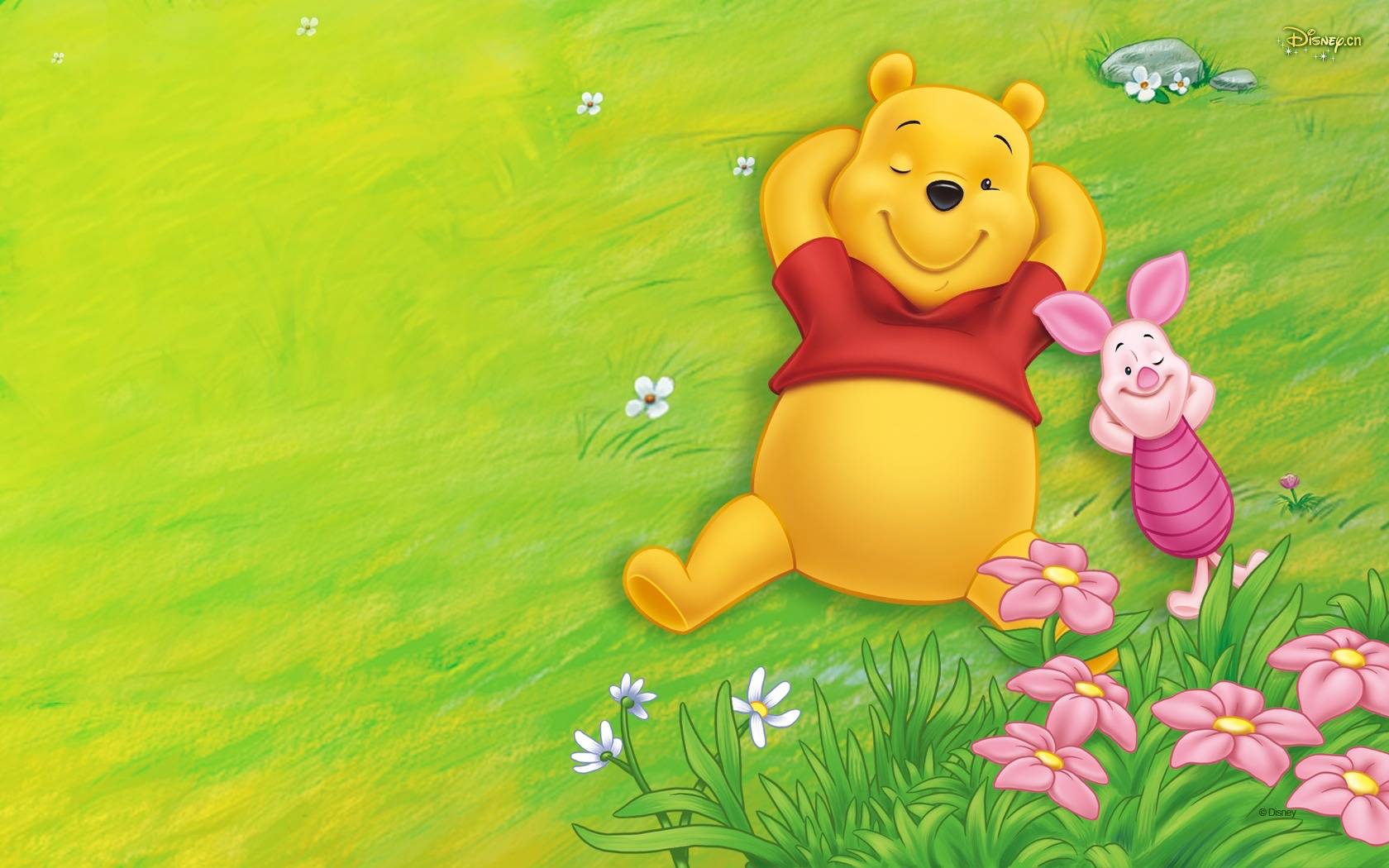
 “Piglet sidled up to Pooh from behind.
“Pooh!” he whispered.
“Yes, Piglet?”
“Nothing,” said Piglet, taking Pooh’s paw. “I just wanted to be sure of you.”

Be your own Piglet.
Be sure of your Pooh.

are you busy? too busy to read this?

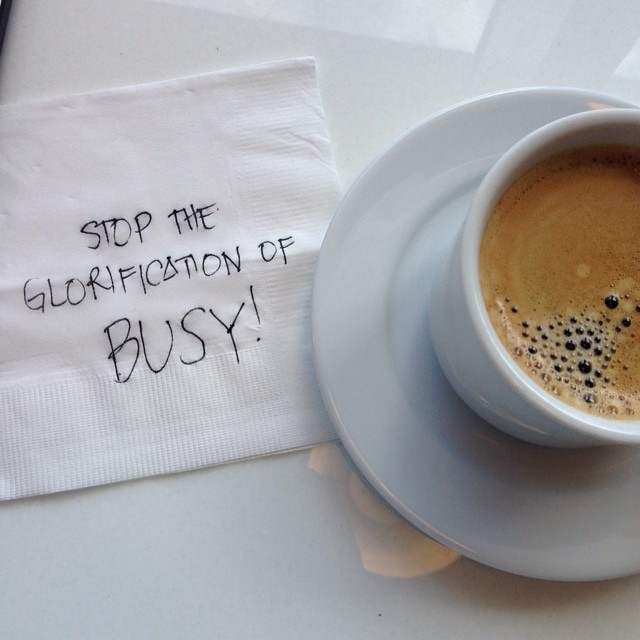
stop the glorification of busy
Are you busy? Too busy to read this? If so, maybe you should read it…

In recent months I have noticed the conversation starter at the coffee machine at work follows a familiar path, when you meet someone you haven’t seen in a while, whoever it may be. Maybe you recognise it? Or maybe you instigate it?

It goes something like this …
“Hi long time no see. What are you busy working on at the moment?”
or
“How are you?” Back comes the reply, “Really busy. You?”
or
“Hello, not seen you in a while.” “No things have been really busy…”

If you’re really busy you might want to stop reading this now.

If you live to an average life expectancy you have a total of around 620,000 hours. Given that we sleep for around a third of that, you have about 410,000 usable hours.

Time is a strange concept though isn’t it? I mean, what is an hour?

I often have the following debate with my wife when the clocks change – she’ll say something like “We gain an hour this week-end” and I’ll respond, “No we don’t, it’s just that what we call it has changed. Six o’clock is now known as five o’clock.” The Earth, Moon and Sun still move in the same harmonious rhythm. We still have the same amount of time in our lives. What we call the time is just that, it’s what we call it.

And we can call ourselves busy. Too busy to spend a few minutes on someone or something that is really important to us.

What matters most is how you use your time; those precious hours that are in short supply.

When was the last time you simply did something you love?
The last time you were kind to yourself?
The last time you carried out a random act of kindness?
The last time you stopped and really noticed another human being?
The last time you checked in with yourself, properly?
The last time you gave someone the gift of your full attention?

Next time you meet someone at the coffee machine, if the conversation starts down the ‘busy’ route, ask them a great coaching question and really listen to their response.
Maybe something like …
“… and how would you like it to be?”
or
“… and if you weren’t busy, what would you be?”

or maybe just invite them to contemplate what they would be doing right now if they were doing something they love.

And now you’ve read this … go and take five minutes for yourself.

we are merely part of the ceaseless becoming of the universe…

illuminate your self
I watched a BBC programme the other day on the ancient world and the philosophies of Buddha, Socrates and Confucius. This episode followed the life and ground breaking thinking of Buddha.

One moment stayed with me.

A part of Buddhist philosophy says … “We are merely a part of the ceaseless becoming of the universe”.

What an interesting and beautiful idea.

The programme showed that our sense of self, the notion of “I” does not begin with birth. We exist in the womb. We exist in the genes of our parents, and they in the genes of theirs. Our ancestors literally make us. Our version of “I” is constantly evolving, influenced by culture, society, experience. In this way the self is merely an imagined entity, manifested from your journey. It existed before you were born, evolves through your living and doubtless continues in your children and the legacy you leave in the universe.

I am not religious but I am attracted to this philosophy.

As the programme hypothesised – Buddha was espousing cognitive psychology twenty five centuries before it emerged. But for me also this connects to another interest of mine – the systemic constellation – the notion of the significance of the system and our relationship to other parts in that system.

Buddhism offers wisdom and compassion as a way forward. Not wisdom in the conventional cognitive, intellectual, knowledge sense but in the old Sanskrit sense of awareness, discernment, insight and consciousness.

That with compassion for yourself and others makes sense to me.

So… maybe bringing into awareness, into consciousness, with insight and compassion your sense of who you are, is a good step forward?

… maybe bringing into awareness your relationship to the rest of the universal system you belong to, is a good step forward?

… maybe having an emerging sense of why you’re here and what your legacy to the universe will be, is a good step forward?

Be your own lamp.
Illuminate yourself.

if you could shop for emotions, what would you get more of?

emotions shopping
I need to shop for food today. Saturday isn’t a normal shopping day for us – too many people in the aisles. The aimless people. I’m a list shopper. Odd really as I never make lists for anything else. The list has to be in the right order for the route I will march purposefully along with my trolley. It provides a structure. I’ll deviate from it, of course… the list. I like deviating from a plan. In fact I don’t plan normally either – too much structure.

Anyhow, it occurred to me, what if I could shop for emotions? What would be on my list? What do I want more of and what do I have enough of in the cupboard?

Do I want more joy? More caring? More trust? More serenity? Do I need a little more sadness? A big pot of empathy? Do I need to refill my anger? Maybe I would like to take some lonely back to the shop?

Am I baking a relationship cake and need some extra courage? Some more selfishness, a little daring, some strong, rather than medium fun, a big box of compassion, a soupcon of adventurousness and a large tin of hurt?

Maybe I’m about to change role and I need to stock up on thrilled, thoughtful and excited, buy a refill pack of embarrassed, but also purchase some ashamed and not good enough seasoning?

Or maybe I’m being forced to change role and need some hope, a little vindictiveness and a splash of inadequate to go with the large supply I have at home of feeling used?

What would be on your emotions shopping list?

do we ever stand still?

moving just be
Driving to the station this morning, I passed joggers, cyclists, walkers and of course other cars. I’m on the train now speeding to London.

All around me are people. They’re not physically moving. They’re sitting, standing, temporarily they’re trapped, encased in this rocking rolling glass and steel box, mounted on wheels, planted on rails, transporting us all to work or to some other activity.

As I observe my fellow passengers though, they are still moving. Mentally they are all moving. Books, iPads, laptops, papers, thoughtful looks, animated conversations, all indicators that they are moving, planning, preparing, reflecting, thinking…

On my iPod I’m listening to Rolling Stone by Passenger. The lyrics go … ‘I’m always moving. I never notice because I never stand still’

So true.

When did you last stand still? Just stop? Think of nothing? Do nothing? Just be? Notice only you, your physicality, your breathing, all parts of your physical body – your presence in the world. Your very existence.

It’s an amazing thing. Try it.

image credit: taylormmeredith.com

what you do, is not who you are

be do identity
What you do, is not who you are.

A friend of mine recently made a decision; a decision that has had significant ramifications for people in their life. It was a hard decision, not easily reached. They have been much criticised by those around them. Judged. Labelled.

Sometimes people view our actions, what we do, as a proxy for who we are. Maybe the smaller actions or behaviours go unnoticed, unacknowledged, but often the larger decisions or actions get assigned to our identity, through judgement. “He is a liar…” or “She is untrustworthy …”

In fact we are so much more than one choice, one decision, one action. There is so much more complexity, subtlety, richness in our humanity, in ‘the self’.

We can do this to ourselves too. Maybe you have done something and then reflected that wasn’t me, that was a bit out of character? Maybe you have done something and then judged yourself with a label too … “I’m stupid…” or “I’m a bad person…”

Making a mistake doesn’t make you stupid. Hurting someone doesn’t make you a bad person.

These judgements ignore context, they narrow our identity to one action, they lessen our humanity and they limit our potential. None of us is perfect, yet we are all perfectly human.

What we do, isn’t who we are. We are always so much more than one behaviour, action or choice. Sometimes we confuse these two. Separate them. Notice what you do and be curious about your motivations and rewards. But also notice who you are; the breadth, depth, richness and magic of you.

the hidden value of sadness

sadness
How can sadness be useful?

When we are sad we seem to be somehow diminished. Absorbed with the source of our sadness. Distracted. Unable to function fully in that moment; emotionally and mentally disabled. Our emotions drive our behaviour and our physiology – sadness may well lead to crying, a desire to be alone and to be introspective.

I’ve just seen the film Inside Out from Pixar. What a delicious film! Pixar at their best. Go see it.

The film charts the development of Riley, a little girl from Minnesota. Her emotions, portrayed as little characters in her head, ‘operate’ Riley. Together joy, sadness, fear, anger and disgust shape new memories and apply her existing memories, including her core memories, to inform her choices. These core memories from childhood create and reinforce her ‘islands of personality’. The film beautifully shows the importance of emotions. The cognitive brain is to all intents and purposes absent, and Riley’s actions and behaviours are driven by a cocktail of her emotions and her memories.

Our emotions, the meaning associated to them and our instant responses when they are triggered are worthy of exploration and portrayal in this way. They are a fundamental part of our humanity.

There is growing psychological and neurological evidence linking emotions, especially the core emotions of fear, anger and disgust to the limbic system and particularly the Amygdala, a small almond shaped part of the brain, at the brain’s core. Here we seem to hard code situations warranting the emotion and its associated meaning. Research for example shows that damage here can impact our ability to recognise angry or fearful expressions in others, and recent studies have started to show problems with social and emotional judgement. Evolutionarily speaking, this part of our brain is old, preceded only by our ‘reptilian’ brain which controls breathing, heart rate etc. These brain systems are designed to run on auto-pilot. It’s no good having to think to breathe, or having to think whether to run away or freeze when faced with danger. There is growing evidence that the limbic system has a role to play in our other emotions too.

The way Pixar capture these complexities and portray them in a touching, yet amusing film is testimony to their art. The metaphor the film uses to suggest the make-up of our personalities as islands, shaped by our core memories from an early age, is a useful reminder of the impact early life experience has, encoding much of our world map – who we are, how the world works, how we fit in that world, what is right and wrong, what is important to us etc.

For me though I took one key insight from this wonderful piece.

The hidden value of sadness.

Sadness allows us to access deeper older memories. Without sadness we are somehow less human. Sadness provides connection and love just as much as happiness and joy do. It also tells us about loss. Sadness tells us about meaning and what matters to us. Sadness can provide real learning. It can help you be more resourceful, as well as less. The key with sadness is balance – balancing sadness with other emotions, as demonstrated in the film.

The next time you are sad, embrace that sadness and the learning it brings. Thank your body for speaking to you so clearly.

you can’t tell your story if you don’t know it…

be you be unique

Be who you are and say what you feel, because those who mind don’t matter, and those who matter don’t mind.

If someone took the time to notice you, to see you, to want to read the dust jacket of your story, what would they see, hear, feel and read?

If you could be who you are and say what you feel, what would people experience? What would that experience be like for you?

Do you know?

why do we seek to grow?

personal growth
It would seem to be a very human thing, to seek to grow, to strive, to learn, to somehow be bigger.

I’m not aware that other animals do this. They seem content to find food, water, shelter, to survive and maybe to indulge in what Sheldon from the Big Bang Theory might call ‘coitus’ – for the purpose of reproduction and survival of the species you understand.

So why do we seek more? Our desire to learn new things, have new experiences, achieve more, to get better at something, even to master it, seems to be an invisible force driving us on.

I’m not suggesting this is a bad thing. I like to learn or do something new as much as the next person. I’m curious though about the unending drive, and some of its consequences.

Where does contentment fit in? Can we ever be content? At peace with what is?

The drive for growth seems to fuel our desire to work harder, earn more, so that we can fund more growth, so that we can own more. Try snowboarding. Walk to Machu Picchu. Learn the piano. See the latest 3D movie on our 4K television. It seems to make us restless. I wonder how that tips over into other parts of our lives, impacting our relationships, our families, our work and our personal happiness?

Organisations for example – merely complex social systems of people – seem obsessed with growth. Is that even possible? Can they all grow inexorably? Are there enough global resources, is there endless demand, sufficient money in the system, enough personal drive for growth…?

In organisations we are encouraged to have goals, to strive to better ourselves and to do better. Encouraged to learn, become more skilled, more flexible, more agile. We are told to aspire, to seek promotion, betterment. It creates a sense of failure, if we don’t achieve.

It’s not very many years ago, our forefathers would have been bemused by this. They worked to live. Nothing more.

So what would happen if we sought growth less? Not abandoned it – it provides motivation, provides us with purpose in our lives. But … what would happen if we balanced this with contentment?

What if organisations equally rewarded contentment? Not complacency, but a general state of contented happiness? A ‘Bhutan-esque’ Gross National Happiness measure?

Maybe growth is a human condition?
I see some benefits.
But I also see a lack of contentment in our world.

Time for better balance I wonder?

Deviant art photograph by: RickHaigh