is it time to change the baubles?

image

Christmas approaches.

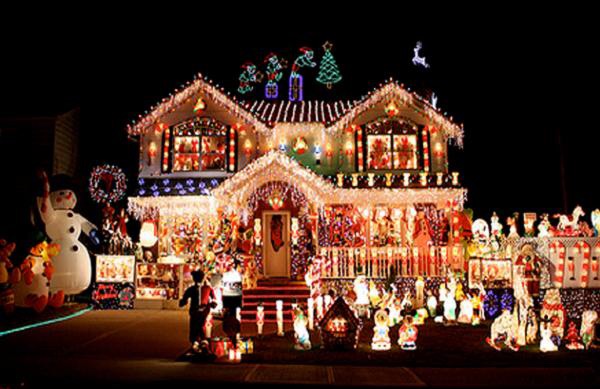
You probably have decorations up. At home. In the office. Maybe your house is lit up from top to bottom, with trailing flashing lights, illuminated elves and a ho-ho-ho-ing Father Christmas? Maybe not.

Decorations are a tradition at this time of year. As is the tree. So too Brussels sprouts, parsnips, Christmas pudding, mince pies, giving gifts, time off work, parties, over eating, old films on the television…

Traditions connect us to the past.

As individuals we have traditions too. Ways of being, behaviours, things we say or do. We learned them a long time ago, but they stay with us in the present.

Traditions can be thought of as the passing of customs, behaviours or beliefs from one generation to the next, usually within a specific group. Often they reflect a special significance, a meaning defined by our ancestors, long ago.

So too with our own traditions of custom, belief or behaviour. Except with our own traditions of being, we created the meaning and the significance ourselves. And we passed them down, from our childhood, through our teenage formative years, into our early adulthood, our mid-life (crisis optional) and on into our old age. At an early stage of our lives we decided something had to be so. Probably for good reason. Now we continue to live it. It has become our own personal tradition.

Sometimes we would do well to unpack these. To review them. To notice them. To see if they still serve us well.

Traditions can be good. Reminders of our past. Connections to where we come from. But sometimes they can become unhelpful, inappropriate or even a burden.

Reviewing our traditions is probably something we should all do, at this traditional time of year.

Keep what serves you. Change what doesn’t.


does Father Christmas exist?

belief future Christmas
When I was a child I believed in Father Christmas.

In part because my parents told the tale and I believed in them. I trusted them as parents. As adults.

In part also because it served me well. I was rewarded. Brightly wrapped presents, sweets and other childhood delights were bestowed upon my compliance. My letter to Santa, brought me gifts.

In part also because everyone else in my child world believed too. I was fitting in by believing, rather than being outside the group.

*Spoiler alert* I don’t believe in Father Christmas now; although I perpetuated the myth with my own children when they were small.

Our beliefs about the world change over time. So too our beliefs about ourselves.

What I believed about work when I was 12 was quite different to what I believed twenty years later at 32. What I believed about the value of money has shifted again in the last twenty years. Certainly my beliefs about girls were very different at 12 to those I held at 22. My beliefs at 40 about human beings, compassion, possibilities are quite different to those my sixteen year old self held. My beliefs about what is important have shifted too. So too my beliefs about my abilities. And much more.

The point here is that our beliefs change over time.

I wonder how would it be if we set an intent to shift a belief in advance? Rather than it shifting simply through the ageing process and maturity, as a result of situation, life experience, context. What if we decided now, what we wanted to believe in say a decade?

What do I want to believe in ten years about money, about fun, about time, about learning, about being healthy, about happiness, about relaxing, about pleasure, about society, about religions, about conflict, about equality, about difference, about humanity?

Can I in some way change my future if I set out, now, to have a different belief about these things in my own future?

Maybe different gifts are possible? Not those delivered by Father Christmas, but by increasing my awareness of myself and by setting out to believe different things about me and the world I live in… what might be?

Now that, might be worth wrapping with a bow.

the importance of wheelbarrows

wheelbarrow
In modern language we seem to have over developed the idea of the nominalisation. That is, the turning of actions into things. The nounification of verbs, if you will.

For example, we talk about ‘our relationship’, as if it is a thing. As if we can stand and look at it.  As if we can pick it up, turn it around, look at it from a different perspective. As if we can move it somewhere else. As if one of us has influence over it, owns it, can change it, or is to blame for it.

I see this all too often in organisation speak. “This person is accountable for the customer relationship.” Good luck with that.

In point of fact what we are really referring to is the verb of relating. I relate to you, you relate to me, and if that is balanced, useful and rewarding to both of us it could be said we have a relationship.  However we can only change the relating. How we behave and relate. We have no direct influence over how the other party relates, so how can we be accountable for the relationship?

This language appears everywhere now. Organisations talk about ‘engagement’. ‘Employee engagement’. We survey it, measure it, agonise about it. It isn’t a thing! It’s a nominalisation. What we should be doing is engaging. Engaging with our employees. Engaging each other. Engaging with other human beings.

We talk about ‘change’. ‘Change management’. We should be talking about changing. It’s active. Change and change management are cold terms that absolve us from acting. Corporate speak.

Someone once said to me, if you can’t put it in a wheelbarrow, it isn’t a thing. I’ve never tested the total truth here, but they are wise words, nonetheless.

Show me the wheelbarrow with a relationship in it. Show me the one with engagement in it. Wheel round the change. Pop down the garden and bring me back some competencies. Oh and get me some growth whilst you’re there.

As human beings we need to get back to doing. The good old fashioned verb.

Nominalisations give priority to the action rather than the person doing it. They prioritise products and outcomes over the actor and the process by which they are achieved.

This is unhelpful at best and dangerous in the extreme. It absolves the individual of responsibility.

I can change, provided I am motivated to. It’s my responsibility. A change management programme isn’t going to cut the mustard, it just provides smoke and mirrors to a leadership lack of engaging me, motivating me, inspiring me.

I can alter my behaviour.  Me, not some invisible behaviour management programme, enhanced benefits package or competency based review framework.

As human beings, let’s relate to each other, engage each other. Let’s focus on being responsible for personally growing, personally changing, reflecting and learning about ourselves, developing our skills.

Let’s keep the wheelbarrow. But only for the things we can put in it.

the folding bike of life

folding_bikes
If you commute at all, you will have come across travellers with the folding bike.

If you have ever watched the BBC spoof W1A, the folding bike was an ever present star.

I have never owned one. I have never folded or unfolded one.  Yet they seem to me to be a marvel of engineering. Collapsing wheels, pedals, frame, chain and saddle into a compact , small suitcase sized, ‘luggable’ package.

Ideal for the linking parts of the journey; fitting easily into the boot of the car, compact for the limited space on a train, portable for the walk to the office or ascending in the lift before you hand it to your office assistant, as in W1A.

Wouldn’t it be great if life was engineered like that? Expandable for the journey itself, practical, functional, expansive, whole, readily facilitating movement and progression as we go about our business of living and growing.

Yet collapsible too. Taking on a compact form for the linking moments of change and transition on life’s journey. Periods perhaps where being expanded can bruise us, or strain us, as we attempt to move through life. Where parts of our own self catch us out, banging against our shins of resilience? Periods when bits of our life maybe stick out, knock against someone else, physically or emotionally? Periods when being expanded, our natural whole self, simply gets us stuck in a doorway, challenges our manoeuverability through a narrow gap and makes change from what was, to what will be, somewhat cumbersome?

If only life were as well engineered and flexible as the folding bike.

the direction of love and hate

love hate constellation personal conscience
I was reminded yesterday of a this quote…

The true soldier fights not because he hates what is in front of him, but because he loves what is behind him

GK Chesterton

It was offered in the context of the recent Paris attacks, but it reminded me of the truth in this for us all, not just for the soldier, the man on the battlefield, the terrorist. We all have a bond, a love of what shaped us, what gives us belonging, those ‘like us’ who give us a place. We feel strong ties to our formative experiences; strong connections to our family of birth; a place where we learned the unspoken rules of belonging. Where we experienced love. We all have strong attachment to familiarity, to the system we operate in, to its customs and culture and to the way of working we have become aligned to. It too gives us a sense of place, a sense of belonging.

Perhaps this in part explains why change can be hard? We have to let go of connections, friends, customs, behaviours, ways of being which have given us a security.

Maybe we don’t hate the change we face, but rather we resist it from a place of love for what has gone before? What is, or will be, behind us?

#prayforParis

the balance of both?

change routine balance
A change is as good as a rest, so the saying goes. But we are creatures of habit, so says another familiar saying.

So which?

Most of us like to experience something new from time to time. Something different. The first time experience is life affirming. It is growth. It is learning. It brings excitement. Anticipation. We holiday in new locations, learn a new skill, see a new band live, buy a new outfit, change our job. Change injects adrenaline. Gives us a buzz. We seek it to bring interest, to force movement, to drive personal growth.

Yet we also like routine. We like the familiar. Something predictable. Solid. Grounded. There is great joy in revisiting a memorable place again, enjoying a favourite meal, wearing that familiar shirt, replaying that special album track. In fact routine structures our lives. We rise at the same hour, dress, shower and breakfast in the familiar sequence. We travel to work the same route at the same time. Regular meetings. Story time, bath time, bed time.

Change and consistency. New and familiar. Spontaneity and routine.

Maybe we are creatures of contrast? Maybe that’s the habit?

you can’t have pizza without pizza

pizza self awareness change
These were the words I heard this morning.

I laughed at first, but then, on reflection, realised the logic was irrefutable.

My wife was explaining a need to go to the shop, to buy pizza, so that we could have pizza for tea. The sequence of the thinking intrigued me.

It seemed to highlight the significance of setting a goal and that once the goal is in place, the steps, the resources, the requirements to fulfil that goal can follow. They become almost inevitable. The goal is pizza, pizza is required, pizza comes from the shop.

So, if you can’t have pizza without pizza, maybe…

You can’t change without changing?
You can’t move without moving?
You can’t learn without learning?
You can’t grow without growing?
You can’t see without seeing?
You can’t feel without feeling?
You can’t be without being?

Of course, these action words necessitate a self awareness – a knowledge of both the intended goal. the current state and a means of connecting them. What is learning for me? What is it I want to change? What am I feeling and what do I want to feel? What am I moving towards and how do I create movement for me? Who am I, who is the person I’m seeking to be?

It is true you can’t have pizza without pizza, but knowing what pizza you want will certainly deliver a more satisfying meal.

growing at the edges

learning on the edge
Trees would look strange with spindle-like trunks supporting thick-set heavy branches. New shoots necessarily grow at the tips. Established branches and the trunk, thicken to support this expansion.

My wife and I walked around a housing development site the other day – new houses being built near us. As we walked further in to the development, roads were less complete, houses half finished, before we reached a temporary fence and gate through which we could peek at groundwork for a subsequent phase. New growth building literally on established infrastructure.

Across the country, roads themselves are built at the extremity of existing roads. Sensible really, as a road that is unconnected to the network is pretty useless.

You only have to observe weeds pushing through paving and tarmac to see what power lies at the most delicate tip of the plant. The drive to push through, to break new ground, belying the tender fragility of that new growth.

So too it would seem with our development as human beings. Growth comes at the edge. It builds on what already exists. At first it is new, a little fragile, but gradually with confidence and practice it strengthens and opens up new possibilities for learning and growth.

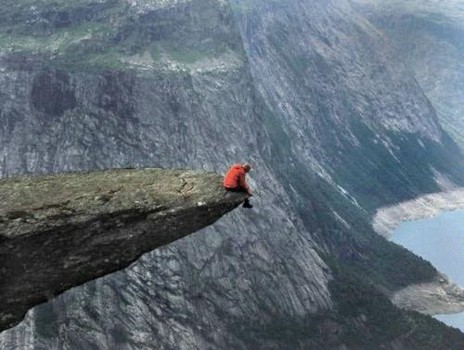
Sometimes we don’t want to go to the edge. It can be scary. A little uncertain. A little too new. We feel vulnerable.

But if we don’t go to the edge, we won’t grow new shoots, expand our capability, learn more about ourselves and our potential.

Stand at the edge of yourself. Branch out. Literally.

so, how do I change that?

service change
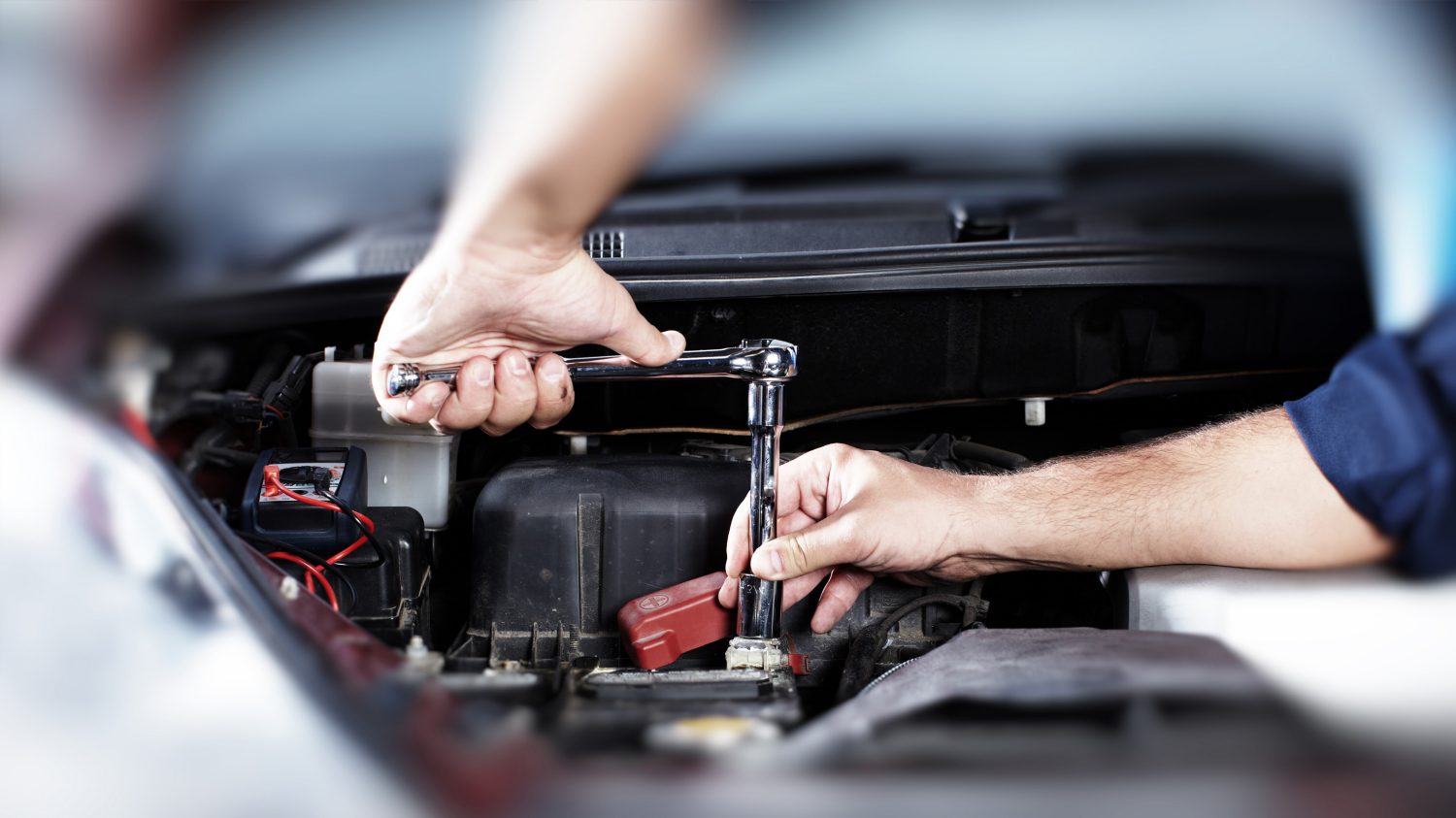
If my car stops working, I take it to a dealer or garage and say please fix this. Generally that works. In part, that’s because the car is one of many identical models. It has a specification. The mechanics are trained and no doubt have detailed on line manuals describing how every part works as well as knowledge of the steps required to breathe life back into those parts that don’t.

We all possess many ‘things’.  If they stop functioning to our needs we fix them, or we replace them.

We are so used to this, we somehow seek to apply the same laws of our materialistic consumerist world to our very humanity.

But here’s the thing…
Human beings are inordinately more complicated and each one is stunningly and beautifully unique. No manual. No like for like replacements.

To hope that all of your learning, life experience and behavioural pattern making since birth, can somehow be re-modelled in a few simple steps … a bit like reprogramming the central heating timer … is curious.

And yet we do.

I often get asked in coaching sessions a question a bit like this one … “So how do I change that?”

It’s almost as if we believe we’ve just missed out on a chapter in the ‘How to be a happy human being’ book. Or perhaps misinterpreted some instruction along the living highway which explained how we were supposed to be. Or maybe that we think someone else messed it up for us, so now we have become aware we can just change course, tweak something, switch out one part for a new one. Whatever our thinking about how we came to be like this, we seem to think this ‘expert’ in front of us, this ‘human mechanic’, can somehow put us right.

Changing ourselves is hard work. Rewarding, but always hard work.

And as we set out on that journey, we would do well to remember that we are unique. To value that uniqueness. To seek to enhance and grow what is, not discard it as broken or not good enough.