stuck in the tunnel of life

stuck tunnel life
My tube train stopped today at Edgware Road. The driver informed us that we would be held there for a while. There was a problem with the train in front.

It got me thinking. If a train becomes completely immovable, what happens then? The tunnel, the only route forward, is blocked. I guess we would all decamp and be forced to exit the platform, leave the station and find another way to our destination. Or I guess we could wait. Wait for life, for someone else to remove the blockage so that we can continue on our chosen path.

It struck me that in the event that this happened, we would just cope. Sure we might moan that we’ll be late, gripe about the cost of tickets and the poor service, worry that we don’t know how to get to our destination, but we would find a way. We would move on. Yet in life we often get stuck and stay stuck. Unable to see another path, we become disabled.

Of course London Underground would probably have staff available. Advice would be on hand. Guidance about how to get to our destination. Failing that, we would simply surface and surf. The Internet would tell us what to do.

Life isn’t like that. Even if people are around to listen or to give advice, our life situation is more complex, more individual, more unique, than the tube journey. The Internet doesn’t offer solutions to complicated life problems, riddled with feelings, entwined with complexities of relationship, weighed down with challenges of expectation, paralysed with the fear of coming up short in some way.

As fellow human beings, we seem hopelessly ill equipped to support each other, even if we were minded to.

Maybe this is the Internet we really need?

fifty shades of green

shades
I’ve been lucky enough to spend time outside today, in the sunshine. I’ve been walking. In open space. Near a river. In nature. Exploring with likeminded people. Coaches.

Nature can teach us much. Many things we struggle with in our human existence have long ago been resolved by nature. By the elements, by other species, by animal and plant. We build buildings with sophisticated cooling systems for hot climates, whilst termites solved the problem long ago, without technology. A tree draws water sixty seventy feet up into its structure without a single pump.

Not only can nature offer us clues to solutions for practical challenges, engineering conundrums, it can also offer insight to our challenges of mind, of thought, of feeling. Challenges around our very being. Our humanity.

Walking today I noticed just how perspective changes as you take another view, turn around, move closer, move away. Useful tools for exploring our own stuckness.

It’s easy to think grass, trees, shrubs, leaves, plants are all green. But today I also noticed just how many shades of green there are. Many enhanced still further by light or shade playing on their surface.

There are shades for our human worlds too. Problems are never one shade. Opportunities are never one shade. Relationships never one shade. Our Performance never one shade. Never one shade of solution. Never one shade of right or wrong, good or bad.

We would do well to remember this. To see the shade in our lives and to get perspective.

If you’re struggling with that, maybe go outside? Walk. Look. Notice.

our stories of self

once upon a time
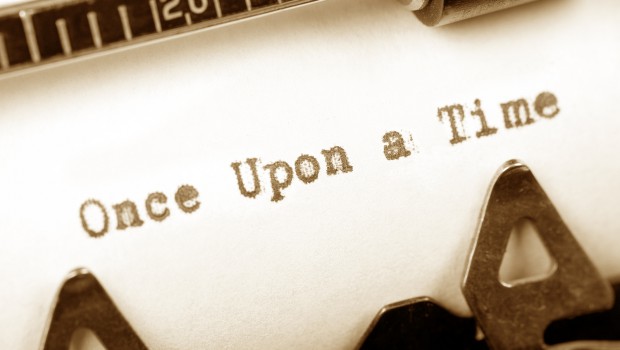
We have a story for ourselves.  Sometimes more than one. Sometimes the story we tell, is not the story we live in.

This was beautifully expressed to me recently when a coach colleague shared this experience

A coach I met recently shared a fascinating story with me about a client they were working with and some profound learning they had experienced.

By their third session, the coach noticed how hard they were finding it to connect with the client and find the truth in the stories the client was sharing. They had a growing sense that the client was not being authentic. The coach noticed how this was affecting their own flow in the sessions.

After this third session, the coach spent much time reflecting on why they felt so uneasy about the situation and admitted to themselves that something just wasn’t right.  Maybe they just weren’t good enough as a coach to support this client?

The coach decided to share their unease with their client at the next session. Whilst waiting for the client to arrive, the coach convinced themselves that the client might be better off with a more experienced coach as the coach clearly had now developed some bias that would get in the way.

The coach gently approached the subject with the client and said “I’m truly sorry, but I have to admit I am struggling to connect with you and more importantly I find myself doubting whether you bring real events in your stories or ones you imagine yourself having”……this last part changed everything !

The client shared how they had imagined when they were younger, that their life would be so very different from what it was now. It transpired the client was mourning the life they had hoped they would have and the person they believed they would become. Their unconscious grief for this representation of self, resulted in the invention of a new reality in which the client remained the same age, the same values and the same personal goals they had had 25 years ago.

This realisation had a profound affect on the coach and resulted in transformation for the client.

This story is both a brilliant reminder of what we do as coaches and at the same time a sobering reminder of the complexity of our humanity.

As coaches our gift to our clients is to support them navigating their personal truth in search of something more whole, more true, more fulfilling – the story is heartwarming in that regard.

Yet the story also serves to show how ‘wierdly’ our very humanness can work for us.

Our brains and bodies can take us on strange journeys, through thought and feeling patterns, to strange places. In this case, for this client, from clarity of vision for self, to grief for an unfulfilled, imagined self, to the creation of a false self, with all its stories, false realities and ties that bind that client to a life less than their potential.

It shows also the power of our stories of self.  The story we imagine for ourselves, the story we exist in, and the story of what we might be.

Stop being who you were or who you could have been… instead, be kind to yourself and be who you are.

Our monochrome contradictions

contradictions
Foreign policy is a balancing act. Lines are never clear. Neatly drawn. It’s a grey world rather than a monochrome extreme one.

Reading recently about the struggles in the Middle East highlights this clearly. Alliances between unlikely bedfellows; either battling against IS, resisting Iran’s regional dominance, seeking to create new states, or to destroy existing ones. Lines drawn between old enemies, new enemies, enemies for a reason, enemies for a season, enemies for a lifetime. Nation states trying to balance their contradictions. Not able to totally support one cause, because of complex overlapping interests in other causes.

It reminds me of our own human struggles. Our internal contradictions of self. That sense that a part of us wants something whilst another part wants something else, something contrary. That experience of being a certain way at times, then being a very different way, in a different place or time.

We have contradictions.

We are muted monochrome shade, rarely black, rarely white.

In my coaching work I sometimes encourage clients to explore their contradictions. The edges of themselves. I, for example, would describe myself as an “extrovert loner”. Sometimes gregarious, social, with a view to express. Sometimes seeking to be alone, silent. I need both parts. My ‘foreign policy’ needs to play both hands.

Naming these seemingly opposite, contrary, elements of self allows us to honour them, respect them, work with them all. I encourage an “I am… ” construct. I often find the choice of sequence my clients make is revealing. Usually the first part of the contradiction describes how they are, the second, who they are. Here are some examples…

I am an open secret
I am a tidy mess
I am hopelessly hopeful
I am an enthusiastic couch potato
I am an away from futurist
I am a responsible rebel
I am a leading follower
I am an unplanned achiever
I am an independent team player
I am deliberately informal
I am a selfish altruist

Foreign policy is laced with politics and self interest. But perhaps so are our parts?  Just like the politicians we are trying to balance multiple interests. Just like the politicians we don’t reveal our full hand, even to ourselves. Just like the politicians, that ‘mishonesty’ can bite us.

The question is, do we need to go to war? Does that serve us?

Be curious about your contradictions. Explore what each part seeks and offers you. Recognise their intent for you. Embrace them all.


why do we question?

question listen silence
Some time back I facilitated a workshop during which we experimented with silence.

It’s a difficult art.

Delegates had individually completed a five minute exploration of one aspect of themselves, resulting in a few written sentences. The second part of the exercise was to pair up and share that with a colleague. The only ask I made of those listening was to say nothing. Yes, to remain fully present. Yes, to listen completely, not just for what was said, but for deeper meaning and what wasn’t being said. But to remain silent. For the full five minutes.

They were all unable to avoid asking questions. So we explored that when we came back together.

It transpired the questions were all for the benefit of the questioner. Questions to clarify the questioner’s understanding. Questions for the questioner to understand context. Questions for the questioner to compare with their own experience. Questions for the questioner to shape appropriate feedback, input, opinion. Questions for the questioner to demonstrate they were listening. Questions for the questioner to collude. Questions for the questioner to feel they were adding value, helping in some way. Questions for the questioner to demonstrate empathy.

“When does this happen?” “What have you tried?” “What happened when you…?” “Could you speak to…?” “How long has this been like this? “If you approached it this way…?” “I know what you mean, it’s hard isn’t it?” “What did they say when you did that?” “How can I help?” …

It seems we have become accustomed to ask questions for our own benefit.

Shifting focus to only ask questions for the benefit of the other person is a skill. It offers the other person a way to expand their own understanding, broaden their own awareness. It offers the other person an opportunity to explore choices, possibilities. It offers the other person the opportunity to learn, to grow.

Above and beyond this enhanced learning, to have someone be with us, solely in service of us, is rare. To have someone listen that deeply, to witness but not judge, to empathise not sympathise, can be a very connected experience. To be given space to be with our own experience is a gift, humbling and trust laden. At this level, silence becomes the deepest form of listening. The purest form of being with someone.

In many of our conversations, our human interactions, we fall into the pattern of asking questions to broaden our own understanding or to feed our own need to be useful. Questions to find solutions for the person, to be helpful and affirm our own value… to ourselves.

Seeking questions solely to broaden the speaker’s awareness offers a different way.

Be curious about the true intent behind the questions you ask.

Practice seeking questions which broaden the other person’s exploration of their own experience and to find new learning, new possibilities, new meaning for themselves. Practice too the art of silence.

if there were human being shops…

change me
Self awareness offers choice.

Once the choice to be different is apparent to me, visible, possible; Once I know what I want, I’m ready to move. Impatient. I can see the sweeties on the shelf and I want them … now!

At moments of deep realisation for my coaching clients, I often get asked in those sessions where the sweeties become apparent, a question a bit like this one … “So how do I change that?”

This question intrigues me.

Of course, it presupposes change is possible and that’s great in a coaching context; we want our clients to come keen to achieve their goals. But the presupposed simplicity implied within the question is another matter.

Often the new awareness pertains to a way of being that we have honed for many years; It is well practiced, in the muscle, part of how we are.  The idea we can shift to a new model, a new way of being through one or two simple steps is fascinating.

We all possess many ‘things’ in this ‘modern’ world. If they stop functioning to our needs we fix them, or replace them. It is as if we somehow seek to apply the laws of our materialistic consumerist ‘thing’ world to our very humanity. I’m ready to change me, where do I go, who has the upgrade part?

If my car stops working, I take it to a dealer or garage and say please fix this. Generally that works. In part, that’s because the car is one of many identical models. It has a specification. The mechanics are trained and no doubt have detailed manuals describing how every part works, along with the knowledge and experience required to breathe life back into those parts that don’t.

If I have a two slice toaster and more family members are eating together I can upgrade to a four slice model. No matter how long I have lived with the two slice, my needs have changed, so I can just change that aspect of my life. An hour down the shops, five minutes on line, change made, life easier.

But, here’s the thing…
human beings are inordinately more complicated and each one is stunningly and beautifully unique.

No manuals. No upgrade models down the shops.

To hope that all of your learning, life experience and behavioural pattern making since birth can somehow be re-modelled in a few simple steps … a bit like reprogramming the central heating timer … is curious.

And yet we do. It’s almost as if we believe we’ve just missed out on a chapter in the book ‘How to be a happy human being’. Or perhaps we misinterpreted some instruction along the living highway which explained how we were supposed to be? Or maybe that we think someone else messed it up for us, but now we know that, we can just pull the tiller and steer the right course? Whatever our thinking about how we came to be like this, we seem to think this ‘expert’ in front of us, this ‘human mechanic’, this ‘coach’ can somehow put us right.

Changing ourselves is hard work.  Possible.  The prizes can be enormous. Life changing. But it’s always hard work.

the eyes to the right have it

NLP eye movement
Since my NLP training I have been fascinated by eye movements.

I have noticed some people in particular search with their eyes for memories, associations or for connections when you ask them questions. I worked with such a client recently and the tiny eye movements were predictable … left, left, left, right, right, right, up, down. Then, left, left, left, right, right, right, up, down. A repeating pattern, as if searching for something.

The other day I read an article on the BBC website about sleep and REM research. The study has followed the neurological activity of sleeping Epilepsy patients for four years.

The lead doctor, Dr Nir, describes how when the patients were awake and shown a picture, especially one associated with a memory, the researchers saw a particular pattern of brain activity. “The activity of these neurons doesn’t reflect image processing. It’s more about signalling to the brain about a refresh of the mental imagery and the associations or related concepts.” says the report.
“…about 0.3 seconds after the picture appears, these neurons burst – they become vigorously active…”

It seems the same brain activity occurs during REM as when you simply close your eyes and imagine a picture or think of related concepts. Almost as if the brain is using the eye movements to aid filing memories or searching for existing memories or concepts with which to associate the new ones.

I am fascinated by the possibility that we do this when fully awake too. When asked a question or asked to think we search using our eyes for stored associations, memories and understanding with which to answer. In some people these eye movements are more noticeable, as with some of my clients.

NLP refers to these as eye accessing cues.

Neuroscience presents the most exciting possibilities for new discovery about the way we work and, I for one, look forward to the next ten years and discovering more.

Meanwhile, be curious about eye movements. Those little flicks left and right have significance far beyond out current awareness.


the true meaning of coffee …

beliefs change
Many years ago I trained as a master practitioner in Neuro Linguistic Programming. I trained with a friend.

The training was near Hammersmith in London and at the beginning of each day we would go for a cappuccino and a bacon sandwich at a little Turkish coffee shop nearby. Although the training modules were several months apart, on seeing us enter at the beginning of a new module the owner would always recall our order – one sandwich on white, one brown, one without butter etc.

That coffee shop has sadly gone now, but that experience still anchors me to that time of learning, and I doubt the owner and his cheery waitress have any knowledge of how much that stays in my memory.

It serves to remind me that interactions between human beings can sometimes have more importance than their seemingly ‘low level’ content might suggest; they can carry more meaning than those involved at the time might ever realise; the spoken word or behaviour may have a completely different result or impact to that intended at the time – indeed one NLP presupposition is that the meaning of the communication is the result it elicits, not necessarily the one the giver intended.

Every day, all day, we give out communication, consciously and unconsciously. Everyone we meet takes their own meaning from that, even if several people experience the same ‘message’, each will create their own meaning.

In our early years, much of this gives rise to our beliefs about the world. Some of that serves us well in later life. Some does not.

The parent with the adolescent child, studying for their exams, will doubtless have the best intention to support them. Comments such as ‘never mind, you did your best’ or ‘all you can do is try’, have positive intentions. Yet I have seen such people in the middle of their lives, still running a belief that ‘I’m not good enough’ or ‘I have to work hard’ or even a more complex belief such as ‘If I don’t succeed nobody will love me’.

Spoiler alert: you probably believed in Father Christmas when you were small. Your parents span the yarn. It served you to believe – you got toys, chocolate, the excitement of presents to unwrap, and as a child that’s desirable. My guess is most of you no longer believe in Father Christmas.

The meaning we take at one point in our lives doesn’t have to be the meaning we live with. Trying hard when you’re 15 might be useful – please a parent, pass an exam. Trying hard later in life, when your work life balance is out of kilter, or when you’re in a job you loathe, or when you’re burning out through effort, or when you just want your boss to notice you, isn’t necessarily so helpful.

The barista can make many coffees.

You have a choice whether yours will always be the same.