So hard to explain…

Thoughts are the shadows of our feelings – always darker, emptier and simpler.

Friedrich Nietzsche

Feelings are so hard to explain aren’t they?

We have these sensations that arise inside our bodies, that move, that have direction, have intensity. They’re hard to interpret, yet hard to ignore. We give them labels, because that allows us to communicate, but really the label does not do justice to the complexity and depth of the feeling, or its meaning and significance to us. We cannot rationalise them, talk them away, hold a conversation with them, like we can our thoughts. Yet our feelings are somehow more pure, more real, more now.

this guy makes a comeback

How big are your ears?

I don’t mean are the lobes oversized, or is the general scale of your listening instruments out of proportion to your face.

I mean what do you hear?

Do you hear some of the words spoken to you? Do you hear all of the words? Do you hear the meaning underneath the words? Do you make sense of the meaning you hear? Do you hear the tone, pitch, pace of the speaker? Do you hear the expression, the phrasing? Do you detect the strength or fragility in their voice? Do you hear the colour of their face? Do you hear the eye movements that accompany the sentences? Do you hear the angle of their head? Do you hear their physiology – their arm and leg movements, their shoulders, hands, fingers? Do you hear their breathing? Do you hear their heartbeat?

three pounds of misbehaving matter

image

Barack Obama launched BRAIN, a collaborative neuroscience project, in 2013 saying,

As humans we can identify galaxies light years away, we can study particles smaller than an atom, but we still haven’t unlocked the mystery of the three pounds of matter between our ears.

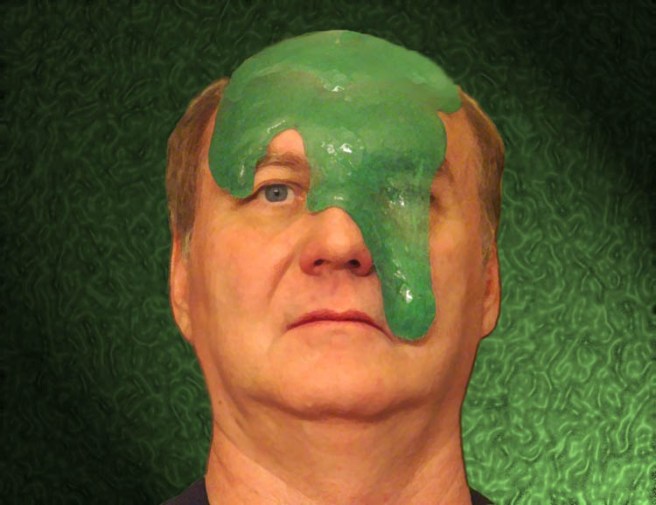
Today my three pounds has been misbehaving, sending me thoughts that don’t make sense yet.


the caveman in my passion fruit

image

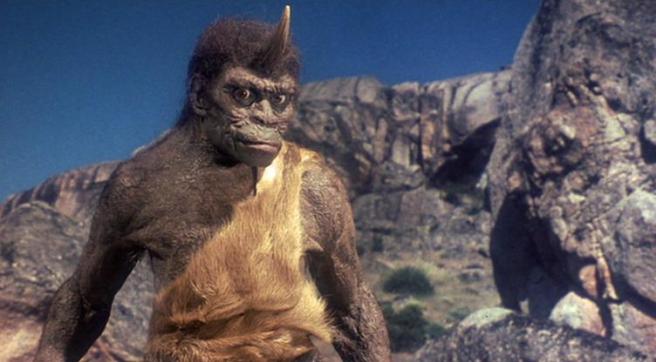
I have always thought of troglodytes as rather primitive cavemen.

So therefore might presume ‘troglodytes troglodytes’ to be a gang of primitive cavemen. A tribe maybe? Often in urgent combat with neighbouring gangs. Fighting to survive. Living a tough existence. Crude, hardy, simple.

Yesterday’s blog post referred to a nesting wren we have.  A sweet little bird just outside my window.

I discovered today that the scientific name for the wren is ‘troglodytes troglodytes’.

Now my understanding, my presumptions, my knowing… is blown apart. Boom.

New connections, new meaning, new awareness. Wow that’s good.

tracks of plenty

image

I travelled into London this morning by train. I arrive at Paddington, a busy station in the rush hour.

Leaving the train I noticed something I have experience before, but usually I am irritated by it, whereas this time I was curious.

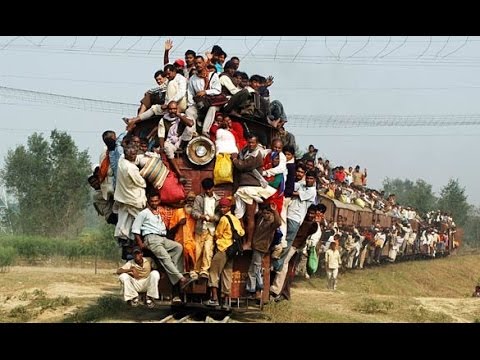
As I stepped from the train, I found myself bumping into fellow travellers. Passengers who had exited the train from an adjacent door or another carriage further down the train; these people were passing along the platform ‘hugging the train’, rather than choosing to move to the centre of a wide concourse, away from disembarking passengers.

I was struck by this behaviour and the potential metaphors for human existence and interaction…

Staying close to where we’ve come from, our roots.
Not exposing ourselves in the throng of humanity and diversity.
Taking the shortest route in life.
Focusing on self and not noticing others.
Being in our own head and not present in the moment.
Staying protected and safe: using a train as a barrier.
Travelling tried and tested paths; the route the train took.
Seeking the beginning or end of our journey.

They seemed plentiful.  I may stay curious.

they’re your rules, believe it or not

truth

We all have beliefs.

I’m not referring here to spiritual, religious beliefs. I refer instead to the invisible beliefs we hold about the world, about who we are and about what we are capable of.

I’m referring to the truths we hold, sometimes consciously, but mostly out of consciousness, such as “I can’t sing”, or “I’m not beautiful”, or “People are amazing” or “If I set my mind to it, I can achieve anything”, or “I’m stupid”, or “Working hard brings rewards”.

Such beliefs are typically generalisations, typically unconscious patterns, meta to our experience. They can be enabling, or they can be limiting. They act as a post-hypnotic suggestion and they direct future behaviour to confirm them.  They provide context, meaning, causation, structure and as such are irrefutable.  We will deny their inaccuracy, even in the face of cognitive evidence. They are in effect our own personal rules of the world.

Take “Working hard brings rewards”. A generalisation, in that it assumes always. A generalisation in that it doesn’t define work, or how hard, or what rewards? But, someone believing this, will work hard, they will, in all likelihood, value the rewards that work brings and justify or explain those as being earned by the hard work. The ‘truth’ of the belief, or personal world rule, is both acted out now and assumed to be required in future – after all, its truth is without doubt, its cause and effect undeniable, its outcome inevitable – such is the nature of a belief.

Meanwhile, work that doesn’t bring rewards, or rewards unconnected with working hard, may be dismissed as of little note, or simply go unnoticed. The belief could be enabling, in that it provides motivation, the believer will doubtless work hard, will attain and will get rewards. It could also be limiting, in that the believer will probably give up leisure time, family time, time for self and may be pressured with a weight of reward earning responsibility, or may burn out over time.

So what do you believe?  Do you know?

How do your beliefs enable you and how do they limit you?


the nature of connecting

image

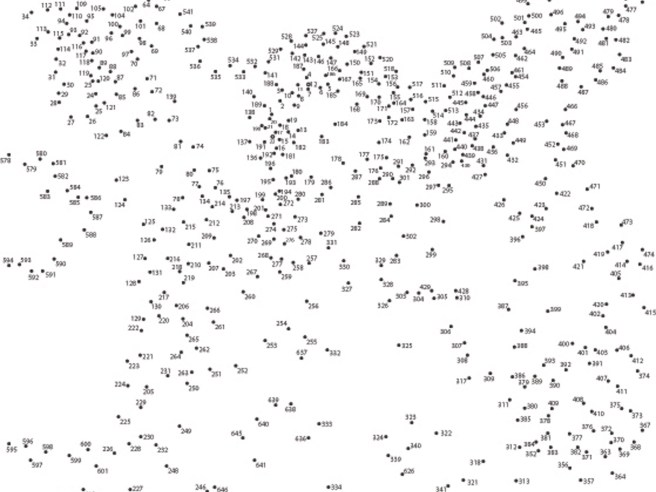
I was trying to explain to a colleague the other day how I see patterns and connections in things.

“For me, everything is connected to everything else…” I said.

Of course, on reflection that’s probably not true. Kumquats are unlikely to be connected to my retirement. The price of aluminium not really connected to the music on my favourite playlist.

What is true though, is that I do see patterns and connections in things which aren’t obvious to other people. They are however obvious to me. That’s not a statement suggesting that others are missing something, or somehow not as able, or that I’m ‘right’. It just is. I can’t always explain the connection, or why it is significant to acknowledge the connection, but they are often both real and meaningful, to me at least.

What is also true, is that I find it hard to do a mind map – for me, things need to be on more than one ‘branch’, some branches need to be joined up. It isn’t therefore a means to clarifying data, as it is for some, rather a way to create complication and frustration.

I have in the past noticed different people connect things in a variety of ways. I recall running numerous workshops over the years, where delegates, asked to group or theme brainstormed post-it notes, would often group them together if they had, for example, the word ‘training’ on them. To me, this ‘connecting’, whilst valid, missed out on the meaning beneath the words.

It seems we all make connections, make meaning, in different ways.  Maybe you make connections in one of these ways?

These things are about the same subject, so they must be connected?
These things are related through cause and effect?
These things are all connected to a specific outcome?
These things form part of the narrative, the story?
These things have a similar significance?
These things together open up possibilities?

Where we find meaning and connection, because we all do it differently, sometimes leads to misunderstanding, disagreement, confusion. So worth exploring the methods you consciously and unconsciously apply?


meta to the meta

image

Meta tags appear on web pages. They aren’t visible to the reader, they contain data describing the page. Data on the data, if you will. ‘Meta’ can also be described as a concept which is itself an abstraction from another concept.

Going ‘meta’ to a situation can also be a self referential place; stepping outside of oneself to observe oneself.

An example might be to ask “What do I think about my thinking?” Or perhaps to explore, “How do you reflect on those reflections about that?”

Sometimes, creating a different physical perspective can help still further. Try this out…

Sit and think about a problem or issue you are currently grappling with. Notice what you’re thinking and feeling as you explore this difficulty.

Now, get up and stand across the room, looking at the original chair or place you were just in. Here you are no longer thinking about the original problem, instead you are considering the thinking about the problem.

Ask yourself “What do I notice about that thinking?”  Ask yourself “What do I think and feel about that thinking and what do I hear in that thinking?”

Notice what comes to mind. Perhaps you think the thinking was a little negative or judgemental? Maybe you notice uncertainty or confusion? Maybe you notice more than one perspective in the thinking – like an internal dialogue? Notice whatever comes to mind?

Now, stand in a third place; another part of the room, still further from the original chair. This time look at the place where you were standing a few moments ago; the second, reflective place. From this new third place, ask yourself “what do I notice, what do I think, how do I feel about that thinking in that place?” The thinking about the thinking, if you will.

Here you may find new insights. New meaning. New significance. New awareness on the original issue… as you go meta to the meta.


pause thoughtfully

image

On the bus the other day, we stopped briefly outside a car dealership on Park Lane. Applied to the window were various graphics declaring “Coming soon… The Mini Gentleman’s Collection”

Now I’m fairly average. Around six foot. Not tall, but not, I deem, a mini gentleman, so I assume this forthcoming collection isn’t for me?

I jest of course. Presumably the marketing refers to a new collection for men who drive the aforementioned motor car?

My point being, the pause matters, emphasis counts and, in this case, punctuation is crucial.

There is a fabulous book, by Lynne Truss, called “Eats, Shoots and Leaves”. Its purpose being to highlight the change in meaning that comes from incorrectly applied punctuation. I once sat in a hospital and observed a sign, directing me down the corridor to “Receptionist’s”. I wondered for a moment what possession of the said receptionist I might find should I follow the arrow? I have also driven past a pub, which had clearly invested in the metre high, six metre plasticised banner on its lawn, advising I should “Come in and meet are new management”. I didn’t, needless to say.

This isn’t of course just about punctuation; the omission of a crucial comma or full-stop, the addition of a spurious apostrophe. Our propensity to write so much these days in email and in text, means we increase the likelihood of misunderstanding and miscommunication because, as the reader, we can infer a tone, a meaning from the sender, which might be unintended. Non verbal signals we could spot in a face to face communication are lost and as a result meanings can be misinterpreted.

So, to all ‘mini gentlemen’, I apologise for raising your hopes and expectations.

Maybe next time the dealership will pause thoughtfully?
Maybe we all should?