separation

  
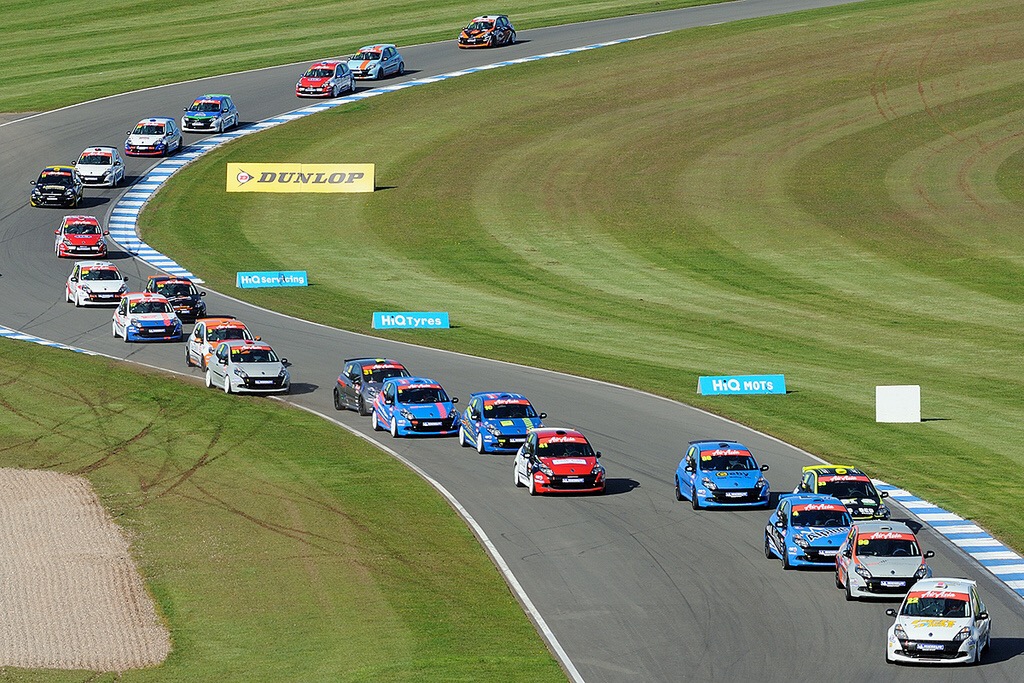
Watching Motorsport at Donington Park today.

I’m sitting on a hill in the infield looking at the old hairpin. Cars are weaving down the Craner Curves, jostling for track position into this all important corner.

Meanwhile, I’m listening to the race commentary on the circuit app on my phone. The commentary covers the action elsewhere on the circuit. So I can listen to the incident at Redgate where two cars have entered the gravel trap.

When we go racing we take a camping stove and I’m tucking in to a freshly made egg and bacon roll. The soft yoke has just exploded across my fingers. The smell and taste a sensory delight.

The sun is warming my right ear.

I’m struck by my ability to separate my senses. To see one set of action, hear another, feel the sun and direct my olfactory and gustatory senses to a stomach welcoming culinary classic.

Maybe separating our senses is easier than focusing them all on the same experience? We do it every day.  I do wonder what I’m losing as a result though?
the in tray blanket

comfort_blanket

In our business, when claiming expenses, we have to post receipts to the relevant finance department. Their office is in a building over the road from mine, so today I wandered over to drop off some receipts in person.

Meanwhile a form with its monochrome content of figures and descriptions, constituting my expense claim, was coursing its way through the invisible veins of our finance system, pausing in a workflow for the arrival of its life affirming sister receipts. Proof of its very right to exist. Its stamp of validity.

I arrived in the office to discover there was an in-tray, on top of  filing cabinet.  A plastic in-tray with a laminated sign, propped up to indicate its purpose in life. ‘Expenses receipts’

I dropped in my receipts, stapled to a copy of my claim form.

I paused.  There is something strangely reassuring about an in-tray.

I’m old enough to remember in-trays and out-trays.  The satisfaction of processing work to empty the in-tray and move it to the out-tray.  Work arriving, often in envelopes, departed in much the same way,dropping into the internal mail system to wend its way to the next person in the work chain, safely enshrined in a manilla envelope, carefully addressed to the next recipient.  As for the pending tray – what the … was that all about?!

In our modern world, much has improved. Much is to be embraced.

This morning though, my brief dalliance with an old friend, the in-tray, led me to reminisce.

For all the joy of the new, we still enjoy hanging on to the familiar sometimes.

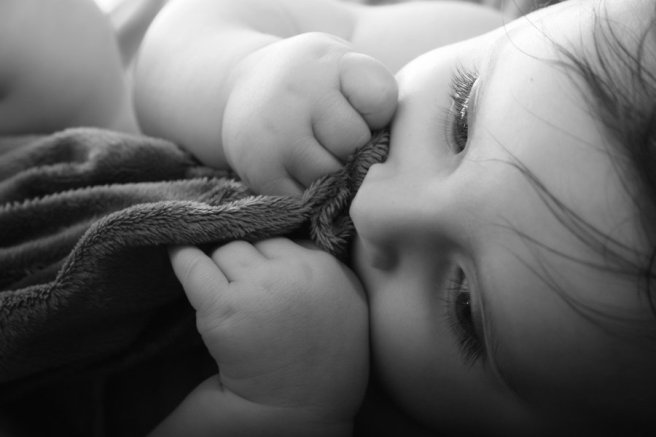
We do this in most aspects of our lives.  Fond throw backs to times gone by. Favourites from the past. Comfort blankets that all is well with the world.

This morning, a humble in-tray was my comfort blanket somehow.

Photo: Elky-Lou on Deviant Art


tracks of plenty

image

I travelled into London this morning by train. I arrive at Paddington, a busy station in the rush hour.

Leaving the train I noticed something I have experience before, but usually I am irritated by it, whereas this time I was curious.

As I stepped from the train, I found myself bumping into fellow travellers. Passengers who had exited the train from an adjacent door or another carriage further down the train; these people were passing along the platform ‘hugging the train’, rather than choosing to move to the centre of a wide concourse, away from disembarking passengers.

I was struck by this behaviour and the potential metaphors for human existence and interaction…

Staying close to where we’ve come from, our roots.
Not exposing ourselves in the throng of humanity and diversity.
Taking the shortest route in life.
Focusing on self and not noticing others.
Being in our own head and not present in the moment.
Staying protected and safe: using a train as a barrier.
Travelling tried and tested paths; the route the train took.
Seeking the beginning or end of our journey.

They seemed plentiful.  I may stay curious.

the passing of life

image

When we hear the sad news of a celebrity or significant public personality passing, it reminds us of our own past.  Often our connection is to a shared time – the music we listened to, the films we saw, the events we witnessed.

It is the memories of those days, those shared times, the recollection of our own dim distant youth and the good times therein, that often brings the sadness, the emotion, maybe the tears.

When people close to us pass away, the number of connections is more, the richness of the memories even brighter, deeper, warmer.

It is at these points of passing, that we reflect on our own mortality. When lives end, we pay attention to the passing of our own years. Time slipping away.

Yet life is passing with every moment.

Each passing hour, minute, second is a moment of our own lives; and so many we let go without conscious thought.

So many pass without reflection to their significance; so many pass in the blink of an eye; so many slip away without time to relish their part in the contribution to our own evolution, our own personal learning and growth.

So many pass without awareness to the contribution we make to the richness of others memories. The people we touch. The difference we make. The memory making moments our existence has had, to those around us who will be here long afterwards.

The passing of life isn’t about death, it’s about now. This minute, this moment.


RIP David


the space to be

fix-what-you-think-fix-what-you-do

The next time you have a thought… let it go

Ron White

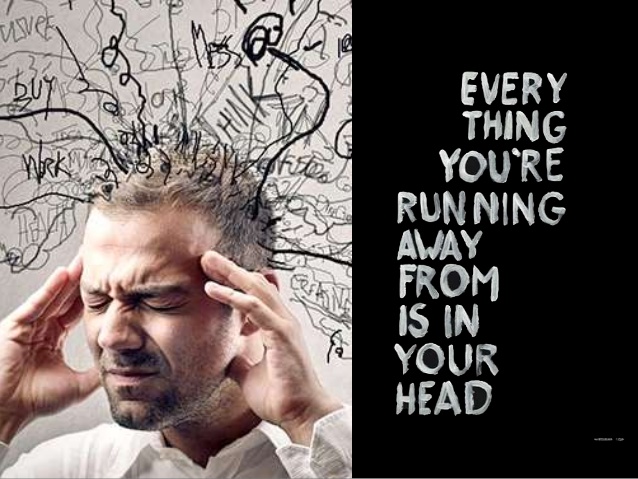
We can become slave to our heads.

We ping pong between the past and the future. What has happened and what might happen. What we need to do. What we did or didn’t do. Experiences we have had. Opportunities to come. Lists of things to do. Things we did, or should have done.

Our thoughts begin to run us.

I must do this…
If only I hadn’t…
What if…?
Don’t forget…
What did I say…?
Should I…?
Why…?
When can I…?

Find instead a place where the mind is quiet. The body is present.

The space to be.

the present lie about absenteeism

daydreaming
Most of us work through the day.  We sit in our office or car. We stand on the production line. We pore over our computer. We meet others and decide important things. To do this, we are expected to be present. To be wherever our work requires us to be.

But physical presence is a lie, a misnomer, if we think it signifies presence in our work. Occupation, activity, productivity, output, quality.

I can sit and stare at words on my screen and yet be somewhere completely different, in my head. I can be in a meeting and look to be taking active part, whilst emotionally being totally disconnected. I can even be driving my car and be on auto-pilot, because my attention is on some unrelated, yet important, mental distraction.

This is largely invisible to those around us. A secret we keep.

We all do it. We do it all the time.

Physically present. Mentally and emotionally elsewhere.

Why is it that the ponderings, thoughts, feelings, of another place, another time, another scenario, with other people, are more important to our bodies, than where our bodies are?

Wherever you are now.  Where are you?


now is the only everlasting memory

image

Many years ago, the photograph was a physical thing.

Nowadays we live in a digital age. The image has become a series of ones and zeros, which can be shared instantly across the globe. It can be enlarged, edited, colours saturated, edges blurred. It can be enhanced with special effects, have its background changed, detail enhanced. All of this can be achieved in seconds. Methods and means for sharing are many, and once a photograph is out in the social network we lose track of its global journey; who might see it, where, how and when.

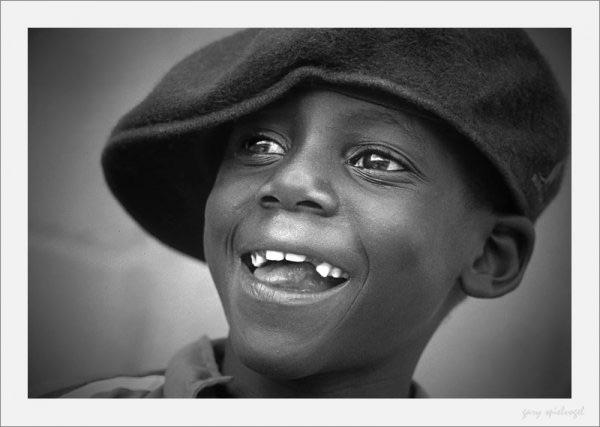
When we capture a smile in a photograph, it has an eternal quality. A moment in time is captured in digital form to be shared and enjoyed for ever. It becomes an everlasting smile. Or does it?

The photograph cannot replicate the human experience. The feeling that went with the smile. The sensation of the facial muscles drawing the lips back. The image or experience behind the camera that generated the smile. The joy of the moment. The supporting emotions of fun, love, togetherness, excitement, happiness. It cannot hold within it the sharing. The memories.

Today we have become obsessed by taking the picture. We snap them constantly. Delete the duplicates. Discard the imperfect. Edit them to impress.

Maybe we have forgotten to enjoy the moment? To take in the experience? To absorb the emotion and allow the feeling to wash over us like a wave of liquid happiness? To live the experience and therefore to enrich the memory? Maybe the smile in the moment is the only truly everlasting smile? The one in the now?

Let’s focus on the moment, not on the creation of the ones and zeros.


time to flex your happy muscle?

happiness mindfulness meditation
For many centuries, great sages, such as Aristotle, Bhudda, Confucius and Epicurus have advocated the pursuit of happiness. They have suggested happiness comes from within, from creating an inner peace, from reflection. Happiness of the mind, rather than of things.

Now science appears to be catching up. I have just been reading about a study at Kyoto University. The research, reported here, has identified a part of the brain, the precuneus, which appears to be larger in people who self declare themselves to have meaning in their lives, who report positive emotional and cognitive experiences and describe themselves as happy. This has been correlated to studies into meditation, which show that the precuneus grows in people who make meditation a part of their lives – it seems that calming our thoughts, being present in the current moment can exercise our happy muscle.

The research speaks of psychological training that could increase the volume of grey matter in the precuneus, which in turn may enhance subjective happiness. The report’s summary says…

Psychological studies have shown that subjective happiness can be measured reliably and consists of emotional and cognitive components. However, the neural substrates of subjective happiness remain unclear. To investigate this issue, we used structural magnetic resonance imaging and questionnaires that assessed subjective happiness, the intensity of positive and negative emotional experiences, and purpose in life. We found a positive relationship between the subjective happiness score and gray matter volume in the right precuneus. Moreover, the same region showed an association with the combined positive and negative emotional intensity and purpose in life scores. Our findings suggest that the precuneus mediates subjective happiness by integrating the emotional and cognitive components of happiness

Time to flex the happy muscle?

Now that’s a happy thought…


when silence is the most perfect form of speaking

silence time to think listen
Nancy Kline’s book ‘Time to Think’ advocates a model of human interaction that honours the individual’s time to think.

In our society we are expected to have an opinion, and to voice that opinion. To disagree or to agree with your perspective. Our language, our organisational culture, our very democracy is imbued with debate, dialogue, challenge. The great debates are forefront in the news and on social media… The USA right to guns or not? Is removing tax credits unethical? Can the Labour party survive its leadership choice? Will Jose get the sack at Chelsea? We are encouraged to debate them, to have a perspective, even to take a side.

At a coaching supervision group discussion today we were talking about silence. One coach spoke of the sheer joy of not having to hold a view in their coaching work. The freedom and release that gave them. As a coach we can be objective. Focus merely on the client’s story, their way of being. We don’t need a view as to the rights and wrongs of that. We don’t need a view as to the way forward, the solution for the client.

We can just be present. Listen at the deepest level. Give them time to think.

Nancy asks “what makes you think the question you are about to ask is more valuable than the client’s next thought?”

I wonder if in organisations, in society, in life we need to learn to be silent more. To honour other people’s time to think and to speak their truth. To not hold a view, but just to accept what is true for them. To intervene solely with the purpose of helping them to develop their thinking. Not for our understanding, not to share our opinion, not to demonstrate our value giving contribution of solution … but just to help them to develop their thinking.

Maybe there would be more understanding, more compassion, more truth?