how will your future you advise the younger you?

wisdom
If you were your own mentor … what would you tell yourself?

If an older, wiser you could guide the younger you and impart some wisdom, some gem of learning from life’s journey, what might that be?

Novelist Cheryl Strayed’s advice to her twenty-two year-old self from a viewpoint two decades further on was …

“There are some things you can’t understand yet. Your life will be a great and continuous unfolding. Understand that what you have resolved will need to be resolved again. And again. You will come to know things that can only be known with the wisdom of age and the grace of years. Most of these things will have to do with forgiveness.”

Sound advice. What would yours be?

What’s the next act?

front stage back stage
So … I’m reading the Theory of Human Ecology.

Now, before you raise your eyebrows or quietly tut in that knowing way, or maybe steel yourself to slap me on the back and declare ‘well done that man!’… I should let you know it’s only the ‘Brief Introduction to the Theory of Human Ecology’, a mere 112 pages.

There are many interesting concepts therein – I confess to liking a concept more than a theory – so I thought I’d share this one…

As we know Abraham Maslow first documented the most basic of human needs is to be safe; we know that experiencing being unsafe or afraid can leave long standing memories in us. One of the concepts discussed in this paper is the idea of having a ‘front stage’ and a ‘back stage’ as one way in which we can manage personal risk and keep ourselves safe.

Our ‘front stage’ is the version of ourselves we show to the world. We develop it to gain acceptance and to belong, to retain the audience’s interest and maybe even get a round of applause sometimes, or at least a polite clap.

Our ‘back stage’ is the bit of ourselves we keep hidden away – it’s where we do our rehearsals, our script writing and where we keep our costumes and props. We don’t tend to let the audience backstage – only those we really trust.

By developing a front stage and a back stage we keep ourselves safe in an inherently unsafe world. It allows us to show the world what we believe we need to, in order to be accepted, affirmed, welcomed in. Meanwhile that part which we need to protect – our vulnerability – we keep hidden away from harm.

A nice theatrical metaphor…?

The seduction of addiction

seduction of addiction
Drug addiction can be a destructive thing.

Yet we are all drug addicts and at the same time drug pushers.

Our addiction in life is often our way of being. It is seductive to stay with the familiar, however much that familiar harms us, limits us, hurts us.

Being exhausted. Lonely. Always moving. Looking out. Looking in. Critical. On the edge. Miserable. Hyped. Caring for others. Not caring for yourself. Catastrophising. Leaking power. Being guilty. Hiding. Needing love. Taking responsibility. Blaming. Saving. Out of balance. Looking back… and many more drugs of familiarity. Each with a high. Each with a low.

We can also become used to beating ourselves up in that internal dialogue of not good enough, not smart enough, not beautiful enough, not talented enough… In a strange way the familiarity keeps us safe. It becomes seductive to keep doing it. Hard to kick the habit. We find ways to give ourselves the fix – seeking evidence to prove the theory, so we can reaffirm its ‘truth’ again, and so stay safe.

We can do this in relationships too. Give our power away. Bemoan the way the behaviour of others makes us think or feel. Yet we are often drawn back, to get another dose. Sometimes because there is an element of that interaction, that relationship, which meets an unspoken need deep within. It gives us a reward. An unconscious lift, an energising boost, a buzz. But all before we experience the fall, the difficult feeling, the disappointment, the hurt, the down after the drug wears off.

Beware the pushers. Those who draw you in with their sweeties. But especially look out for the pusher within. The part of you that also gets you hooked; seduces you; feeds you the familiar yet painful drug.

Choose what you consume. Notice what is addictive. Seek out the truth of the seduction.

Don’t hurt me…

hurt
Sometimes we interact with people and feel hurt, anger, pain, frustration following their action or words.

Sometimes we keep that emotion inside, but sometimes we throw it out with a statement such as…

“You hurt me when you did that…”
“He really makes me angry when he says that…”
“When she says that, it really annoys me…”
“You upset me when you don’t…”

The notion that one human being has the power to create a powerful emotion in another, by saying or not saying something, by doing or not doing something is intriguing. A dark art.

In reality of course, as receivers, we do it to ourselves.  It is our interpretation, our meaning making that generates the hurt, the anger, the pain.  It is our internal sense of ourselves that allows the action, inaction or words to generate the feeling. Our own beliefs or values.

Maybe the better response would be…

“I allow what you do to hurt me”
“I take his words and I use them to create a sense of anger within me”
“I convert her words into a feeling of annoyance within me”
“I interpret your inaction in a way that enables me to generate feelings of upset within me”

Owning the feeling we have, the feeling we generate, gives us power and choice. To no longer blame or attribute the emotion to someone else, but to say this is mine allows us to change it.

the search for normal

normal or unique
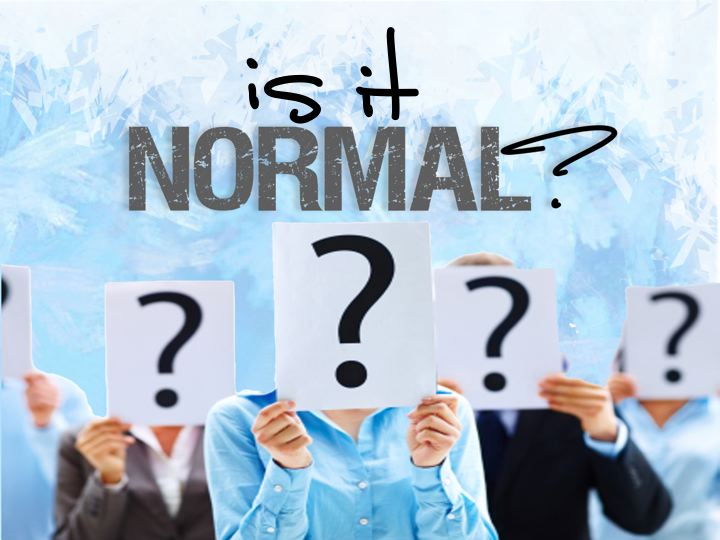
“Is that normal?”

In my coaching work, that’s a phrase frequently added by my clients…

“I don’t see it like that. Is that normal?”
“I can feel it churning in my tummy. Is that normal?”
“I just don’t know what I want. Is that normal?”
“It’s like I have a conversation in my head. Is that normal?”
even, “If we were to meet every three weeks maybe? I don’t know, is that normal?”

The search for affirmation that we are in some way ‘normal’ seems to be intrinsically inside us.

Society reinforces this of course. You will know this if your ethnicity is different from the majority. If you have a disability. If your sexuality, or the way you dress, is in some way not the society imagined ‘norm’ then your belonging can be challenged. You can be ‘told’ directly or indirectly that you don’t ‘fit’. For some of course this drives an expressed desire to be ‘different’, to stand out, to be individual.

There seems to be a tension between individual and the crowd or majority; between unique and the same, individual and similar; a tension between who we are and the expectations of everyone else.

When one of my clients says something like “I’m just not that driven. Is that normal?”

I wonder if the first half of that proclamation is a statement of self. A statement of uniqueness. A statement of what is. A statement of who we are and how we work. A statement of truth.

I wonder if the second half is just a blanket for belonging. A sense that by showing who I am, I might be judged, rejected, cast out.

Of course, in reality we are all unique. Even those who band together under the cloak of ‘the normal’ are, in truth, unique individuals. Hiding their true uniqueness for fear of rejection.

Normal is a cloak though.

Unique IS normal.

Shine your light. Step into the sunshine. Be yourself. Celebrate your difference. For it is through your difference that your contribution to the world will be manifest.

where do you find yourself?

find yourself
I don’t mean now at this minute… in the office, walking to a meeting, having a coffee, in the bath… I don’t mean physically where are you at this precise moment.

I mean, where do you go, to find yourself?

Where do you re-group, resource yourself, check in? Where do you go to validate yourself? Where do you go to make sense and meaning from your interaction with the world, with life? Where do you check for congruence with you?

Maybe you meditate, or do yoga? Maybe you listen to music? Maybe you walk? Maybe you run? Maybe you sit alone and reflect quietly looking out of the window?

Maybe you don’t do something or go anywhere?

Maybe instead it’s an entirely internal process? Maybe you step outside of yourself and look – in your mind’s eye as it were? Maybe you go inside and connect with a feeling? Listen to your heart? Check out your gut feel? Maybe you have a known sense of you, a deep sense of self, a sense of your soul? Maybe you calibrate against that?

And what do you get from doing whatever you do?

Is it a way to preserve yourself? A way to survive? Is it a way to regroup? Is it about balance? Is it about correcting your course? Is it to find meaning? Is it to make sense? Is it so you know you haven’t lost yourself? Is it about resourcing yourself for the next step? Is it just a warm safe place? Maybe you just want to be sure of you?

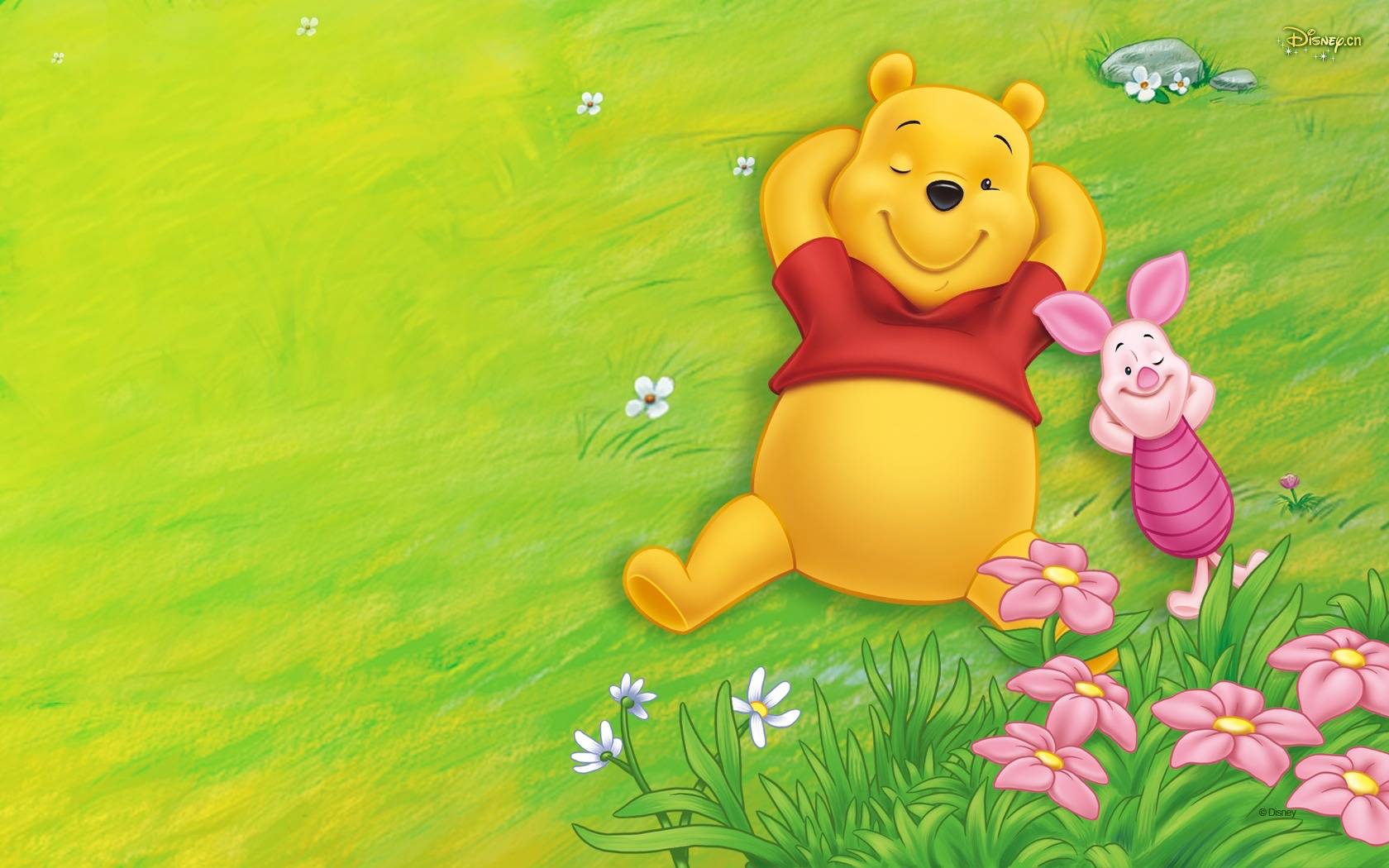
 “Piglet sidled up to Pooh from behind.
“Pooh!” he whispered.
“Yes, Piglet?”
“Nothing,” said Piglet, taking Pooh’s paw. “I just wanted to be sure of you.”

Be your own Piglet.
Be sure of your Pooh.

we are merely part of the ceaseless becoming of the universe…

illuminate your self
I watched a BBC programme the other day on the ancient world and the philosophies of Buddha, Socrates and Confucius. This episode followed the life and ground breaking thinking of Buddha.

One moment stayed with me.

A part of Buddhist philosophy says … “We are merely a part of the ceaseless becoming of the universe”.

What an interesting and beautiful idea.

The programme showed that our sense of self, the notion of “I” does not begin with birth. We exist in the womb. We exist in the genes of our parents, and they in the genes of theirs. Our ancestors literally make us. Our version of “I” is constantly evolving, influenced by culture, society, experience. In this way the self is merely an imagined entity, manifested from your journey. It existed before you were born, evolves through your living and doubtless continues in your children and the legacy you leave in the universe.

I am not religious but I am attracted to this philosophy.

As the programme hypothesised – Buddha was espousing cognitive psychology twenty five centuries before it emerged. But for me also this connects to another interest of mine – the systemic constellation – the notion of the significance of the system and our relationship to other parts in that system.

Buddhism offers wisdom and compassion as a way forward. Not wisdom in the conventional cognitive, intellectual, knowledge sense but in the old Sanskrit sense of awareness, discernment, insight and consciousness.

That with compassion for yourself and others makes sense to me.

So… maybe bringing into awareness, into consciousness, with insight and compassion your sense of who you are, is a good step forward?

… maybe bringing into awareness your relationship to the rest of the universal system you belong to, is a good step forward?

… maybe having an emerging sense of why you’re here and what your legacy to the universe will be, is a good step forward?

Be your own lamp.
Illuminate yourself.

if you could shop for emotions, what would you get more of?

emotions shopping
I need to shop for food today. Saturday isn’t a normal shopping day for us – too many people in the aisles. The aimless people. I’m a list shopper. Odd really as I never make lists for anything else. The list has to be in the right order for the route I will march purposefully along with my trolley. It provides a structure. I’ll deviate from it, of course… the list. I like deviating from a plan. In fact I don’t plan normally either – too much structure.

Anyhow, it occurred to me, what if I could shop for emotions? What would be on my list? What do I want more of and what do I have enough of in the cupboard?

Do I want more joy? More caring? More trust? More serenity? Do I need a little more sadness? A big pot of empathy? Do I need to refill my anger? Maybe I would like to take some lonely back to the shop?

Am I baking a relationship cake and need some extra courage? Some more selfishness, a little daring, some strong, rather than medium fun, a big box of compassion, a soupcon of adventurousness and a large tin of hurt?

Maybe I’m about to change role and I need to stock up on thrilled, thoughtful and excited, buy a refill pack of embarrassed, but also purchase some ashamed and not good enough seasoning?

Or maybe I’m being forced to change role and need some hope, a little vindictiveness and a splash of inadequate to go with the large supply I have at home of feeling used?

What would be on your emotions shopping list?

what you do, is not who you are

be do identity
What you do, is not who you are.

A friend of mine recently made a decision; a decision that has had significant ramifications for people in their life. It was a hard decision, not easily reached. They have been much criticised by those around them. Judged. Labelled.

Sometimes people view our actions, what we do, as a proxy for who we are. Maybe the smaller actions or behaviours go unnoticed, unacknowledged, but often the larger decisions or actions get assigned to our identity, through judgement. “He is a liar…” or “She is untrustworthy …”

In fact we are so much more than one choice, one decision, one action. There is so much more complexity, subtlety, richness in our humanity, in ‘the self’.

We can do this to ourselves too. Maybe you have done something and then reflected that wasn’t me, that was a bit out of character? Maybe you have done something and then judged yourself with a label too … “I’m stupid…” or “I’m a bad person…”

Making a mistake doesn’t make you stupid. Hurting someone doesn’t make you a bad person.

These judgements ignore context, they narrow our identity to one action, they lessen our humanity and they limit our potential. None of us is perfect, yet we are all perfectly human.

What we do, isn’t who we are. We are always so much more than one behaviour, action or choice. Sometimes we confuse these two. Separate them. Notice what you do and be curious about your motivations and rewards. But also notice who you are; the breadth, depth, richness and magic of you.

learn to unlearn you must

yoda unlearn
Your brain is a meaning making machine. The greatest meaning making machine we know.

It works through patterns. Once learned, those patterns repeat, time and again. Once meaning is learned, it is adhered to relentlessly.

Most of this is out of consciousness. Some estimates suggest that the unconscious mind is as much as 95% of brain activity. Trigger … response, carried out automatically without what you might consider as ‘thinking’.

The challenge is that most of these patterns are shaped in childhood. Experiences early in our lives create emotions and child-like cause and effect reasoning; meaning making which creates our sense of self, our rules of the world, our beliefs about our place in the world and how to belong in it, all at a time when we are very unworldly.  A necessary process for the very survival of our ancestors – the ability to learn quickly and create strategies, crucial.

This process continues today though, and patterns and strategies learned in childhood repeat, over and over, as we progress into adulthood. Often the patterns no longer have relevance in an adult world, or the meaning has changed, or maybe was simply misinterpreted originally by the seven year old?

Running on automatic with patterns, strategies and meaning which disable rather than empower, limit rather than enable, constrain rather than offer choice, is at the heart of our struggle to reach our potential. These are limiting beliefs.

So, unlearning patterns of thinking, patterns of feeling, patterns of doing could be the most important learning you will ever do.

The first step is to become conscious of the pattern. Then explore its origins – where did it start, what’s your earliest memory of believing that? Is that belief or strategy relevant now? Does it serve you? What are you distorting in that memory? What has been deleted? Where is today’s evidence and what gets generalised in your thinking?

Start now, be curious, what needs to be unlearned?